

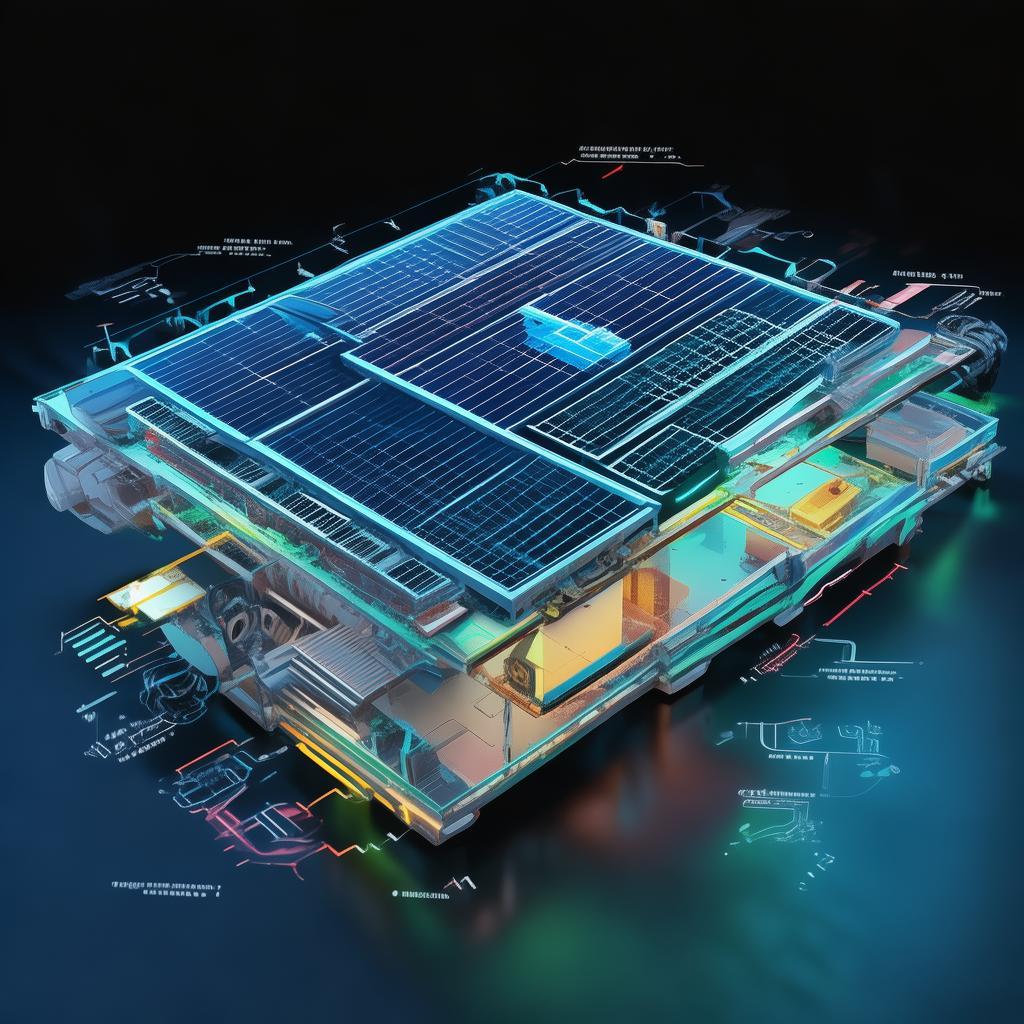
types of solar panels for roofs
Discover the diverse types of solar panels for roofs designed to maximize energy production while seamlessly integrating with various roof structures. As a leading supplier in the international solar
Types of Solar Panels for Roofs: Premium Solutions for Efficient Energy Harvesting
Product Overview
Discover the diverse types of solar panels for roofs designed to maximize energy production while seamlessly integrating with various roof structures. As a leading supplier in the international solar industry, we offer monocrystalline, polycrystalline, thin-film, bifacial, and PERC solar panels, each tailored for rooftop installations. These panels convert sunlight into electricity through photovoltaic technology, providing reliable power for residential, commercial, and industrial applications.
Monocrystalline panels, known for their high efficiency and sleek black appearance, are ideal for space-constrained roofs. Polycrystalline options offer cost-effective performance with a distinctive blue hue, suitable for larger surface areas. Thin-film panels provide flexibility and lightweight design for unconventional roof shapes, while bifacial panels capture sunlight from both sides, boosting output on reflective surfaces. PERC (Passivated Emitter and Rear Cell) technology enhances all types by reducing energy loss, making them superior choices among types of solar panels for roofs.
Our selection ensures compatibility with pitched, flat, or curved roofs, adhering to international standards like IEC 61215 and UL 1703. With advancements in half-cut cell and multi-busbar designs, these panels achieve up to 22% efficiency, delivering long-term ROI through reduced electricity bills and grid independence. Whether you're outfitting a warehouse in Europe or a villa in Asia, our types of solar panels for roofs support scalable projects from 1kW to MW-scale installations.
Key Features
- High Efficiency Ratings: Ranging from 18-22% across types, ensuring optimal energy yield even on partially shaded roofs.
- Durable Tempered Glass: 3.2mm anti-reflective coating resists hail, wind up to 2400Pa, and snow loads up to 5400Pa.
- Advanced Cell Technology: Half-cut cells and PERC minimize micro-cracks and shading losses, common in rooftop environments.
- Aesthetic Integration: Low-profile frames and color options blend with roof tiles or metal sheets for unobtrusive installations.
- Weather Resistance: IP68 junction boxes and anodized aluminum frames withstand PID (Potential Induced Degradation) and salt mist corrosion.
- Easy Installation: Pre-drilled holes and lightweight designs (18-22kg per panel) reduce labor costs on sloped roofs.
- Smart Monitoring: Compatible with IoT systems for real-time performance tracking via apps.
- Recyclable Materials: 95% end-of-life recyclability supports sustainable B2B projects.
Technical Specifications
Compare the leading types of solar panels for roofs in our comprehensive table below, showcasing key metrics for informed procurement decisions.
| Parameter | Monocrystalline | Polycrystalline | Thin-Film (CIGS) | Bifacial | PERC Mono |
|---|---|---|---|---|---|
| Max Power (Pmax) | 400-550W | 350-450W | 100-150W/m² | 450-600W (bifacial gain +20%) | 420-580W |
| Efficiency | 20-22% | 17-19% | 14-16% | 21-23% | 21-22.5% |
| Dimensions (L x W x H) | 1960x990x35mm | 1956x992x35mm | Flexible: 1200x600x2mm | 1960x990x30mm | 2094x1038x35mm |
| Weight | 21-23kg | 20-22kg | 2-4kg/m² | 22kg | 23kg |
| Warranty (Product/Performance) | 12/25 years | 12/25 years | 10/20 years | 12/30 years | 12/30 years |
| Temperature Coefficient (Pmax) | -0.35%/°C | -0.39%/°C | -0.30%/°C | -0.34%/°C | -0.35%/°C |
| Certifications | IEC, UL, TUV | IEC, UL, TUV | IEC, UL | IEC, UL, CEC | IEC, UL, PID |
Application Scenarios
The versatility of our types of solar panels for roofs makes them suitable for a wide array of scenarios. In residential settings, monocrystalline panels excel on south-facing sloped roofs in suburban areas, generating 10-15kWh daily for households in sunny climates like California or Spain. For commercial flat roofs on office buildings, polycrystalline arrays provide economical coverage, offsetting peak-hour demands and qualifying for incentives like the ITC in the US.
Thin-film panels shine in hot regions such as the Middle East, where their lower temperature coefficient maintains output under high heat. Bifacial models are perfect for ground-level reflective roofs or white gravel surfaces in logistics parks, capturing albedo up to 30% more energy. Industrial facilities with metal roofs benefit from PERC panels' robustness against vibrations and dust accumulation.
Off-grid cabins in remote areas or agricultural greenhouses utilize flexible thin-film for curved profiles, while urban high-rises integrate frameless monocrystalline for zero aesthetic disruption. Our panels support hybrid systems with batteries, ensuring 24/7 power in variable weather, from tropical monsoons to arctic winters.
Advantages
Opting for our types of solar panels for roofs delivers unmatched advantages over traditional energy sources. Achieve 25-30% energy cost savings within 5-7 years, with payback periods shortened by rising utility rates. Environmentally, they reduce CO2 emissions by 0.5 tons per kW annually, aligning with ESG goals for corporate buyers.
Superior durability outperforms competitors, with <1% first-year degradation and 80% output after 25 years. Scalable designs minimize BOS (balance of system) costs, and bankability from Tier 1 status ensures financing ease. Compared to wind or fossil fuels, rooftop solar offers silent operation, zero fuel costs, and instant scalability without land use.
Why Choose Us
As a trusted global manufacturer and exporter, we specialize in premium types of solar panels for roofs, backed by 10+ years of production expertise and 2GW+ annual capacity. Our ISO 9001-certified facilities in China ensure consistent quality, with full traceability from silicon ingot to finished module.
We provide customization options like panel sizes, frameless designs, and branding, plus rapid lead times of 7-15 days for container loads. Rigorous testing exceeds industry norms, including EL imaging and salt spray chambers. Competitive MOQ starts at 100 panels, with FOB/CIF shipping to 100+ countries. Partner with us for PID-free, bankable products that elevate your supply chain.
FAQ
What are the main types of solar panels for roofs? The primary types include monocrystalline (high efficiency), polycrystalline (cost-effective), thin-film (flexible), bifacial (dual-sided), and PERC-enhanced variants, each optimized for different roof types and climates.
How do I select the best type for my roof? Consider roof orientation, available space, budget, and local irradiance. Monocrystalline suits limited spaces; polycrystalline for budget projects. Consult our engineers for site-specific modeling.
Are these panels suitable for all roof materials? Yes, with mounting systems for tile, shingle, metal, concrete, or flat membranes. Anti-corrosion clamps ensure secure, leak-proof installs.
What is the expected lifespan? 25-30 years, with linear performance warranties guaranteeing at least 84.8% output at year 25.
Do they perform in low-light conditions? Advanced PERC and half-cut cells maintain 95% relative efficiency at 200W/m² irradiance, ideal for cloudy regions.
How about maintenance? Minimal: annual cleaning and inspections. Self-cleaning coatings reduce dust buildup by 70%.
Are bulk orders customizable? Absolutely, including power ratings, dimensions, and certifications for your market.
Related product
- English
- Françai
- Español
- Deutsch
- Română
- العربية
- 한국어
- 日本語
- Italiano
- Português
- Gaeilge
- Dansk
- Čeština
- Русский
- Afrikaans
- Euskara
- Català
- Esperanto
- हिन्दी
- Ελληνικά
- Bahasa Melayu
- Polski
- Српски
- Kiswahili
- ภาษาไทย
- Tiếng Việt
- Türkçe
- Svenska
- Cymraeg
- Slovenčina
- Latviešu
- Malti
- Magyar
- Galego
- ગુજરાતી
- Eesti Keel
- বাংলা
- Shqip
- беларуская мова
- Nederlands
- Tagalog
- ქართული
- Íslenska
- Kreyòl Ayisyen
- Lietuvių
- Norsk
- slovenščina
- தமிழ்
- Українська
- ײִדיש
- اردو
- తెలుగు
- فارسی
- македонски
- ಕನ್ನಡ
- Bahasa Indonesia
- עברית
- Suomi
- Hrvatski
- Български
- Azerbaijani