

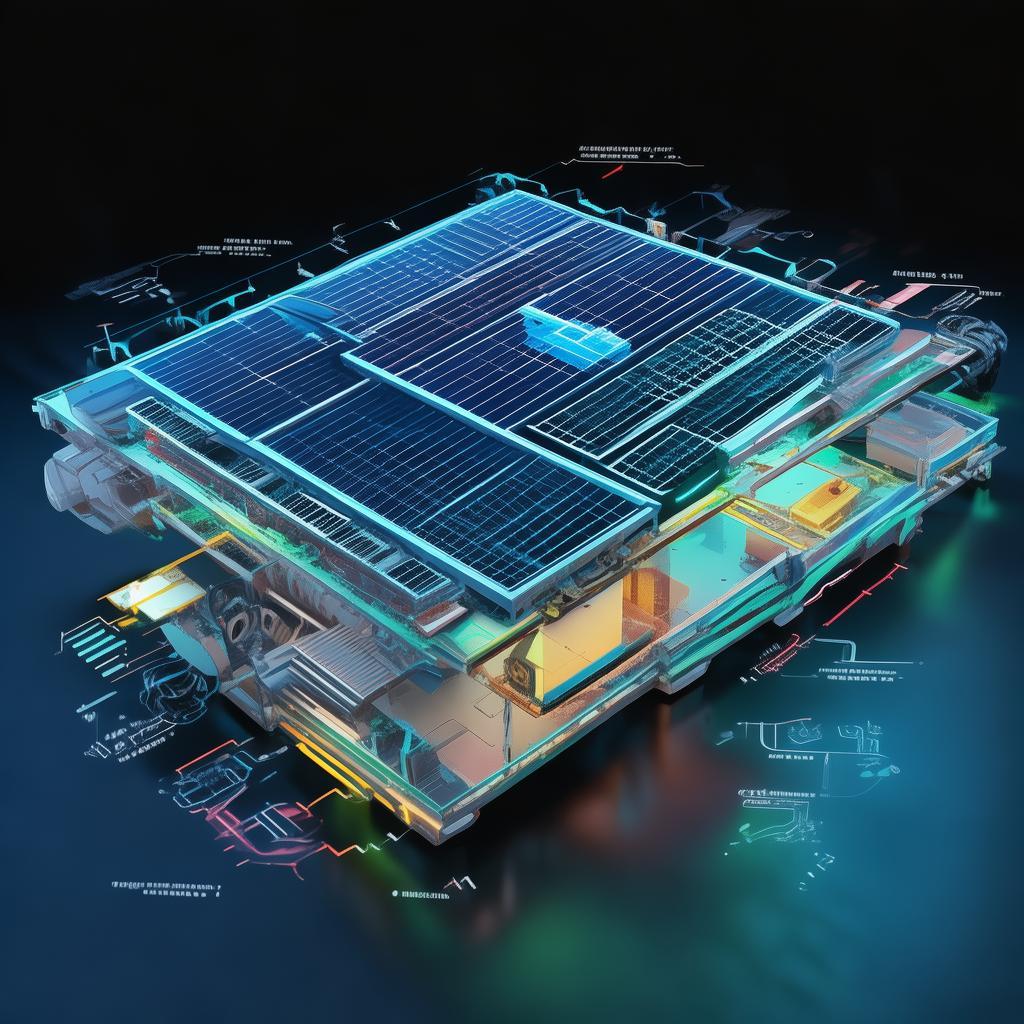
types of roof solar panels
Discover the diverse types of roof solar panels designed specifically for seamless integration into residential, commercial, and industrial rooftops worldwide. As a leading supplier in the
Types of Roof Solar Panels: Premium Solutions for Rooftop Energy Generation
Product Overview
Discover the diverse types of roof solar panels designed specifically for seamless integration into residential, commercial, and industrial rooftops worldwide. As a leading supplier in the international solar trade market, we offer an extensive range of types of roof solar panels, including monocrystalline, polycrystalline, PERC, bifacial, and thin-film variants. These panels are engineered to maximize energy yield while minimizing space usage on sloped or flat roofs, making them ideal for urban and rural installations alike.
Monocrystalline types of roof solar panels stand out for their high efficiency and sleek black appearance, perfect for aesthetically demanding projects. Polycrystalline options provide a cost-effective alternative with solid performance in various climates. Advanced PERC technology enhances light absorption, boosting output by up to 5-10% compared to standard models. Bifacial types of roof solar panels capture sunlight from both sides, ideal for reflective roof surfaces, while thin-film panels excel in low-light conditions and high-temperature environments.
Our types of roof solar panels comply with international standards such as IEC 61215 and UL 1703, ensuring durability against harsh weather, from heavy snow loads to high winds. With power outputs ranging from 300W to 600W per panel, these solutions support scalable systems for off-grid, hybrid, or grid-tied applications. Whether you're outfitting a warehouse in Europe, a villa in the Middle East, or a factory in Asia, our types of roof solar panels deliver reliable, long-term return on investment through superior energy harvesting and minimal degradation rates of under 0.5% annually.
Key Features
- High-Efficiency Cells: Up to 22.5% conversion efficiency across monocrystalline and PERC types of roof solar panels, ensuring maximum power from limited roof space.
- Anti-PID and Salt Mist Resistance: Robust construction protects against potential induced degradation and coastal corrosion, extending lifespan in diverse environments.
- Tempered Glass and Aluminum Frames: 3.2mm high-transmission glass with anodized frames withstands hail impacts up to 25mm and wind loads up to 5400Pa.
- Bypass Diodes: Integrated to prevent shading losses, optimizing performance in partially shaded rooftop scenarios.
- Low-Light Performance: Advanced cell technology in thin-film and bifacial types of roof solar panels maintains output during dawn, dusk, or cloudy days.
- Easy Installation: Pre-drilled frames and lightweight designs (18-22kg per panel) simplify mounting on various roof types, including tile, metal, and concrete.
- 25-Year Linear Power Warranty: Guaranteed minimum output of 84.8% after 25 years, backed by rigorous testing.
Technical Specifications
| Parameter | Monocrystalline | Polycrystalline | PERC Mono | Bifacial | Thin-Film |
|---|---|---|---|---|---|
| Power Output (W) | 400-550 | 350-500 | 450-600 | 450-580 (bifacial gain up to 30%) | 300-400 |
| Efficiency (%) | 20.5-21.8 | 18.5-20.0 | 21.5-22.5 | 21.0-22.0 | 15.0-18.0 |
| Dimensions (mm) | 1722x1134x30 | 1960x992x35 | 2094x1038x30 | 2278x1134x30 | Custom (flexible) |
| Weight (kg) | 21.5 | 22.0 | 23.5 | 28.0 | 15.0 |
| Cell Type | 182mm Half-Cut | 156mm Multi | 210mm PERC Half-Cut | 182mm N-Type | CIGS/a-Si |
| Operating Temperature (°C) | -40 to +85 | -40 to +85 | -40 to +85 | -40 to +85 | -40 to +85 |
| Warranty (Years) | 12 Product / 25 Power | 12 Product / 25 Power | 12 Product / 30 Power | 12 Product / 30 Power | 10 Product / 25 Power |
| Certifications | IEC, UL, TUV | IEC, UL, TUV | IEC, UL, TUV, CE | IEC, UL, TUV, PID | IEC, UL |
Note: Specifications may vary slightly based on custom configurations. All types of roof solar panels undergo EL testing and electroluminescence inspection for defect-free delivery.
Application Scenarios
Types of roof solar panels are versatile, catering to a wide array of rooftop installations globally. In residential settings, monocrystalline and PERC models are favored for their compact size and high output, enabling homeowners to offset 70-100% of electricity bills on standard 4-6kW systems. For commercial flat roofs, polycrystalline and bifacial types of roof solar panels offer economical scalability, supporting 50kW+ arrays with racking systems that accommodate HVAC units and skylights.
Industrial applications benefit from durable thin-film options in high-heat regions like the Middle East, where temperature coefficients as low as -0.30%/°C prevent output drops. Bifacial panels shine on white or reflective membranes in logistics parks, capturing albedo up to 30% additional yield. In Europe’s variable climates, half-cut cell designs in our types of roof solar panels mitigate shading from chimneys or trees.
Off-grid scenarios, such as remote cabins or agricultural greenhouses, leverage flexible thin-film variants for curved surfaces. Hybrid systems combining types of roof solar panels with battery storage ensure energy independence for EV charging stations or data centers, aligning with net-zero goals under regulations like the EU Green Deal.
Advantages
- Superior ROI: Types of roof solar panels reduce LCOE by 20-30% versus traditional energy, with payback periods of 4-7 years.
- Space Optimization: High-efficiency designs generate more kWh per square meter, ideal for constrained urban rooftops.
- Environmental Compliance: RoHS and REACH certified, minimizing carbon footprint and supporting ESG reporting.
- Global Adaptability: Wide temperature range and IP68 junction boxes suit tropical, arid, and temperate zones.
- Future-Proof Technology: Compatible with smart inverters and monitoring apps for real-time performance tracking.
- Cost Competitiveness: Bulk trade pricing without compromising quality, outperforming generic imports.
Why Choose Us
As a trusted exporter of types of roof solar panels, we partner with tier-1 manufacturers using automotive-grade silicon and automated production lines. Our ISO 9001-certified facilities ensure batch consistency, with third-party audits from TUV and SGS. We provide tailored solutions, from containerized shipping to project engineering, serving over 50 countries with 99.5% on-time delivery.
Our expertise spans customizing types of roof solar panels for specific roof pitches (10-60°) and orientations, backed by PID-free guarantees and extended warranties. Competitive MOQs, flexible payment terms (L/C, T/T), and value-added services like racking bundles position us as your reliable B2B partner for sustainable energy projects.
FAQ
Q: What are the main types of roof solar panels available?
A: The primary types include monocrystalline (high efficiency, premium aesthetics), polycrystalline (cost-effective, blue hue), PERC (enhanced rear passivation), bifacial (dual-sided generation), and thin-film (flexible, low-light optimized).
Q: How do I select the best type for my roof?
A: Consider roof space, orientation, budget, and climate. Monocrystalline suits space-limited roofs; bifacial excels on reflective surfaces; thin-film for hot, shaded areas.
Q: Are these panels suitable for all roof types?
A: Yes, our types of roof solar panels support pitched tile, metal seam, flat membrane, and concrete roofs with compatible mounting hardware.
Q: What is the expected lifespan?
A: 25-30 years, with linear power warranties ensuring at least 80% output. Frames and glass are warrantied against defects for 12 years.
Q: Do they perform well in shaded conditions?
A: Half-cut cells and bypass diodes in most types of roof solar panels minimize shading losses by up to 75% compared to full-cell panels.
Q: What certifications ensure quality?
A: All models meet IEC 61215/61730 for durability, UL 1703 for fire safety, and PID testing for long-term reliability.
Related product
- English
- Françai
- Español
- Deutsch
- Română
- العربية
- 한국어
- 日本語
- Italiano
- Português
- Gaeilge
- Dansk
- Čeština
- Русский
- Afrikaans
- Euskara
- Català
- Esperanto
- हिन्दी
- Ελληνικά
- Bahasa Melayu
- Polski
- Српски
- Kiswahili
- ภาษาไทย
- Tiếng Việt
- Türkçe
- Svenska
- Cymraeg
- Slovenčina
- Latviešu
- Malti
- Magyar
- Galego
- ગુજરાતી
- Eesti Keel
- বাংলা
- Shqip
- беларуская мова
- Nederlands
- Tagalog
- ქართული
- Íslenska
- Kreyòl Ayisyen
- Lietuvių
- Norsk
- slovenščina
- தமிழ்
- Українська
- ײִדיש
- اردو
- తెలుగు
- فارسی
- македонски
- ಕನ್ನಡ
- Bahasa Indonesia
- עברית
- Suomi
- Hrvatski
- Български
- Azerbaijani