

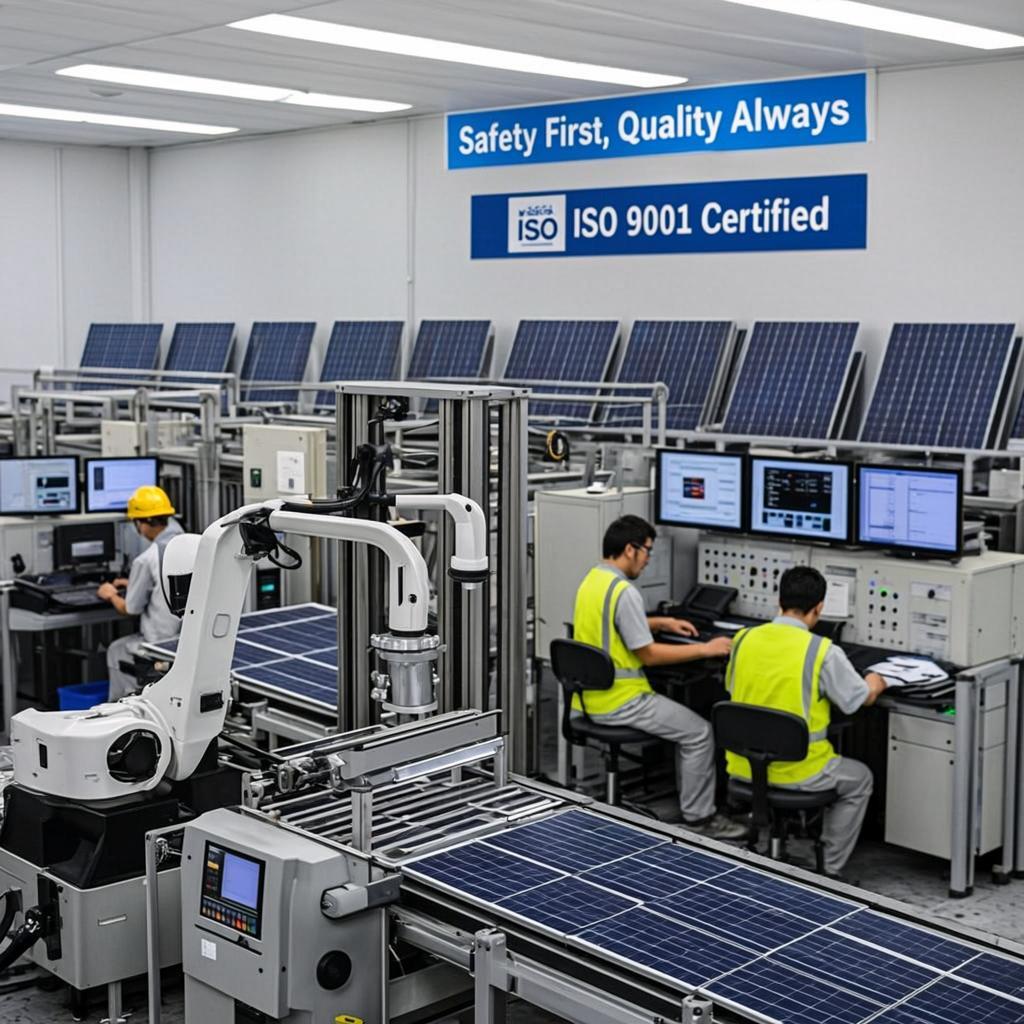
standard dimensions of solar panels
In the rapidly evolving renewable energy sector, understanding the standard dimensions of solar panels is crucial for procurement managers, engineers, and installers engaged in international trade.
Standard Dimensions of Solar Panels
Product Overview
In the rapidly evolving renewable energy sector, understanding the standard dimensions of solar panels is crucial for procurement managers, engineers, and installers engaged in international trade. These standardized sizes ensure seamless integration into diverse mounting systems, optimize logistics efficiency, and maximize energy yield across global projects. Predominantly framed in aluminum with tempered glass fronts, solar photovoltaic (PV) panels adhere to industry benchmarks set by organizations like the International Electrotechnical Commission (IEC) and manufacturers' consortia.
The most common standard dimensions of solar panels include 60-cell modules measuring approximately 1650mm x 992mm x 35-40mm and 72-cell variants at 1956mm x 992mm x 35-40mm, with half-cut and bifacial options following similar footprints for compatibility. These dimensions facilitate containerized shipping—typically 600-700 panels per 40-foot container—reducing costs and carbon footprints in B2B supply chains. Whether sourcing monocrystalline, polycrystalline, or PERC technology panels, adherence to these standards guarantees interoperability with racking systems from brands like IronRidge or Unirac, minimizing on-site customization and accelerating deployment timelines.
For large-scale utility projects or commercial rooftops, selecting panels with precise standard dimensions of solar panels aligns with building codes and structural load calculations, ensuring compliance in markets from Europe to Asia-Pacific. Our offerings emphasize high-efficiency modules (up to 22% conversion rates) within these norms, backed by rigorous testing to IEC 61215 and IEC 61730 standards for durability against PID, LID, and environmental stressors.
Key Features
- Universal Compatibility: All panels conform to standard dimensions of solar panels, fitting standard racking, inverters, and balance-of-system components worldwide.
- Optimized Weight Distribution: Lightweight frames (18-23kg per module) with even weight spread for easy handling and reduced structural reinforcement needs.
- High Transmittance Glass: 3.2mm anti-reflective coated glass enhances light capture without altering core dimensions.
- MC4-Compatible Junction Boxes: Bypass diodes and IP68-rated cables integrated seamlessly into the standard frame profile.
- Temperature-Resistant Framing: Anodized aluminum resists corrosion, maintaining dimensional stability from -40°C to +85°C.
- Half-Cut Cell Technology: Reduces shading losses while preserving standard dimensions of solar panels for drop-in replacements.
- Bifacial Options: Dual-glass designs with identical front-facing dimensions for rear-side energy gains up to 30%.
These features position our solar panels as reliable choices for B2B buyers prioritizing scalability and long-term performance in diverse climates.
Technical Specifications
| Panel Type | Cell Count | Dimensions (L x W x H mm) | Weight (kg) | Power Output (W) | Efficiency (%) | Frame Type |
|---|---|---|---|---|---|---|
| Monocrystalline 60-Cell | 60 (Half-Cut) | 1650 x 992 x 35 | 19.5 | 370-400 | 20.5-21.5 | Anodized Aluminum, Silver |
| Monocrystalline 72-Cell | 72 (Half-Cut) | 1956 x 992 x 40 | 22.0 | 450-500 | 20.8-21.8 | Anodized Aluminum, Black |
| Polycrystalline 60-Cell | 60 | 1640 x 992 x 35 | 18.8 | 340-370 | 19.0-20.0 | Anodized Aluminum, Silver |
| Bifacial 60-Cell | 60 (PERC Half-Cut) | 1722 x 1134 x 30 | 21.5 | 400-450 | 21.0-22.0 | Dual-Glass, Frameless Option |
| 72-Cell Commercial | 72 | 1961 x 991 x 40 | 22.5 | 480-540 | 21.2-22.5 | Anodized Aluminum, Silver |
| Half-Cell 120 (60x2) | 120 | 1698 x 1002 x 35 | 20.2 | 390-420 | 21.5-22.0 | Anodized Aluminum, Black |
These standard dimensions of solar panels are certified under UL, TUV, and CE, with tolerances of ±2mm to ensure precise array configurations. Custom variations available upon request for non-standard applications.
Application Scenarios
Residential Rooftops
Compact 60-cell panels with standard dimensions of solar panels (1650x992mm) ideal for space-constrained homes, enabling 5-10kW systems with minimal aesthetic disruption.
Commercial & Industrial
Larger 72-cell modules (1956x992mm) suit flat roofs and carports, supporting 50kW+ arrays with optimized ground coverage ratios for high ROI.
Utility-Scale Solar Farms
High-volume deployment of dimensionally consistent panels reduces installation time by 20-30%, compatible with single-axis trackers for enhanced yield.
Off-Grid & Mobile Installations
Portable frames within standard sizes power remote telecom sites, EVs, and agrivoltaic setups, withstanding wind loads up to 2400Pa.
Floating Solar Projects
Bifacial panels adhering to standard dimensions of solar panels float on HDPE pontoons, leveraging water cooling for 10-15% efficiency boosts.
Versatility across these scenarios underscores the strategic value of standardized sizing in global B2B solar trade.
Advantages
Opting for products aligned with standard dimensions of solar panels delivers multifaceted benefits for international buyers. First, logistical predictability: Standardized footprints enable precise palletizing and container loading, slashing freight costs by up to 15% on transpacific or transatlantic routes. Second, supply chain reliability—interchangeability across Tier 1 manufacturers like Jinko, Trina, and LONGi mitigates shortages and price volatility.
Performance-wise, these dimensions correlate with optimal cell interconnects, minimizing resistive losses and boosting specific power (W/m²). Installers benefit from reduced labor hours, as pre-engineered clamps and rails fit universally, cutting project CAPEX. Environmentally, standardized production scales efficiencies in recycling, with 95% material recoverability per EU PV Cycle guidelines.
Financially, panels in these sizes qualify for incentives like the U.S. ITC or EU feed-in tariffs without dimensional audits. Longevity is assured: 30-year linear power warranties backed by salt mist and ammonia corrosion tests, ensuring <80% output retention. In essence, embracing standard dimensions of solar panels future-proofs investments in the 1.7TW global PV pipeline.
Why Choose Us
As a premier exporter specializing in standard dimensions of solar panels, we partner with leading silicon wafer producers to deliver bankable modules with 12-25 year product warranties. Our ISO 9001-certified facilities in Southeast Asia ensure rapid turnaround—MOQ 100kW with lead times under 4 weeks. Rigorous EL testing and flash report transparency build trust, while OHSAS 18001 compliance safeguards workforces.
We excel in customization within standards, offering anti-dumping compliant origins and multimodal shipping to 150+ ports. Audited by DNV and Bureau Veritas, our track record includes 2GW+ supplied to EPCs in the Middle East and Americas. Competitive LCOE through vertical integration positions us as your strategic ally in decarbonization goals.
FAQ
What are the most common standard dimensions of solar panels?
The industry standards are 1650-1722mm length x 992-1134mm width x 30-40mm thickness for 60/72-cell modules, accommodating 90% of installations.
Do all manufacturers follow these standard dimensions of solar panels?
Yes, Tier 1 brands adhere closely, with ±3% variances to maintain ecosystem compatibility.
Can I mix different standard dimensions of solar panels in one array?
Possible with string inverters, but matched dimensions optimize performance; consult engineers for DC clipping analysis.
How do standard dimensions affect shipping?
They enable 31-35 panels per Euro-pallet and 600+/40' HQ, maximizing volume efficiency.
Are there emerging standards for next-gen panels?
Yes, 210mm wafer-based modules trend toward 2382x1134mm for 72-cell equivalents, still aligning with racking evolutions.
What certifications validate these standard dimensions of solar panels?
IEC 61215/61730 for mechanical load, UL 1703 for fire rating, and ISO 4017 for frame tolerances.
Related product
- English
- Françai
- Español
- Deutsch
- Română
- العربية
- 한국어
- 日本語
- Italiano
- Português
- Gaeilge
- Dansk
- Čeština
- Русский
- Afrikaans
- Euskara
- Català
- Esperanto
- हिन्दी
- Ελληνικά
- Bahasa Melayu
- Polski
- Српски
- Kiswahili
- ภาษาไทย
- Tiếng Việt
- Türkçe
- Svenska
- Cymraeg
- Slovenčina
- Latviešu
- Malti
- Magyar
- Galego
- ગુજરાતી
- Eesti Keel
- বাংলা
- Shqip
- беларуская мова
- Nederlands
- Tagalog
- ქართული
- Íslenska
- Kreyòl Ayisyen
- Lietuvių
- Norsk
- slovenščina
- தமிழ்
- Українська
- ײִדיש
- اردو
- తెలుగు
- فارسی
- македонски
- ಕನ್ನಡ
- Bahasa Indonesia
- עברית
- Suomi
- Hrvatski
- Български
- Azerbaijani