

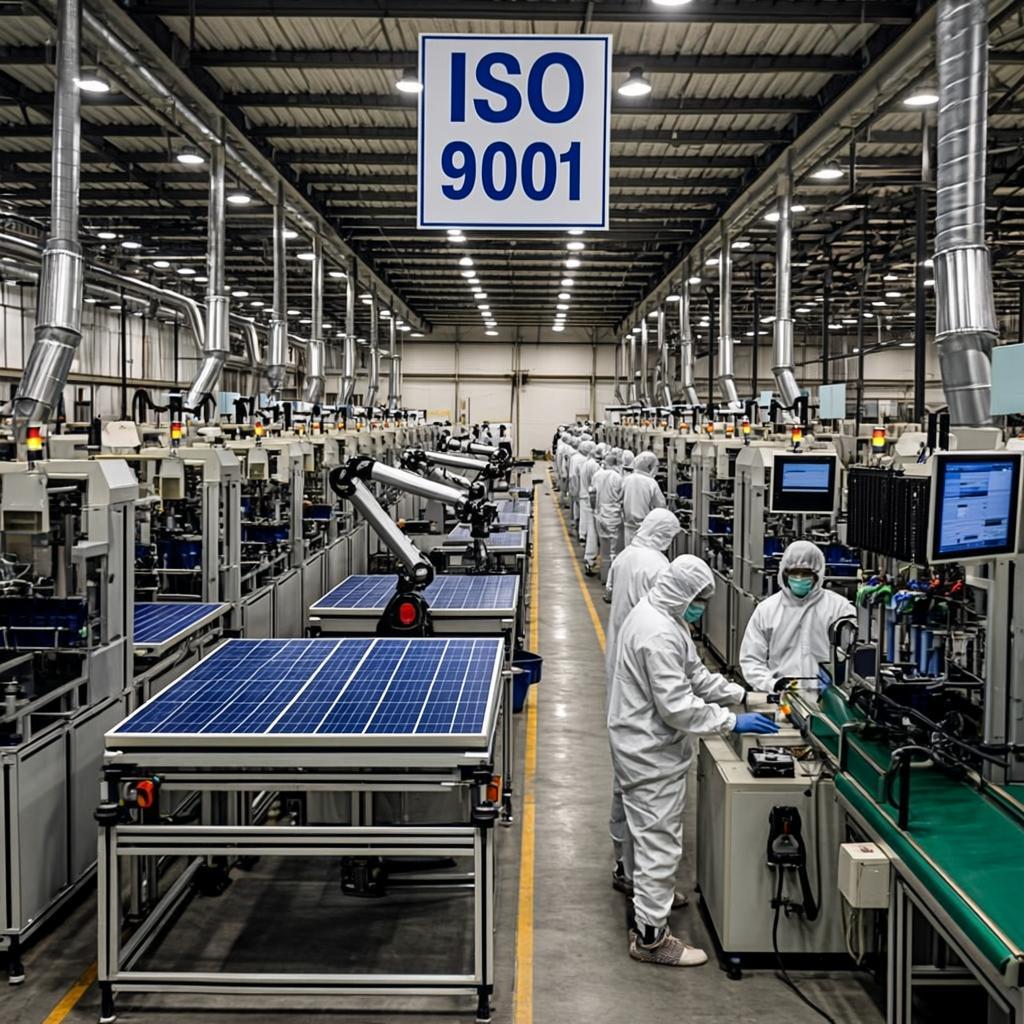
solar panels needed to run a house
Determining the solar panels needed to run a house requires a precise assessment of energy consumption, location, and system efficiency. Our premium monocrystalline and polycrystalline solar panels
Solar Panels Needed to Run a House
1. Product Overview
Determining the solar panels needed to run a house requires a precise assessment of energy consumption, location, and system efficiency. Our premium monocrystalline and polycrystalline solar panels are engineered specifically for residential applications, providing reliable power generation to meet the daily demands of an average household. Whether you're powering a 3-bedroom home with appliances, lighting, HVAC systems, and electronics, or scaling up for larger estates, our solutions deliver the optimal number and capacity of panels.
For a typical U.S. household consuming 30 kWh per day, approximately 20-30 high-efficiency 400W panels are the solar panels needed to run a house effectively, depending on sunlight hours (4-6 peak hours daily). We offer customizable kits that include inverters, mounting systems, and batteries for complete off-grid or grid-tied setups. These panels boast efficiencies up to 22%, ensuring maximum energy harvest from limited roof space. Certified to international standards like IEC 61215 and UL 1703, our products guarantee long-term performance in diverse climates, from sunny deserts to temperate regions.
Ideal for B2B distributors, installers, and developers in international trade, our solar panels minimize payback periods to 5-7 years through superior durability and output. By selecting the right solar panels needed to run a house, businesses can offer clients energy independence, reducing reliance on volatile grid prices and fossil fuels.
2. Key Features
- High-Efficiency Cells: Monocrystalline PERC technology achieves 20-22% efficiency, reducing the total solar panels needed to run a house and maximizing ROI.
- Anti-PID and Salt Mist Corrosion Resistance: Ensures reliable performance in coastal or humid environments, extending lifespan beyond 25 years.
- Tempered Glass and Aluminum Frame: 3.2mm low-iron glass with anodized aluminum framing withstands hail up to 25mm and wind loads up to 5400Pa.
- Bifacial Options Available: Capture reflected light from both sides, boosting output by up to 30%—perfect for ground-mounted systems powering homes.
- Smart Monitoring Integration: Compatible with Wi-Fi modules for real-time app-based tracking of energy production from your solar panels needed to run a house.
- Multiple Certifications: TUV, CE, INMETRO, and MCS approved, facilitating seamless export and installation worldwide.
- Half-Cut Cell Design: Reduces shading losses and micro-cracks, optimizing performance for residential rooftops.
3. Technical Specifications
| Parameter | 400W Monocrystalline | 500W Monocrystalline | 550W Bifacial |
|---|---|---|---|
| Maximum Power (Pmax) | 400W | 500W | 550W (+30% bifacial gain) |
| Module Efficiency | 20.5% | 21.3% | 22.1% |
| Cell Type | Half-cut PERC Mono | Half-cut PERC Mono | Half-cut N-Type Bifacial |
| Dimensions (L x W x H) | 1722 x 1134 x 30mm | 2094 x 1038 x 35mm | 2382 x 1134 x 30mm |
| Weight | 21.5kg | 25.8kg | 31.8kg |
| Operating Temperature | -40°C to +85°C | -40°C to +85°C | -40°C to +85°C |
| Maximum System Voltage | 1000V DC | 1500V DC | 1500V DC |
| Warranty | 12 years product, 30 years linear power | 12 years product, 30 years linear power | 12 years product, 30 years linear power |
| Certifications | IEC 61215, UL 1703, CE | IEC 61215, UL 1703, CE | IEC 61215, UL 1703, CE, TUV |
These specifications position our panels as the ideal solar panels needed to run a house, with scalability for systems from 5kW to 20kW+.
4. Application Scenarios
Our solar panels needed to run a house excel in various residential setups. For urban rooftops with limited space, high-efficiency 400W panels generate 1.6-2.4kWh daily per unit, requiring just 15-20 panels for a 30kWh household. In rural off-grid homes, pair 500W panels with lithium batteries to power essentials like refrigerators, pumps, and lighting without utility dependence.
Grid-tied systems benefit from zero-export inverters, allowing excess energy sales back to the grid. Developers in emerging markets use our bifacial panels for ground-mount arrays on estates, capturing ground-reflected light for enhanced yields. Custom configurations account for regional factors: in high-latitude areas like Europe, fewer panels suffice with optimal tilt; in equatorial zones, flat mounting maximizes output.
Commercial applications extend to holiday homes, farmhouses, and eco-villages, where modular designs facilitate easy expansion as energy needs grow.
5. Advantages
Choosing the precise solar panels needed to run a house from our range offers unmatched benefits. First, superior efficiency translates to fewer panels, slashing installation costs by 20-30% compared to lower-grade alternatives. Our anti-LID (Light Induced Degradation) technology ensures first-year degradation under 2%, maintaining 84.8% output after 30 years.
Environmentally, these panels reduce CO2 emissions by 35 tons over their lifespan per 10kW system, supporting global sustainability goals. Economically, households save $1,500-2,500 annually on bills, with incentives like ITC rebates accelerating returns. Durability features like bypass diodes minimize hotspot risks, while IP68 junction boxes ensure waterproofing.
For B2B partners, our panels provide a competitive edge through bulk pricing, private labeling, and rapid lead times, enabling distributors to dominate the residential solar market.
6. Why Choose Us
As a leading manufacturer with 15+ years in photovoltaic production, we supply the most reliable solar panels needed to run a house to over 50 countries. Our Tier 1 status, verified by BNEF, guarantees bankable quality and performance ratios above 98%. State-of-the-art automated lines produce 5GW annually, ensuring consistent supply for large-scale projects.
We offer end-to-end support: free system design tools to calculate exact solar panels needed to run a house based on load profiles, comprehensive testing labs, and flexible MOQs from 100 panels. Global logistics with FOB/CIF terms and ISO 9001-certified quality control minimize risks. Partner with us for innovation, like our upcoming TOPCon panels exceeding 23% efficiency.
7. FAQ
Q: How many solar panels are needed to run a house?
A: It varies by consumption and location. A 10kW system (25 x 400W panels) powers most average homes using 30kWh/day in sunny areas. Use our calculator for precise solar panels needed to run a house.
Q: What factors affect the solar panels needed to run a house?
A: Daily energy use, peak sun hours (3-7), roof orientation, shading, and efficiency. Northern latitudes may need 20% more panels than equatorial regions.
Q: Are these panels suitable for off-grid homes?
A: Yes, compatible with hybrid inverters and batteries. A 15kW array with 20kWh storage fully powers off-grid houses.
Q: What is the lifespan of your solar panels?
A: 30+ years, with linear power warranties guaranteeing 80% output. Rigorous testing simulates 25 years of exposure.
Q: Do you offer customization for international markets?
A: Absolutely. Panels tailored to local standards (e.g., AS/NZS for Australia), with voltages for 50/60Hz grids.
Q: How do bifacial panels impact the solar panels needed to run a house?
A: They increase yield by 10-30%, potentially reducing total panels by 15-20% for the same output.
Q: What warranties and support do you provide?
A: 12-year product, 30-year performance warranties, plus remote diagnostics and spare parts availability worldwide.
Related product
- English
- Françai
- Español
- Deutsch
- Română
- العربية
- 한국어
- 日本語
- Italiano
- Português
- Gaeilge
- Dansk
- Čeština
- Русский
- Afrikaans
- Euskara
- Català
- Esperanto
- हिन्दी
- Ελληνικά
- Bahasa Melayu
- Polski
- Српски
- Kiswahili
- ภาษาไทย
- Tiếng Việt
- Türkçe
- Svenska
- Cymraeg
- Slovenčina
- Latviešu
- Malti
- Magyar
- Galego
- ગુજરાતી
- Eesti Keel
- বাংলা
- Shqip
- беларуская мова
- Nederlands
- Tagalog
- ქართული
- Íslenska
- Kreyòl Ayisyen
- Lietuvių
- Norsk
- slovenščina
- தமிழ்
- Українська
- ײִדיש
- اردو
- తెలుగు
- فارسی
- македонски
- ಕನ್ನಡ
- Bahasa Indonesia
- עברית
- Suomi
- Hrvatski
- Български
- Azerbaijani