

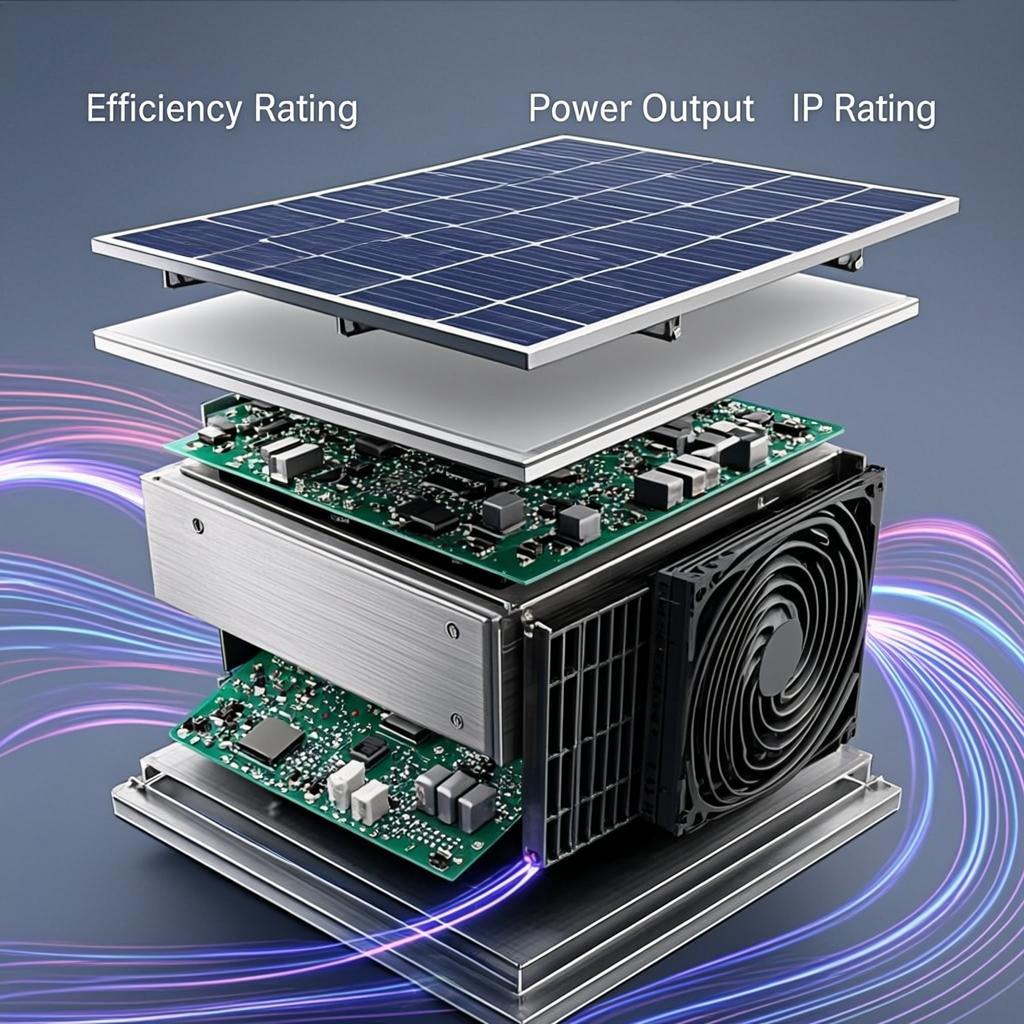
solar panels how they are made
In the realm of renewable energy, understanding solar panels how they are made is essential for B2B buyers seeking reliable, high-efficiency photovoltaic solutions. Our solar panels are engineered
Solar Panels: How They Are Made – Precision Manufacturing for Superior Performance
1. Product Overview
In the realm of renewable energy, understanding solar panels how they are made is essential for B2B buyers seeking reliable, high-efficiency photovoltaic solutions. Our solar panels are engineered through a meticulous, multi-stage manufacturing process that transforms raw silicon into robust, high-output modules ready for global deployment. This process begins with the purification of metallurgical-grade silicon into polysilicon, a critical feedstock produced in high-temperature chemical vapor deposition reactors.
The journey continues with the creation of silicon ingots using the Czochralski method, where a seed crystal is dipped into molten silicon and slowly pulled upward, forming a single-crystal ingot up to 300mm in diameter. These ingots are then sliced into ultra-thin wafers—typically 150-180 micrometers thick—using diamond wire saws for precision and minimal material waste. Each wafer undergoes chemical cleaning and texturing to enhance light absorption, setting the foundation for photovoltaic cell efficiency.
Cell fabrication involves phosphorus diffusion to create n-type layers, plasma etching for anti-reflective coatings, and metallization via screen printing of silver-aluminum pastes. These cells are rigorously tested for electrical performance before assembly into modules. Stringing cells with automated robotic systems, laminating under vacuum with EVA encapsulant and backsheets, and framing with anodized aluminum completes the process. Every panel undergoes electroluminescence imaging, flash testing, and thermal cycling to ensure durability exceeding 25 years. By demystifying solar panels how they are made, we empower international trade partners to select products backed by cutting-edge production standards, delivering up to 22% efficiency and PID resistance for demanding commercial applications.
2. Key Features
- Advanced Silicon Purification: Starting with 99.9999% pure polysilicon, our process ensures minimal impurities that could degrade performance, a cornerstone of solar panels how they are made at industrial scale.
- Precision Wafer Slicing: Multi-wire saw technology yields wafers with <10μm thickness variation, optimizing material yield by over 90% and reducing costs for B2B bulk orders.
- PERC Cell Technology: Passivated Emitter Rear Cell design boosts efficiency by reflecting light back through the cell, achieving 22-23% conversion rates standard in our modules.
- Automated Stringing and Layup: Robotic precision aligns cells with 0.1mm accuracy, minimizing micro-cracks and enhancing mechanical reliability during transport and installation.
- High-Transmission Glass and EVA: Tempered glass with 91.5% transmittance and UV-stabilized encapsulants protect against environmental stressors, extending lifespan in harsh climates.
- Comprehensive Quality Assurance: Inline metrology and AI-driven defect detection throughout production, ensuring each panel meets IEC 61215 and UL 1703 certifications.
- Customizable Configurations: From monofacial to bifacial designs, tailored to client specifications while adhering to proven manufacturing protocols.
3. Technical Specifications
| Parameter | Specification | Details |
|---|---|---|
| Module Type | Monocrystalline PERC | Half-cut cell design for reduced resistance losses |
| Maximum Power (Pmax) | 550-585W | Under STC: 1000W/m², 25°C, AM 1.5 |
| Module Efficiency | 21.5-22.5% | Optimized through advanced manufacturing steps |
| Cell Size | 182mm x 182mm (M10) | 158 half-cells per module |
| Dimensions (L x W x H) | 2278 x 1134 x 30mm | Lightweight aluminum frame, 28kg weight |
| Operating Temperature | -40°C to +85°C | Temperature coefficient: -0.35%/°C |
| Warranty | 12 years product, 30 years linear power | First-year degradation <2%, annual <0.55% |
| Maximum System Voltage | 1500V DC | IP68 junction box for superior waterproofing |
| Wind/Snow Load | 2400Pa / 5400Pa | Test-proven for extreme weather resilience |
| Certifications | IEC 61215, IEC 61730, UL 1703 | Full compliance from raw material to finished panel |
4. Application Scenarios
Delving into solar panels how they are made reveals their versatility across B2B sectors. In commercial rooftops, our panels integrate seamlessly with flat or tilted installations, powering office complexes with minimal shading losses due to half-cut cell technology. Utility-scale solar farms benefit from high power density and bifacial options, capturing reflected light from ground surfaces to boost yields by 10-30%.
Industrial applications, such as manufacturing plants and warehouses, leverage our robust framing for ground-mounted arrays enduring heavy snow loads. Off-grid scenarios in remote mining operations or agricultural greenhouses utilize these panels' wide temperature range and low-light performance. Floating solar projects on reservoirs employ our PID-resistant designs to combat moisture ingress, while transportation hubs like airports deploy them for shaded canopies with superior wind resistance.
For emerging markets, our scalable production mirrors global standards, enabling cost-effective deployments in residential farms or hybrid microgrids, always rooted in the precision of solar panels how they are made.
5. Advantages
- Superior Efficiency from Core Processes: Texturing and PERC passivation in cell production maximize photon capture, outperforming standard modules by 1-2%.
- Cost-Effective Scalability: Automated lines produce 10GW annually, driving down per-watt costs without compromising quality.
- Enhanced Durability: Multi-layer lamination and edge sealing resist microcracking and delamination, validated by 2400-cycle thermal tests.
- Supply Chain Transparency: Full traceability from silicon sourcing to final assembly, aligning with ESG standards for international buyers.
- Performance in Real-World Conditions: Low LID/LETID through controlled firing processes ensures stable output over decades.
- Environmental Responsibility: 95% recyclable materials and low-carbon manufacturing footprint, supporting sustainable procurement.
6. Why Choose Us
As leaders in photovoltaic manufacturing, we excel in revealing solar panels how they are made through transparent, state-of-the-art facilities audited to ISO 9001 and ISO 14001. Our 20+ years of expertise deliver customized solutions for Tier 1 banks and EPC firms worldwide, with lead times under 4 weeks for container loads.
We prioritize vertical integration—from polysilicon to modules—ensuring consistent quality and competitive pricing. Rigorous R&D invests in next-gen TOPCon and HJT cells, future-proofing your projects. Partner with us for unmatched reliability, backed by global logistics networks and dedicated technical support, making us the preferred source for discerning B2B clients exploring solar panels how they are made.
7. FAQ
Q: What are the primary stages in solar panels how they are made?
A: Key stages include silicon purification, ingot growth, wafer slicing, cell diffusion and metallization, stringing, lamination, and final testing—each optimized for efficiency and reliability.
Q: How does PERC technology factor into solar panels how they are made?
A: During cell fabrication, a dielectric passivation layer is added to the rear, reflecting unused light and reducing recombination losses for higher efficiency.
Q: What quality controls are applied in solar panels how they are made?
A: Electroluminescence inspection, IV curve tracing, and salt mist testing ensure defect-free panels meeting international standards.
Q: Can manufacturing processes be customized for bifacial solar panels?
A: Yes, by altering rear metallization and glass selection during assembly, achieving 70-80% bifaciality without altering core wafer production.
Q: How long does the full production cycle take for solar panels how they are made?
A: From silicon to finished module, approximately 4-6 weeks in high-volume facilities, with rapid scaling for large orders.
Q: What sustainability measures are in solar panels how they are made?
A: Water recycling at 95%, zero-waste wafer production, and carbon-neutral energy use in factories minimize environmental impact.
Q: How do manufacturing tolerances affect panel performance?
A: <2mm cell alignment and uniform busbar printing ensure power output variation under 2W, guaranteeing project ROI.
Related product
- English
- Françai
- Español
- Deutsch
- Română
- العربية
- 한국어
- 日本語
- Italiano
- Português
- Gaeilge
- Dansk
- Čeština
- Русский
- Afrikaans
- Euskara
- Català
- Esperanto
- हिन्दी
- Ελληνικά
- Bahasa Melayu
- Polski
- Српски
- Kiswahili
- ภาษาไทย
- Tiếng Việt
- Türkçe
- Svenska
- Cymraeg
- Slovenčina
- Latviešu
- Malti
- Magyar
- Galego
- ગુજરાતી
- Eesti Keel
- বাংলা
- Shqip
- беларуская мова
- Nederlands
- Tagalog
- ქართული
- Íslenska
- Kreyòl Ayisyen
- Lietuvių
- Norsk
- slovenščina
- தமிழ்
- Українська
- ײִדיש
- اردو
- తెలుగు
- فارسی
- македонски
- ಕನ್ನಡ
- Bahasa Indonesia
- עברית
- Suomi
- Hrvatski
- Български
- Azerbaijani