

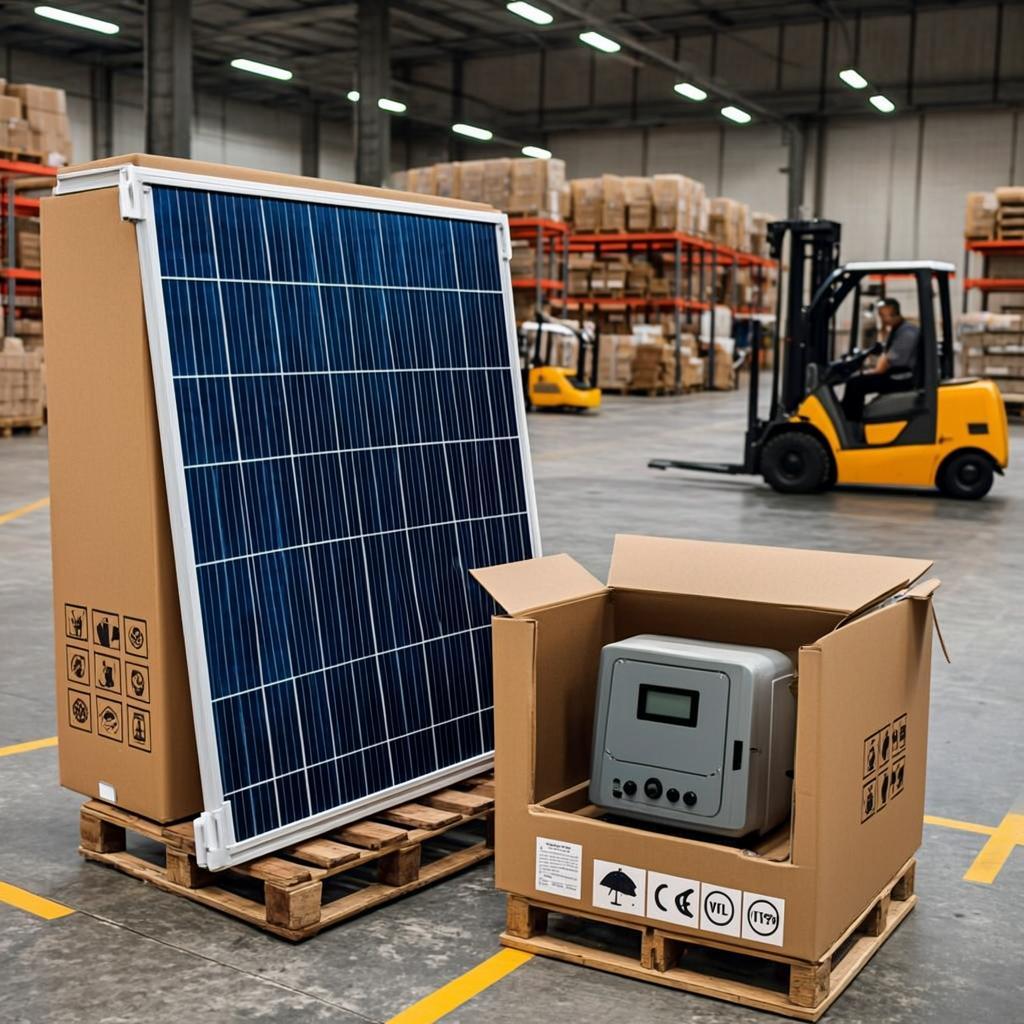
solar panel specs comparison
In the rapidly evolving solar energy market, conducting a thorough solar panel specs comparison is essential for B2B buyers seeking optimal performance, cost-effectiveness, and long-term reliability.
Solar Panel Specs Comparison: Your Guide to Informed Purchasing Decisions
Product Overview
In the rapidly evolving solar energy market, conducting a thorough solar panel specs comparison is essential for B2B buyers seeking optimal performance, cost-effectiveness, and long-term reliability. This comprehensive guide compares three leading solar panel models—our premium 400W Monocrystalline PERC panel (Model MP-400), the standard 400W Polycrystalline panel (Model PP-400), and the high-output 550W Half-Cut Monocrystalline panel (Model HC-550). These models represent the diversity available in international trade, catering to residential, commercial, and utility-scale projects.
Key factors in any solar panel specs comparison include power output, efficiency, temperature coefficients, degradation rates, and certifications. Our panels adhere to international standards such as IEC 61215, IEC 61730, and UL 1703, ensuring compliance for global markets including Europe, North America, and Asia-Pacific. By evaluating these specifications side-by-side, procurement managers can align choices with project requirements, budget constraints, and environmental conditions. Whether you're sourcing for large-scale solar farms or distributed generation systems, this solar panel specs comparison highlights how modern photovoltaic (PV) technologies deliver superior energy yield and return on investment (ROI).
Advancements in cell technology, such as PERC (Passivated Emitter and Rear Cell) and half-cut designs, have narrowed performance gaps between monocrystalline and polycrystalline options. This overview sets the stage for a detailed breakdown, empowering importers and distributors to make data-driven decisions that minimize total cost of ownership (TCO) over 25+ years.
Key Features
- High-Efficiency PERC Technology: Model MP-400 boasts up to 21.5% module efficiency, maximizing energy harvest in limited rooftop spaces—critical for urban commercial installations.
- Half-Cut Cell Design: Exclusive to Model HC-550, this reduces resistive losses by 75% and shading effects, ideal for ground-mounted arrays in high-shade environments.
- Tempered Glass and Robust Framing: All models feature 3.2mm AR-coated glass and anodized aluminum frames, withstanding hail up to 25mm diameter and wind loads exceeding 5400 Pa.
- Low-Light Performance: Superior PID (Potential Induced Degradation) resistance ensures consistent output under diffuse irradiance, a standout in solar panel specs comparison for cloudy regions.
- Bifacial Compatibility: Model HC-550 supports bifacial configurations, capturing up to 30% additional rear-side generation on reflective surfaces like white gravel.
- Extended Warranties: 12-year product and 30-year linear power warranties across the lineup, backed by third-party testing from TÜV Rheinland.
- Anti-Soiling Coating: Reduces dust accumulation by 20%, minimizing cleaning frequency in desert or industrial settings.
Technical Specifications
Delve into the precise details with this solar panel specs comparison table, showcasing head-to-head metrics for power, dimensions, electrical characteristics, and mechanical properties. Data is STC (Standard Test Conditions: 1000 W/m², 25°C, AM 1.5) certified.
| Parameter | Model MP-400 (Mono PERC) | Model PP-400 (Poly) | Model HC-550 (Half-Cut Mono) |
|---|---|---|---|
| Nominal Power (Pmax) | 400W | 400W | 550W |
| Module Efficiency | 21.5% | 18.7% | 21.3% |
| Cell Type | Monocrystalline PERC, 144 half-cells (6x24) | Polycrystalline, 72 cells (6x12) | Monocrystalline, 144 half-cells (6x24) |
| Dimensions (L x W x H) | 1722 x 1134 x 30 mm | 1956 x 992 x 35 mm | 2278 x 1134 x 30 mm |
| Weight | 21.5 kg | 22.0 kg | 28.3 kg |
| Voc (Open Circuit Voltage) | 49.5 V | 49.3 V | 50.6 V |
| Isc (Short Circuit Current) | 10.55 A | 10.45 A | 13.95 A |
| Vmp (Voltage at Max Power) | 41.2 V | 41.0 V | 42.1 V |
| Imp (Current at Max Power) | 9.71 A | 9.76 A | 13.06 A |
| Temperature Coefficient (Pmax) | -0.35%/°C | -0.40%/°C | -0.34%/°C |
| NOCT | 45±2°C | 47±2°C | 44±2°C |
| Max System Voltage | 1500V DC | 1000V DC | 1500V DC |
| Junction Box | IP68, 3 diodes | IP67, 3 diodes | IP68, 3 diodes |
| Annual Degradation | 1st year: 1%, 2.5%/25 years | 1st year: 2%, 3%/25 years | 1st year: 1%, 2%/30 years |
| Certifications | IEC, UL, CE, INMETRO | IEC, CE | IEC, UL, CE, AS/NZS |
Application Scenarios
This solar panel specs comparison reveals tailored fits for diverse B2B applications. Model MP-400 excels in space-constrained commercial rooftops, where its high efficiency (21.5%) translates to 15-20% more kWh per square meter compared to polycrystalline alternatives. Ideal for office buildings, warehouses, and retail chains in temperate climates.
For cost-sensitive utility-scale projects in sunny regions, Model PP-400 offers reliable performance at a lower upfront cost, suitable for ground-mounted farms exceeding 10MW. Its larger footprint accommodates high-volume deployments in emerging markets like India and the Middle East.
Model HC-550 shines in large-format arrays, including solar parks and agrivoltaic systems, leveraging half-cut cells to boost energy yield by 5-10% under partial shading from trackers or vegetation. Bifacial potential enhances viability for floating PV or reflective ground installations in Europe and Australia.
Off-grid and hybrid systems benefit from all models' low temperature coefficients, ensuring output stability from -40°C to +85°C—perfect for remote mining operations or island microgrids.
Advantages
Engaging in a meticulous solar panel specs comparison uncovers distinct advantages that drive superior project outcomes. Our MP-400 model outperforms in efficiency and aesthetics, with black-on-black framing for premium installations, reducing BOS (Balance of System) costs by optimizing inverter sizing.
Polycrystalline PP-400 provides economic advantages, with manufacturing yields 10-15% higher than mono, translating to competitive LCOE (Levelized Cost of Energy) under $0.03/kWh in high-irradiance zones. Half-cut HC-550 minimizes micro-cracks, extending field lifespan and lowering O&M expenses.
Across the board, these panels exhibit <2% first-year degradation, far below industry averages, ensuring predictable cash flows for IPPs (Independent Power Producers). Salt mist and ammonia resistance suits coastal or agricultural deployments, while fire class A rating enhances safety compliance.
Why Choose Us
As a tier-1 manufacturer with 15+ years in PV module production, we prioritize transparency in every solar panel specs comparison. Our facilities boast automated lines with >99% uptime, enabling flexible MOQs from 100kW pallets to full container loads. Vertically integrated supply chain—from silicon ingots to encapsulation—guarantees traceability via blockchain serialization.
We offer customized solutions, including TUV-audited power tolerances (±3W) and pre-assembly services for rapid deployment. Global logistics partners ensure DDP delivery worldwide, with stock in Rotterdam, Los Angeles, and Singapore hubs. Our engineering team provides free LCOE modeling based on your site's irradiance data, solidifying partnerships with 500+ distributors across 60 countries.
FAQ
Q: How does this solar panel specs comparison account for real-world performance?
A: Metrics include NOCT and temperature coefficients for field conditions, validated by PVEL Top Performer tests.
Q: What is the lead time for bulk orders post solar panel specs comparison?
A: 10-15 days for standard models, scalable to 100MW/month capacity.
Q: Are these panels compatible with high-voltage string inverters?
A: Yes, 1500V systems supported on MP-400 and HC-550, reducing cabling costs by 20%.
Q: How do warranties differ in this solar panel specs comparison?
A: MP-400 and HC-550 offer 30-year linear power (80% output), vs. 25 years on PP-400.
Q: Can I request samples for solar panel specs comparison?
A: Yes, nominal fees apply for 5-10 panels, with full specs sheets and EL imaging provided.
Q: What recycling standards apply?
A: Compliant with EU PV Cycle and SETO guidelines for 95% material recovery.
Related product
- English
- Françai
- Español
- Deutsch
- Română
- العربية
- 한국어
- 日本語
- Italiano
- Português
- Gaeilge
- Dansk
- Čeština
- Русский
- Afrikaans
- Euskara
- Català
- Esperanto
- हिन्दी
- Ελληνικά
- Bahasa Melayu
- Polski
- Српски
- Kiswahili
- ภาษาไทย
- Tiếng Việt
- Türkçe
- Svenska
- Cymraeg
- Slovenčina
- Latviešu
- Malti
- Magyar
- Galego
- ગુજરાતી
- Eesti Keel
- বাংলা
- Shqip
- беларуская мова
- Nederlands
- Tagalog
- ქართული
- Íslenska
- Kreyòl Ayisyen
- Lietuvių
- Norsk
- slovenščina
- தமிழ்
- Українська
- ײִדיש
- اردو
- తెలుగు
- فارسی
- македонски
- ಕನ್ನಡ
- Bahasa Indonesia
- עברית
- Suomi
- Hrvatski
- Български
- Azerbaijani