

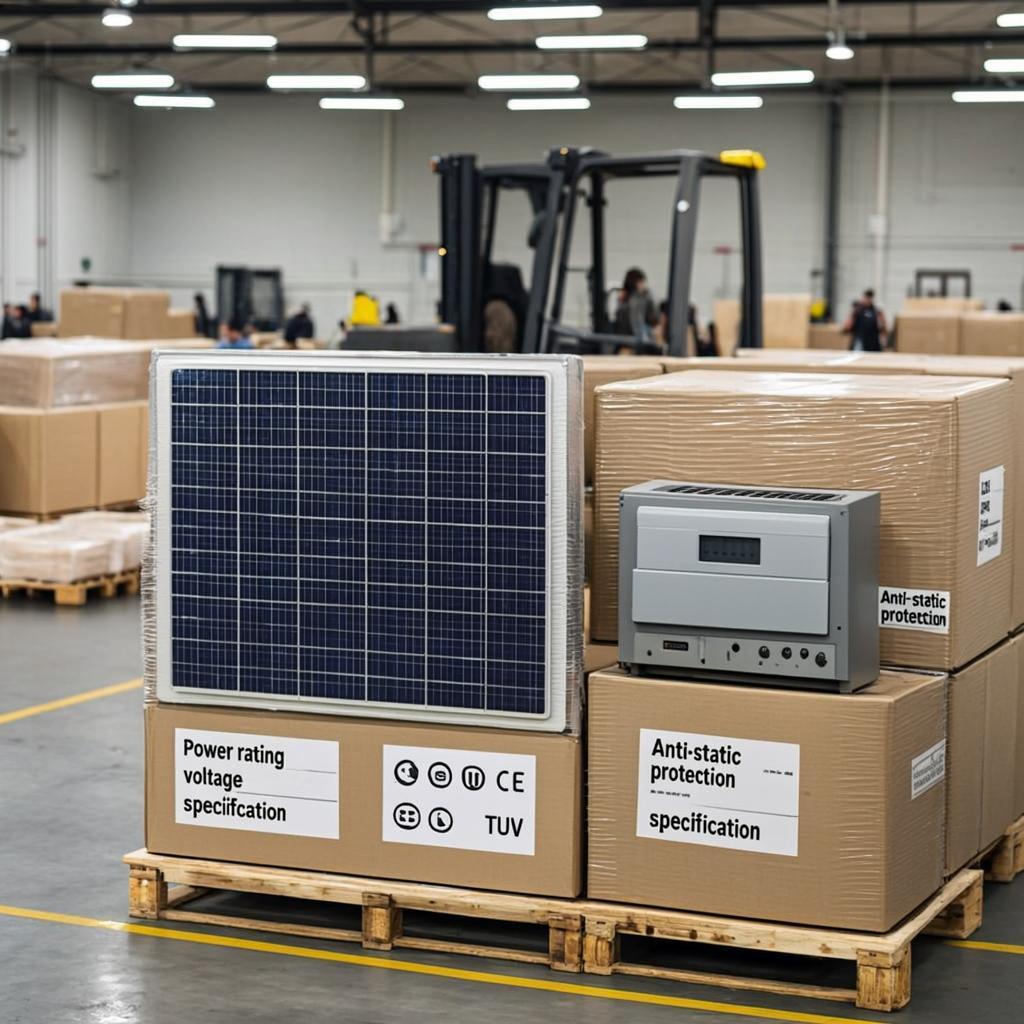
solar panel size and cost
When evaluating solar panel size and cost, businesses and industrial buyers must consider a balance between physical dimensions, power output, and long-term value. Our premium monocrystalline and
Solar Panel Size and Cost: Your Guide to Optimal Solar Investments
Product Overview
When evaluating solar panel size and cost, businesses and industrial buyers must consider a balance between physical dimensions, power output, and long-term value. Our premium monocrystalline and polycrystalline solar panels are engineered to meet diverse B2B needs, from large-scale commercial installations to off-grid industrial applications. Standard solar panel sizes typically range from compact 60-cell modules at approximately 1.65m x 1m (around 1.65m²) to larger 72-cell panels measuring 2m x 1m (about 2m²), with power ratings from 300W to 550W per panel.
Understanding solar panel size and cost dynamics is essential for accurate system design. Costs vary significantly based on panel efficiency (18-22% for high-end models), material quality, and market fluctuations, averaging $0.25-$0.50 per watt for bulk wholesale purchases. For instance, a standard 400W panel (size: 1.75m x 1.03m) might cost $100-$200 per unit, translating to $0.25-$0.50/W. Larger formats offer economies of scale, reducing installation costs per watt by up to 15%. Our panels undergo rigorous IEC 61215 and UL 1703 certifications, ensuring durability in harsh environments, with warranties up to 25 years on power output (80% minimum).
This comprehensive overview of solar panel size and cost helps procurement teams forecast budgets, optimize roof space, and maximize ROI. Whether scaling for utility projects or rooftop arrays, selecting the right size minimizes land use while controlling upfront and lifecycle expenses.
Key Features
- Versatile Sizes: Available in residential-friendly 60/72-cell formats and industrial 96/108 half-cut cell options, allowing precise matching of solar panel size and cost to project requirements.
- High Efficiency: Up to 22.5% conversion rates reduce the required panel count, directly impacting overall solar panel size and cost for equivalent energy yield.
- Anti-PID and Salt Mist Resistance: Ideal for coastal or high-humidity industrial sites, extending lifespan and stabilizing long-term costs.
- Low-Light Performance: Bifacial designs capture up to 30% more energy from reflected light, enhancing value in shaded or diffuse conditions.
- Easy Integration: Compatible with major inverters and racking systems, minimizing solar panel size and cost overruns during deployment.
- Temperature Coefficient: -0.35%/°C ensures reliable output in hot climates, safeguarding investment returns.
These features position our panels as a smart choice when analyzing solar panel size and cost trade-offs, delivering superior performance without premium pricing.
Technical Specifications
Below is a detailed table outlining common solar panel size and cost configurations. Prices are indicative wholesale rates (FOB) for minimum order quantities of 1000 units, subject to current market conditions.
| Model | Cell Type | Panel Size (L x W x T, mm) | Area (m²) | Power Output (W) | Efficiency (%) | Cost per Watt (USD/W) | Approx. Unit Cost (USD) | Warranty (Years) |
|---|---|---|---|---|---|---|---|---|
| SP-300M | Monocrystalline | 1650 x 992 x 35 | 1.64 | 300-320 | 18.5-19.5 | 0.35 | 105-112 | 12/25 |
| SP-400P | Polycrystalline | 1750 x 1038 x 35 | 1.82 | 390-410 | 18-19 | 0.30 | 117-123 | 12/25 |
| SP-450M-HC | Monocrystalline Half-Cut | 1961 x 992 x 35 | 1.95 | 440-460 | 20.5-21.5 | 0.28 | 123-129 | 15/30 |
| SP-540M-BF | Monocrystalline Bifacial | 2278 x 1134 x 30 | 2.58 | 530-550 | 21-22.5 | 0.32 | 170-176 | 15/30 |
| SP-600M-T | Monocrystalline TOPCon | 2382 x 1134 x 30 | 2.70 | 590-610 | 22-23 | 0.34 | 201-207 | 15/30 |
This table highlights how solar panel size and cost scale with technology—larger, higher-efficiency panels offer better $/W ratios for bulk buyers.
Application Scenarios
Selecting the optimal solar panel size and cost depends on your deployment context. For commercial rooftops (e.g., warehouses), 72-cell 400-450W panels (1.75m x 1m) maximize kWh/m², with costs around $0.30/W enabling payback in 4-6 years.
In ground-mounted utility farms, oversized 108-cell bifacial panels (2.3m x 1.1m, 500W+) reduce racking needs by 10-15%, lowering total solar panel size and cost per MW. Off-grid industrial sites, such as mining operations, benefit from compact 300W modules for portable setups, balancing size constraints with affordable pricing.
Carports and agrivoltaics favor half-cut designs to minimize shading losses, while marine applications use salt-resistant 400W panels. Across scenarios, our panels adapt seamlessly, ensuring solar panel size and cost aligns with energy demands and site logistics.
Advantages
Our solar panels excel in solar panel size and cost optimization, offering:
- Cost Predictability: Tiered pricing with volume discounts (up to 20% for 10MW+ orders) and transparent $/W breakdowns.
- Space Efficiency: High-wattage densities mean fewer panels, cutting labor and BOS (balance of system) expenses by 12-18%.
- Superior Durability: PID-free cells and 2400Pa wind load rating reduce degradation to <0.55%/year, preserving value over decades.
- Global Compliance: CE, TUV, and INMETRO certifications streamline international trade.
- Scalable Supply: From 1MW pilots to 100MW turns, with lead times under 4 weeks.
These advantages make our offerings a benchmark for solar panel size and cost evaluations in B2B markets.
Why Choose Us
As a Tier 1 manufacturer with 15+ years in photovoltaics, we specialize in tailoring solar panel size and cost to enterprise needs. Our state-of-the-art facilities produce 5GW annually, ensuring consistent quality via automated PERC and TOPCon lines. We provide customized size configurations, detailed LCOE (levelized cost of energy) modeling, and financing partnerships to optimize your total ownership costs.
Unlike commodity suppliers, our engineering team offers free system audits, factoring in local irradiance, tilt angles, and tariffs. With exports to 50+ countries and a 99.5% on-time delivery rate, we deliver reliability that underpins your green energy strategy. Choosing us means mastering solar panel size and cost for maximum profitability.
FAQ
Q: How does solar panel size affect overall system cost?
A: Larger panels (e.g., 72-cell vs. 60-cell) reduce the number needed for the same capacity, lowering mounting hardware and labor costs by 10-20%, though transport logistics must be considered in solar panel size and cost planning.
Q: What factors influence current solar panel costs per watt?
A: Polysilicon prices, supply chain stability, and efficiency gains drive $/W rates. Expect $0.25-$0.40 for monocrystalline in 2024, with bulk deals enhancing solar panel size and cost value.
Q: Are there standard solar panel sizes for international projects?
A: Yes, IEC norms favor 1650x992mm (60-cell) and 1961x992mm (72-cell); custom sizes available to match regional racking standards without inflating solar panel size and cost.
Q: How to calculate ROI considering solar panel size and cost?
A: Use PVsyst or SAM tools: Divide system cost (panels + BOS at ~$1.0-$1.5/W total) by annual kWh yield, factoring incentives. High-efficiency panels shorten payback to 3-5 years.
Q: Do bifacial panels justify higher upfront costs?
A: Absolutely—for ground-mounts, 10-30% bifacial gain offsets 5-10% premium, improving solar panel size and cost metrics in reflective environments like deserts.
Q: What warranties cover solar panel size and cost risks?
A: Product (12-15 years), linear power (25-30 years at 84.8% retention), ensuring predictable performance and value retention.
Related product
- English
- Françai
- Español
- Deutsch
- Română
- العربية
- 한국어
- 日本語
- Italiano
- Português
- Gaeilge
- Dansk
- Čeština
- Русский
- Afrikaans
- Euskara
- Català
- Esperanto
- हिन्दी
- Ελληνικά
- Bahasa Melayu
- Polski
- Српски
- Kiswahili
- ภาษาไทย
- Tiếng Việt
- Türkçe
- Svenska
- Cymraeg
- Slovenčina
- Latviešu
- Malti
- Magyar
- Galego
- ગુજરાતી
- Eesti Keel
- বাংলা
- Shqip
- беларуская мова
- Nederlands
- Tagalog
- ქართული
- Íslenska
- Kreyòl Ayisyen
- Lietuvių
- Norsk
- slovenščina
- தமிழ்
- Українська
- ײִדיש
- اردو
- తెలుగు
- فارسی
- македонски
- ಕನ್ನಡ
- Bahasa Indonesia
- עברית
- Suomi
- Hrvatski
- Български
- Azerbaijani