

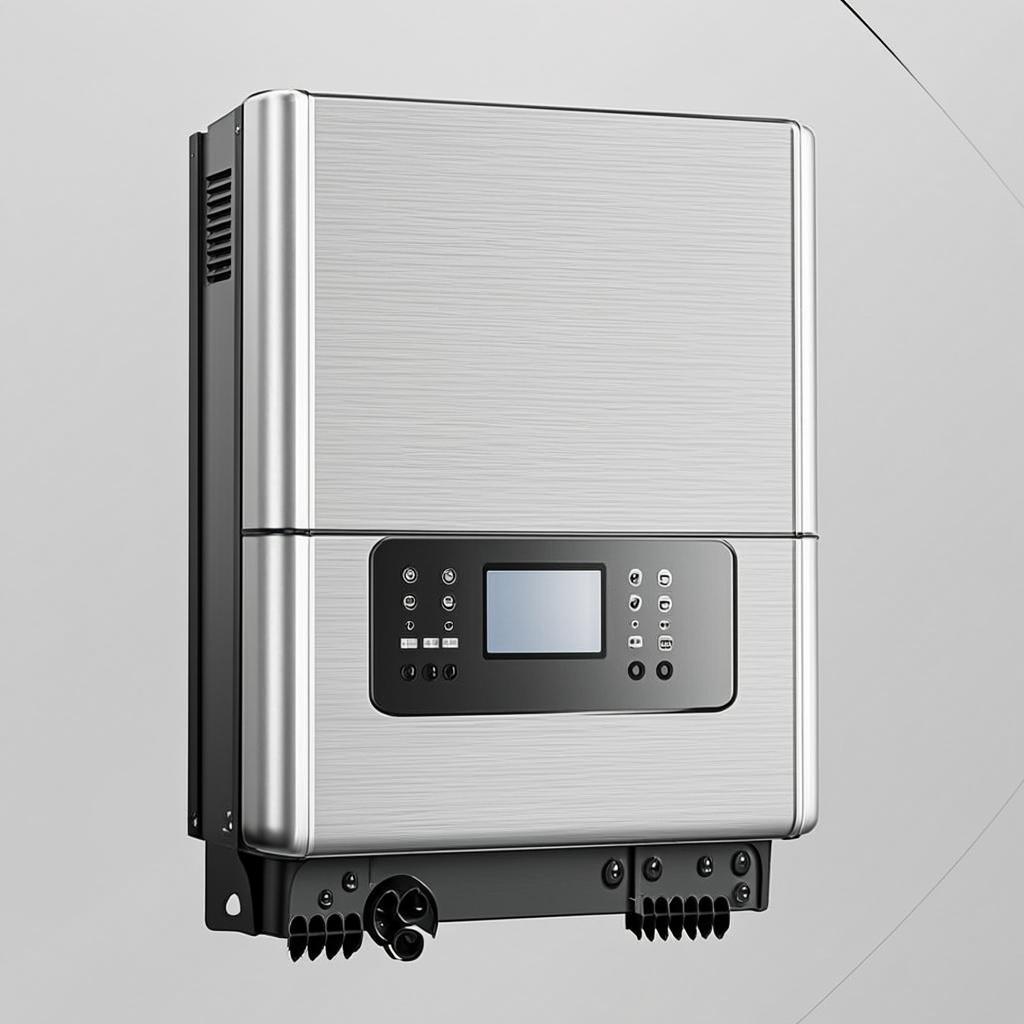
solar panel size and capacity
Understanding solar panel size and capacity is essential for businesses and industrial projects aiming to harness renewable energy efficiently. Our range of monocrystalline and polycrystalline solar
Solar Panel Size and Capacity: Optimize Your Energy Solutions
Product Overview
Understanding solar panel size and capacity is essential for businesses and industrial projects aiming to harness renewable energy efficiently. Our range of monocrystalline and polycrystalline solar panels is engineered to meet diverse power requirements, from compact residential installations to large-scale commercial arrays. Solar panel size refers to the physical dimensions—typically measured in length, width, and thickness—while capacity denotes the power output in watts (W) under standard test conditions (STC).
Selecting the right solar panel size and capacity ensures maximum energy yield per square meter, optimal roof or ground mounting, and seamless integration into your electrical systems. Our panels boast efficiencies up to 22%, allowing for higher capacity in smaller footprints. Whether you're designing off-grid systems, hybrid setups, or grid-tied photovoltaic (PV) farms, our products deliver reliable performance across varying climates and load demands. With dimensions starting from 1.6m² for 300W modules up to 2.4m² for 600W+ bifacial units, we provide flexibility for any project scale.
Key Features
- Versatile Solar Panel Size and Capacity Options: Modules available in standard sizes from 1650x992mm (300W) to 2384x1134mm (600W), with capacities ranging from 300W to 700W to match precise energy needs.
- High-Efficiency Cells: PERC technology in monocrystalline panels achieves 20-22% efficiency, maximizing output regardless of solar panel size and capacity constraints.
- Durable Framing: Anodized aluminum frames with 30mm-35mm thickness withstand wind loads up to 5400Pa and snow loads up to 2400Pa, ideal for harsh environments.
- Advanced Encapsulation: Tempered glass (3.2mm) and EVA/POE backsheets ensure PID resistance and 25-year linear power warranty.
- Bifacial Compatibility: Select models offer 20-30% rear-side gain, boosting effective capacity without increasing solar panel size.
- Easy Integration: MC4 connectors and junction boxes support rapid deployment in series/parallel configurations for scalable solar panel size and capacity arrays.
Technical Specifications
| Model | Capacity (W) | Dimensions (L x W x T, mm) | Area (m²) | Efficiency (%) | Weight (kg) | Cell Type | Max Load (Wind/Snow, Pa) |
|---|---|---|---|---|---|---|---|
| SP-300M | 300-320 | 1650 x 992 x 30 | 1.64 | 18.3-19.5 | 18.5 | Monocrystalline | 2400/5400 |
| SP-400P | 400-420 | 1722 x 1134 x 30 | 1.95 | 20.5-21.5 | 21.0 | Polycrystalline | 2400/5400 |
| SP-500M | 500-540 | 1961 x 992 x 35 | 1.95 | 20.6-22.1 | 24.5 | Monocrystalline PERC | 2400/5400 |
| SP-550B | 550-585 | 2278 x 1134 x 30 | 2.58 | 21.3-22.7 | 28.3 | Bifacial Mono | 2400/5400 |
| SP-600M | 600-650 | 2384 x 1134 x 35 | 2.70 | 22.2-24.1 | 31.2 | Monocrystalline Half-Cut | 2400/5400 |
| SP-700T | 650-700 | 2465 x 1134 x 35 | 2.79 | 23.3-25.1 | 33.5 | TOPCon Mono | 2400/5400 |
Note: All specifications measured under STC (1000W/m² irradiance, 25°C cell temperature, AM 1.5 spectrum). Tolerances: ±3% on capacity, ±2mm on dimensions. Custom solar panel size and capacity configurations available upon request.
Application Scenarios
Our solar panels excel in scenarios where precise solar panel size and capacity alignment drives project success. For residential rooftops, compact 300-400W modules (under 2m²) fit standard 10-20kW systems, generating 15-30kWh daily. Commercial flat roofs benefit from 500-550W panels, optimizing space for 50-100kW installations with minimal shading losses.
In industrial settings, high-capacity 600-700W bifacial panels suit ground-mounted solar farms, delivering over 1MW per 2000m² array. Off-grid applications, such as remote telecom towers or mining sites, leverage modular sizes for 5-50kW hybrid systems with battery storage. Utility-scale projects scale effortlessly with our panels' uniform solar panel size and capacity, reducing BOS (balance of system) costs by 10-15%. Agricultural agrivoltaics pair mid-size panels over crops, balancing energy production with land use.
Advantages
Choosing panels with optimized solar panel size and capacity yields tangible benefits. First, superior space efficiency—our 22%+ modules produce 20% more power than competitors in the same footprint, ideal for land-scarce sites. Second, enhanced durability: Anti-reflective coatings and bypass diodes minimize hotspots, ensuring 84.8% capacity retention after 25 years.
Third, cost-effectiveness: Lower LCOE (levelized cost of energy) through higher upfront capacity per panel reduces installation labor by 15-20%. Fourth, environmental compliance: RoHS and REACH certified, with recyclable frames supporting circular economy goals. Finally, performance in low-light: 98.5% of rated capacity at 200W/m² irradiance, outperforming standard panels.
- Reduced shading losses via half-cut cell design.
- Seamless scalability for MW-scale deployments.
- 25-year product warranty, 30-year lifespan projection.
Why Choose Us
As a leading manufacturer in the PV industry, we specialize in tailoring solar panel size and capacity to your exact specifications. Our ISO 9001, ISO 14001, and TUV-certified facilities produce over 5GW annually, ensuring supply chain reliability for international trade. We offer Tier 1 quality with bankable warranties, backed by in-house R&D for next-gen TOPCon and HJT technologies.
Our global logistics network delivers to 100+ countries with zero-defect rates exceeding 99.9%. Engineers provide free system design support, simulating solar panel size and capacity impacts via PVSyst software. Competitive pricing, flexible MOQs (100 panels), and ODM/OEM services make us the trusted partner for EPC firms, distributors, and developers worldwide.
FAQ
Q: How do I determine the right solar panel size and capacity for my project?
A: Calculate based on daily energy needs (kWh), peak sun hours (4-6 globally), and available area. For 10kWh/day with 5 sun hours, aim for ~2kW capacity (e.g., 5x 400W panels). Use our sizing tool or consult our team.
Q: What factors affect solar panel capacity output?
A: Irradiance, temperature (derate 0.4%/°C above 25°C), soiling, and angle. Our panels maintain 90%+ efficiency in real-world conditions.
Q: Are custom solar panel sizes available?
A: Yes, we customize dimensions and capacities for special applications, like curved roofs or marine environments, with MOQ 1000 units.
Q: What is the difference between monocrystalline and polycrystalline in terms of size and capacity?
A: Monocrystalline offers higher efficiency (20-22%) in similar sizes, yielding more capacity; polycrystalline (18-20%) is cost-effective for larger arrays.
Q: How does bifacial design impact solar panel size and capacity?
A: Same front-side size/capacity, but 10-30% extra from rear reflection, effectively increasing yield without enlarging footprint.
Q: What certifications ensure quality for solar panel size and capacity?
A: IEC 61215/61730, UL 1703, CE, and INMETRO validate performance, safety, and durability across all models.
Related product
- English
- Françai
- Español
- Deutsch
- Română
- العربية
- 한국어
- 日本語
- Italiano
- Português
- Gaeilge
- Dansk
- Čeština
- Русский
- Afrikaans
- Euskara
- Català
- Esperanto
- हिन्दी
- Ελληνικά
- Bahasa Melayu
- Polski
- Српски
- Kiswahili
- ภาษาไทย
- Tiếng Việt
- Türkçe
- Svenska
- Cymraeg
- Slovenčina
- Latviešu
- Malti
- Magyar
- Galego
- ગુજરાતી
- Eesti Keel
- বাংলা
- Shqip
- беларуская мова
- Nederlands
- Tagalog
- ქართული
- Íslenska
- Kreyòl Ayisyen
- Lietuvių
- Norsk
- slovenščina
- தமிழ்
- Українська
- ײִדיש
- اردو
- తెలుగు
- فارسی
- македонски
- ಕನ್ನಡ
- Bahasa Indonesia
- עברית
- Suomi
- Hrvatski
- Български
- Azerbaijani