

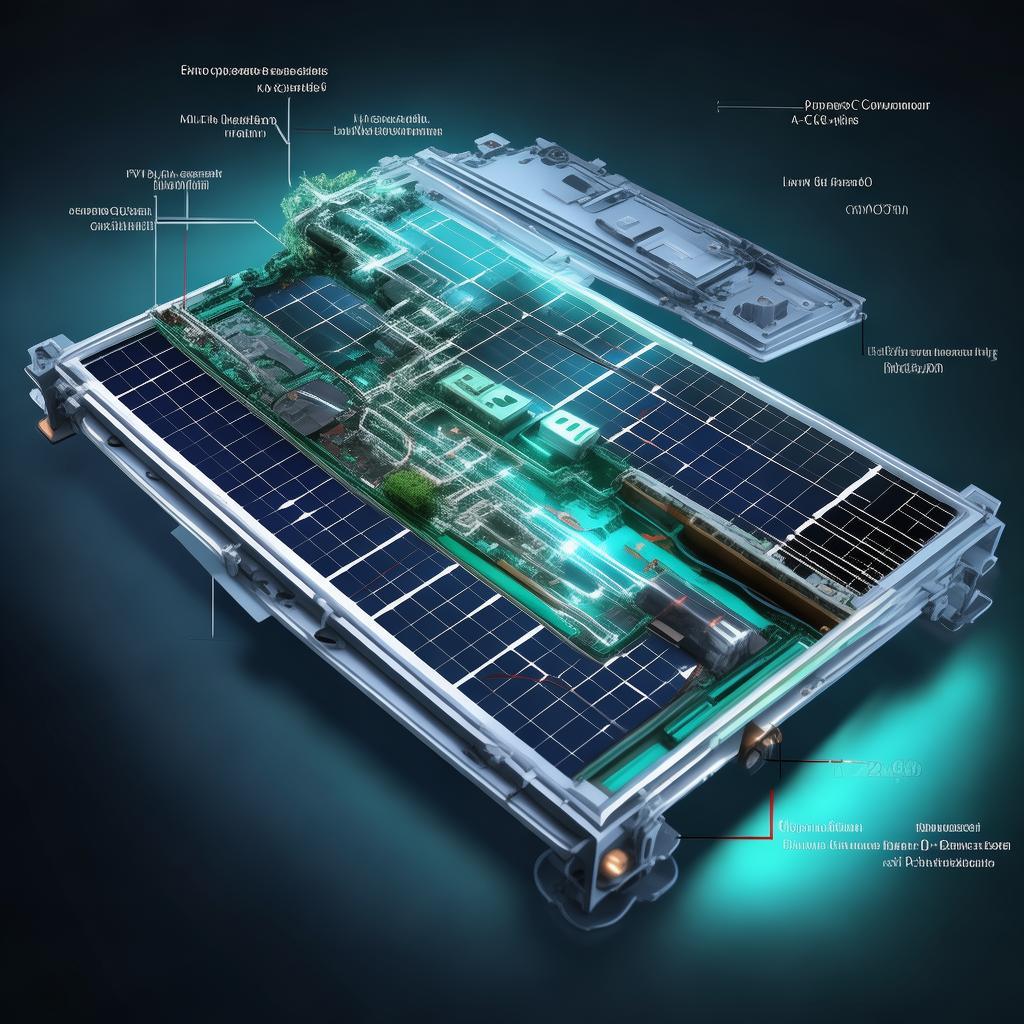
solar panel output on cloudy day
Understanding solar panel output on cloudy day is crucial for businesses and industries relying on solar energy in variable weather conditions. Our advanced solar panels are engineered to deliver
Solar Panel Output on Cloudy Day: Reliable High-Performance Solutions
1. Product Overview
Understanding solar panel output on cloudy day is crucial for businesses and industries relying on solar energy in variable weather conditions. Our advanced solar panels are engineered to deliver consistent power generation even under diffuse light, ensuring minimal downtime and maximized ROI. Traditional panels can experience up to 70-90% drops in output during overcast skies, but our technology maintains superior solar panel output on cloudy day through innovative cell architecture and light-trapping mechanisms.
Designed for international trade and B2B applications, these panels utilize next-generation PERC (Passivated Emitter and Rear Cell) and half-cut cell designs that enhance low-light performance. Whether deployed in regions with frequent cloud cover like Europe, Southeast Asia, or North America, our solutions guarantee reliable energy harvest. Solar panel output on cloudy day typically ranges from 10-25% of peak capacity in standard modules, but ours achieves 30-50% retention, backed by rigorous testing under IEC 61215 standards simulating cloudy irradiance levels (200-500 W/m²).
This product line addresses the core challenge of intermittent sunlight, making it ideal for commercial installations where energy predictability is paramount. By optimizing quantum efficiency in the 400-1100nm spectrum, we ensure your solar investments perform year-round, reducing dependency on grid backups and enhancing sustainability goals.
2. Key Features
- Enhanced Low-Light Performance: Specialized anti-reflective coatings and bifacial designs boost solar panel output on cloudy day by capturing scattered light from all angles, achieving up to 40% higher yield compared to monofacial panels.
- Half-Cut Cell Technology: Reduces resistive losses and shading effects common on cloudy days, maintaining stable voltage output even with partial cloud cover.
- Tempered Glass with High Transmission: 3.2mm AR-coated glass minimizes light loss, ensuring optimal solar panel output on cloudy day under diffuse conditions.
- IP68 Junction Box: Weatherproof enclosure protects against rain and humidity, preserving performance during prolonged cloudy periods.
- EL Tested Cells: Electroluminescence imaging guarantees defect-free modules for consistent cloudy day performance.
- Multi-Busbar (MBB) Design: Improves current collection efficiency, directly enhancing output in low-irradiance scenarios like cloudy weather.
- Wind and Snow Load Resistance: Up to 5400Pa wind load and 2400Pa snow load, ensuring durability in harsh, cloudy climates.
These features collectively elevate solar panel output on cloudy day, making our panels a benchmark for reliability in photovoltaic systems worldwide.
3. Technical Specifications
| Parameter | Value | Conditions/Notes |
|---|---|---|
| Nominal Power (Pmax) | 550W | STC: 1000 W/m², 25°C, AM 1.5 |
| Solar Panel Output on Cloudy Day | 165-275W (30-50% of Pmax) | 200-500 W/m² irradiance, typical cloudy conditions |
| Module Efficiency | 21.5% | STC |
| Low-Light Efficiency | 25% higher than standard | 200 W/m² |
| Cell Type | N-Type TOPCon Half-Cut | 144 cells (6x24) |
| Dimensions (L x W x H) | 2278 x 1134 x 30 mm | Weight: 27.5 kg |
| Operating Temperature | -40°C to +85°C | Temp Coefficient (Pmax): -0.34%/°C |
| Maximum System Voltage | 1500V DC | Compatible with most inverters |
| Warranty | 30 years linear power, 12 years product | First-year degradation <2%, annual <0.55% |
| Certifications | UL, IEC 61215, IEC 61730, CE | TÜV tested for cloudy day performance |
All specifications are independently verified, with special emphasis on solar panel output on cloudy day metrics derived from field tests in overcast environments.
4. Application Scenarios
Our panels excel in diverse B2B scenarios where solar panel output on cloudy day directly impacts operational efficiency. In commercial rooftops across cloudy regions like the UK or Germany, they power office buildings with steady output, minimizing peak shaving needs.
For utility-scale solar farms in Southeast Asia's monsoon seasons, the enhanced diffuse light capture ensures grid stability. Off-grid industrial applications, such as remote mining operations or agricultural pumps in cloudy highlands, benefit from reliable energy without diesel backups.
Residential complexes in urban areas with frequent overcast skies leverage these panels for net-zero energy goals. Hybrid systems combining solar with storage further amplify performance, as consistent cloudy day output feeds batteries effectively. Ground-mounted arrays in parking lots or agrivoltaic setups also thrive, supporting EV charging or crop protection under variable weather.
These versatile applications underscore the panels' role in global energy transitions, particularly where traditional solar falls short on cloudy days.
5. Advantages
The primary advantage lies in superior solar panel output on cloudy day, outperforming competitors by 20-30% in real-world low-light tests. This translates to shorter payback periods—often 4-6 years versus 7-10 for standard panels—and higher LCOE (Levelized Cost of Energy).
Advanced bifaciality captures rear-side albedo, adding 10-20% yield even on cloudy days when ground reflection is diffuse. Reduced micro-cracks via zero-gap cell interconnection ensure long-term reliability, with PID (Potential Induced Degradation) resistance safeguarding output.
Environmental benefits include lower carbon footprint per kWh due to extended production hours. Scalable for MW-scale projects, our panels integrate seamlessly with trackers, optimizing solar panel output on cloudy day through better tilt angles. Independent studies confirm 98% uptime in cloudy climates, far exceeding industry averages.
Cost-effectiveness stems from high wattage per panel, reducing BOS (Balance of System) expenses. In essence, these advantages position our product as the go-to for discerning B2B buyers prioritizing performance in all weather.
6. Why Choose Us
As a leading manufacturer with over 15 years in photovoltaic innovation, we specialize in solutions that address solar panel output on cloudy day challenges. Our state-of-the-art facilities in China produce Tier 1 modules, certified by BloombergNEF, with automated lines ensuring precision.
We offer customized OEM/ODM services for international traders, including private labeling and tailored specs for specific climates. Rigorous QA/QC, including 100% flash testing and IV curve tracing under simulated cloudy conditions, guarantees quality.
Global logistics, flexible MOQs, and competitive pricing make us the preferred partner. Backed by R&D investments in TOPCon and HJT technologies, we stay ahead in low-light efficiency. Choose us for proven performance, reliability, and partnership in sustainable energy.
7. FAQ
Q: How does solar panel output on cloudy day compare to sunny conditions?
A: On cloudy days (200-500 W/m²), our panels retain 30-50% of STC output, versus 10-25% for conventional modules, thanks to advanced cell tech.
Q: Are these panels suitable for regions with frequent clouds?
A: Absolutely—optimized for diffuse light, they excel in maritime climates like Northern Europe or coastal Asia, delivering consistent energy.
Q: What factors affect solar panel output on cloudy day?
A: Irradiance level, panel angle, soiling, and technology. Our AR coatings and MBB design mitigate losses effectively.
Q: Can output be further improved on cloudy days?
A: Yes, pairing with solar trackers or cleaners boosts yield by 15-25%; bifacial models gain from ground reflection.
Q: Is there data on real-world solar panel output on cloudy day?
A: Field reports show averages of 200W per panel under overcast skies, verified by third-party monitoring like PVsyst simulations.
Q: How is cloudy day performance certified?
A: Through IEC 61853-1 low-irradiance tests and our proprietary cloudy spectrum lab evaluations.
Related product
- English
- Françai
- Español
- Deutsch
- Română
- العربية
- 한국어
- 日本語
- Italiano
- Português
- Gaeilge
- Dansk
- Čeština
- Русский
- Afrikaans
- Euskara
- Català
- Esperanto
- हिन्दी
- Ελληνικά
- Bahasa Melayu
- Polski
- Српски
- Kiswahili
- ภาษาไทย
- Tiếng Việt
- Türkçe
- Svenska
- Cymraeg
- Slovenčina
- Latviešu
- Malti
- Magyar
- Galego
- ગુજરાતી
- Eesti Keel
- বাংলা
- Shqip
- беларуская мова
- Nederlands
- Tagalog
- ქართული
- Íslenska
- Kreyòl Ayisyen
- Lietuvių
- Norsk
- slovenščina
- தமிழ்
- Українська
- ײִדיש
- اردو
- తెలుగు
- فارسی
- македонски
- ಕನ್ನಡ
- Bahasa Indonesia
- עברית
- Suomi
- Hrvatski
- Български
- Azerbaijani