

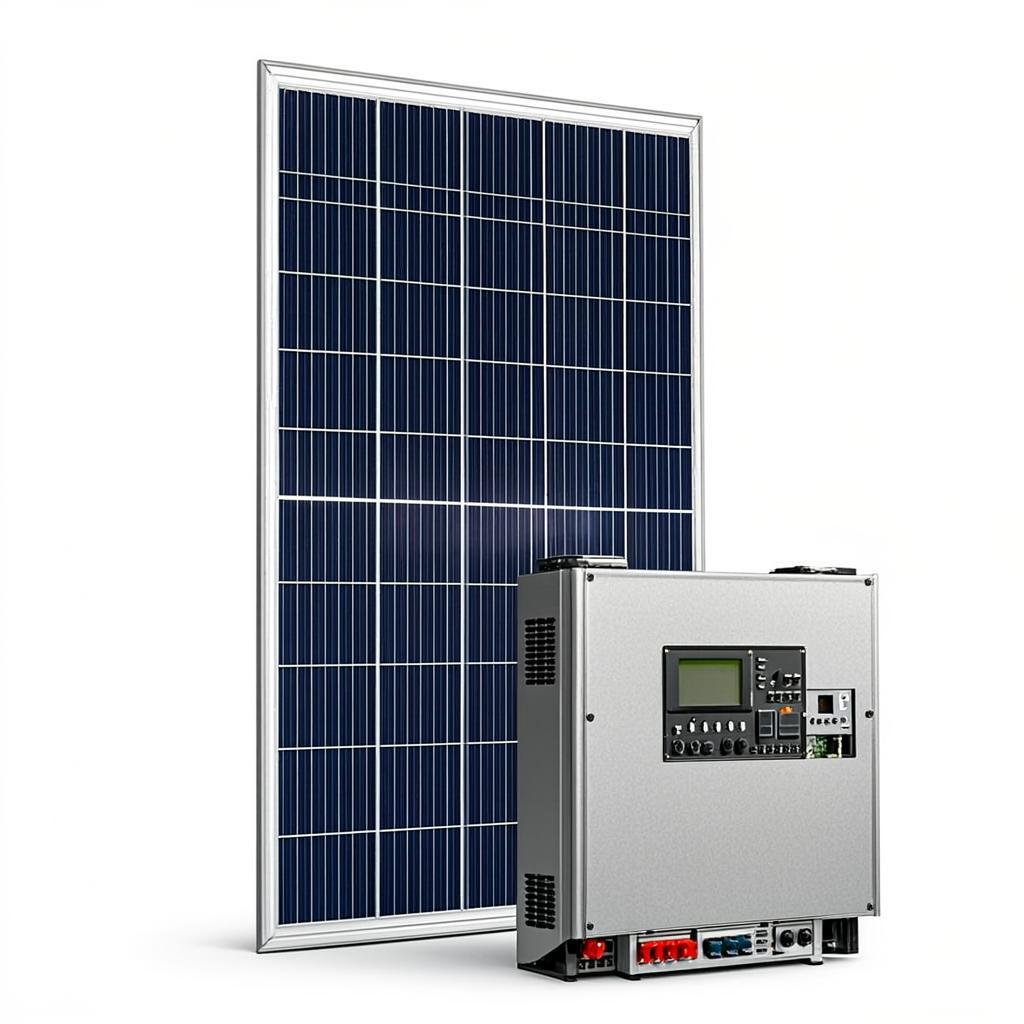
solar panel kwh
Our solar panel kWh series represents the pinnacle of photovoltaic technology, engineered to deliver exceptional energy output measured in kilowatt-hours (kWh) under real-world conditions. Designed
Solar Panel kWh: Premium High-Yield Photovoltaic Solution
1. Product Overview
Our solar panel kWh series represents the pinnacle of photovoltaic technology, engineered to deliver exceptional energy output measured in kilowatt-hours (kWh) under real-world conditions. Designed for international B2B markets, these modules maximize kWh production through advanced monocrystalline PERC cells, achieving efficiencies exceeding 22%. Ideal for commercial installations, utility-scale projects, and industrial applications, the solar panel kWh ensures reliable power generation, reducing dependency on grid electricity and lowering long-term operational costs.
Each solar panel kWh unit is optimized for high irradiance environments, delivering up to 1,800 kWh annually per kWp installed capacity in optimal locations. With robust PID resistance and anti-reflective coatings, these panels maintain peak performance across diverse climates, from arid deserts to temperate zones. Backed by rigorous testing to IEC standards, our solar panel kWh products offer a seamless integration into hybrid systems, rooftop arrays, and ground-mounted farms, empowering businesses worldwide to harness sustainable energy with confidence.
The solar panel kWh lineup features tempered glass encapsulation and anodized aluminum frames for unparalleled durability, withstandstanding hail impacts up to 25mm diameter at 23 m/s. This combination of cutting-edge cell technology and structural integrity positions our solar panel kWh as the go-to choice for importers, distributors, and EPC contractors seeking superior return on investment through elevated kWh yields and extended lifespans exceeding 30 years.
2. Key Features
- Superior kWh Output: Advanced half-cut cell design minimizes shading losses, boosting annual kWh generation by up to 15% compared to conventional panels.
- High-Efficiency PERC Technology: Monocrystalline cells with passivated emitter rear contact deliver over 22% module efficiency, ensuring maximum solar panel kWh performance even in low-light conditions.
- Enhanced Durability: IP68-rated junction boxes and multi-busbar (MBB) interconnects provide excellent resistance to moisture, salt mist, and ammonia, ideal for coastal and agricultural solar panel kWh deployments.
- Low Degradation Rate: First-year degradation under 2%, with annual rates below 0.55%, guaranteeing sustained solar panel kWh productivity over decades.
- Easy Installation: Pre-drilled frames and MC4-compatible connectors simplify mounting, reducing labor costs for large-scale solar panel kWh projects.
- Smart Monitoring Compatible: Supports integration with IoT platforms for real-time kWh tracking and predictive maintenance.
- Environmental Compliance: RoHS and REACH certified, with recyclable materials to support green solar panel kWh initiatives.
3. Technical Specifications
| Parameter | Value | Unit / Notes |
|---|---|---|
| Module Type | Monocrystalline PERC Half-Cut | Solar panel kWh series |
| Maximum Power (Pmax) | 550 | Wp (STC) |
| Module Efficiency | 21.6 - 22.5 | % |
| Estimated Annual kWh Yield | 1,650 - 1,850 | kWh/kWp (based on 1,800 full sun hours) |
| Open Circuit Voltage (Voc) | 50.6 | V |
| Short Circuit Current (Isc) | 13.95 | A |
| Dimensions (L x W x H) | 2278 x 1134 x 35 | mm |
| Weight | 28.5 | kg |
| Cell Count | 144 (6x24 half-cells) | - |
| Operating Temperature | -40 to +85 | °C |
| Maximum System Voltage | 1500 | DC (IEC) |
| Hail Resistance | 25mm @ 23 m/s | - |
| Warranty | 15 years product / 30 years linear power | 80% output at year 30 |
| Certifications | IEC 61215, IEC 61730, UL 1703 | ISO 9001, ISO 14001 |
Note: Specifications measured under STC (Standard Test Conditions: 1000 W/m² irradiance, 25°C cell temperature, AM 1.5 spectrum). Actual solar panel kWh output varies by location and installation.
4. Application Scenarios
The versatility of our solar panel kWh modules shines across multiple sectors. In commercial rooftops, they optimize limited space for high kWh yields, enabling businesses to offset peak-hour tariffs and achieve energy independence. For utility-scale solar farms, the panels' low BOS (balance of system) costs and high specific power facilitate gigawatt-hour productions, supporting national renewable targets.
Off-grid applications, such as remote mining operations or telecom towers, benefit from the solar panel kWh's robust low-light performance, ensuring consistent kWh delivery without batteries in hybrid setups. Agricultural agrivoltaics pair these panels with crop cultivation, generating revenue from dual land use while shading sensitive plants. In residential complexes, solar panel kWh arrays power EV charging stations, aligning with smart city initiatives.
Industrial parks deploy solar panel kWh for self-consumption, slashing electricity bills by 40-60% through net metering. Floating solar projects on reservoirs leverage the panels' water resistance for elevated kWh output due to natural cooling. Each scenario underscores the solar panel kWh's adaptability, certified for extreme conditions like high winds (up to 2400 Pa) and snow loads (5400 Pa).
5. Advantages
Investing in our solar panel kWh series provides distinct competitive edges. Firstly, the multi-busbar technology reduces resistive losses by 5-10%, translating to higher lifetime kWh accumulation and shorter payback periods—typically 4-6 years. Secondly, bifacial options in select models capture rear-side albedo for an additional 10-30% kWh boost, perfect for reflective surfaces.
Unlike standard panels, our solar panel kWh exhibits minimal temperature coefficients (-0.34%/°C for Pmax), maintaining output in hot climates. The anodized frame's corrosion resistance extends service life in marine environments, while the self-cleaning glass coating minimizes maintenance, preserving solar panel kWh efficiency at 98% after 5 years.
Economically, bulk pricing and flexible MOQs make our solar panel kWh accessible for global trade, with LCOE (levelized cost of energy) as low as 0.03 USD/kWh. Environmentally, they reduce CO2 emissions by 40 tons per MW over 25 years. These advantages, validated by third-party audits like DNV GL and TÜV, position our solar panel kWh as a benchmark for reliability and profitability.
6. Why Choose Us
As a leading manufacturer of solar panel kWh solutions, we prioritize quality from silicon ingot to final assembly in our state-of-the-art facilities. With over 15 years in photovoltaic production, we supply Tier 1 banks and Fortune 500 clients across 80+ countries. Our vertical integration controls costs without compromising standards, ensuring every solar panel kWh meets or exceeds global benchmarks.
We offer customized solutions, including ODM/OEM services and rapid prototyping for specific kWh targets. Comprehensive logistics, including FOB/CIF terms and container optimization, minimize import hassles. Post-sale, our 24/7 technical support and EL (electroluminescence) imaging guarantee defect-free deliveries. Certifications like TUV Rheinland and CE mark our commitment to excellence, making us the trusted partner for discerning B2B buyers seeking dependable solar panel kWh performance.
7. FAQ
Q: What is the expected daily kWh output of a solar panel kWh?
A: Depending on location and insolation, a 550Wp solar panel kWh produces 2-6 kWh per day, scaling linearly with array size.
Q: Are these solar panel kWh panels suitable for high-humidity areas?
A: Yes, with IP68 junction boxes and salt mist certification (IEC 61701), they excel in humid, coastal environments.
Q: How does the solar panel kWh warranty work?
A: 15-year product warranty covers manufacturing defects; 30-year linear power warranty ensures at least 84.8% output at year 25.
Q: Can solar panel kWh be used in bifacial configurations?
A: Select models support bifaciality up to 70%, enhancing ground-mounted kWh yields via rear irradiation.
Q: What mounting options are compatible with solar panel kWh?
A: Universal compatibility with rail, clamp, and torque tube systems for roof, ground, or tracker installations.
Q: How is solar panel kWh performance measured in real-world vs. lab conditions?
A: Lab uses STC; field performance factors in temperature, soiling, and tilt, with our panels rated NMOT (Nominal Module Operating Temperature) for accuracy.
Related product
- English
- Françai
- Español
- Deutsch
- Română
- العربية
- 한국어
- 日本語
- Italiano
- Português
- Gaeilge
- Dansk
- Čeština
- Русский
- Afrikaans
- Euskara
- Català
- Esperanto
- हिन्दी
- Ελληνικά
- Bahasa Melayu
- Polski
- Српски
- Kiswahili
- ภาษาไทย
- Tiếng Việt
- Türkçe
- Svenska
- Cymraeg
- Slovenčina
- Latviešu
- Malti
- Magyar
- Galego
- ગુજરાતી
- Eesti Keel
- বাংলা
- Shqip
- беларуская мова
- Nederlands
- Tagalog
- ქართული
- Íslenska
- Kreyòl Ayisyen
- Lietuvių
- Norsk
- slovenščina
- தமிழ்
- Українська
- ײִדיש
- اردو
- తెలుగు
- فارسی
- македонски
- ಕನ್ನಡ
- Bahasa Indonesia
- עברית
- Suomi
- Hrvatski
- Български
- Azerbaijani