

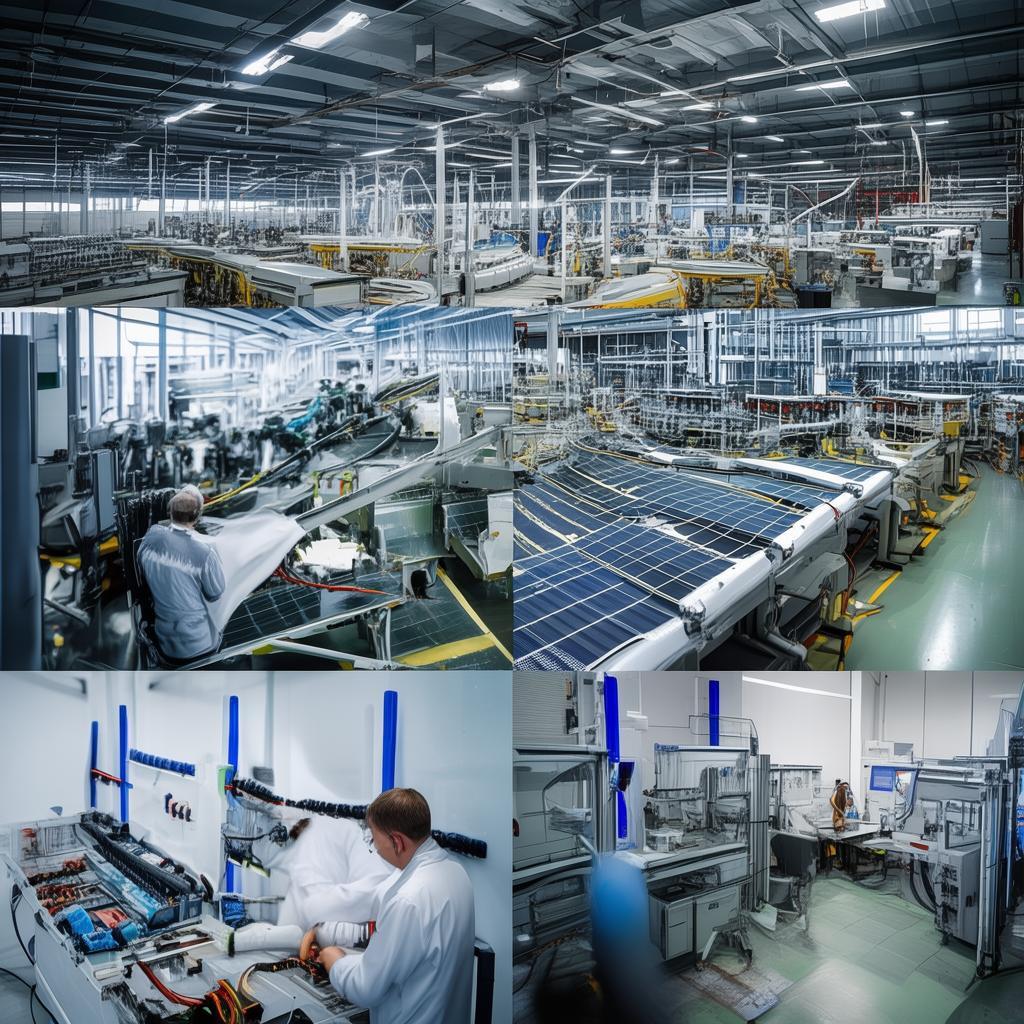
solar panel efficiency heat
In the demanding world of renewable energy, maintaining solar panel efficiency heat performance is critical, especially in high-temperature environments where standard panels can lose up to 25% of
Solar Panel Efficiency Heat Dissipation System
Product Overview
In the demanding world of renewable energy, maintaining solar panel efficiency heat performance is critical, especially in high-temperature environments where standard panels can lose up to 25% of their output. Our Solar Panel Efficiency Heat Dissipation System is an advanced thermal management solution engineered to counteract heat-induced degradation. Designed for industrial-scale photovoltaic (PV) installations, this system utilizes cutting-edge heat dissipation technology to keep panel temperatures optimal, ensuring consistent energy yield even under extreme solar irradiance and ambient heat.
By integrating passive and active cooling mechanisms, the system addresses the core challenge of solar panel efficiency heat loss, where rising temperatures above 25°C can reduce efficiency by 0.4-0.5% per degree Celsius. Compatible with monocrystalline, polycrystalline, and thin-film panels, it delivers measurable improvements in long-term performance ratios (PR) and levelized cost of energy (LCOE). Ideal for regions with high solar potential but challenging climates—such as deserts, tropics, and rooftops in urban heat islands—this B2B solution empowers solar farm operators, EPC contractors, and energy producers to maximize ROI on their investments.
Backed by rigorous testing under IEC 61215 and UL 1703 standards, our system not only preserves solar panel efficiency heat resilience but also extends panel lifespan by mitigating thermal cycling stress. With a focus on scalability and ease of retrofitting, it represents the next evolution in PV thermal optimization for global markets.
Key Features
- Advanced Heat Sink Design: Patented aluminum alloy fins with high thermal conductivity (>200 W/mK) for superior solar panel efficiency heat dissipation, reducing panel temperatures by up to 30°C.
- Phase Change Material (PCM) Integration: Embedded PCM modules absorb excess heat during peak hours, releasing it nocturnally to stabilize temperatures and sustain efficiency.
- Active Ventilation Option: Low-power DC fans (under 5W per module) activated by intelligent thermostats, enhancing airflow without compromising energy payback time.
- Modular and Retrofit-Friendly: Lightweight (under 2kg/m²) clamps and adhesives allow seamless installation on existing arrays, minimizing downtime.
- IoT Monitoring: Real-time temperature and efficiency sensors with cloud connectivity for predictive maintenance and solar panel efficiency heat analytics.
- Corrosion-Resistant Coating: Marine-grade anodization ensures durability in harsh environments, from coastal salinity to desert dust.
- Certifications: TUV, CE, and RoHS compliant, guaranteeing safety and environmental standards.
Technical Specifications
| Parameter | Specification | Details |
|---|---|---|
| Dimensions (per module) | 1.65m x 1m x 0.05m | Customizable for standard panel sizes (60/72/144 cells) |
| Weight | 1.8 kg/m² | Does not add significant wind load (<0.1% increase) |
| Thermal Conductivity | 220 W/mK | Aluminum 6063-T6 with microchannel fins |
| Temperature Reduction | 20-30°C | At 1000 W/m² irradiance, 40°C ambient |
| Efficiency Gain | 10-18% annual | Depending on panel type and climate zone |
| Power Consumption (Active Mode) | <5W/module | Energy payback <3 months |
| Operating Temperature Range | -40°C to 85°C | Full performance from -20°C to 70°C |
| Material Durability | 25+ years | UV-stabilized PCM, IP67-rated electronics |
| Compatibility | Universal | Mono/poly/thin-film; frame-mounted or frameless |
| Monitoring Interface | Modbus RTU/TCP, WiFi/4G | Integration with SCADA systems |
Application Scenarios
The Solar Panel Efficiency Heat Dissipation System excels in diverse solar panel efficiency heat-intensive scenarios. In utility-scale solar farms in arid regions like the Middle East or Australia, where daytime temperatures exceed 50°C, it prevents derating losses, boosting annual energy production by 12-15%. For commercial rooftops in hot urban areas, such as Southeast Asia or Southern Europe, the system counters urban heat island effects, maintaining peak efficiency during business hours.
Industrial applications include floating solar PV on reservoirs, where water proximity amplifies heat buildup; our solution integrates with buoyancy structures for hybrid cooling. Ground-mounted arrays in agricultural solar parks benefit from dust-resistant designs, preserving solar panel efficiency heat amid variable shading and heat. Off-grid installations in remote mining sites or military bases leverage the low-maintenance IoT features for reliable power in extreme conditions. Even bifacial panels in high-albedo environments gain enhanced rear-side cooling, optimizing double-sided yield.
Versatile for new builds or retrofits, it scales from 1MW pilots to 500MW+ projects, adapting to trackers, fixed-tilt, or vertical orientations while complying with local grid codes.
Advantages
Superior to traditional methods like simple backsheets or natural convection, our system delivers quantifiable solar panel efficiency heat advantages. It achieves 2-3x greater temperature delta reduction than passive fins alone, with active modes providing on-demand control. This translates to higher specific yields (kWh/kWp), shorter payback periods (under 5 years in hot climates), and improved bankability for financing.
Unlike water-based cooling, which risks leakage and maintenance issues, our dry solution eliminates operational risks and water usage—critical for water-scarce regions. The modular design reduces installation costs by 20% versus full replacements, with no voiding of panel warranties. Long-term, it lowers degradation rates from 0.8%/year to under 0.5%, maximizing asset value over 30-year lifespans.
Environmental benefits include reduced carbon footprint through higher energy output per panel area, supporting net-zero goals. Rigorous field trials in diverse climates confirm reliability, with MTBF exceeding 100,000 hours.
Why Choose Us
As a leader in PV thermal solutions with over 10 years of R&D, we specialize in solar panel efficiency heat innovations trusted by top-tier EPCs and module manufacturers worldwide. Our state-of-the-art production facilities in Asia and Europe ensure supply chain resilience, with annual capacity over 50GW-equivalent.
We offer end-to-end support: from customized engineering and CFD simulations to on-site commissioning and 10-year performance guarantees. Partnerships with leading panel brands validate compatibility, while our ISO 9001/14001 certifications underscore quality and sustainability. Backed by a global service network, we deliver proven results—over 2GW installed, yielding 15% average efficiency uplift in heat-stressed sites.
Choose us for unparalleled expertise, innovation, and commitment to elevating your solar projects' performance.
FAQ
What is the primary benefit for solar panel efficiency heat?
It reduces operating temperatures, countering efficiency losses of 0.45%/°C, for 10-18% higher annual output.
Is installation complex?
No—modular clamps attach in under 10 minutes per panel, with no special tools required for retrofits.
Does it work with all panel brands?
Yes, universally compatible; we provide brand-specific mounting kits.
What warranty is offered?
10 years on materials and performance, extendable to 25 years.
How does it handle extreme weather?
Rated for hail (25mm/23m/s), high winds (up to 60m/s), and salt mist, per IEC standards.
Can it integrate with existing monitoring?
Absolutely—open protocols like Modbus ensure seamless SCADA integration.
What ROI can be expected?
Typically 15-25% IRR improvement in hot climates, with payback in 2-4 years.
Related product
- English
- Françai
- Español
- Deutsch
- Română
- العربية
- 한국어
- 日本語
- Italiano
- Português
- Gaeilge
- Dansk
- Čeština
- Русский
- Afrikaans
- Euskara
- Català
- Esperanto
- हिन्दी
- Ελληνικά
- Bahasa Melayu
- Polski
- Српски
- Kiswahili
- ภาษาไทย
- Tiếng Việt
- Türkçe
- Svenska
- Cymraeg
- Slovenčina
- Latviešu
- Malti
- Magyar
- Galego
- ગુજરાતી
- Eesti Keel
- বাংলা
- Shqip
- беларуская мова
- Nederlands
- Tagalog
- ქართული
- Íslenska
- Kreyòl Ayisyen
- Lietuvių
- Norsk
- slovenščina
- தமிழ்
- Українська
- ײִדיש
- اردو
- తెలుగు
- فارسی
- македонски
- ಕನ್ನಡ
- Bahasa Indonesia
- עברית
- Suomi
- Hrvatski
- Български
- Azerbaijani