

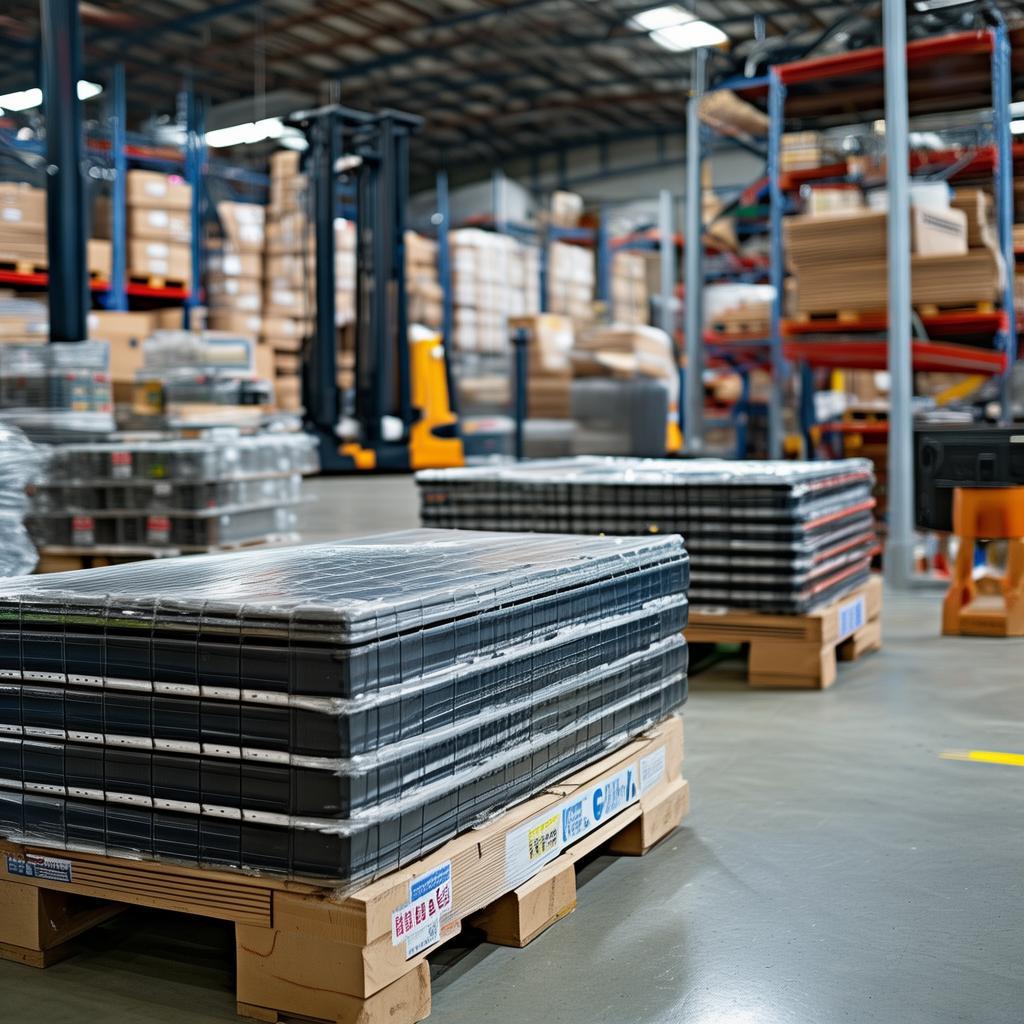
solar panel cost per panel
High-Efficiency 550W Bifacial Solar Panel | Optimized for Utility & Commercial Projects 1. Product Overview In the rapidly evolving solar energy market, understanding the solar panel cost per panel is
High-Efficiency 550W Bifacial Solar Panel | Optimized for Utility & Commercial Projects
1. Product Overview
In the rapidly evolving solar energy market, understanding the solar panel cost per panel is critical for project budgeting and ROI calculations. Our latest 550W bifacial monocrystalline solar panel is engineered to deliver superior power generation while offering one of the most competitive solar panel cost per panel ratios in its class. Designed for large-scale commercial, industrial, and utility installations, this panel combines cutting-edge N-type TOPCon technology with a robust mechanical design to maximize energy yield over a 30-year lifespan.
For procurement managers and EPC contractors, the solar panel cost per panel is not just about upfront price—it's about the levelized cost of electricity (LCOE). Our panel achieves a low LCOE by combining high efficiency (up to 21.8%) with a bifacial gain of up to 25%, effectively reducing the effective solar panel cost per panel when calculated per watt produced.
2. Key Features
- N-Type TOPCon Technology: Superior temperature coefficient (-0.30%/°C) and higher bifaciality (80%±5%) compared to traditional PERC panels.
- Bifacial Design: Generates power from both sides, increasing total energy output by 10-25% depending on ground albedo.
- Half-Cut Cell Architecture: Reduces resistive losses and improves shading tolerance, ensuring consistent performance.
- Low Degradation Rate: First-year degradation <1.0%, linear degradation <0.4% per year. Retains 87.4% output after 30 years.
- Enhanced Durability: 2.0mm tempered glass, anodized aluminum alloy frame, certified for 5400Pa snow load and 2400Pa wind load.
- Fire Rating Class A: Meets highest safety standards for commercial and residential installations.
3. Technical Specifications
| Parameter | Value |
|---|---|
| Model Number | HM-550W-TOPCon |
| Maximum Power (Pmax) | 550W (±3%) |
| Module Efficiency | 21.8% |
| Cell Type | Monocrystalline N-type TOPCon 182mm |
| Number of Cells | 144 (2 x 72 half-cut cells) |
| Open Circuit Voltage (Voc) | 49.8V |
| Short Circuit Current (Isc) | 13.96A |
| Maximum Power Voltage (Vmp) | 41.9V |
| Maximum Power Current (Imp) | 13.13A |
| Bifaciality Factor | 80% ±5% |
| Operating Temperature | -40°C to +85°C |
| Temperature Coefficient of Pmax | -0.30%/°C |
| Dimensions (L x W x H) | 2279 x 1134 x 35mm |
| Weight | 28.5 kg |
| Connector Type | MC4 Compatible |
| Warranty | 12-year product, 30-year linear power |
4. Application Scenarios
- Utility-Scale Solar Farms: Ideal for ground-mounted projects where bifacial gain can be maximized using high-albedo surfaces (white gravel, reflective membranes).
- Commercial & Industrial Rooftops: Flat or low-slope roofs benefit from the panel's lightweight design and high power density, reducing the number of panels required and improving the overall solar panel cost per panel economics.
- Solar Canopies & Carports: Bifacial panels under transparent or semi-transparent structures capture reflected light from the ground and vehicles.
- Agrivoltaics: Mounted above crops, these panels allow partial light transmission while generating power, with the rear side capturing reflected sunlight from soil or mulch.
- Off-Grid & Hybrid Systems: High efficiency and low degradation make this panel suitable for remote mining sites, telecom towers, and microgrids.
5. Advantages
5.1 Superior Economic Performance
By leveraging N-type technology, our panel delivers up to 3% higher energy yield per watt compared to standard PERC modules. When calculating the effective solar panel cost per panel over its lifetime, the higher output translates to a lower cost per kilowatt-hour generated. For a 10MW project, switching to our 550W panels can reduce the number of panels needed by 8-10%, lowering BOS (balance of system) costs.
5.2 Lower Degradation, Higher Reliability
Traditional PERC panels suffer from light-induced degradation (LID) and potential-induced degradation (PID). Our N-type cells are inherently resistant to LID, and the module is certified for PID resistance (85°C/85%RH, 1500V). This ensures your system maintains peak performance for decades.
5.3 Optimized Logistics & Installation
At 28.5 kg and 35mm frame thickness, our panel is lighter and thinner than many competitors' 550W models. This reduces shipping costs, simplifies handling, and allows for higher density packing in containers—further improving the solar panel cost per panel when factoring in logistics.
5.4 Bifacial Flexibility
The 80% bifaciality factor means you can achieve up to 687W equivalent output under optimal ground conditions. For projects where land is a premium, this effectively doubles the power density without increasing the footprint.
6. Why Choose Us
- Factory Direct Pricing: As a Tier 1 manufacturer with ISO 9001:2015 and ISO 14001:2015 certifications, we offer transparent pricing structures. Our solar panel cost per panel is among the most competitive for N-type bifacial modules, with MOQ flexibility starting from 1 pallet (26 panels).
- Stringent Quality Control: Every panel undergoes EL testing, electroluminescence inspection, and flash testing before shipment. Our reject rate is <0.3%, ensuring you receive only grade A+ cells.
- Global Logistics & Warehousing: With warehouses in Rotterdam, Los Angeles, and Dubai, we offer fast delivery (7-14 days) and can consolidate LCL shipments to reduce your landed solar panel cost per panel.
- Technical Support & Warranty: Our in-house engineering team provides free system design support, shading analysis, and string sizing calculations. The 30-year linear warranty is backed by a global insurance policy from Chubb.
- Customization Available: We can customize cable length (1.0m-3.0m), connector type (MC4, Amphenol, Staubli), and packaging (palletized, cardboard boxes, or export crates).
7. FAQ
Q1: What is the typical solar panel cost per panel for this 550W model?
A: The solar panel cost per panel varies based on order volume and shipping destination. For a standard 26-panel pallet (FOB Shanghai), the price ranges from $0.18 to $0.22 per watt. For a 40HQ container (624 panels), the solar panel cost per panel can drop to $0.16 per watt. Please contact our sales team for a real-time quote based on your project size and delivery location.
Q2: How does the bifacial gain affect the effective solar panel cost per panel?
A: Bifacial gain effectively reduces the cost per watt. For example, if the base cost is $0.20/watt and the bifacial gain is 15%, the effective cost drops to $0.174/watt. This makes the solar panel cost per panel highly competitive when installed on reflective surfaces like white TPO roofs or light gravel.
Q3: What is the minimum order quantity (MOQ)?
A: Our MOQ is 1 pallet (26 panels) for stock items. For custom orders (different cable lengths, connectors, or packaging), the MOQ is 1 pallet (26 panels). We accept trial orders for new clients.
Q4: How does this panel perform in high-temperature environments?
A: With a temperature coefficient of -0.30%/°C, our panel outperforms standard PERC modules (-0.35% to -0.40%/°C). At 75°C cell temperature, a PERC panel loses 16% output, while ours loses only 12%. This significantly improves the solar panel cost per panel economics in hot climates like the Middle East, Australia, and the US Southwest.
Q5: Do you provide samples before bulk order?
A: Yes, we offer paid samples with a lead time of 5-7 days. Sample cost is $150 per panel (including shipping via DHL/FedEx). We deduct the sample cost from your first bulk order of 5 pallets or more.
Q6: What certifications does this panel hold?
A: Our panel is certified to IEC 61215:2021, IEC 61730:2016, and UL 61730. It also holds CE, TÜV Rheinland, and ISO certifications. Fire rating is Class A per UL 790.
For detailed pricing, technical datasheets, or to request a sample, please email our B2B sales team at sales@example.com or use the live chat on our website.
Related product
- English
- Françai
- Español
- Deutsch
- Română
- العربية
- 한국어
- 日本語
- Italiano
- Português
- Gaeilge
- Dansk
- Čeština
- Русский
- Afrikaans
- Euskara
- Català
- Esperanto
- हिन्दी
- Ελληνικά
- Bahasa Melayu
- Polski
- Српски
- Kiswahili
- ภาษาไทย
- Tiếng Việt
- Türkçe
- Svenska
- Cymraeg
- Slovenčina
- Latviešu
- Malti
- Magyar
- Galego
- ગુજરાતી
- Eesti Keel
- বাংলা
- Shqip
- беларуская мова
- Nederlands
- Tagalog
- ქართული
- Íslenska
- Kreyòl Ayisyen
- Lietuvių
- Norsk
- slovenščina
- தமிழ்
- Українська
- ײִדיש
- اردو
- తెలుగు
- فارسی
- македонски
- ಕನ್ನಡ
- Bahasa Indonesia
- עברית
- Suomi
- Hrvatski
- Български
- Azerbaijani