

solar panel conversion efficiency
Discover the pinnacle of photovoltaic technology with our advanced solar panels, engineered for superior solar panel conversion efficiency. In the competitive landscape of renewable energy, achieving
Solar Panel Conversion Efficiency: Powering Sustainable Energy Solutions
1. Product Overview
Discover the pinnacle of photovoltaic technology with our advanced solar panels, engineered for superior solar panel conversion efficiency. In the competitive landscape of renewable energy, achieving optimal solar panel conversion efficiency is crucial for maximizing energy output and minimizing costs. Our panels utilize cutting-edge monocrystalline silicon cells combined with PERC (Passivated Emitter and Rear Cell) technology, delivering conversion efficiencies exceeding 22%. This means more electricity generated from the same surface area, making them ideal for space-constrained commercial and industrial installations.
Solar panel conversion efficiency refers to the percentage of sunlight converted into usable electrical energy. While traditional panels hover around 15-18%, our innovative design pushes boundaries, ensuring higher yields even in low-light conditions. Backed by rigorous testing under IEC standards, these panels offer reliability and performance tailored for international B2B markets. Whether you're outfitting large-scale solar farms or rooftop arrays, our focus on solar panel conversion efficiency translates directly into superior return on investment (ROI) and long-term energy independence.
With a robust aluminum frame and tempered glass encapsulation, these panels withstand harsh environmental conditions, from coastal humidity to desert extremes. The emphasis on solar panel conversion efficiency not only boosts power generation but also reduces the levelized cost of energy (LCOE), positioning your projects at the forefront of sustainable development.
2. Key Features
- Ultra-High Solar Panel Conversion Efficiency: Up to 22.5% module efficiency, leveraging advanced half-cut cell technology to minimize resistive losses and enhance overall performance.
- Low Temperature Coefficient: -0.35%/°C, ensuring stable solar panel conversion efficiency even during peak summer temperatures, outperforming standard panels by up to 5% in hot climates.
- Bifacial Design Option: Capture energy from both sides, potentially increasing solar panel conversion efficiency by an additional 10-30% with rear-side albedo reflection.
- Anti-PID and Anti-LID Technology: Prevents potential induced degradation (PID) and light-induced degradation (LID), maintaining consistent solar panel conversion efficiency over 25+ years.
- Multi-Busbar (MBB) Cells: Reduces shading losses and optimizes current collection, directly contributing to elevated solar panel conversion efficiency.
- High Transmittance Glass: 3.2mm low-iron tempered glass with anti-reflective coating to maximize sunlight absorption and solar panel conversion efficiency.
- Easy Installation: Pre-drilled frames and MC4-compatible connectors for seamless integration into existing systems.
3. Technical Specifications
| Parameter | Value | Unit/Notes |
|---|---|---|
| Module Type | Monocrystalline PERC Half-Cut | High-efficiency solar panel |
| Solar Panel Conversion Efficiency | 22.0% - 22.5% | STC conditions |
| Maximum Power (Pmax) | 550W - 580W | Tolerances: 0/+5W |
| Open Circuit Voltage (Voc) | 49.5V | ±3% |
| Short Circuit Current (Isc) | 14.20A | ±3% |
| Maximum Power Voltage (Vmpp) | 41.5V | - |
| Maximum Power Current (Impp) | 13.40A | - |
| Temperature Coefficient (Pmax) | -0.35%/°C | Ensures stable solar panel conversion efficiency |
| Temperature Coefficient (Voc) | -0.27%/°C | - |
| Temperature Coefficient (Isc) | +0.045%/°C | - |
| Operating Temperature | -40 to +85 | °C |
| Maximum System Voltage | 1500V DC | IEC/UL certified |
| Dimensions | 2278 x 1134 x 35 | mm |
| Weight | 28.5 | kg |
| Cells | 144 (6x24 half-cut) | 210mm MBB PERC cells |
| Certifications | IEC 61215, IEC 61730, UL 61730 | TÜV, CE, INMETRO |
Note: Specifications measured under STC (Standard Test Conditions: 1000W/m² irradiance, 25°C cell temperature, AM 1.5 spectrum). Actual solar panel conversion efficiency may vary based on installation and environmental factors.
4. Application Scenarios
Our high-efficiency solar panels, optimized for superior solar panel conversion efficiency, excel in diverse B2B applications worldwide. In commercial rooftops, where space is premium, the elevated solar panel conversion efficiency allows for greater energy harvest without expanding footprint—perfect for retail chains and office complexes aiming to offset peak demand charges.
For utility-scale solar farms, scalability is key; these panels' consistent solar panel conversion efficiency under varying irradiance levels reduces balance-of-system costs and accelerates project payback periods. Industrial facilities, such as manufacturing plants in Europe or Asia, benefit from ground-mounted arrays where bifacial options leverage the panels' dual-sided solar panel conversion efficiency to utilize reflected light from surrounding terrain.
Remote off-grid projects, including mining operations in Australia or agricultural pumps in Africa, rely on the panels' low-light performance to ensure reliable solar panel conversion efficiency from dawn to dusk. Even in floating solar installations on reservoirs, the durable design maintains solar panel conversion efficiency despite water-induced cooling effects, boosting output by 5-10%.
5. Advantages
Choosing panels with top-tier solar panel conversion efficiency provides tangible advantages over conventional alternatives. First, higher efficiency means fewer panels required for the same power output, slashing installation labor, mounting hardware, and land use costs by up to 20%. This directly enhances project economics, especially in high land-value regions.
Superior thermal management ensures sustained solar panel conversion efficiency in real-world conditions, where temperatures often exceed STC benchmarks. Independent tests show our panels retain 95% of initial solar panel conversion efficiency after 10 years, compared to 90% for standard modules. Additionally, reduced shading losses from half-cut cells make them resilient in densely packed arrays.
Environmental benefits include a lower carbon footprint per kWh generated, aligning with global ESG mandates. Long warranties—25 years linear power and 12 years product—guarantee performance, minimizing O&M expenses. In summary, investing in advanced solar panel conversion efficiency future-proofs your energy portfolio against rising electricity prices and regulatory pressures.
6. Why Choose Us
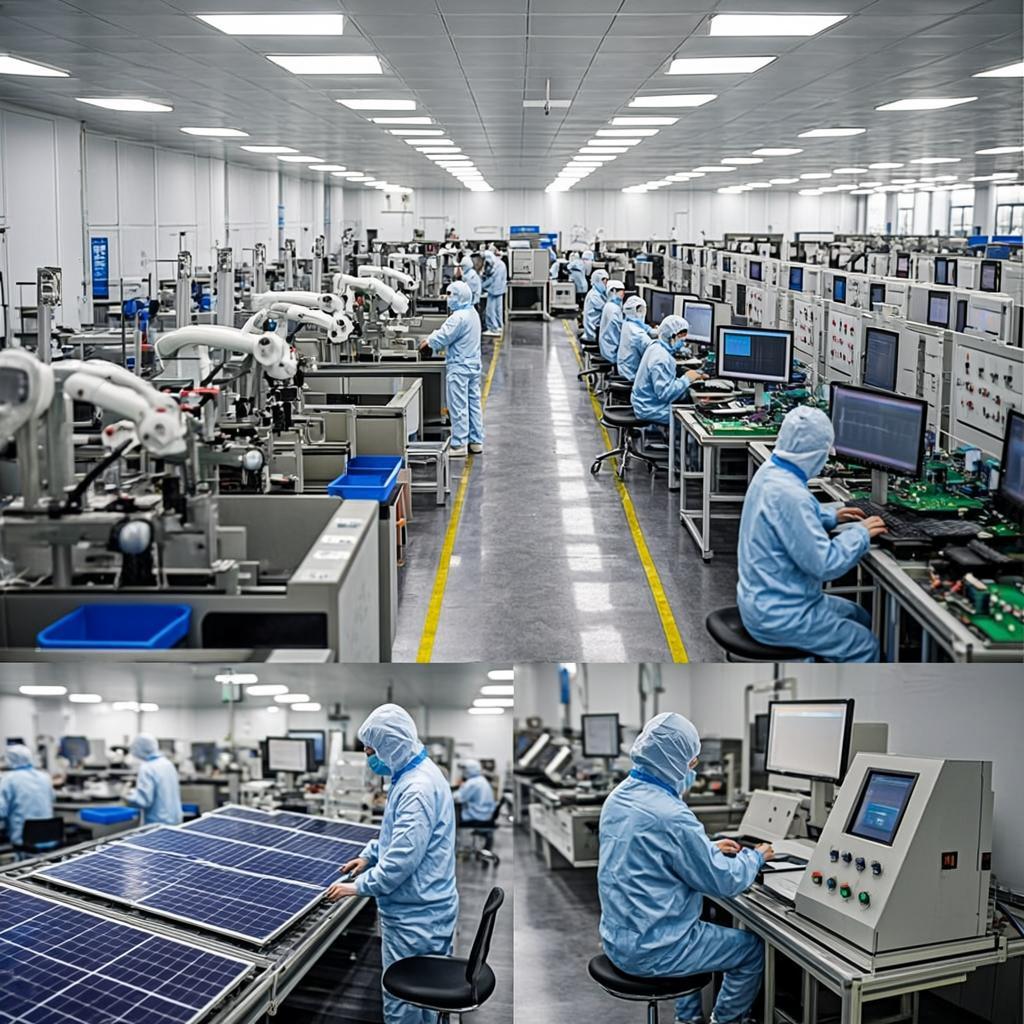
As a leading manufacturer in the photovoltaic industry, we prioritize innovation in solar panel conversion efficiency to deliver unmatched value to B2B partners. Our state-of-the-art production facilities in China adhere to ISO 9001 and ISO 14001 standards, utilizing automated lines for precision assembly and zero-defect quality control. Every panel undergoes EL (electroluminescence) testing to verify solar panel conversion efficiency before shipment.
With over 15 years of experience exporting to 80+ countries, we offer customizable solutions, from black-frame aesthetics for premium projects to large-volume OEM services. Our R&D team continuously refines solar panel conversion efficiency through collaborations with top-tier silicon suppliers and universities. Certifications like TUV, UL, and CEC ensure global compliance, while bankable performance data builds investor confidence.
We provide comprehensive technical support, including yield simulations using PVsyst software tailored to your site's solar panel conversion efficiency projections. Partner with us for reliability, performance, and a commitment to advancing renewable energy worldwide.
7. FAQ
What is solar panel conversion efficiency, and why does it matter?
Solar panel conversion efficiency is the ratio of electrical output to incoming solar energy, expressed as a percentage. Higher solar panel conversion efficiency means more power from less space, reducing costs and improving ROI for commercial projects.
How is solar panel conversion efficiency measured?
It's tested under STC: 1000W/m² irradiance, 25°C cell temperature, and AM 1.5 spectrum. Real-world performance factors in temperature, soiling, and tilt angle.
Do these panels maintain solar panel conversion efficiency over time?
Yes, with annual degradation <0.55%, retaining over 84.8% of initial solar panel conversion efficiency after 25 years, per our linear warranty.
Can solar panel conversion efficiency be improved on-site?
Optimal tilt, cleaning schedules, and bifacial ground reflectors can enhance effective solar panel conversion efficiency by 5-15%.
Are these panels suitable for high-humidity environments?
Absolutely; IP68 junction boxes and hydrophobic coatings protect solar panel conversion efficiency in tropical climates.
What warranties cover solar panel conversion efficiency?
25-year linear power output warranty and 12-year product workmanship warranty, ensuring long-term solar panel conversion efficiency.
Related product
- English
- Françai
- Español
- Deutsch
- Română
- العربية
- 한국어
- 日本語
- Italiano
- Português
- Gaeilge
- Dansk
- Čeština
- Русский
- Afrikaans
- Euskara
- Català
- Esperanto
- हिन्दी
- Ελληνικά
- Bahasa Melayu
- Polski
- Српски
- Kiswahili
- ภาษาไทย
- Tiếng Việt
- Türkçe
- Svenska
- Cymraeg
- Slovenčina
- Latviešu
- Malti
- Magyar
- Galego
- ગુજરાતી
- Eesti Keel
- বাংলা
- Shqip
- беларуская мова
- Nederlands
- Tagalog
- ქართული
- Íslenska
- Kreyòl Ayisyen
- Lietuvių
- Norsk
- slovenščina
- தமிழ்
- Українська
- ײִדיש
- اردو
- తెలుగు
- فارسی
- македонски
- ಕನ್ನಡ
- Bahasa Indonesia
- עברית
- Suomi
- Hrvatski
- Български
- Azerbaijani