


High-Efficiency Bifacial Solar Module for Commercial & Utility-Scale Projects
Introducing our next-generation solar module bifacial, engineered to maximize energy yield and deliver superior return on investment for large-scale solar installations. By capturing sunlight on both the front and rear sides, this advanced photovoltaic solution significantly outperforms traditional monofacial panels, particularly in environments with high albedo. Designed for durability and long-term performance, our bifacial modules are the optimal choice for developers, EPCs, and IPPs seeking to reduce levelized cost of energy (LCOE) and enhance project profitability.
Product Overview
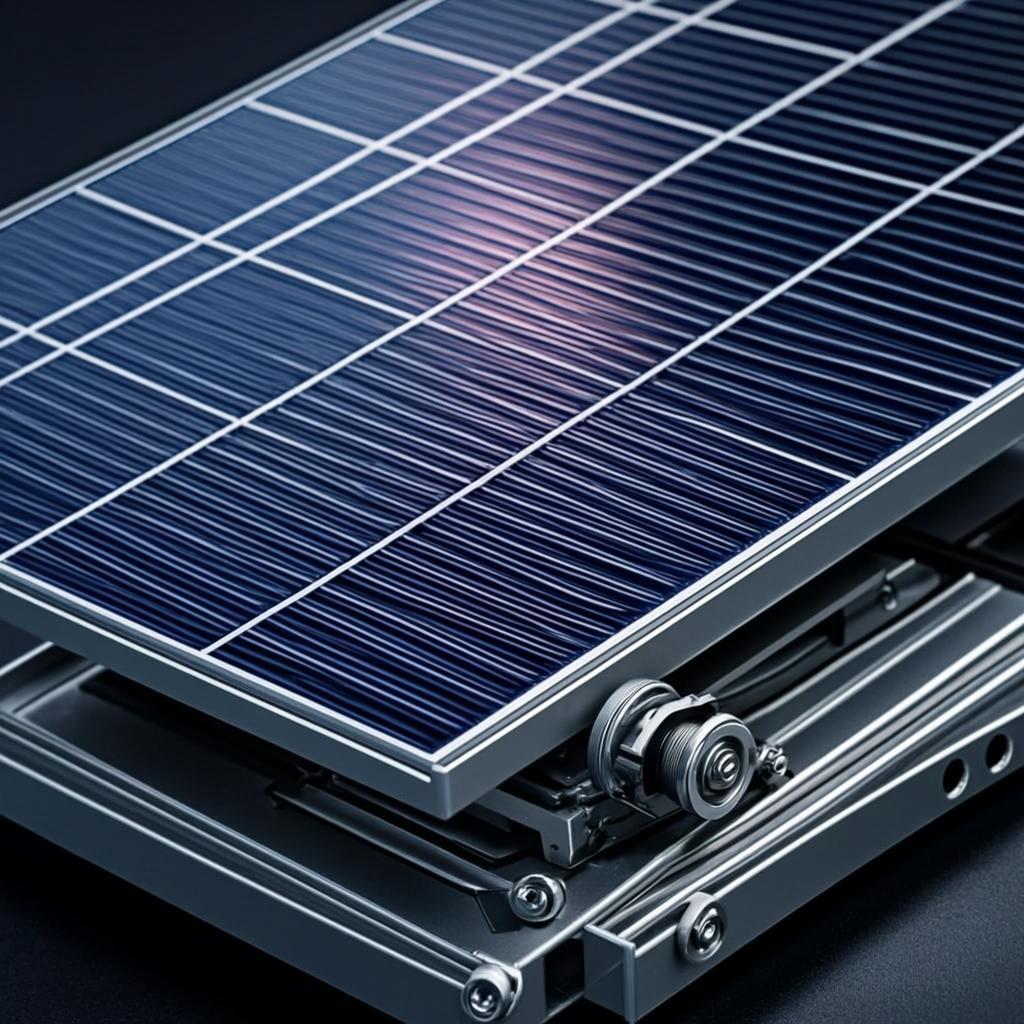
Our solar module bifacial represents a leap forward in photovoltaic technology. Utilizing high-efficiency monocrystalline PERC cells and a transparent backsheet or dual-glass construction, these modules convert direct, diffuse, and reflected light into usable electricity. The core innovation lies in its ability to generate additional energy from light reflected off the ground or surrounding surfaces (albedo), such as white gravel, sand, snow, or specialized reflective membranes. This dual-sided power generation capability makes it an indispensable asset for ground-mounted solar farms, carport canopies, and agrovoltaic systems where space optimization and maximum energy harvest are critical.
Key Features
- Dual-Side Power Generation: Captures direct sunlight on the front and utilizes reflected light on the rear, boosting total energy output by up to 30% depending on installation conditions.
- Robust Dual-Glass Construction: Featuring tempered glass on both sides for exceptional mechanical strength, improved resistance to PID (Potential Induced Degradation), and a longer operational lifespan exceeding 30 years.
- Enhanced Low-Light Performance: Advanced cell technology ensures stable and efficient power production during early morning, late evening, and overcast conditions.
- Superior Durability: Withstands harsh environmental stresses, including high wind loads (up to 5400Pa), heavy snow (up to 5400Pa), and humidity, backed by a comprehensive product and performance warranty.
- Optimized for High-Albedo Environments: Delivers maximum bifacial gain when installed over light-colored, reflective surfaces, unlocking higher energy density per installed capacity.
Technical Specifications
| Parameter | Specification |
|---|---|
| Cell Type | Monocrystalline PERC, Bifacial |
| Nominal Power (Pmax) | 550W - 670W |
| Bifaciality Factor | ≥ 70% |
| Module Efficiency | Up to 21.6% |
| Dimensions (L x W) | 2278mm x 1134mm |
| Weight | Approx. 32.5 kg |
| Front / Rear Glass | 3.2mm Tempered Glass / 2.0mm Tempered Glass |
| Frame | Anodized Aluminum Alloy |
| Power Temperature Coefficient | -0.34% / °C |
| Operating Temperature | -40°C to +85°C |
| Warranty | 15-Year Product Warranty, 30-Year Linear Power Warranty (≥ 87.4% of nominal power) |
Application Scenarios
The versatility of our bifacial solar module makes it suitable for a wide range of demanding applications:
- Utility-Scale Solar Farms: Maximizes land use efficiency and energy yield, especially with single-axis trackers and high-albedo ground cover.
- Commercial & Industrial (C&I) Rooftops: Ideal for flat roofs with reflective coatings, providing higher energy output in constrained areas.
- Solar Carports and Canopies: Generates power from both top-side sunlight and light reflected from the pavement below.
- Agrovoltaic and Floating PV: The transparent rear allows partial light transmission, beneficial for certain crops, while water surfaces provide excellent reflectivity for floating installations.
- Noise Barriers and Vertical Installations: Effectively captures low-angle sunlight on vertical surfaces along highways or buildings.
Advantages
Choosing our bifacial technology delivers tangible benefits to your project's bottom line:
- Higher Energy Yield: The primary advantage is increased energy production, leading to a lower Levelized Cost of Energy (LCOE) and faster payback periods.
- Improved Reliability: The dual-glass structure is impervious to water vapor, prevents backsheet degradation, and offers superior resistance to corrosion, ammonia, and salt mist.
- Reduced Soiling Losses: The smooth glass surface on both sides is easier to clean and less prone to dirt accumulation compared to textured backsheets.
- Better Temperature Coefficient: Maintains higher performance in high-temperature environments compared to standard modules.
- Long-Term Investment Security: The extended 30-year performance warranty ensures stable and predictable energy output over the system's lifetime.
Why Choose Us
As a leading manufacturer of advanced photovoltaic solutions, we provide more than just a product; we offer a partnership for success.
- Proven Expertise: Over a decade of specialization in high-efficiency module manufacturing, with a dedicated R&D team focused on bifacial technology.
- Rigorous Quality Control: Every solar module bifacial undergoes stringent testing (EL, electroluminescence, flash testing) and complies with international certifications (IEC 61215, IEC 61730, UL).
- Global Supply Chain & Support: We ensure reliable, on-time delivery worldwide, backed by a responsive technical support and warranty service team.
- Customizable Solutions: We can tailor specifications, including frame colors and junction box configurations, to meet specific project requirements.
- Commitment to Sustainability: Our manufacturing process emphasizes energy efficiency and responsible sourcing, contributing to your project's sustainability goals.
FAQ
How much extra energy can a bifacial module produce?
The bifacial gain varies from 5% to 30%, primarily dependent on ground albedo (reflectivity), installation height, racking configuration (tracker vs. fixed-tilt), and geographic location. A professional site-specific simulation is recommended for accurate yield prediction.
Is special mounting required for bifacial modules?
Bifacial modules can be used with standard mounting systems, but to maximize rear-side gain, it is advised to use racking with minimal rear shading (e.g., single central rail or specific tracker designs) and to elevate the modules higher from the ground.
Are bifacial modules more expensive?
While the initial cost per module may be slightly higher than monofacial equivalents, the significantly higher energy output over the system's lifetime results in a lower LCOE, providing a superior financial return.
How do I model the performance of a bifacial system?
Advanced PV simulation software (like PVsyst) now includes dedicated bifacial modeling tools. Accurate modeling requires inputs for albedo, array layout, mounting structure geometry, and site weather data.
What surfaces provide the best albedo for bifacial gain?
Light-colored surfaces like white gravel, concrete, sand, and specialized reflective films offer high albedo (0.5-0.7). Fresh snow provides the highest albedo (~0.9), while grass and asphalt are lower (0.1-0.25).