

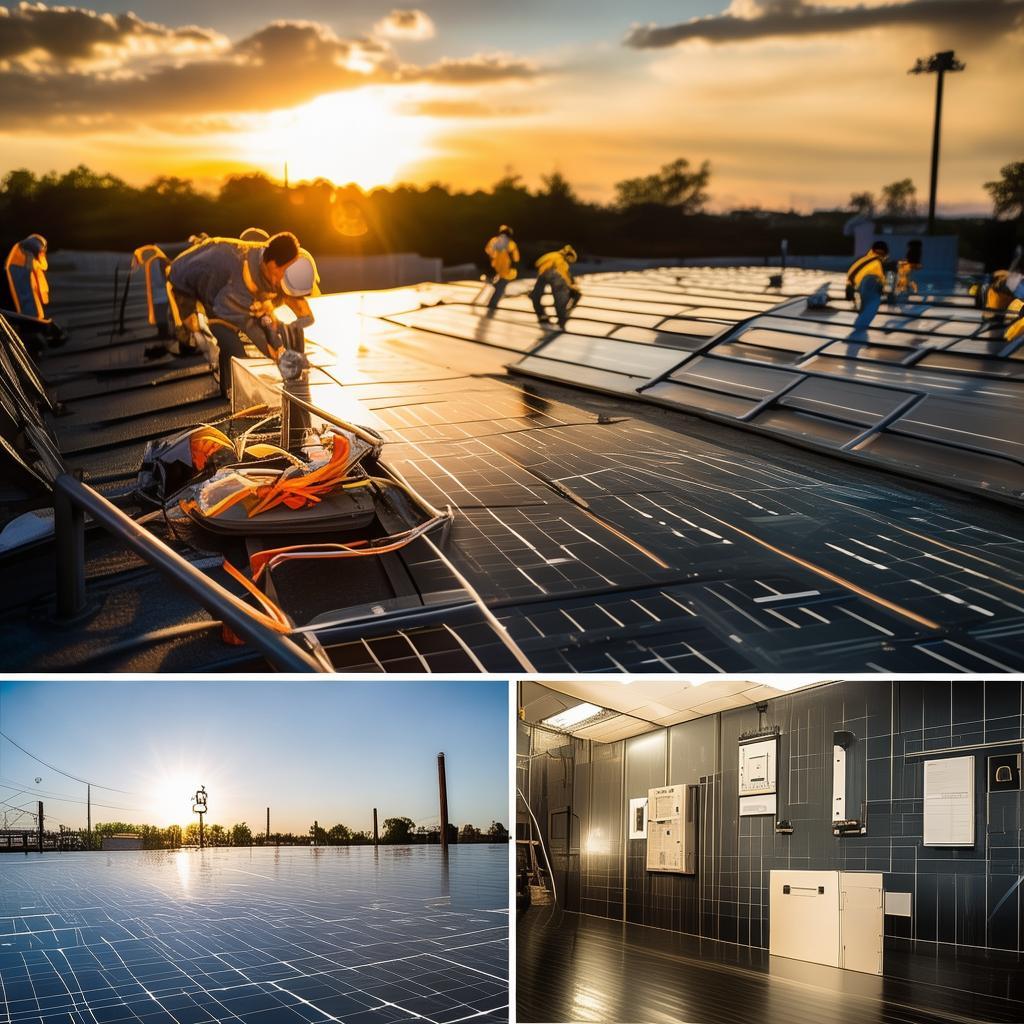
solar design
Discover the pinnacle of photovoltaic engineering with Solar Design, our state-of-the-art software platform engineered for precision solar system planning and optimization. Tailored for professional
Solar Design
Product Overview
Discover the pinnacle of photovoltaic engineering with Solar Design, our state-of-the-art software platform engineered for precision solar system planning and optimization. Tailored for professional engineers, EPC firms, and installers in the international solar market, Solar Design streamlines the entire process from site assessment to final layout, ensuring maximum energy yield and compliance with global standards.
At its core, Solar Design leverages advanced algorithms and AI-driven simulations to model complex solar installations with unparalleled accuracy. Whether you're designing rooftop arrays for commercial buildings or utility-scale ground-mounted farms, this comprehensive tool integrates topographic data, weather patterns, and module specifications to deliver actionable insights. Our solar design solution supports seamless collaboration across teams, reducing project timelines by up to 40% while minimizing costly errors.
Built on a modular architecture, Solar Design accommodates diverse project scales, from residential setups to multi-MW parks. It incorporates real-time irradiance calculations, shading analysis, and electrical modeling, empowering users to create bankable designs that meet IEC 61724 and other rigorous standards. With intuitive workflows and customizable templates, Solar Design transforms intricate solar design challenges into efficient, data-backed decisions.
Key Features
- 3D Modeling and Visualization: Generate photorealistic 3D renders of solar arrays on any terrain, with drag-and-drop module placement and automatic stringing optimization for superior solar design outcomes.
- Shading and Bifacial Analysis: Advanced ray-tracing engine simulates hourly shading from obstacles, trees, and buildings, including rear-side irradiance for bifacial modules to enhance solar design precision.
- Energy Yield Prediction: Powered by NASA POWER and PVGIS databases, predict annual production with <2% deviation, factoring in soiling, degradation, and spectral effects for reliable solar design forecasting.
- Electrical Design Automation: Auto-generate single-line diagrams, DC/AC sizing, and inverter configurations compliant with NEC, IEC, and AS/NZS standards, streamlining solar design documentation.
- BOM and Cost Estimation: Integrated bill of materials with supplier pricing databases, enabling instant CAPEX/OPEX calculations and scenario comparisons within the solar design environment.
- Multi-Site Portfolio Management: Handle hundreds of projects simultaneously with centralized dashboards, GIS integration, and API connectivity for CRM/ERP systems in large-scale solar design operations.
- Regulatory Compliance Tools: Built-in checks for grid codes, setback rules, and environmental permits, ensuring your solar design adheres to local and international regulations effortlessly.
- Cloud Collaboration: Real-time sharing, version control, and markup tools for distributed teams, accelerating solar design reviews and approvals globally.
Technical Specifications
| Category | Specification | Details |
|---|---|---|
| System Requirements | OS Compatibility | Windows 10/11 (64-bit), macOS 12+, Linux (Ubuntu 20.04+) |
| CPU | Intel i7 or equivalent, 8 cores minimum | |
| RAM | 16 GB (32 GB recommended for large projects) | |
| GPU | DirectX 12 compatible with 4 GB VRAM | |
| Supported Modules | Panel Database | 50,000+ modules from 500+ manufacturers (CEC, Sandia databases integrated) |
| Inverters | 10,000+ string/central/micro models, optimizer support | |
| Simulation Engine | Time Resolution | 1-minute intervals, 30+ years of TMY data |
| Accuracy | <2% RMSE vs. measured data (P50/P90 guarantees) | |
| File I/O | Imports | DWG, DXF, IFC, LiDAR (LAS), GIS (SHP, GeoTIFF) |
| Exports | PDF, AutoCAD, Revit, Excel, JSON, PVSyst-compatible CSV | |
| Performance | Project Capacity | Up to 1 GW per project, 500 concurrent simulations |
| Licensing | Deployment | Perpetual/Subscription, Cloud/On-Premise, Multi-User |
Application Scenarios
Solar Design excels across a spectrum of photovoltaic deployments, making it indispensable for B2B solar professionals worldwide.
Utility-Scale Solar Farms
For ground-mounted systems exceeding 10 MW, Solar Design optimizes tracker layouts, terrain following, and wind load analysis, maximizing DC/AC ratios and minimizing LCOE through precise solar design modeling.
Commercial and Industrial Rooftops
Navigate complex geometries with ease: parapets, HVAC units, and skylights are automatically accounted for in shading studies, delivering optimized solar design for high-value C&I portfolios.
Residential and Agri-PV
Support agrivoltaic dual-use systems with crop height modeling and elevated structures, ensuring solar design balances energy production with agricultural productivity.
Floating Solar (FPV)
Specialized hydrology modules simulate water evaporation, wave effects, and cooling gains, perfect for innovative solar design on reservoirs and ponds.
Advantages
Choosing Solar Design means gaining a competitive edge in the fast-evolving solar industry. Our platform's advantages are rooted in cutting-edge technology and user-centric development:
- Unmatched Accuracy: Proprietary ML models reduce prediction errors by 15% compared to legacy tools, validated against 1,000+ real-world installations.
- Time Efficiency: Automate 80% of manual tasks, from terrain meshing to report generation, slashing solar design cycles from weeks to days.
- Cost Optimization: Scenario analysis identifies the lowest LCOE configurations, often yielding 5-10% savings on BoP materials.
- Scalability: Enterprise-grade architecture handles petabyte-scale data for IPPs managing global asset portfolios.
- Future-Proof: Regular updates incorporate emerging tech like perovskite tandems and DC-coupled storage, keeping your solar design ahead of the curve.
Why Choose Us
With over 15 years in photovoltaic software development, we power 30% of the world's top solar EPCs. Our Solar Design platform is backed by a team of PhD engineers and partnerships with leading module makers like LONGi and Trina Solar. We offer 24/7 multilingual support, annual training academies, and a 99.9% uptime SLA for cloud users.
Unlike generic CAD tools, our deep domain expertise ensures Solar Design delivers ROI from day one—users report 25% faster permitting and 12% higher yields. Join thousands of professionals trusting our solar design expertise for bankable, grid-ready projects.
FAQ
What makes Solar Design different from competitors like Helioscope or Aurora?
Solar Design stands out with its integrated bifacial/tracker optimization and ML-enhanced yield forecasts, offering superior accuracy for diverse climates without add-ons.
Is Solar Design suitable for non-English speaking markets?
Yes, fully localized in 12 languages, with region-specific databases for Europe, APAC, LATAM, and MENA solar design standards.
Can I import existing PVSyst projects into Solar Design?
Absolutely—seamless CSV import preserves meteo data, geometries, and simulations for effortless migration to advanced solar design.
Does Solar Design support battery storage integration?
Comprehensive: Model hybrid systems with BESS dispatch, arbitrage, and frequency response, compliant with IEEE 1547.
How often is the module/inverter database updated?
Weekly, with auto-sync to CEC/Sandia and custom uploads for proprietary solar design components.
What training resources are available?
Extensive: Video tutorials, webinars, certification paths, and on-site workshops tailored to your solar design workflows.
Related product
- English
- Françai
- Español
- Deutsch
- Română
- العربية
- 한국어
- 日本語
- Italiano
- Português
- Gaeilge
- Dansk
- Čeština
- Русский
- Afrikaans
- Euskara
- Català
- Esperanto
- हिन्दी
- Ελληνικά
- Bahasa Melayu
- Polski
- Српски
- Kiswahili
- ภาษาไทย
- Tiếng Việt
- Türkçe
- Svenska
- Cymraeg
- Slovenčina
- Latviešu
- Malti
- Magyar
- Galego
- ગુજરાતી
- Eesti Keel
- বাংলা
- Shqip
- беларуская мова
- Nederlands
- Tagalog
- ქართული
- Íslenska
- Kreyòl Ayisyen
- Lietuvių
- Norsk
- slovenščina
- தமிழ்
- Українська
- ײִדיש
- اردو
- తెలుగు
- فارسی
- македонски
- ಕನ್ನಡ
- Bahasa Indonesia
- עברית
- Suomi
- Hrvatski
- Български
- Azerbaijani