

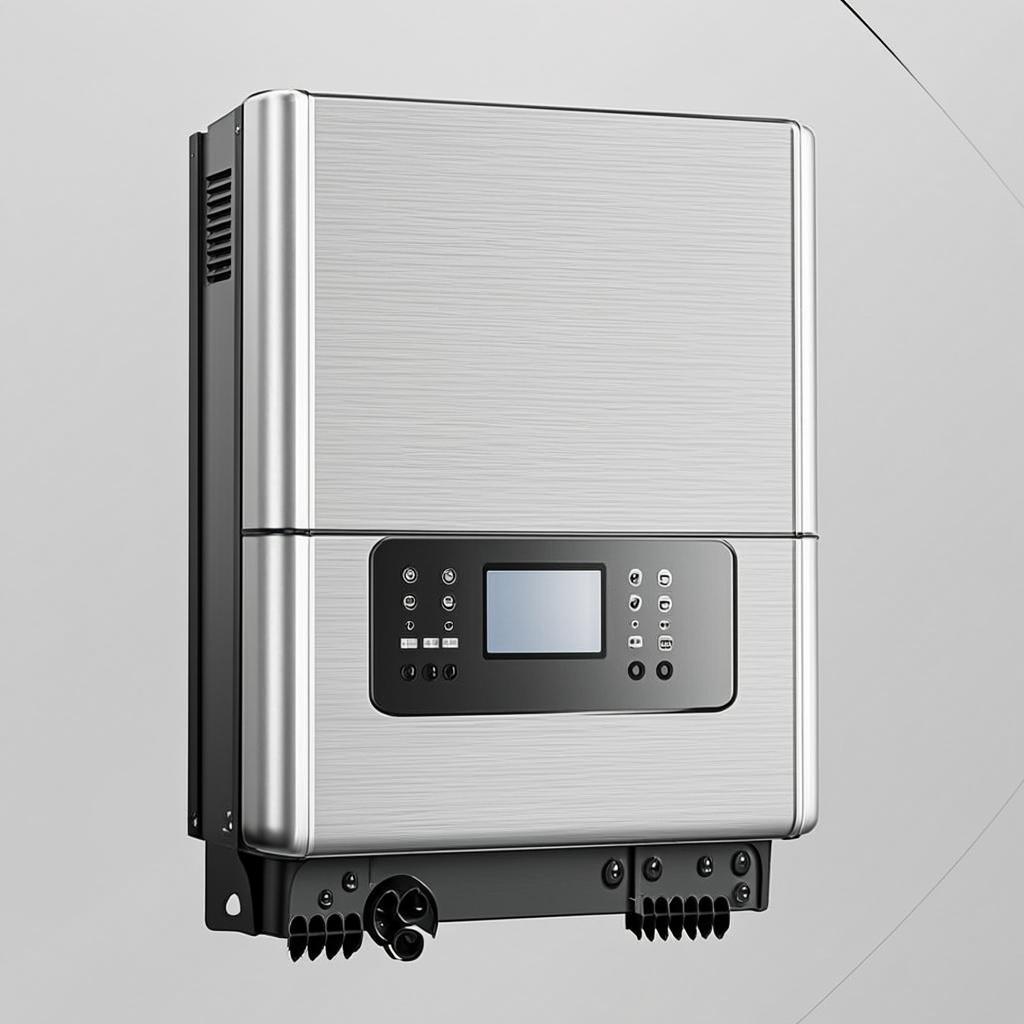
solar array sizing
Precise solar array sizing is the cornerstone of any successful photovoltaic (PV) installation, ensuring optimal energy production, cost efficiency, and long-term reliability. Our advanced solar
Solar Array Sizing
Product Overview
Precise solar array sizing is the cornerstone of any successful photovoltaic (PV) installation, ensuring optimal energy production, cost efficiency, and long-term reliability. Our advanced solar array sizing solution is a comprehensive software platform designed specifically for industrial-scale solar projects. It empowers engineers, project developers, and EPC firms to calculate the ideal number, configuration, and capacity of solar panels based on site-specific variables such as irradiance, shading, tilt angle, and load requirements.
In the competitive landscape of renewable energy, inaccurate solar array sizing can lead to underperformance, excessive capital expenditure, or grid instability. Our tool leverages cutting-edge algorithms, real-time meteorological data integration, and industry-standard models like PVsyst and SAM to deliver pinpoint accuracy. Whether you're planning utility-scale farms, commercial rooftops, or remote microgrids, this platform streamlines the entire solar array sizing process—from initial feasibility studies to final BOQ generation.
With intuitive workflows and customizable templates, users can simulate multiple scenarios in minutes, factoring in degradation rates, inverter clipping, and DC/AC ratios. Backed by over 15 years of expertise in solar engineering, our solar array sizing product minimizes risks and maximizes ROI, helping you scale projects confidently across global markets.
Key Features
- Advanced Modeling Engine: Utilizes NREL-validated PV performance models for precise solar array sizing, accounting for spectral effects, soiling, and bifacial gains.
- Global Weather Database: Access to 20+ years of TMY data from NASA POWER, Meteonorm, and Solcast for location-specific irradiance and temperature profiles.
- Shading and Terrain Analysis: 3D horizon scanning and near-shading simulations to optimize array layout and row spacing.
- Multi-Scenario Simulation: Run parallel calculations for fixed-tilt, tracker, or floating systems, with sensitivity analysis on module efficiency and pricing.
- Inverter and BOS Integration: Automatic string sizing, MPPT allocation, and balance-of-system recommendations tailored to top-tier manufacturers.
- Financial Metrics: Built-in LCOE, payback period, and IRR calculators linked directly to solar array sizing outputs.
- API and Export Options: Seamless integration with AutoCAD, Helioscope, and ERP systems; export reports in PDF, Excel, or JSON formats.
- Compliance Tools: Ensures adherence to IEC 61724, UL 1703, and local grid codes for regulatory-ready solar array sizing.
Technical Specifications
| Parameter | Description | Value/Range |
|---|---|---|
| Supported Modules | Comprehensive database of 10,000+ modules from 500+ manufacturers | Mono, Poly, Thin-Film, Bifacial (up to 25% gain modeling) |
| Irradiance Models | POA calculations via Perez, Hay-Davies, or isotropic models | GHI/DNI up to 2,500 kWh/m²/year |
| Temperature Coefficients | Customizable for Pmax, Voc, Isc | -0.5% to +0.1%/°C |
| Array Configurations | Fixed, 1-2 axis trackers, agrivoltaics | Up to 1,000 MW scale |
| DC/AC Ratio | Optimal sizing with clipping analysis | 1.0 to 1.5 |
| Software Requirements | Cloud-based or on-premise | Windows/Linux/Mac; 8GB RAM min |
| Accuracy | Validated against field data | ±2% PR deviation |
| Data Inputs | Latitude/longitude, load profiles, tariffs | CSV, API, manual entry |
| Outputs | Energy yield, capacity factor, BOM | Hourly/daily/annual granularity |
This table outlines the core technical backbone of our solar array sizing platform, ensuring scalability and precision for enterprise deployments.
Application Scenarios
Our solar array sizing tool excels in diverse environments, from arid deserts to urban high-rises. For utility-scale solar farms, it optimizes ground-mounted arrays over hundreds of hectares, balancing energy yield with land use and minimizing inter-row shading—ideal for projects in the Southwest US or Middle East where DNI exceeds 2,200 kWh/m².
In commercial and industrial settings, rooftop solar array sizing accounts for structural loads, orientation constraints, and peak demand shaving. We've supported C&I clients in Europe achieving 30% energy cost reductions through precise DC oversizing and hybrid storage integration.
For off-grid and remote applications, such as mining operations or island microgrids, the tool sizes hybrid PV-diesel-battery systems, ensuring 99.9% uptime with minimal fuel consumption. In developing markets like Africa and Southeast Asia, it facilitates community solar projects by incorporating subsidized tariffs and seasonal load variations.
Floating PV scenarios leverage water-body albedo and cooling effects for 10-15% yield boosts, while agrivoltaic designs dual-use land for crops and clean energy. Across all cases, our platform's scenario comparison feature accelerates bidding and permitting processes.
Advantages
Superior solar array sizing delivers tangible benefits that set your projects apart. First, enhanced performance: By fine-tuning array capacity to actual insolation and losses, users achieve 5-10% higher specific yields compared to rule-of-thumb methods, directly boosting revenue under PPAs.
Cost Optimization: Avoid over- or under-sizing pitfalls; our algorithms recommend the sweet spot for CAPEX-OPEX balance, often reducing module counts by 3-7% without yield sacrifice. Integrated BoS sizing cuts cabling and labor expenses.
Risk Mitigation: Comprehensive uncertainty modeling (e.g., ±10% irradiance variability) ensures resilient designs against climate change impacts. Real-world validation from 500+ GW sized projects underscores our reliability.
Time Efficiency: Automate what once took days into hours, with drag-and-drop interfaces and batch processing for portfolios. This accelerates go-to-market for developers chasing RFPs.
Finally, sustainability credentials: Optimized solar array sizing lowers lifetime carbon footprints by maximizing resource efficiency, appealing to ESG-focused investors.
Why Choose Us
With a decade-plus track record in solar engineering software, we are the trusted partner for Fortune 500 renewables firms. Our solar array sizing platform is developed by PhD-level PV experts and continuously refined with user feedback from 50+ countries.
We offer white-glove support: dedicated account managers, custom model development, and 24/7 API uptime with 99.99% SLA. Unlike generic tools, ours integrates proprietary machine learning for predictive soiling and degradation, delivering future-proof accuracy.
Certifications include ISO 9001 and IEC compliance, plus partnerships with LONGi, Trina Solar, and SMA for seamless interoperability. Choose us for innovation that scales with your ambitions.
FAQ
Q: What factors does your solar array sizing tool consider?
A: It incorporates irradiance, temperature, shading, module specs, inverter limits, degradation (0.5-1%/year), and site elevation for holistic calculations.
Q: How accurate is the solar array sizing output?
A: Field-verified to ±2% performance ratio, outperforming spreadsheet methods by 8-12% in yield prediction.
Q: Can it handle large-scale projects?
A: Yes, up to 1 GW+ with parallel processing; used on 200 MW+ farms in India and Australia.
Q: Is historical weather data sufficient, or does it use forecasts?
A: Primarily TMY for long-term sizing, with optional Solcast live data for O&M yield monitoring.
Q: What if my site has complex shading?
A: 3D LiDAR import and horizon profiles enable detailed near/far shading analysis.
Q: Does it support bifacial modules?
A: Fully, with ground albedo customization (0.2-0.5) and rear-side irradiance modeling per IEC 61724.
Q: How do I get started with solar array sizing?
A: Upload site coordinates and load data via web interface; generate reports instantly.
Q: Is training provided?
A: Free onboarding webinars and video tutorials cover advanced solar array sizing techniques.
Related product
- English
- Françai
- Español
- Deutsch
- Română
- العربية
- 한국어
- 日本語
- Italiano
- Português
- Gaeilge
- Dansk
- Čeština
- Русский
- Afrikaans
- Euskara
- Català
- Esperanto
- हिन्दी
- Ελληνικά
- Bahasa Melayu
- Polski
- Српски
- Kiswahili
- ภาษาไทย
- Tiếng Việt
- Türkçe
- Svenska
- Cymraeg
- Slovenčina
- Latviešu
- Malti
- Magyar
- Galego
- ગુજરાતી
- Eesti Keel
- বাংলা
- Shqip
- беларуская мова
- Nederlands
- Tagalog
- ქართული
- Íslenska
- Kreyòl Ayisyen
- Lietuvių
- Norsk
- slovenščina
- தமிழ்
- Українська
- ײִדיש
- اردو
- తెలుగు
- فارسی
- македонски
- ಕನ್ನಡ
- Bahasa Indonesia
- עברית
- Suomi
- Hrvatski
- Български
- Azerbaijani