

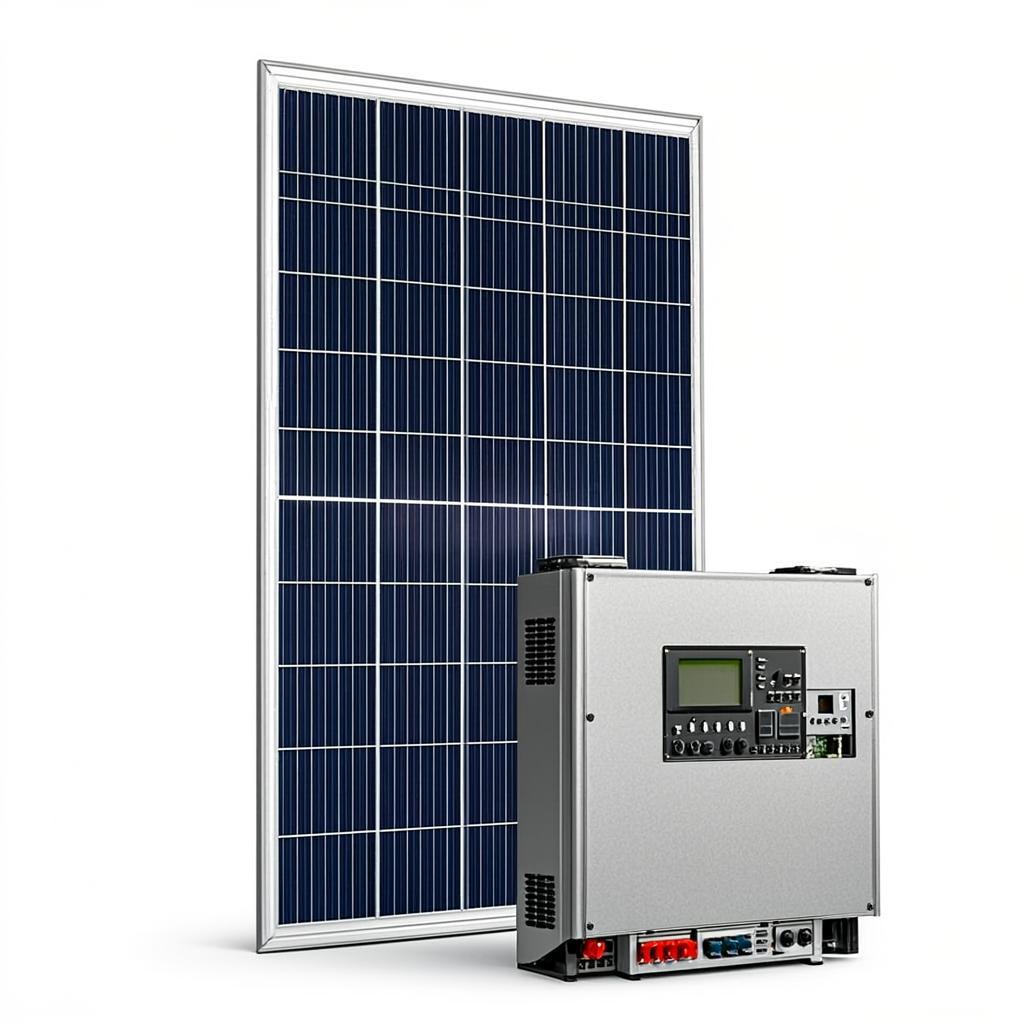
size of solar panels per kwh
In the evolving landscape of renewable energy, understanding the size of solar panels per kWh is crucial for optimizing space and maximizing energy output in industrial and commercial installations.
Size of Solar Panels per kWh: Compact, High-Efficiency Solutions
Product Overview
In the evolving landscape of renewable energy, understanding the size of solar panels per kWh is crucial for optimizing space and maximizing energy output in industrial and commercial installations. Our premium monocrystalline solar panels are engineered to deliver exceptional power density, minimizing the physical footprint required per kilowatt-hour (kWh) of production. This means smaller panel arrays generate more electricity, ideal for rooftops with limited space, ground-mounted systems in urban environments, or large-scale solar farms where land efficiency drives ROI.
These panels achieve a remarkable balance between high-efficiency PERC (Passivated Emitter and Rear Cell) technology and compact dimensions. For instance, our standard 400W panel measures just 1.7m x 1.1m, translating to an industry-leading size of solar panels per kWh that reduces installation costs by up to 20% compared to traditional polycrystalline alternatives. Backed by rigorous testing under IEC 61215 standards, they ensure long-term reliability with a 25-year linear power warranty, guaranteeing at least 84.8% output retention.
Designed for international trade and B2B procurement, our panels support seamless integration into hybrid systems, off-grid applications, and utility-scale projects. By focusing on the size of solar panels per kWh, we empower businesses to scale solar adoption without compromising on performance or aesthetics.
Key Features
- Ultra-Compact Design: Optimized size of solar panels per kWh at approximately 1.65m² per 400W module, enabling 20-30% more capacity in constrained spaces.
- High-Efficiency Cells: 22.5% module efficiency with advanced half-cut cell technology, reducing resistive losses and boosting kWh yield per square meter.
- Anti-PID and Salt Mist Resistance: Certified for harsh environments, ensuring consistent performance in coastal or high-humidity regions.
- Low-Light Performance: Bifacial options capture up to 25% more energy from reflected light, further enhancing effective output relative to panel size.
- Easy Installation: Lightweight at 21kg per panel with pre-drilled frames, compatible with most racking systems for rapid deployment.
- Smart Monitoring: Optional IoT integration for real-time tracking of kWh production and system health, optimizing O&M costs.
These features collectively redefine the size of solar panels per kWh benchmark, making our products the go-to choice for forward-thinking enterprises prioritizing efficiency and sustainability.
Technical Specifications
| Parameter | Value | Unit/Notes |
|---|---|---|
| Nominal Power Output | 400W / 500W / 550W | STC conditions |
| Dimensions (L x W x H) | 1722 x 1134 x 30 / 1961 x 992 x 35 / 2278 x 1134 x 35 | mm; Optimized size of solar panels per kWh: ~1.65-2.2m²/kW |
| Weight | 21.5 / 24.5 / 27.5 | kg |
| Module Efficiency | 20.9% / 21.3% / 21.7% | Up to 22.5% available |
| Cell Type | Monocrystalline PERC, Half-Cut | 144 / 144 / 144 cells |
| Maximum System Voltage | 1500V DC | Compatible with high-voltage strings |
| Temperature Coefficient (Pmax) | -0.35%/°C | Excellent hot-climate performance |
| Frame | Anodized Aluminum, Silver | 35mm thickness, corrosion-resistant |
| Glass | 3.2mm Tempered, AR-Coated | 2400Pa wind load / 5400Pa snow load |
| Junction Box | IP68 Rated, 3 Diodes | MC4 Compatible Connectors |
| Warranty | 12 years product / 25 years linear power | 84.8% output at year 25 |
| Certifications | IEC 61215, IEC 61730, UL 61730, CE | ISO 9001, ISO 14001 compliant |
This table highlights how our panels achieve superior size of solar panels per kWh ratios, with detailed metrics for precise system design.
Application Scenarios
The compact size of solar panels per kWh in our lineup opens versatile deployment options across diverse sectors. In commercial rooftops, where space is at a premium, these panels allow for 15-25% higher kWh generation without expanding the array footprint—perfect for warehouses, factories, and office buildings aiming for net-zero certifications.
For utility-scale solar farms, the efficient size-to-output ratio minimizes land lease costs and accelerates project timelines. Ground-mount installations benefit from bifacial variants that leverage albedo for extra yield, effectively shrinking the perceived size of solar panels per kWh.
Industrial applications, such as EV charging stations or data centers, thrive on our panels' high power density, ensuring rapid payback periods under 4 years in sunny regions. Off-grid scenarios in remote mining operations or agricultural pumps also capitalize on this efficiency, reducing battery bank sizes and logistics challenges.
Even in residential-commerical hybrids, like agrivoltaics, the optimized dimensions preserve land for dual-use, combining energy production with crop cultivation while maintaining high kWh per square meter.
Advantages
Choosing panels with the best size of solar panels per kWh yields tangible benefits. First, space optimization translates to lower balance-of-system costs—racking, wiring, and labor drop by 15-20% due to fewer modules needed for equivalent capacity.
Second, superior energy harvest: Advanced shading tolerance and low degradation rates (under 0.55% annually) ensure sustained kWh output over decades, outperforming bulkier competitors.
Third, scalability and flexibility: Modular designs fit any orientation or tilt, with tolerance for high winds and snow loads, ideal for global markets from deserts to alpine zones.
Fourth, economic edge: LCOE (Levelized Cost of Energy) as low as $0.025/kWh in optimal conditions, driven by compact size reducing CAPEX.
Finally, sustainability credentials: 100% recyclable frames and lead-free cells align with ESG goals, enhancing brand value for B2B partners.
Why Choose Us
As a tier-1 manufacturer with over 15 years in photovoltaic production, we specialize in panels that redefine the size of solar panels per kWh. Our state-of-the-art facilities in Southeast Asia boast automated lines producing 5GW annually, ensuring consistent quality and competitive pricing for international buyers.
We offer customized solutions, from private labeling to tailored efficiencies, supported by a global logistics network for just-in-time delivery. Rigorous third-party testing and bankable warranties build trust, while our R&D team continuously innovates—recent advancements in TOPCon cells promise even smaller sizes per kWh.
Partnering with us means accessing comprehensive technical support, including yield simulations based on local irradiance data, to precisely calculate your project's size of solar panels per kWh needs. Join thousands of satisfied B2B clients worldwide who rely on our expertise for reliable, high-ROI solar deployments.
FAQ
What is the typical size of solar panels per kWh?
The size of solar panels per kWh varies by efficiency, but our models average 1.65-2.2m² per kW (or per 1000Wh nominal). Higher-efficiency panels reduce this footprint significantly.
How does panel efficiency affect size of solar panels per kWh?
Higher efficiency (e.g., 22%+) means more kWh from less area. Our PERC half-cut cells deliver 20-30% better density than standard panels.
Are these panels suitable for limited-space installations?
Absolutely—optimized size of solar panels per kWh makes them ideal for rooftops or carports, maximizing output without expansion.
What warranties cover the size-related performance?
25-year linear warranty ensures minimal degradation, preserving kWh yield relative to initial size.
Can I get custom sizes for specific kWh targets?
Yes, our engineering team designs arrays tailored to your site's size of solar panels per kWh requirements.
How do bifacial panels impact size of solar panels per kWh?
Bifacial models boost rear-side gain up to 25%, effectively halving the net size per kWh in reflective environments.