

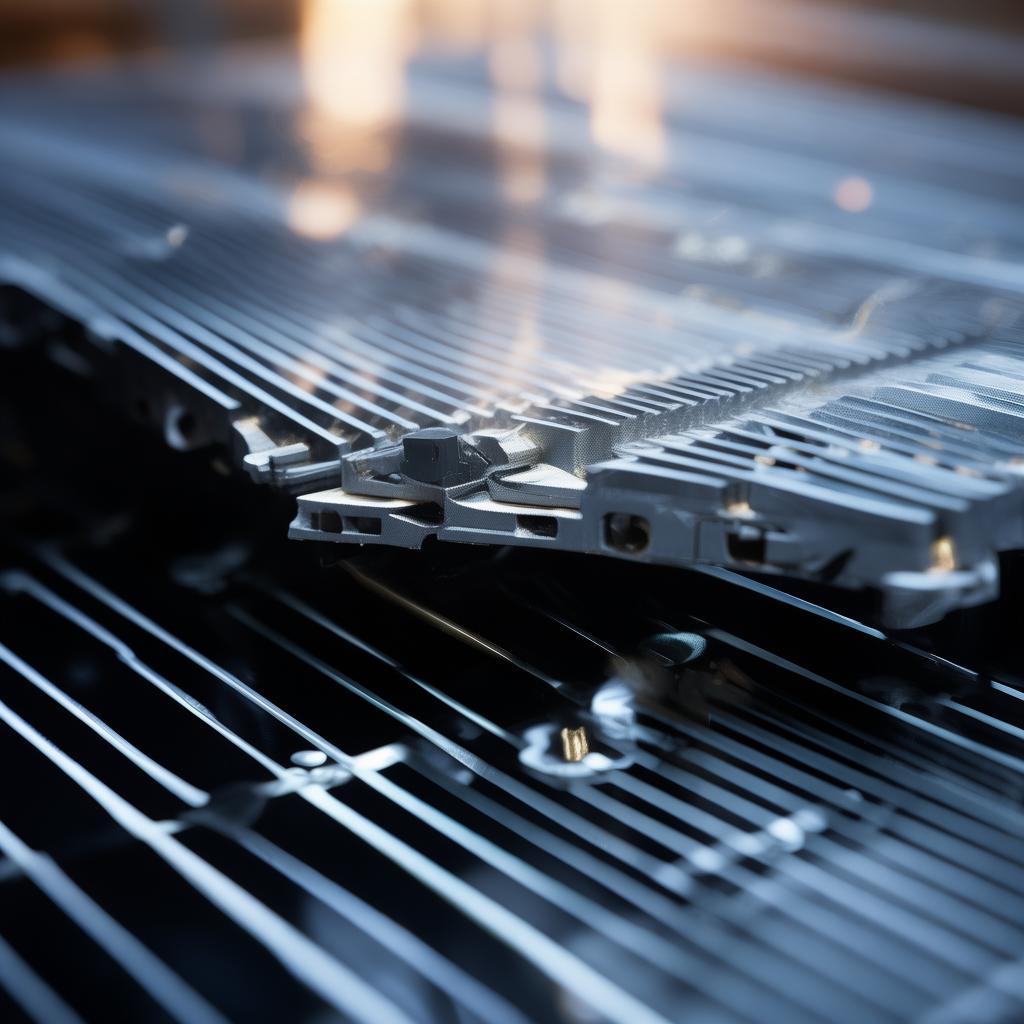
price of bifacial solar panel
In the evolving landscape of renewable energy, bifacial solar panels stand out as a superior choice for commercial and industrial applications. Unlike traditional monofacial panels, bifacial models
Bifacial Solar Panels: Optimal Price of Bifacial Solar Panel for Maximum ROI
1. Product Overview
In the evolving landscape of renewable energy, bifacial solar panels stand out as a superior choice for commercial and industrial applications. Unlike traditional monofacial panels, bifacial models capture sunlight from both sides, delivering up to 30% more energy yield in optimal conditions. Our bifacial solar panels are engineered for high performance, durability, and cost-effectiveness, making them ideal for buyers seeking the best price of bifacial solar panel without compromising quality.
These panels utilize advanced PERC (Passivated Emitter and Rear Cell) technology combined with bifacial design, achieving efficiencies exceeding 21% on the front side and substantial rear-side generation. Whether you're outfitting large-scale solar farms, commercial rooftops, or utility-scale projects, our offerings provide a competitive price of bifacial solar panel that translates to faster payback periods and long-term savings. With global supply chain optimization, we ensure wholesale pricing that meets international trade standards, backed by rigorous testing for PID resistance, salt mist corrosion, and ammonia resistance.
Understanding the price of bifacial solar panel involves more than upfront costs—it's about total lifecycle value. Our panels are certified under IEC 61215 and IEC 61730, ensuring reliability in diverse climates from deserts to coastal regions. As demand surges for sustainable energy solutions, securing the right price of bifacial solar panel positions your business at the forefront of green innovation.
2. Key Features
- High Bifaciality Factor: Up to 70-75% rear-side efficiency, maximizing energy harvest from reflected and diffused light, which directly impacts the effective price of bifacial solar panel per kWh.
- Advanced Half-Cut Cell Design: Reduces resistive losses by 75%, lowers operating temperatures, and boosts overall output, offering superior value at competitive price of bifacial solar panel levels.
- Multi-Busbar (MBB) Technology: Minimizes shading effects and microcracks, enhancing durability and performance ratio for better long-term ROI.
- Anti-Reflective Coating and Tempered Glass: Dual-glass construction on select models provides 30-year mechanical load resistance, ideal for ground-mounted systems where albedo reflection optimizes the price of bifacial solar panel.
- Low Degradation Rate: First-year degradation under 2%, annual under 0.55%, ensuring predictable energy production and justifying the investment in premium price of bifacial solar panel options.
- Frame and Junction Box Excellence: Anodized aluminum frames with drainage holes and IP68-rated junction boxes for harsh environments.
These features collectively lower the levelized cost of energy (LCOE), making our bifacial solar panels a smart pick when evaluating the price of bifacial solar panel against performance metrics.
3. Technical Specifications
Below is a comprehensive table detailing the technical specifications of our flagship 550W bifacial solar panel model. These specs are verified through third-party testing, providing transparency for informed purchasing decisions on the price of bifacial solar panel.
| Parameter | Value | Unit / Notes |
|---|---|---|
| Peak Power (Pmax) - Front Side | 550 | W (STC) |
| Power Output - Rear Side | Up to 385 (70% bifaciality) | W (with 30% albedo) |
| Module Efficiency - Front | 21.7 | % |
| Open Circuit Voltage (Voc) | 49.5 | V |
| Short Circuit Current (Isc) | 14.28 | A |
| Dimensions (L x W x H) | 2278 x 1134 x 30 | mm |
| Weight | 27.3 | kg |
| Cell Type | n-TOPCon / PERC Bifacial | 144 half-cells (6x24) |
| Front Glass | 3.2 mm tempered, AR-coated | High transmission |
| Rear Glass / Backsheet | Transparent dual-glass | POE encapsulation |
| Frame | Anodized silver aluminum | 35 mm thickness |
| Junction Box | IP68, 3 diodes | MC4 compatible |
| Maximum System Voltage | 1500 | DC (IEC) |
| Temperature Coefficient (Pmax) | -0.34 | %/°C |
| Warranty | 12/30 years (product/performance) | Linear power guarantee |
| Certifications | IEC 61215, IEC 61730, UL 61730 | MNRE, CE, INMETRO |
4. Application Scenarios
Bifacial solar panels excel in scenarios where rear-side generation adds significant value, enhancing the overall price of bifacial solar panel proposition. In ground-mounted utility-scale projects, high-albedo surfaces like white gravel or snow amplify output by 10-25%, ideal for solar farms in arid regions.
For commercial rooftops with reflective membranes, bifacial panels capture bounced light from HVAC units or surrounding structures, boosting urban installations. Agrivoltaics—combining solar with agriculture—benefits from elevated mounting, allowing shade-tolerant crops underneath while panels gain from ground reflection, optimizing land use and the effective price of bifacial solar panel.
Offshore floating solar farms leverage water's high reflectivity, and desert projects with sand-polished surfaces see exceptional gains. In snowy climates, bifacial designs self-clean via melting snow exposure on the rear. These versatile applications underscore why savvy B2B buyers prioritize the competitive price of bifacial solar panel for diverse portfolios.
5. Advantages
Opting for bifacial solar panels delivers multifaceted advantages that far outweigh initial costs, redefining the price of bifacial solar panel in terms of value. Higher energy density means fewer panels for the same capacity, reducing balance-of-system (BOS) costs by up to 10%. The bifacial gain—typically 5-30% extra yield—shortens payback to under 4 years in optimal setups.
Superior low-light performance ensures consistent output during cloudy days or dawn/dusk, stabilizing revenue for IPPs. Durability features like dual-glass resist micro-cracks and UV degradation, minimizing O&M expenses. Environmentally, they support circular economy goals with recyclable frames and 99% module recyclability.
From an economic standpoint, the low LCOE—often 20% below monofacial equivalents—combined with incentives like ITC or RE100 compliance, makes bifacial the strategic choice. When factoring total ownership cost, our price of bifacial solar panel emerges as the most economical for high-volume international trade.
6. Why Choose Us
As a leading manufacturer in the photovoltaic industry, we specialize in delivering the most competitive price of bifacial solar panel with unwavering quality. Our state-of-the-art production lines in Asia adhere to Industry 4.0 standards, with automated testing ensuring <1% power tolerance. Vertically integrated supply—from silicon wafers to modules—eliminates markups, passing savings to you.
We hold TUV, UL, and CEC certifications, with bankable warranties serviced globally. Bulk orders benefit from flexible MOQs, customized branding, and logistics via major ports. Our R&D team continuously innovates, as seen in our latest TOPCon bifacial series. Partner with us for transparent pricing, rapid lead times, and dedicated support that maximizes your project's success.
7. FAQ
Q: What factors influence the price of bifacial solar panel?
A: Key drivers include power rating, technology (PERC vs. TOPCon), quantity, certifications, and market conditions. Our bulk pricing starts competitively, with volume discounts enhancing value.
Q: How does bifaciality affect the overall price of bifacial solar panel?
A: Higher bifaciality (70%+) increases yield, lowering LCOE despite a modest premium over monofacial panels—typically 5-10% more upfront for 15-25% more energy.
Q: Are these panels suitable for all installations?
A: Yes, but maximum gains occur with reflective ground (albedo >20%). For flat roofs, use reflective coatings; for trackers, bifacial excels further.
Q: What is the warranty on your bifacial solar panels?
A: 12 years product warranty and 30 years linear power warranty, guaranteeing 84.8% output at year 30.
Q: How does the price of bifacial solar panel compare internationally?
A: Our export-optimized pricing undercuts European and US brands while matching Tier 1 quality, ideal for EPCs in emerging markets.
Q: Can I get samples to evaluate price of bifacial solar panel?
A: Absolutely—contact for sample programs tailored to your testing needs.
Q: What shipping and packaging standards do you follow?
A: Palletized in seaworthy plywood cases, compliant with IMDG for safe global delivery.
Related product
- English
- Françai
- Español
- Deutsch
- Română
- العربية
- 한국어
- 日本語
- Italiano
- Português
- Gaeilge
- Dansk
- Čeština
- Русский
- Afrikaans
- Euskara
- Català
- Esperanto
- हिन्दी
- Ελληνικά
- Bahasa Melayu
- Polski
- Српски
- Kiswahili
- ภาษาไทย
- Tiếng Việt
- Türkçe
- Svenska
- Cymraeg
- Slovenčina
- Latviešu
- Malti
- Magyar
- Galego
- ગુજરાતી
- Eesti Keel
- বাংলা
- Shqip
- беларуская мова
- Nederlands
- Tagalog
- ქართული
- Íslenska
- Kreyòl Ayisyen
- Lietuvių
- Norsk
- slovenščina
- தமிழ்
- Українська
- ײִדיש
- اردو
- తెలుగు
- فارسی
- македонски
- ಕನ್ನಡ
- Bahasa Indonesia
- עברית
- Suomi
- Hrvatski
- Български
- Azerbaijani