


High-Efficiency Monofacial Solar Panel for Commercial & Utility-Scale Projects
In the competitive landscape of solar energy, selecting the right panel technology is paramount for maximizing return on investment. Our premium monofacial solar panels are engineered for projects where consistent, high-yield performance and proven reliability are non-negotiable. While the debate of monofacial vs bifacial solar panels continues, our monofacial solutions offer unmatched value and predictability for a vast array of installations, from expansive solar farms to robust industrial rooftops.
Product Overview
Our high-performance monofacial solar panel series represents the culmination of advanced photovoltaic engineering and rigorous manufacturing standards. Designed with a focus on durability and efficiency, these panels utilize high-grade monocrystalline PERC cells to deliver exceptional power output and long-term energy yield. They are the ideal choice for developers and EPC contractors seeking a dependable, high-quality solar solution that simplifies system design and delivers predictable financial outcomes. Understanding the core differences in monofacial vs bifacial solar panels allows for an informed choice, and our monofacial line excels in traditional, high-density deployment scenarios.
Key Features
- High-Efficiency Monocrystalline PERC Cells: Achieve superior energy conversion rates, maximizing power generation per square meter.
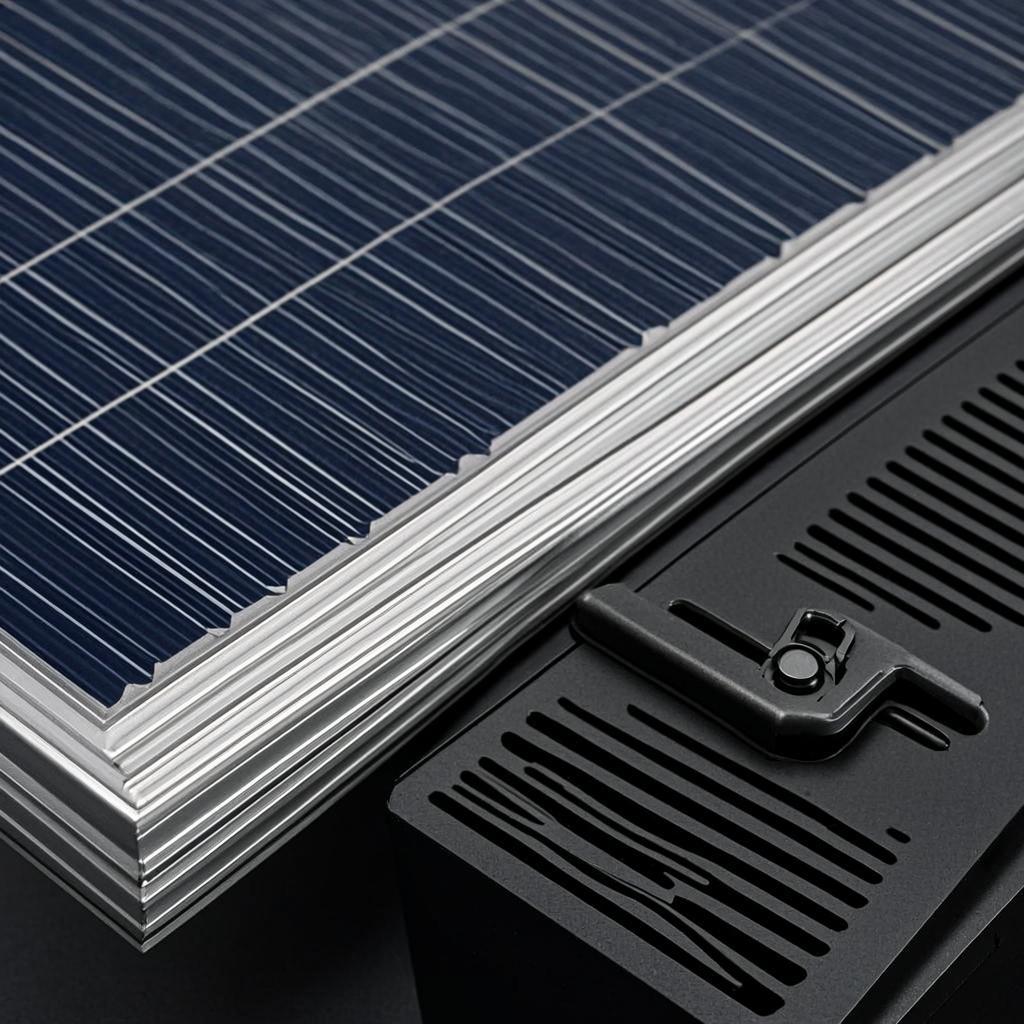
- Enhanced Durability: Constructed with anodized aluminum frames and high-transmission, anti-reflective tempered glass to withstand harsh environmental conditions, including high wind and snow loads.
- Low Light & High-Temperature Performance: Advanced cell technology ensures stable power output during early mornings, late evenings, and in elevated temperature conditions.
- PID Resistance & Hot-Spot Protection: Built-in safeguards against Potential Induced Degradation and hot-spot formation ensure long-term reliability and minimal power degradation.
- Streamlined Installation: Standardized dimensions and robust frame design allow for quick, secure mounting, reducing balance-of-system costs and installation time.
Technical Specifications
| Parameter | Specification |
|---|---|
| Model | Mono-PRO 550W |
| Cell Type | Monocrystalline PERC (M10) |
| Rated Power (Pmax) | 550W |
| Panel Efficiency | 21.5% |
| Power Tolerance | 0 ~ +5W |
| Maximum System Voltage | 1500V DC |
| Temperature Coefficient (Pmax) | -0.34% / °C |
| Operating Temperature | -40°C to +85°C |
| Product Warranty | 15 Years |
| Linear Power Warranty | 30 Years (≥ 87.4% of rated power) |
Application Scenarios
Our monofacial solar panels are versatile and excel in numerous commercial and utility applications:
- Large-Scale Solar Farms: Optimal for ground-mounted installations with high-density arrays, maximizing land use and project ROI.
- Industrial & Commercial Rooftops: Perfect for flat or sloped roofs on warehouses, factories, and retail centers, providing reliable on-site power.
- Agricultural Solar Projects: Suitable for agrivoltaics setups where simplicity and cost-effectiveness are key.
- Government & Public Infrastructure: Deployed for schools, municipal buildings, and water treatment plants requiring durable and low-maintenance solutions.
Advantages
Choosing our monofacial panels provides distinct strategic benefits, especially when evaluating monofacial vs bifacial solar panels:
- Proven Technology & Predictability: Monofacial technology is time-tested, offering highly predictable performance and energy modeling, reducing financial uncertainty.
- Cost-Effectiveness: Typically lower initial cost per watt compared to bifacial alternatives, leading to faster payback periods and attractive LCOE (Levelized Cost of Energy).
- Simplified System Design: No need to consider ground albedo or specialized mounting structures, streamlining engineering and procurement.
- Optimal for High-Density Layouts: In tightly packed arrays where rear-side gain is minimal, monofacial panels deliver their full rated power efficiently without dependency on reflective surfaces.
- Wide Regulatory Acceptance: Universally accepted and understood by utilities, financiers, and authorities having jurisdiction (AHJs), facilitating smoother project approvals.
Why Choose Us
As a leading manufacturer in the global solar industry, we offer more than just a product:
- Vertical Integration: We control the entire production process from ingot to module, ensuring superior quality control and cost stability.
- Rigorous Quality Assurance: Every panel undergoes stringent EL testing and performance verification before shipment, backed by comprehensive warranties.
- Global Certification Portfolio: Our panels are certified to IEC, UL, CE, and other major international standards, ensuring compliance for projects worldwide.
- Expert Technical Support: Our engineering team provides dedicated support for system design, yield optimization, and technical documentation.
- Reliable Supply Chain: With large-scale manufacturing capacity and strategic logistics partnerships, we guarantee on-time delivery for projects of any scale.
FAQ
Q: When should I choose monofacial over bifacial panels?
A: Monofacial panels are typically the superior choice for projects with budget constraints, installations on dark or non-reflective surfaces (like standard gravel or grass), or in high-density layouts where rear-side illumination is limited. The decision in the monofacial vs bifacial solar panels debate hinges on specific site conditions and financial models.
Q: What is the expected annual degradation rate?
A: Our panels feature a very low degradation rate. The first-year degradation is ≤2%, followed by a linear annual degradation of ≤0.45%, ensuring over 87.4% of nominal power output at the end of the 30-year warranty period.
Q: Do you offer custom specifications for large-volume projects?
A: Yes. For utility-scale and large commercial tenders, we offer flexible customization options for power class, frame color, junction box type, and cable length. Contact our sales team with your project requirements.
Q: How do I determine if my site is better for monofacial or bifacial?
A: A key factor is ground albedo (reflectivity). Sites with highly reflective surfaces (e.g., white gravel, sand, concrete, or snow) may benefit more from bifacial gains. For standard terrain, a monofacial system often provides the most straightforward and economical solution. Our technical team can assist with a site-specific yield analysis.
Q: What are the standard packaging and shipping terms?
A: Panels are securely packed in palletized wooden crates. Standard containers (20'GP, 40'GP, 40'HQ) can be accommodated. We offer flexible trade terms (EXW, FOB, CIF, DAP) based on your needs and destination.