

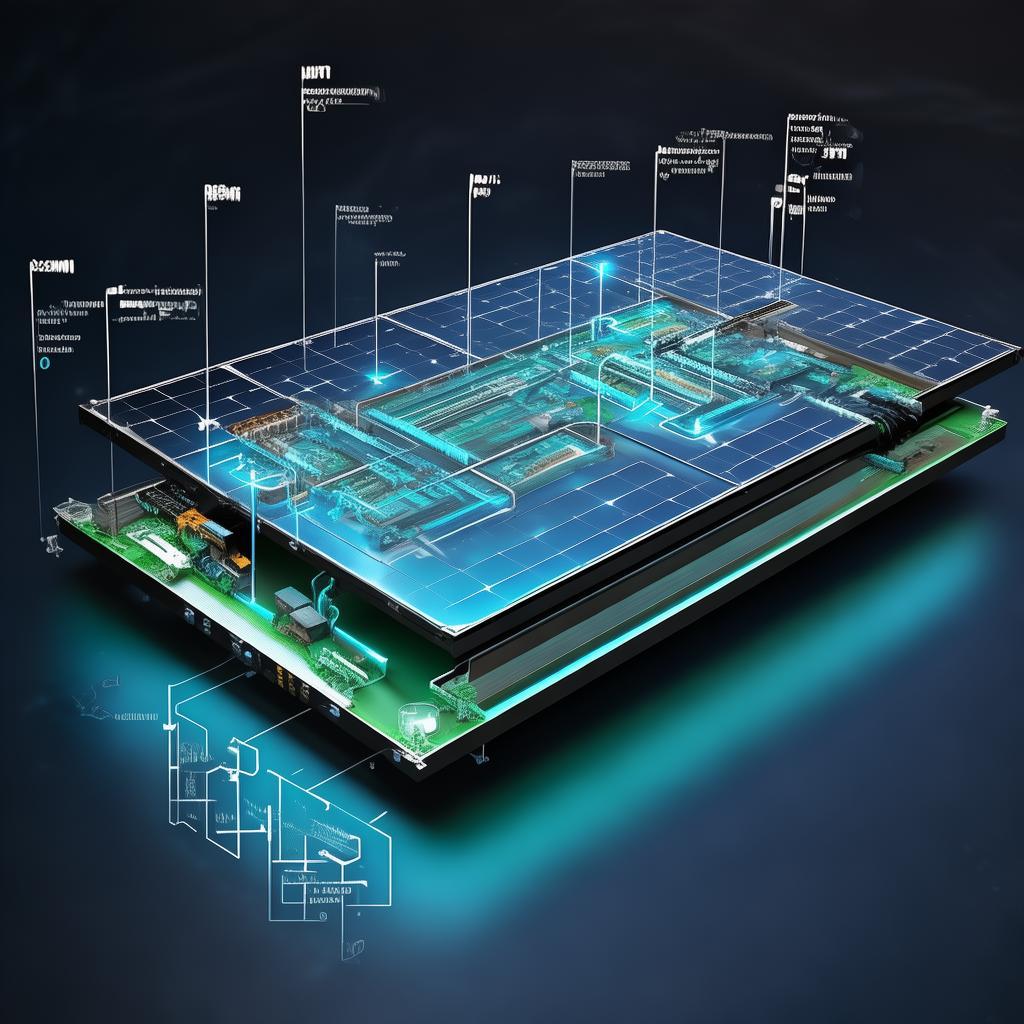
mono bifacial
Premium Mono Bifacial Solar Panels: Maximizing Energy Yield with Dual-Side Technology 1. Product Overview Our latest series of mono bifacial solar modules represents a significant advancement in photo
Premium Mono Bifacial Solar Panels: Maximizing Energy Yield with Dual-Side Technology
1. Product Overview
Our latest series of mono bifacial solar modules represents a significant advancement in photovoltaic technology. By combining high-efficiency monocrystalline cells with a transparent backsheet and dual-glass construction, these panels capture sunlight from both the front and rear surfaces. The rear side utilizes reflected light from the ground, snow, or surrounding structures—commonly referred to as albedo—to generate up to 30% additional energy compared to traditional monofacial panels. Designed for utility-scale solar farms, commercial rooftops, and ground-mounted installations, the mono bifacial design delivers superior performance under low-light conditions and high-temperature environments, making it a future-proof investment for serious energy buyers.
2. Key Features
- Dual-Side Power Generation: The transparent backsheet and rear glass allow light penetration, enabling the rear cells to harvest reflected sunlight. This mono bifacial architecture boosts overall energy yield without increasing footprint.
- High-Efficiency Mono PERC Cells: Each module uses 182mm or 210mm monocrystalline PERC cells with multi-busbar technology, achieving front-side efficiency of up to 22.5% and rear-side gain of 10–30% depending on albedo.
- Durable Dual-Glass Construction: Tempered 2.0mm glass on both sides provides superior resistance to microcracks, PID (Potential Induced Degradation), and harsh weather conditions including salt mist, ammonia, and sand erosion.
- Enhanced Low-Light Performance: Advanced anti-reflective coating and optimized cell layout ensure stable power output during cloudy days, dawn, dusk, and winter months.
- Extended Warranty: 30-year linear power output warranty (minimum 84.8% of nominal power after 30 years) and 15-year product warranty.
- Fire Rating Class A: Compliant with IEC 61730 and UL 1703 standards, offering the highest level of fire safety for rooftop installations.
3. Technical Specifications
| Parameter | MBB-440M | MBB-540M | MBB-660M |
|---|---|---|---|
| Max Power (Pmax) – Front Side | 440 Wp | 540 Wp | 660 Wp |
| Max Power (Pmax) – Bifacial Gain (30% albedo) | 572 Wp | 702 Wp | 858 Wp |
| Cell Type | Mono PERC (182mm) | Mono PERC (182mm) | Mono PERC (210mm) |
| Module Efficiency (Front) | 21.8% | 22.2% | 22.5% |
| Bifaciality Factor | ≥ 75% | ≥ 75% | ≥ 80% |
| Open Circuit Voltage (Voc) | 49.2 V | 49.6 V | 50.1 V |
| Short Circuit Current (Isc) | 11.3 A | 13.8 A | 16.5 A |
| Operating Temperature Range | -40°C to +85°C | -40°C to +85°C | -40°C to +85°C |
| Dimensions (L x W x H) | 1903 x 1134 x 30 mm | 2278 x 1134 x 30 mm | 2384 x 1303 x 35 mm |
| Weight | 28.5 kg | 33.0 kg | 38.5 kg |
| Cable Length | 1.2 m (positive/negative) | 1.2 m (positive/negative) | 1.2 m (positive/negative) |
| Connector Type | MC4 compatible | MC4 compatible | MC4 compatible |
Note: Bifacial gain varies based on ground albedo, mounting height, and tilt angle. Tested under STC (1000 W/m², 25°C, AM 1.5).
4. Application Scenarios
- Utility-Scale Solar Farms: The mono bifacial modules are ideal for large ground-mounted arrays where white gravel, sand, or snow can significantly boost rear-side generation. Single-axis trackers further enhance energy capture by optimizing both front and rear exposure.
- Commercial & Industrial Rooftops: Flat roofs with white TPO or PVC membranes reflect up to 80% of light. Our panels can be mounted on ballasted or penetrating racking systems to maximize the bifacial effect.
- Carports & Canopies: Transparent or semi-transparent structures allow light to pass through to vehicles below while generating power from both sides—ideal for EV charging stations.
- Agrivoltaics: Elevated mounting over crops or grazing land allows sunlight to reach plants underneath, while the rear side of the mono bifacial panel captures reflected light from the soil or vegetation.
- Floating Solar (Floatovoltaics): Water surfaces naturally reflect 10–15% of light, and the dual-glass construction resists moisture and corrosion better than standard backsheet modules.
5. Advantages
- Higher Energy Density per Square Meter: By utilizing both sides, the mono bifacial design can produce 10–30% more kWh over the same land area compared to monofacial panels, reducing levelized cost of energy (LCOE).
- Improved Degradation Resistance: Dual-glass encapsulation eliminates the polymer backsheet, which is a common failure point. This reduces the risk of yellowing, delamination, and moisture ingress, extending operational life beyond 30 years.
- Better Performance in High Temperatures: The transparent rear allows heat to dissipate more efficiently, lowering the module operating temperature by 2–5°C compared to traditional modules. This directly improves voltage and power output in hot climates.
- Reduced Balance of System (BOS) Costs: Higher power output per module means fewer panels, less racking, fewer cables, and lower installation labor costs for the same system capacity.
- Environmentally Friendly: No backsheet waste, and the glass-on-glass structure is fully recyclable at end of life. The increased energy yield also reduces the carbon payback period.
6. Why Choose Us
- Factory Direct with ISO 9001 & ISO 14001 Certification: We own the production line, ensuring strict quality control from cell sorting to final assembly. Each mono bifacial module undergoes EL testing, flash testing, and insulation testing before shipment.
- Proven Track Record: Over 5 GW of bifacial modules shipped globally to projects in Europe, Southeast Asia, the Middle East, and the Americas. Our modules are used by top EPC contractors and IPPs.
- Customizable Solutions: We offer custom cable lengths, connector types (MC4, Amphenol, Stäubli), and packaging options (pallet, crate, or container loading) to match your logistics and installation requirements.
- Technical Support & Design Assistance: Our engineering team provides free PVsyst simulation reports, shading analysis, and mounting recommendations to optimize your specific site’s bifacial gain.
- Competitive Pricing & Fast Lead Time: With an annual capacity of 2 GW, we maintain buffer inventory and can ship standard orders within 15–20 working days. Bulk orders receive volume discounts.
7. FAQ
Q1: How much extra power can I expect from a mono bifacial panel?
A: The rear-side gain depends on ground albedo. Under typical ground conditions (grass or soil, albedo ~20%), you can expect 10–15% extra. With white gravel or snow (albedo ~80%), gains can reach 25–30%. Always request a site-specific simulation from our team.
Q2: Can mono bifacial panels be used with standard racking?
A: Yes, but for optimal rear-side performance, we recommend mounting them on elevated racks (minimum 1 meter above ground) or using single-axis trackers. Avoid opaque racking that blocks rear light. We provide compatible mounting recommendations.
Q3: Are these panels suitable for residential rooftops?
A: While primarily designed for commercial and utility projects, they can be used on residential flat roofs with reflective membranes. However, the higher cost of bifacial modules may not be justified on sloped roofs with limited rear light access. We can help you evaluate the ROI.
Q4: What is the difference between bifacial and monofacial in terms of warranty?
A: Our mono bifacial modules carry a 30-year linear power warranty (vs. 25 years for monofacial) and a 15-year product warranty. The dual-glass construction is inherently more durable, which is why we offer extended coverage.
Q5: How do I calculate the effective power rating for a bifacial module?
A: The nameplate rating (e.g., 540 Wp) is the front-side power under STC. The total effective power is: Front Power + (Front Power × Bifaciality Factor × Albedo). For example, 540 W + (540 W × 0.75 × 0.30) = 540 W + 121.5 W = 661.5 W effective. Use the front rating for system sizing and the effective rating for energy yield estimation.
Q6: Do you offer samples before bulk order?
A: Yes, we provide 2–4 sample modules for evaluation at a discounted price. Shipping is via air freight. Once the order quantity exceeds 1000 pieces, the sample cost is deducted from the total invoice.
Q7: What is the minimum order quantity (MOQ)?
A: For standard models (440W, 540W), MOQ is 26 pieces (one pallet). For high-power models (660W), MOQ is 20 pieces. We also accept mixed containers for different power classes.
Contact our sales team for a customized quotation, technical datasheet, and free PVsyst simulation.
Related product
- English
- Françai
- Español
- Deutsch
- Română
- العربية
- 한국어
- 日本語
- Italiano
- Português
- Gaeilge
- Dansk
- Čeština
- Русский
- Afrikaans
- Euskara
- Català
- Esperanto
- हिन्दी
- Ελληνικά
- Bahasa Melayu
- Polski
- Српски
- Kiswahili
- ภาษาไทย
- Tiếng Việt
- Türkçe
- Svenska
- Cymraeg
- Slovenčina
- Latviešu
- Malti
- Magyar
- Galego
- ગુજરાતી
- Eesti Keel
- বাংলা
- Shqip
- беларуская мова
- Nederlands
- Tagalog
- ქართული
- Íslenska
- Kreyòl Ayisyen
- Lietuvių
- Norsk
- slovenščina
- தமிழ்
- Українська
- ײִדיש
- اردو
- తెలుగు
- فارسی
- македонски
- ಕನ್ನಡ
- Bahasa Indonesia
- עברית
- Suomi
- Hrvatski
- Български
- Azerbaijani