

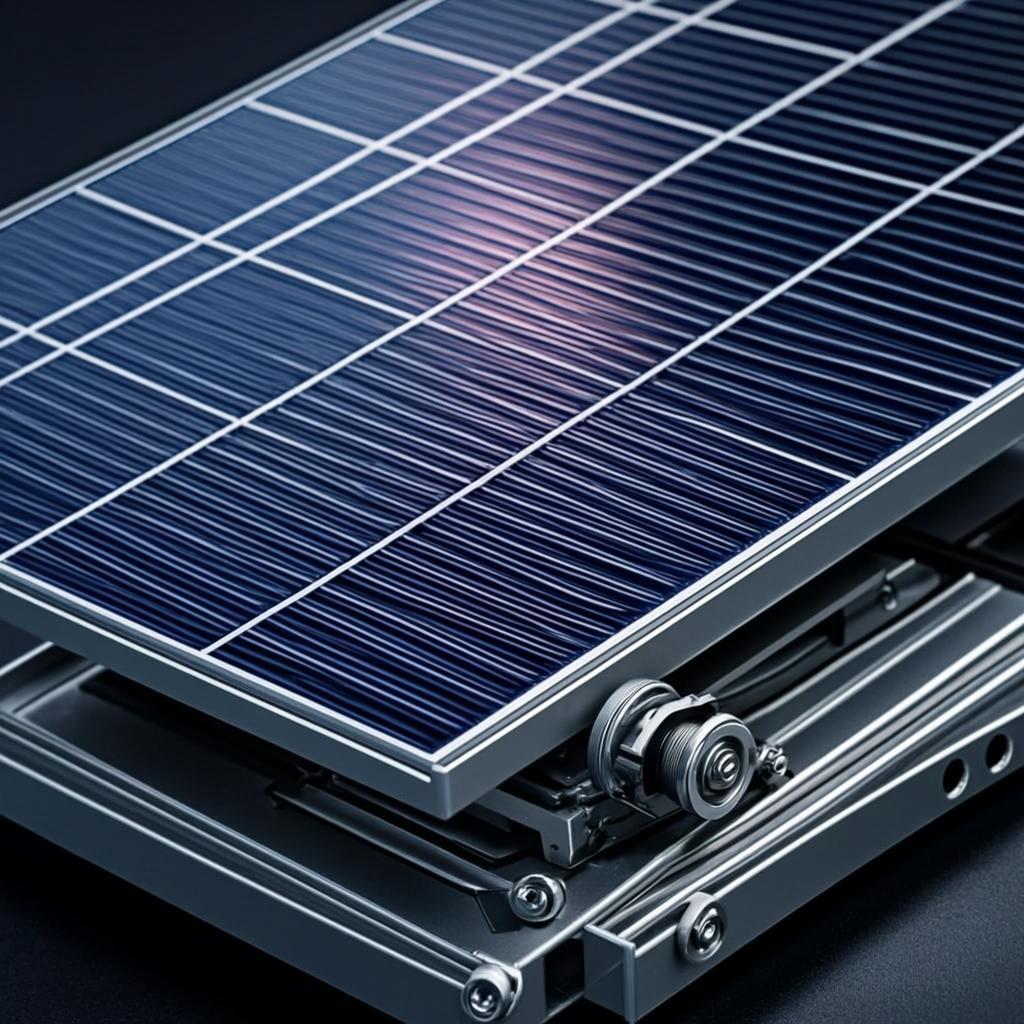
modulo solar bifacial
The modulo solar bifacial represents the pinnacle of photovoltaic innovation, designed to capture sunlight from both the front and rear surfaces for maximum energy production. Unlike traditional
Modulo Solar Bifacial: Revolutionizing Solar Energy Yield
1. Product Overview
The modulo solar bifacial represents the pinnacle of photovoltaic innovation, designed to capture sunlight from both the front and rear surfaces for maximum energy production. Unlike traditional monofacial panels, our modulo solar bifacial modules leverage advanced bifacial technology, utilizing transparent backsheets and specialized cell architectures to harness reflected and diffused light, boosting overall yield by up to 30% in optimal conditions. Engineered for durability and high performance, these modules are ideal for commercial, industrial, and utility-scale projects worldwide.
Featuring high-efficiency N-type TOPCon or PERC half-cut cells, the modulo solar bifacial delivers superior power output ranging from 550W to 700W per panel, with module efficiencies exceeding 22%. This makes it a versatile solution for diverse environments, from snowy landscapes where albedo reflection is high to agricultural fields enabling agrivoltaics. Certified to international standards like IEC 61215 and IEC 61730, our modulo solar bifacial ensures long-term reliability, backed by a 30-year linear power warranty and 12-year product warranty. As a leader in international trade, we supply these premium modules optimized for seamless integration into large-scale solar farms, rooftop installations, and hybrid energy systems.
With a focus on sustainability, the modulo solar bifacial minimizes the levelized cost of energy (LCOE) through enhanced bifaciality factors—typically 70-80%—allowing installers to achieve higher returns on investment. Whether you're optimizing ground-mounted arrays or exploring floating solar applications, this module sets a new benchmark in double-glass, frameless designs that resist PID (Potential Induced Degradation) and exhibit excellent low-light performance.
2. Key Features
- Bifacial Design: Generates power from both sides, capturing up to 30% more energy from ground reflection and albedo.
- High-Efficiency Cells: Utilizes N-type TOPCon or PERC half-cut cells with multi-busbar (MBB) technology for reduced resistance and higher output.
- Double-Glass Construction: Frameless or framed options with tempered glass on both sides for superior mechanical load resistance (up to 5400Pa snow load, 2400Pa wind load).
- Anti-PID and Anti-LID: Advanced passivation ensures minimal degradation, maintaining over 92% output after 25 years.
- Low Temperature Coefficient: Optimal performance in hot climates with Pmax coefficient of -0.30%/°C.
- Excellent Low-Irradiance Response: Bifacial gain shines in diffuse light, cloudy days, and early/late hours.
- Certifications: UL, TUV, CE, INMETRO compliant; salt mist and ammonia resistant for harsh environments.
- Customizable: Available in various sizes and power ratings to suit project-specific needs.
3. Technical Specifications
| Category | Specification | Details |
|---|---|---|
| Electrical Data (STC*) | Nominal Power | 550-700W |
| Module Efficiency | 21.5%-22.8% | |
| Open Circuit Voltage (Voc) | 49.5-52.5V | |
| Short Circuit Current (Isc) | 13.8-14.5A (front) / 10.5-11.5A (rear) | |
| Maximum Power Voltage (Vmpp) | 41.5-43.5V | |
| Maximum Power Current (Impp) | 13.3-14.0A | |
| Temperature Characteristics | Pmax Coefficient | -0.30%/°C |
| Voc Coefficient | -0.28%/°C | |
| Isc Coefficient | +0.045%/°C | |
| Operating Temperature | -40°C to +85°C | |
| Mechanical Data | Dimensions (L×W×H) | 2384×1134×30mm |
| Weight | 31.5-33.5kg | |
| Cell Type | 182mm N-type TOPCon / PERC, 144 half-cut | |
| Front Glass | 2.0mm tempered glass | |
| Back Glass/Backsheet | 2.0mm tempered glass (bifacial) | |
| Qualification & Warranty | Mechanical Load | 5400Pa / 2400Pa |
| Bifaciality | 70-80% | |
| Warranty | 12 years product / 30 years linear power (≥92% at 25 years) | |
| Certifications | IEC 61215, IEC 61730, UL 61730, ISO 9001 |
*STC: Standard Test Conditions (1000W/m², 25°C, AM 1.5). Rear-side power gain depends on installation height, albedo, and tilt angle. Data measured at 1000W/m² front irradiation.
4. Application Scenarios
The modulo solar bifacial excels in scenarios where bifacial technology maximizes energy harvest. In utility-scale ground-mounted solar farms on reflective surfaces like white gravel or snow-covered terrains, rear-side generation can add 15-25% extra yield. For agrivoltaic systems, these modules are mounted at elevated heights (1-2m) above crops, allowing light transmission to vegetation while capturing ground-reflected irradiance, promoting dual land use for energy and agriculture.
Rooftop installations benefit from white or light-colored surfaces, enhancing albedo for urban commercial buildings. In floating solar photovoltaic (FPV) projects on reservoirs, water reflection boosts bifacial performance by 10-20%. Desert environments with sandy albedo, coastal areas with salt resistance, and even vertical bifacial setups for building-integrated photovoltaics (BIPV) showcase its versatility. Our modulo solar bifacial supports trackers and fixed-tilt systems, integrating seamlessly with energy storage and inverters for hybrid microgrids, making it a go-to for international EPC contractors seeking optimized LCOE in diverse climates.
5. Advantages
Opting for our modulo solar bifacial provides distinct advantages over conventional monofacial modules. The bifacial architecture inherently increases energy density, reducing balance-of-system (BOS) costs by requiring fewer panels for the same capacity. With a high bifaciality factor, it outperforms in real-world conditions, including partial shading and non-optimal orientations, thanks to half-cut cell design minimizing mismatch losses.
Durability is paramount: double-glass encapsulation offers PID resistance, UV stability, and fire ratings (Class A), extending lifespan in harsh conditions. Economically, the modulo solar bifacial lowers payback periods through superior specific yield—up to 650W/m² annually in high-albedo setups—while maintaining low degradation rates (<0.4%/year). Environmentally, it supports sustainable practices with recyclable materials and reduced carbon footprint during production. Compared to competitors, our modules deliver better low-light and high-temperature performance, ensuring reliable output across global markets from Europe to Latin America.
6. Why Choose Us
As a premier manufacturer and exporter of modulo solar bifacial, we combine cutting-edge R&D with robust supply chain capabilities. Our state-of-the-art facilities produce Tier 1 quality modules, verified by BloombergNEF, with full traceability from silicon to shipment. We offer flexible MOQs, OEM/ODM services, and rapid delivery to over 50 countries, supported by comprehensive logistics and after-sales technical support.
Our commitment to innovation includes ongoing enhancements like heterojunction (HJT) bifacial variants for even higher efficiencies. Rigorous third-party testing ensures compliance with regional standards, while our financial stability guarantees long-term warranties. Partner with us for competitive pricing, bankable projects, and a team of solar experts ready to customize solutions for your next venture.
7. FAQ
Q: What makes the modulo solar bifacial different from monofacial modules?
A: Bifacial modules like ours generate power from both sides, capturing reflected light for 10-30% higher yields, ideal for ground-mounted systems with high albedo.
Q: What is the optimal installation height for maximum bifacial gain?
A: 0.5-1.5m above ground, depending on albedo. Higher heights increase rear irradiation but may require structural reinforcements.
Q: Are modulo solar bifacial modules suitable for rooftops?
A: Yes, especially on light-colored roofs. They perform well in commercial settings, though monofacial may suffice for dark surfaces.
Q: What warranty does the modulo solar bifacial come with?
A: 12 years on product workmanship and 30 years linear power output, guaranteeing at least 92% performance at year 25.
Q: How does bifaciality affect system design?
A: Account for rear-side current in string sizing; use bifacial-compatible inverters. Simulation tools like PVSyst can model gains accurately.
Q: Can these modules be used in salty or ammonia-rich environments?
A: Absolutely, certified for salt mist (IEC 61701) and ammonia (IEC 62716), perfect for coastal or livestock farm proximity.
Q: What cell technologies are available in your modulo solar bifacial?
A: Primarily N-TOPCon and PERC, with HJT options for ultra-high efficiency projects.
Related product
- English
- Françai
- Español
- Deutsch
- Română
- العربية
- 한국어
- 日本語
- Italiano
- Português
- Gaeilge
- Dansk
- Čeština
- Русский
- Afrikaans
- Euskara
- Català
- Esperanto
- हिन्दी
- Ελληνικά
- Bahasa Melayu
- Polski
- Српски
- Kiswahili
- ภาษาไทย
- Tiếng Việt
- Türkçe
- Svenska
- Cymraeg
- Slovenčina
- Latviešu
- Malti
- Magyar
- Galego
- ગુજરાતી
- Eesti Keel
- বাংলা
- Shqip
- беларуская мова
- Nederlands
- Tagalog
- ქართული
- Íslenska
- Kreyòl Ayisyen
- Lietuvių
- Norsk
- slovenščina
- தமிழ்
- Українська
- ײִדיש
- اردو
- తెలుగు
- فارسی
- македонски
- ಕನ್ನಡ
- Bahasa Indonesia
- עברית
- Suomi
- Hrvatski
- Български
- Azerbaijani