

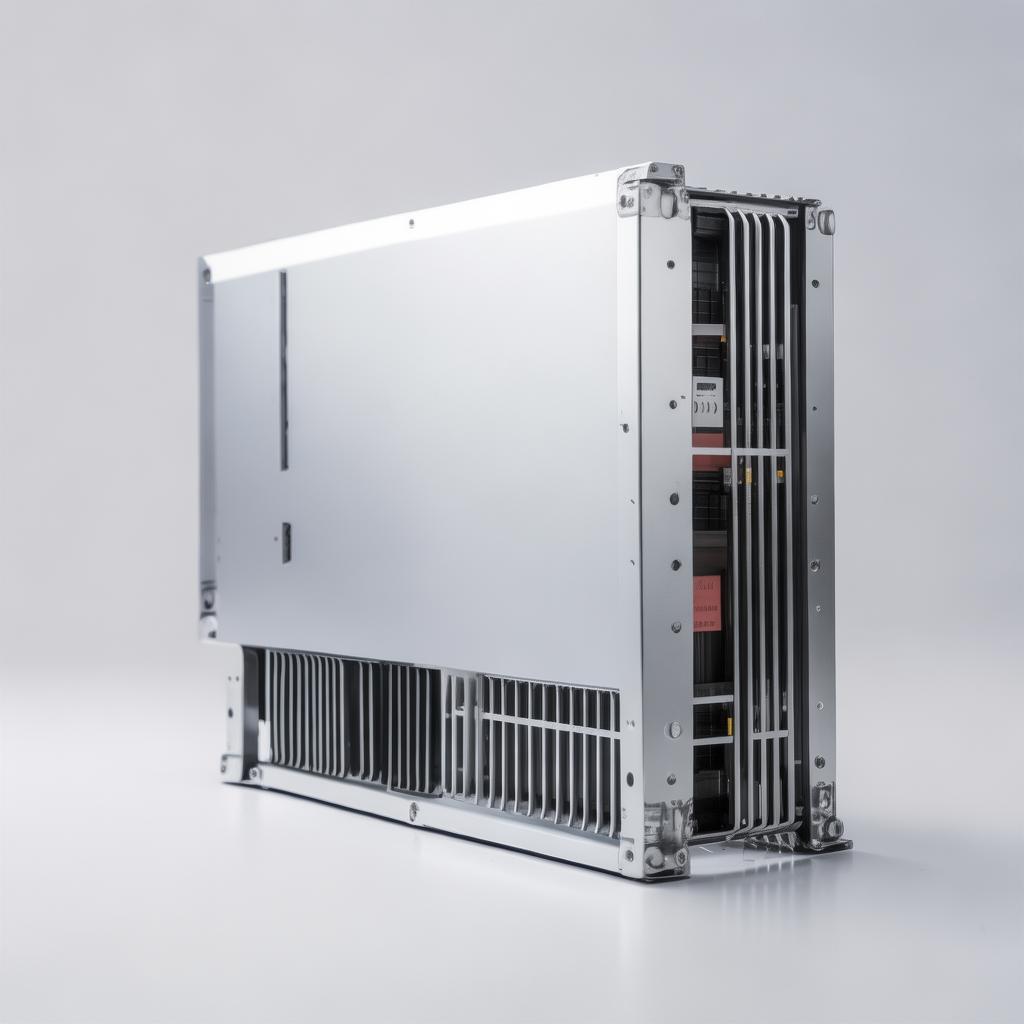
microinverter 2000w
High-Efficiency Microinverter 2000W: The Next-Gen Solar Solution for Commercial & Residential PV Systems 1. Product Overview The microinverter 2000w represents a paradigm shift in solar energy convers
High-Efficiency Microinverter 2000W: The Next-Gen Solar Solution for Commercial & Residential PV Systems
1. Product Overview
The microinverter 2000w represents a paradigm shift in solar energy conversion technology. Unlike traditional string inverters that suffer from single-point failure risks and panel mismatch losses, this advanced microinverter is engineered to maximize energy harvest at the individual panel level. With a continuous output power of 2000W AC, it is specifically designed to pair with high-power solar modules (400W-550W) in modern photovoltaic arrays.
This unit integrates MPPT (Maximum Power Point Tracking) per input channel, ensuring that shading, debris, or partial soiling on one panel does not compromise the performance of the entire string. The microinverter 2000w is a plug-and-play system that simplifies installation, reduces DC high-voltage risks, and provides granular monitoring capability for every solar module in the array.
2. Key Features
- True 2000W Continuous Output: Delivers up to 2000VA of clean sine wave AC power, compatible with 208V/240V split-phase or single-phase grids.
- Dual Independent MPPT Channels: Each of the two input channels operates independently, optimizing the output of two separate panels even under different irradiance conditions.
- NEMA 6P Weatherproof Enclosure: IP67-rated housing with corrosion-resistant aluminum alloy, designed for outdoor installation in extreme temperatures (-40°C to +65°C).
- Rapid Shutdown Compliance: Meets NEC 2017/2020 rapid shutdown requirements, ensuring module-level safety for firefighters and maintenance personnel.
- Integrated Wi-Fi & Zigbee Monitoring: Real-time data transmission to cloud-based platform, with 24/7 alerts for performance anomalies.
- 90%+ Peak Efficiency: Advanced GaN (Gallium Nitride) transistors reduce switching losses, achieving a peak efficiency of 97.5% and CEC weighted efficiency of 96.8%.
- 5-Year Warranty (Optional 10-Year Extension): Standard 5-year comprehensive warranty with optional extension to 10 years for long-term reliability.
3. Technical Specifications
| Parameter | Specification |
|---|---|
| Model Number | MI-2000W-PRO |
| Input Voltage Range (DC) | 16V – 60V |
| MPPT Voltage Range | 22V – 48V |
| Max Input Current (per channel) | 15A |
| Output Power (Continuous) | 2000W |
| Output Voltage (AC) | 208/240 VAC ±2% |
| Output Frequency | 50/60 Hz (Auto-sensing) |
| Peak Efficiency | 97.5% |
| CEC Weighted Efficiency | 96.8% |
| Operating Temperature Range | -40°C to +65°C |
| Enclosure Rating | IP67 (NEMA 6P) |
| Communication | Wi-Fi 802.11 b/g/n, Zigbee 3.0 |
| Dimensions (W x H x D) | 280 x 210 x 45 mm |
| Weight | 3.2 kg |
| Certifications | UL 1741, IEEE 1547, CSA C22.2, FCC Part 15 |
4. Application Scenarios
The microinverter 2000w is ideally suited for a variety of B2B and commercial applications:
- Commercial Rooftop Arrays: For flat or sloped commercial roofs with multiple orientations. The dual MPPT channels allow panels facing East and West to operate independently, capturing morning and afternoon sun without cross-talk.
- Residential Solar Systems: Ideal for homes with complex roof geometries, skylights, or chimneys. Each panel's output is individually optimized, eliminating the "Christmas tree effect" of partial shading.
- Solar Carports & Pergolas: The 2000W capacity is sufficient to power EV charging stations or commercial lighting loads directly from the array.
- Agricultural Solar Installations: For greenhouses or livestock barns where ground-mount panels may be partially shaded by trees or equipment.
- Emergency Backup Systems: When paired with a battery storage system, the microinverter can provide grid-forming capabilities for critical loads.
5. Advantages
Compared to traditional string inverters or lower-wattage microinverters, the microinverter 2000w offers distinct operational and economic advantages:
- Eliminates Single-Point Failure: In a string inverter system, one faulty inverter can shut down the entire array. With this microinverter, each unit operates independently—if one fails, only its associated panels are affected.
- No DC Arc-Fire Risk: By converting DC to AC at the module level, high-voltage DC wiring (typically 600V-1000V) is eliminated. This drastically reduces the risk of arc faults and fire hazards.
- 40% More Energy in Shaded Conditions: Independent MPPT per channel ensures that a shaded panel does not drag down the output of unshaded panels. Real-world data shows 15-40% energy gain in partially shaded arrays.
- Simplified System Design: No string sizing calculations, no voltage drop calculations, and no need for central inverters. This reduces engineering time and installation labor costs by up to 30%.
- Scalability: Systems can be expanded panel-by-panel. Add a single microinverter 2000w and two new panels without redesigning the entire PV string.
- Advanced Monitoring: Each microinverter reports real-time power, voltage, current, and temperature data. This enables predictive maintenance and reduces downtime.
6. Why Choose Us
As a leading OEM/ODM manufacturer of power electronics for the solar industry, we bring over 15 years of engineering expertise to every microinverter 2000w unit:
- Proprietary GaN Technology: Our in-house developed gallium nitride power modules achieve 97.5% efficiency—outperforming industry average by 2-3 percentage points.
- Rigorous Testing: Each unit undergoes 100% burn-in testing at 65°C for 4 hours, followed by thermal cycling (-40°C to +85°C) and vibration testing per IEC 60068.
- Global Logistics & Support: Warehouses in USA, Germany, and China ensure 48-hour delivery to most markets. Dedicated technical support teams available in 6 languages.
- Customizable Firmware: For large-scale B2B clients, we offer firmware customization for grid code compliance in specific countries (e.g., VDE-AR-N 4105, EN 50549, AS 4777).
- Bulk Pricing & White-Label Options: Volume discounts available for orders over 500 units. White-label packaging with your branding is available with MOQ of 1000 units.
7. FAQ
Q: Can I use the microinverter 2000w with 400W solar panels?
A: Yes. The microinverter 2000w is designed for panels ranging from 350W to 550W. For 400W panels, you can connect two panels per unit (one per MPPT channel) for a total of 800W per microinverter. For higher power panels, consult the input current limits (15A per channel).
Q: What is the maximum string length for AC cabling?
A: The AC trunk cable supports up to 16 microinverters in a single branch circuit (32 panels). For larger systems, use multiple branch circuits with appropriate AC breakers. Maximum distance from microinverter to grid interconnection point is 100 meters using 10 AWG wire.
Q: Does this microinverter support battery storage integration?
A: Yes, when paired with a compatible AC-coupled battery system (e.g., Tesla Powerwall, Enphase Encharge), the microinverter 2000w can operate in grid-tied or backup mode. For off-grid applications, a separate charge controller is required.
Q: What is the warranty coverage?
A: Standard warranty is 5 years covering materials and workmanship. Optional extended warranty to 10 years is available for an additional fee. Warranty covers replacement unit and shipping costs. Labor costs for installation are not covered.
Q: How does the monitoring system work?
A: Each microinverter connects to the cloud via built-in Wi-Fi or Zigbee. The web-based dashboard (compatible with iOS/Android apps) shows real-time power output, daily energy yield, and historical performance graphs. Alerts are sent via email or SMS for any underperformance or fault conditions.
Q: Is this product compliant with UL 1741 and IEEE 1547?
A: Yes. The microinverter 2000w is fully certified to UL 1741 (Inverters, Converters, and Controllers for Use in Independent Power Systems) and IEEE 1547 (Interconnection and Interoperability of Distributed Energy Resources). It is approved for use in all 50 US states and Canada.
Q: What is the typical payback period for commercial installations?
A: Based on average US commercial electricity rates ($0.12/kWh) and federal ITC incentives, the payback period for a 200kW system using these microinverters is typically 4-6 years. The higher efficiency and lower maintenance costs often result in 15-20% faster ROI compared to string inverter systems.
Related product
- English
- Françai
- Español
- Deutsch
- Română
- العربية
- 한국어
- 日本語
- Italiano
- Português
- Gaeilge
- Dansk
- Čeština
- Русский
- Afrikaans
- Euskara
- Català
- Esperanto
- हिन्दी
- Ελληνικά
- Bahasa Melayu
- Polski
- Српски
- Kiswahili
- ภาษาไทย
- Tiếng Việt
- Türkçe
- Svenska
- Cymraeg
- Slovenčina
- Latviešu
- Malti
- Magyar
- Galego
- ગુજરાતી
- Eesti Keel
- বাংলা
- Shqip
- беларуская мова
- Nederlands
- Tagalog
- ქართული
- Íslenska
- Kreyòl Ayisyen
- Lietuvių
- Norsk
- slovenščina
- தமிழ்
- Українська
- ײִדיש
- اردو
- తెలుగు
- فارسی
- македонски
- ಕನ್ನಡ
- Bahasa Indonesia
- עברית
- Suomi
- Hrvatski
- Български
- Azerbaijani