

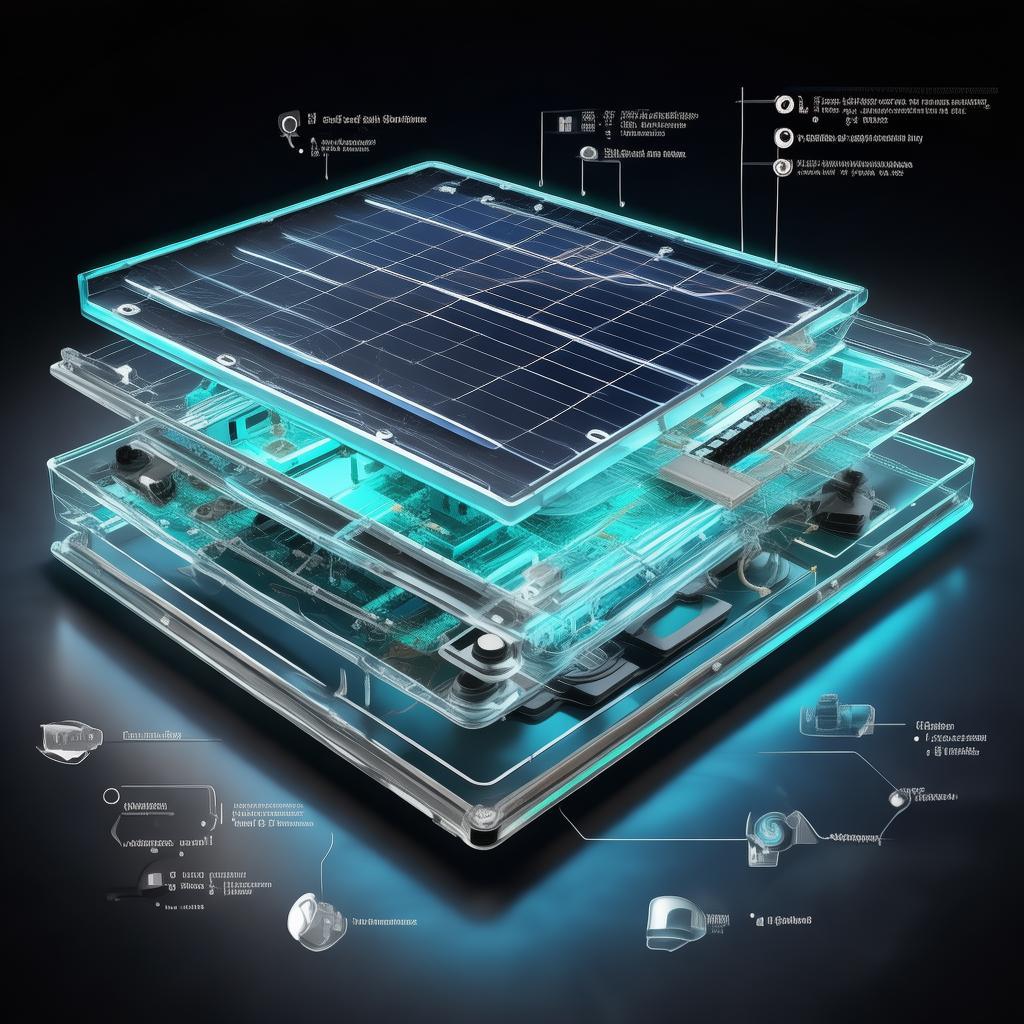
integrated solar panels
Discover the future of sustainable architecture with our premium integrated solar panels, designed specifically for seamless incorporation into building envelopes. Unlike traditional photovoltaic
Integrated Solar Panels
Product Overview
Discover the future of sustainable architecture with our premium integrated solar panels, designed specifically for seamless incorporation into building envelopes. Unlike traditional photovoltaic systems that require separate mounting structures, our integrated solar panels function as both energy generators and structural components, revolutionizing building-integrated photovoltaics (BIPV). These advanced modules are engineered to replace conventional roofing, facade cladding, or glazing materials, delivering clean, renewable energy while enhancing aesthetic appeal and structural integrity.
Our integrated solar panels utilize high-efficiency monocrystalline PERC cells, encapsulated in durable, weather-resistant materials that withstand extreme environmental conditions. Ideal for commercial, industrial, and residential projects worldwide, they offer superior power output per square meter, minimizing the need for additional space and reducing installation costs. By embedding solar technology directly into architectural elements, these panels enable zero-energy buildings, support green certifications like LEED and BREEAM, and contribute to global net-zero goals.
With a focus on innovation, our integrated solar panels feature customizable designs to match diverse architectural styles—from sleek modern facades to traditional tiled roofs. Backed by rigorous testing and compliance with international standards such as IEC 61215 and IEC 61730, they guarantee long-term reliability and performance. Whether you're retrofitting existing structures or designing new developments, our integrated solar panels provide a smart, future-proof solution for energy-efficient construction in the era of renewable energy transition.
Key Features
- Seamless Integration: Engineered to mimic traditional building materials like glass, metal, or tiles, ensuring integrated solar panels blend invisibly with architectural designs without compromising aesthetics.
- High Efficiency: Up to 22% module efficiency with advanced half-cut cell technology, maximizing energy yield even in low-light conditions.
- Durability and Longevity: IP68-rated junction boxes and tempered glass with anti-reflective coatings for resistance to hail, wind loads up to 5400 Pa, and snow loads up to 8000 Pa.
- Fire Safety: Class A fire rating per UL 61730, making them suitable for high-rise and commercial applications.
- Smart Monitoring: Compatible with IoT-enabled systems for real-time performance tracking and predictive maintenance.
- Customizable Formats: Available in various sizes, colors, and transparencies to suit roofing, facades, balconies, and noise barriers.
- Environmental Resilience: PID-resistant and salt mist corrosion-tested, ideal for coastal and urban environments.
- Easy Installation: Plug-and-play connectors and lightweight design reduce labor costs by up to 30% compared to standard PV systems.
Technical Specifications
| Parameter | Value |
|---|---|
| Module Type | Building-Integrated Photovoltaic (BIPV) Integrated Solar Panels |
| Cell Type | Monocrystalline PERC, Half-Cut |
| Nominal Power (Pmax) | 400W - 600W (customizable) |
| Module Efficiency | 20.5% - 22.0% |
| Dimensions (L x W x H) | Custom: 1700 x 1000 x 30mm (standard roof tile format); Facade: 2000 x 1000 x 25mm |
| Weight | 20 - 25 kg/m² |
| Front Glass | 3.2mm Tempered Glass with AR Coating |
| Frame | Anodized Aluminum or Frameless (Integrated Design) |
| Junction Box | IP68 Rated, 3 Diodes |
| Cable | 4mm², 1200mm Length (MC4 Compatible) |
| Operating Temperature | -40°C to +85°C |
| Temperature Coefficient (Pmax) | -0.35%/°C |
| Maximum System Voltage | 1000V DC |
| Wind Load | 5400 Pa |
| Snow Load | 8000 Pa |
| Hail Resistance | 25mm at 23 m/s |
| Warranty | 12 Years Product, 30 Years Linear Power Output |
| Certifications | IEC 61215, IEC 61730, UL 61730, CE, TUV, Salt Mist (IEC 61701) |
| Transparency Options | 0% - 20% (for semi-transparent facades) |
Application Scenarios
Our integrated solar panels excel in a wide array of real-world applications, transforming ordinary structures into energy-producing assets. In commercial roofing, they replace asphalt shingles or metal sheets, generating power while providing waterproofing and insulation. For high-end office buildings, facade-integrated variants offer a modern, glass-like appearance that maintains natural light diffusion.
Residential projects benefit from roof-integrated solar panels that mimic clay or slate tiles, preserving curb appeal and increasing property value. Industrial facilities utilize them in carports and canopies, creating shaded parking with embedded solar generation. Urban noise barriers and railway stations employ vertical integrated solar panels to power lighting and signage sustainably.
In greenhouses and agrivoltaics, semi-transparent options allow light transmission for crop growth while harvesting solar energy. Retrofit scenarios, such as upgrading historic buildings, leverage slim-profile designs that comply with heritage regulations. Across these scenarios, our integrated solar panels deliver consistent performance, adapting to pitched roofs, flat surfaces, curved facades, and even balconies.
Advantages
The superiority of our integrated solar panels lies in their multifaceted benefits over conventional solar solutions. First, they eliminate the need for racking systems, reducing material costs by 20-30% and simplifying installation to accelerate project timelines. This integration also preserves roof space for HVAC or other uses, maximizing land value in dense urban settings.
Aesthetically, integrated solar panels create a uniform building envelope, avoiding the bulky appearance of add-on PV arrays and appealing to architects prioritizing design excellence. Performance-wise, their proximity to the building structure minimizes shading and optimizes orientation, boosting annual energy yield by up to 15%.
From a lifecycle perspective, these panels boast enhanced durability with built-in ventilation and thermal management, extending operational life beyond 30 years. They contribute to thermal insulation, lowering heating and cooling demands, and support energy independence amid rising utility prices. Environmentally, integrated solar panels reduce embodied carbon by integrating multifunctional layers, aligning with circular economy principles through recyclable components.
Economically, incentives like tax credits for BIPV systems amplify ROI, with payback periods as short as 5-7 years in sunny regions. Overall, choosing integrated solar panels means investing in resilient, high-value infrastructure that future-proofs your projects against regulatory shifts toward sustainability.
Why Choose Us
As a leading manufacturer of integrated solar panels, we combine cutting-edge R&D with proven manufacturing excellence. Our state-of-the-art facilities employ automated production lines adhering to ISO 9001 and ISO 14001 standards, ensuring batch-to-batch consistency and defect rates below 0.1%.
With over a decade of BIPV expertise, we've supplied projects across Europe, North America, Asia, and the Middle East, including landmark installations like zero-energy skyscrapers and solar-powered airports. Our engineering team offers full customization—from cell layout to color matching—supported by advanced simulation software for precise energy modeling.
We prioritize transparency with third-party verified performance data and provide comprehensive technical support, including on-site training and remote diagnostics. Our global supply chain guarantees competitive lead times and pricing, without compromising quality. Partnering with us for integrated solar panels means accessing reliable, bankable solutions that drive your sustainability objectives forward.
FAQ
Q: What are integrated solar panels?
A: Integrated solar panels, or BIPV modules, are photovoltaic systems designed to be part of the building structure itself, such as roofs or facades, rather than mounted on top. They generate electricity while serving architectural functions.
Q: Are integrated solar panels suitable for all climates?
A: Yes, our integrated solar panels are rigorously tested for extreme conditions, including high winds, heavy snow, and corrosive environments, with temperature ranges from -40°C to +85°C.
Q: Can they be customized for specific projects?
A: Absolutely. We offer tailored dimensions, power ratings, transparencies, and finishes to match any architectural vision, with rapid prototyping available.
Q: What is the expected lifespan and warranty?
A: Panels are warranted for 12 years on product quality and 30 years on linear power output, with real-world degradation under 0.5% annually.
Q: Do integrated solar panels meet building codes?
A: Fully compliant with international standards like IEC, UL, and local building regulations, including fire safety and structural load requirements.
Q: How do they perform compared to traditional solar panels?
A: They offer comparable or higher efficiency per area, plus added benefits like no penetration of the building envelope and improved aesthetics.
Q: Is installation more complex?
A: No—integrated solar panels use standard roofing or cladding techniques, often requiring less labor and no separate supports.
Q: Are they recyclable?
A: Yes, over 95% of materials are recyclable, supporting end-of-life programs and sustainable practices.
Related product
- English
- Françai
- Español
- Deutsch
- Română
- العربية
- 한국어
- 日本語
- Italiano
- Português
- Gaeilge
- Dansk
- Čeština
- Русский
- Afrikaans
- Euskara
- Català
- Esperanto
- हिन्दी
- Ελληνικά
- Bahasa Melayu
- Polski
- Српски
- Kiswahili
- ภาษาไทย
- Tiếng Việt
- Türkçe
- Svenska
- Cymraeg
- Slovenčina
- Latviešu
- Malti
- Magyar
- Galego
- ગુજરાતી
- Eesti Keel
- বাংলা
- Shqip
- беларуская мова
- Nederlands
- Tagalog
- ქართული
- Íslenska
- Kreyòl Ayisyen
- Lietuvių
- Norsk
- slovenščina
- தமிழ்
- Українська
- ײִדיש
- اردو
- తెలుగు
- فارسی
- македонски
- ಕನ್ನಡ
- Bahasa Indonesia
- עברית
- Suomi
- Hrvatski
- Български
- Azerbaijani