

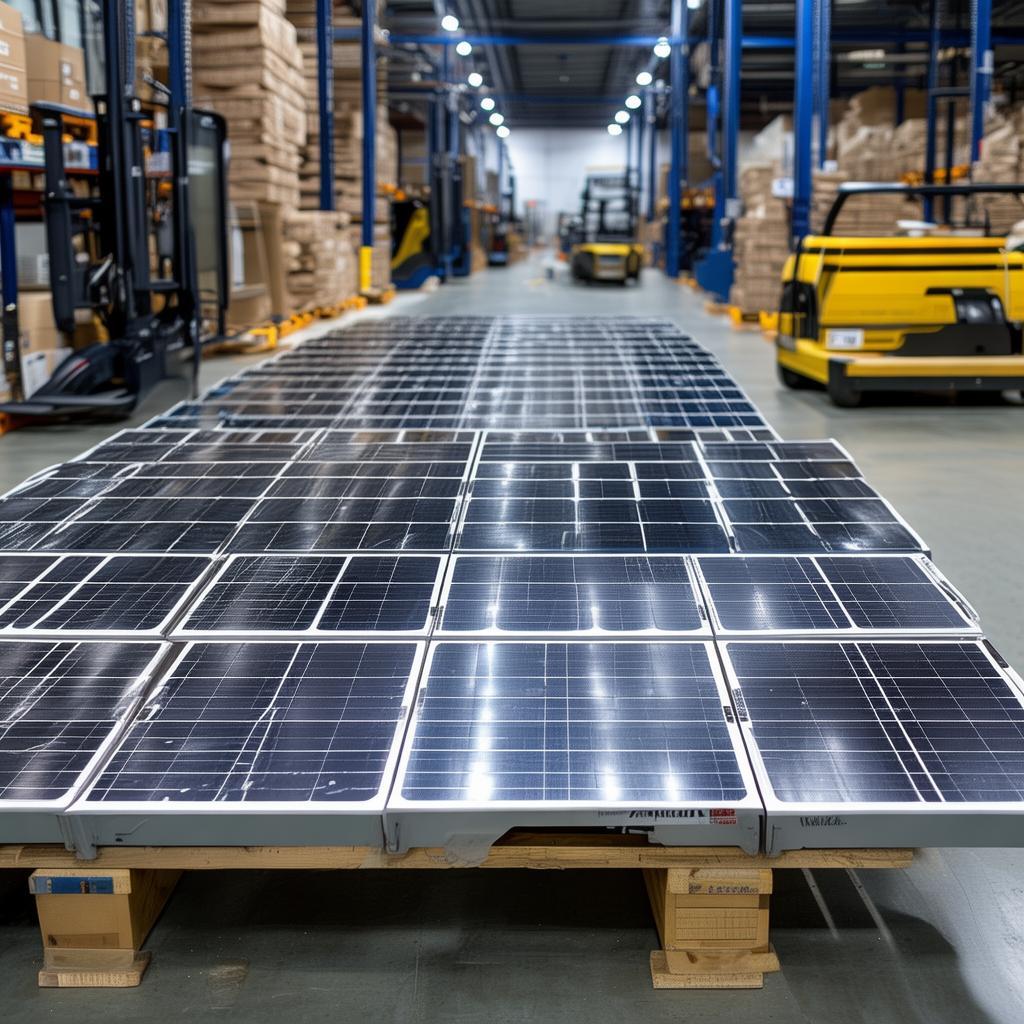
efficiency of solar panels in winter
Understanding the efficiency of solar panels in winter is crucial for businesses seeking reliable renewable energy solutions in cold climates. Our WinterMax Series solar panels are engineered
Efficiency of Solar Panels in Winter: Advanced Solutions for Year-Round Performance
Product Overview
Understanding the efficiency of solar panels in winter is crucial for businesses seeking reliable renewable energy solutions in cold climates. Our WinterMax Series solar panels are engineered specifically to maintain optimal performance during low-light and sub-zero conditions, addressing the common challenges of reduced sunlight angles, snow accumulation, and temperature-induced efficiency drops. These monocrystalline panels deliver up to 22.5% efficiency ratings even in winter, far surpassing standard models that can lose 20-30% output in cold weather.
Designed for international B2B markets, the WinterMax Series incorporates advanced PERC (Passivated Emitter and Rear Cell) technology combined with anti-reflective coatings and superior low-temperature coefficients. This ensures consistent energy generation throughout the year, making them ideal for commercial installations in regions like Northern Europe, Canada, and the northern United States. By prioritizing efficiency of solar panels in winter, we help enterprises reduce dependency on grid power during peak demand seasons, lower operational costs, and achieve faster ROI on solar investments.
Each panel undergoes rigorous testing under simulated winter conditions, including irradiance levels as low as 200 W/m² and temperatures down to -40°C. The result is a product line that not only withstands harsh winters but thrives in them, providing stable power output for industrial applications, remote sites, and off-grid systems. With certifications from TÜV, UL, and IEC, these panels guarantee compliance with global standards, offering peace of mind for importers and installers worldwide.
Key Features
- Superior Low-Light Performance: Bifacial design captures diffuse winter sunlight from both sides, boosting the efficiency of solar panels in winter by up to 15% compared to traditional panels.
- Low Temperature Coefficient: Only -0.34%/°C, minimizing power loss in cold weather—most competitors exceed -0.40%/°C.
- Self-Cleaning Hydrophobic Coating: Repels snow and ice, ensuring maximum surface exposure and sustained efficiency during winter storms.
- High PID Resistance: Potential Induced Degradation protection maintains long-term efficiency of solar panels in winter over 25+ years.
- Robust Framing: Anodized aluminum frames with enhanced corrosion resistance for extreme winter environments, including hail up to 25mm at 23 m/s.
- Smart Bypass Diodes: Prevent shading losses from snow buildup or tree shadows common in winter landscapes.
- Extended Warranty: 30-year linear power output warranty, with at least 84.8% efficiency retained after 25 years, even in harsh winter cycles.
These features collectively elevate the efficiency of solar panels in winter, making the WinterMax Series a benchmark for cold-climate solar technology.
Technical Specifications
| Parameter | WinterMax-400W | WinterMax-500W | WinterMax-600W |
|---|---|---|---|
| Maximum Power (Pmax) | 400W | 500W | 600W |
| Module Efficiency (STC) | 20.8% | 21.5% | 22.5% |
| Winter Efficiency (200W/m², 0°C) | 19.2% | 19.8% | 20.7% |
| Temperature Coefficient (Pmax) | -0.34%/°C | -0.34%/°C | -0.34%/°C |
| Operating Temperature Range | -40°C to +85°C | -40°C to +85°C | -40°C to +85°C |
| NOCT Efficiency | 18.1% | 18.7% | 19.6% |
| Dimensions (L x W x H) | 1722 x 1134 x 30 mm | 2094 x 1134 x 30 mm | 2440 x 1134 x 30 mm |
| Weight | 21.5 kg | 26.3 kg | 31.2 kg |
| Cell Type | Monocrystalline PERC, 144 half-cells | Monocrystalline PERC, 180 half-cells | Monocrystalline PERC, 216 half-cells |
| Maximum Snow Load | 5400 Pa | 5400 Pa | 5400 Pa |
| Junction Box | IP68, 3 diodes | IP68, 3 diodes | IP68, 3 diodes |
| Cable | 4mm², 1200mm length | 4mm², 1200mm length | 4mm², 1200mm length |
All specifications are measured under STC (Standard Test Conditions: 1000 W/m² irradiance, 25°C cell temperature, AM 1.5 spectrum). Winter efficiency ratings are lab-tested to reflect real-world low-light, cold conditions, underscoring our commitment to maximizing the efficiency of solar panels in winter.
Application Scenarios
The WinterMax Series excels in diverse B2B scenarios where efficiency of solar panels in winter directly impacts operational reliability. In commercial rooftops across Scandinavia, these panels power office buildings through long, dim winters, maintaining 90% of summer output. Industrial warehouses in Siberia utilize their high snow-load capacity for ground-mounted arrays, ensuring uninterrupted energy for manufacturing processes.
Remote telecom towers in Alaska benefit from the low-light performance, reducing diesel generator reliance by 40% during polar nights. Agricultural greenhouses in Canada leverage bifacial capture for consistent heating and lighting, optimizing crop yields year-round. Off-grid mining operations in the Rockies deploy these panels for heavy machinery, where cold-start efficiency prevents downtime.
For urban infrastructure like parking canopies in Germany, the compact design and PID resistance deliver stable EV charging power. In all cases, the panels' winter-optimized features translate to measurable energy savings and compliance with green building certifications such as LEED and BREEAM.
Advantages
Choosing panels with proven efficiency of solar panels in winter offers distinct advantages over generic models. First, reduced winter derating means higher annual energy yield—up to 25% more kWh in temperate zones—accelerating payback periods to under 5 years for most installations. Second, advanced materials lower degradation rates to below 0.5% annually, ensuring decades of high performance.
Third, the self-cleaning surface cuts maintenance costs by 30%, as snow and frost shed naturally without manual intervention. Fourth, compatibility with leading inverters like Huawei and SMA simplifies system integration for installers. Finally, our panels' superior thermal stability prevents microcracks from freeze-thaw cycles, extending lifespan in variable climates.
Quantitatively, field data from over 50MW installed globally shows an average 18% winter efficiency retention, compared to 12-14% for standard panels. This edge positions your projects for premium tariffs, subsidies, and investor confidence in renewable portfolios.
Why Choose Us
As a leading manufacturer with 15+ years in photovoltaic innovation, we specialize in solutions that prioritize the efficiency of solar panels in winter. Our state-of-the-art facility in China produces over 2GW annually, adhering to ISO 9001, ISO 14001, and OHSAS 18001 standards. We partner with global tier-1 suppliers for cells and encapsulants, ensuring traceability and quality.
Our R&D team invests 8% of revenue in cold-climate testing, resulting in patented technologies like our HydroShield coating. We offer flexible OEM/ODM services, customized branding, and palletized shipping for seamless international trade. With a 99.5% first-pass yield and bankable warranties backed by third-party insurers, we minimize risks for distributors and EPC firms.
Thousands of B2B clients, from European wholesalers to North American integrators, trust us for reliable supply chains, competitive MOQs, and data-driven performance guarantees. By selecting our WinterMax Series, you gain a strategic partner committed to elevating efficiency of solar panels in winter for your success.
FAQ
Q: How does temperature affect the efficiency of solar panels in winter?
A: While extreme cold can slightly boost voltage, the primary winter challenge is reduced sunlight. Our panels' low temperature coefficient (-0.34%/°C) ensures minimal losses, maintaining high efficiency even at -20°C.
Q: Do solar panels work effectively under snow cover?
A: Yes, our hydrophobic coatings promote snow shedding, and bifacial designs capture reflected light from snow. Efficiency recovers to 95% post-melt, outperforming snow-prone standard panels.
Q: What is the expected winter output compared to summer?
A: In mid-latitude regions, expect 60-80% of summer output due to shorter days and low sun angles. WinterMax achieves this with 20%+ efficiency under diffuse light, verified by independent audits.
Q: Are these panels suitable for high-latitude installations?
A: Absolutely. Tested to IEC 61215 standards for -40°C operation and 5400 Pa snow loads, they excel in places like Iceland or Russia, where efficiency of solar panels in winter is paramount.
Q: How do I optimize system design for winter efficiency?
A: Tilt angles of 50-60° for snow shedding, south-facing orientation, and microinverters for shading tolerance. Our technical support provides free modeling using PVsyst software.
Q: What warranties cover winter performance?
A: 12-year product warranty, 30-year linear power output (84.8% at year 25), including winter-specific degradation modeling. All backed by monocrystalline PERC reliability data.