

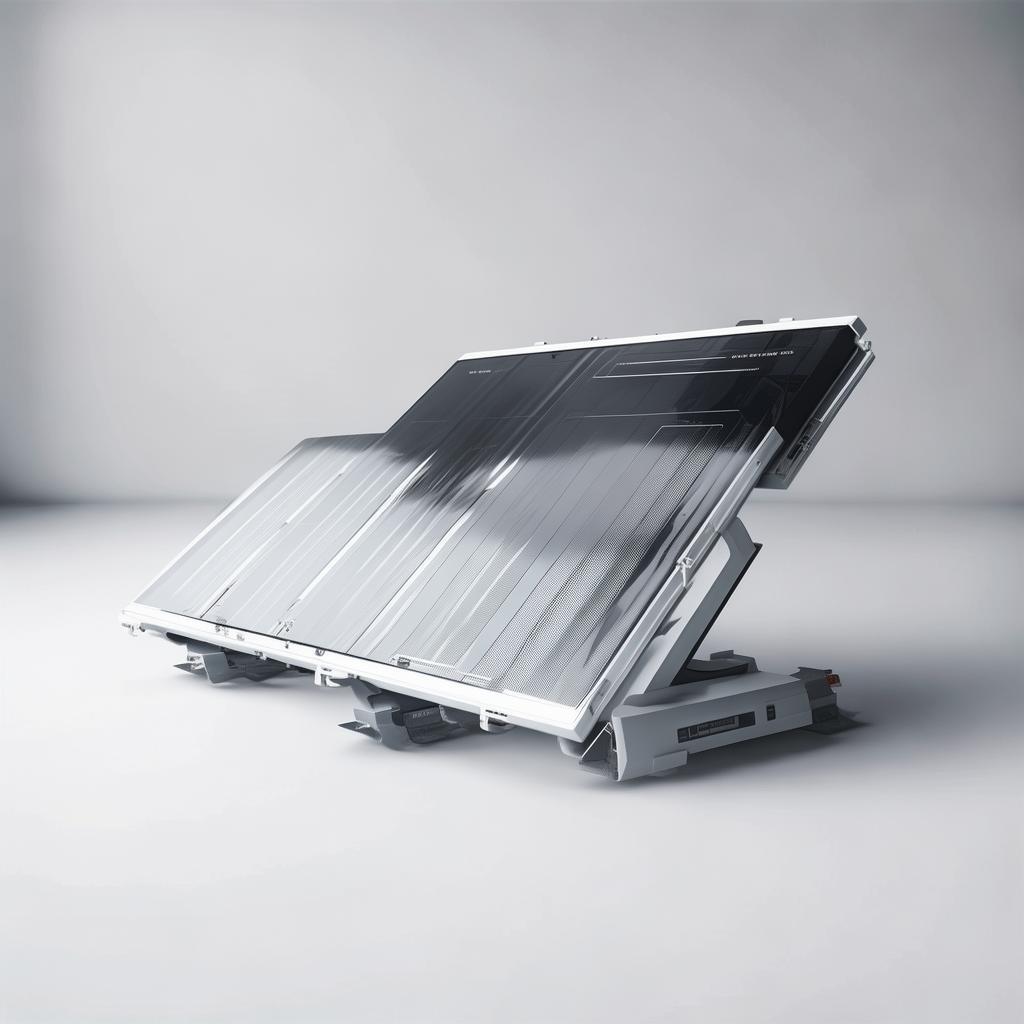
efficiency of bifacial solar panels
In the evolving landscape of renewable energy, the efficiency of bifacial solar panels stands out as a game-changer for industrial-scale solar deployments. Bifacial solar panels are designed to
Efficiency of Bifacial Solar Panels
Product Overview
In the evolving landscape of renewable energy, the efficiency of bifacial solar panels stands out as a game-changer for industrial-scale solar deployments. Bifacial solar panels are designed to capture sunlight from both the front and rear surfaces, significantly boosting overall energy production compared to traditional monofacial panels. This dual-sided absorption leverages reflected and diffused light, particularly in environments with high albedo surfaces like white roofs or sandy terrains.
Our bifacial solar panels achieve front-side efficiencies exceeding 22%, with bifaciality factors up to 80%, resulting in total energy yields that can surpass 25% effective efficiency under optimal conditions. This superior performance is driven by advanced N-type TOPCon cell technology, which minimizes degradation and maximizes power output over the panel's lifespan. Ideal for international trade and large-scale projects, these panels offer B2B buyers a reliable solution for maximizing ROI in utility-scale farms, commercial installations, and off-grid applications.
The efficiency of bifacial solar panels is not just about peak performance; it's about sustained output in real-world scenarios. With low temperature coefficients and resistance to PID (Potential Induced Degradation), they deliver consistent results even in challenging climates, from hot deserts to snowy regions. As global demand for high-efficiency photovoltaics rises, our panels position your projects at the forefront of sustainable energy innovation.
Key Features
- High Bifaciality: Up to 80% bifaciality ratio ensures maximum rear-side energy gain, elevating the overall efficiency of bifacial solar panels by 10-30% depending on installation height and ground reflectivity.
- Advanced TOPCon Cells: N-type tunnel oxide passivated contact cells provide superior efficiency, lower LID (Light Induced Degradation), and first-year degradation under 1%.
- Robust Framing: Anodized aluminum frames with reinforced corners withstand harsh environmental conditions, including wind loads up to 5400 Pa and snow loads up to 8000 Pa.
- Anti-Reflective Coating: Multi-layer AR coating on both sides reduces reflection losses, optimizing light absorption and enhancing the efficiency of bifacial solar panels.
- Half-Cut Cell Design: Minimizes shading losses and resistive losses, improving performance under partial shading common in ground-mounted systems.
- Certifications: IEC 61215, IEC 61730, UL 61730 compliant, ensuring global market access and insurance eligibility for international projects.
- Transparent Backsheet: High-transparency POE encapsulation material maximizes rear-side light transmission without yellowing over time.
Technical Specifications
| Parameter | Value | Notes |
|---|---|---|
| Cell Type | N-type TOPCon, 182mm half-cut | 166 cells per module |
| Front Side Efficiency | 22.5% - 23.5% | STC conditions |
| Bifaciality | 75% - 80% | Rear-side relative efficiency |
| Power Output (Pmax) | 580W - 620W | Front side; +15-25% bifacial gain possible |
| Dimensions | 2278 x 1134 x 30 mm | Weight: 28.5 kg |
| Temperature Coefficient (Pmax) | -0.30%/°C | Excellent thermal stability |
| Maximum System Voltage | 1500V DC | Compatible with string inverters |
| Junction Box | IP68 rated, 3 diodes | MC4 connectors |
| Warranty | 30 years linear power, 12 years product | Annual degradation <0.4% after year 1 |
| Mechanical Load | 5400 Pa front / 2400 Pa rear | Hail resistant up to 25mm |
These specifications underscore the exceptional efficiency of bifacial solar panels, tailored for high-performance PV systems. All data measured under STC (Standard Test Conditions: 1000 W/m² irradiance, 25°C cell temperature, AM 1.5 spectrum).
Application Scenarios
The versatility of bifacial solar panels makes them suitable for diverse B2B applications where the efficiency of bifacial solar panels translates directly to higher energy yields and faster project paybacks.
- Utility-Scale Solar Farms: Elevated mounting at 1-2 meters height over reflective ground covers like gravel or white fabric maximizes bifacial gains, achieving up to 25% more kWh per kWp installed.
- Commercial Rooftops: On flat roofs with TPO or white gravel surfaces, rear-side illumination boosts output by 10-15%, ideal for warehouses and factories seeking energy independence.
- Agrivoltaics: Dual-use systems over crops or livestock areas allow light penetration to the ground while harvesting reflected light, enhancing land efficiency in agricultural regions.
- Ground-Mounted Tracking Systems: Single-axis trackers amplify the efficiency of bifacial solar panels by optimizing tilt angles for both direct and albedo light capture.
- Off-Grid and Hybrid Projects: Remote mining sites or island grids benefit from compact high-output modules, reducing balance-of-system costs.
- Desert and High-Albedo Environments: Sand or salt flats reflect up to 40% light, pushing effective efficiencies beyond 28% in regions like the Middle East or Australia.
Advantages
Opting for bifacial solar panels delivers tangible advantages that elevate project economics and long-term reliability. The core efficiency of bifacial solar panels stems from their ability to generate power from diffuse and ground-reflected irradiance, which monofacial panels simply waste.
Key benefits include:
- Superior Energy Yield: 10-30% higher annual output reduces LCOE (Levelized Cost of Energy) by up to 15%, accelerating payback periods to under 5 years in optimal setups.
- Lower BOS Costs: Higher power per module means fewer panels, strings, and foundations, streamlining installation and logistics for international shipments.
- Enhanced Durability: N-type cells resist degradation from UV, heat, and impurities, ensuring 85% output retention after 30 years.
- Shading Tolerance: Half-cut design and bifacial gain mitigate row-to-row shading losses common in dense arrays.
- Environmental Adaptability: Performs exceptionally in low-light conditions, cloudy skies, or winter months, providing stable revenue for PPAs (Power Purchase Agreements).
- Scalability: From 1 MW pilots to GW-scale farms, seamless integration with major inverters and trackers.
These advantages position bifacial technology as the preferred choice for forward-thinking EPC firms and developers in the global solar market.
Why Choose Us
As a leading manufacturer in the photovoltaic industry, we specialize in high-efficiency bifacial solar panels engineered for international trade and demanding B2B applications. Our commitment to innovation ensures that every panel embodies the pinnacle of efficiency of bifacial solar panels.
We leverage state-of-the-art automated production lines with diamond wire cutting and AI-driven quality control, achieving defect rates below 0.1%. Partnerships with top-tier silicon suppliers guarantee consistent cell performance. Our global supply chain supports containerized exports to over 50 countries, with flexible MOQs for distributors and project developers.
Backed by ISO 9001, ISO 14001, and ISO 45001 certifications, we prioritize sustainability—from recyclable materials to carbon-neutral manufacturing. Extensive R&D investments keep our products ahead of industry standards, with ongoing enhancements in bifacial gain and aesthetics. Choose us for proven reliability, competitive pricing, and dedicated technical support tailored to your project's unique requirements.
FAQ
Q: What factors most influence the efficiency of bifacial solar panels?
A: Ground albedo (reflectivity), installation height (1-2m optimal), tilt angle, and rear-side shading. High-albedo surfaces like snow (90%) or white roofs (70%) can add 20-30% gain.
Q: How does bifacial efficiency compare to monofacial panels?
A: Front-side efficiency is similar (22-23%), but total yield is 10-30% higher due to rear-side contribution, making bifacial panels more cost-effective per kWh.
Q: Are bifacial panels suitable for all mounting types?
A: Yes, but maximum efficiency of bifacial solar panels is realized in ground-mount or elevated rooftop systems. Avoid flush-mounted setups where rear access is blocked.
Q: What is the expected bifacial gain in real-world projects?
A: Typically 5-15% for rooftops, 15-25% for ground mounts. Simulations using tools like PVsyst can predict site-specific gains accurately.
Q: Do bifacial panels require special inverters or monitoring?
A: No, they are compatible with standard string inverters. Bifacial gain is accounted for in DC/AC ratio designs; advanced monitoring optimizes performance tracking.
Q: How is the efficiency of bifacial solar panels measured and certified?
A: Front efficiency per STC; bifaciality as rear/front ratio under identical conditions. Third-party certifications from TUV, UL, and RETC validate claims.