

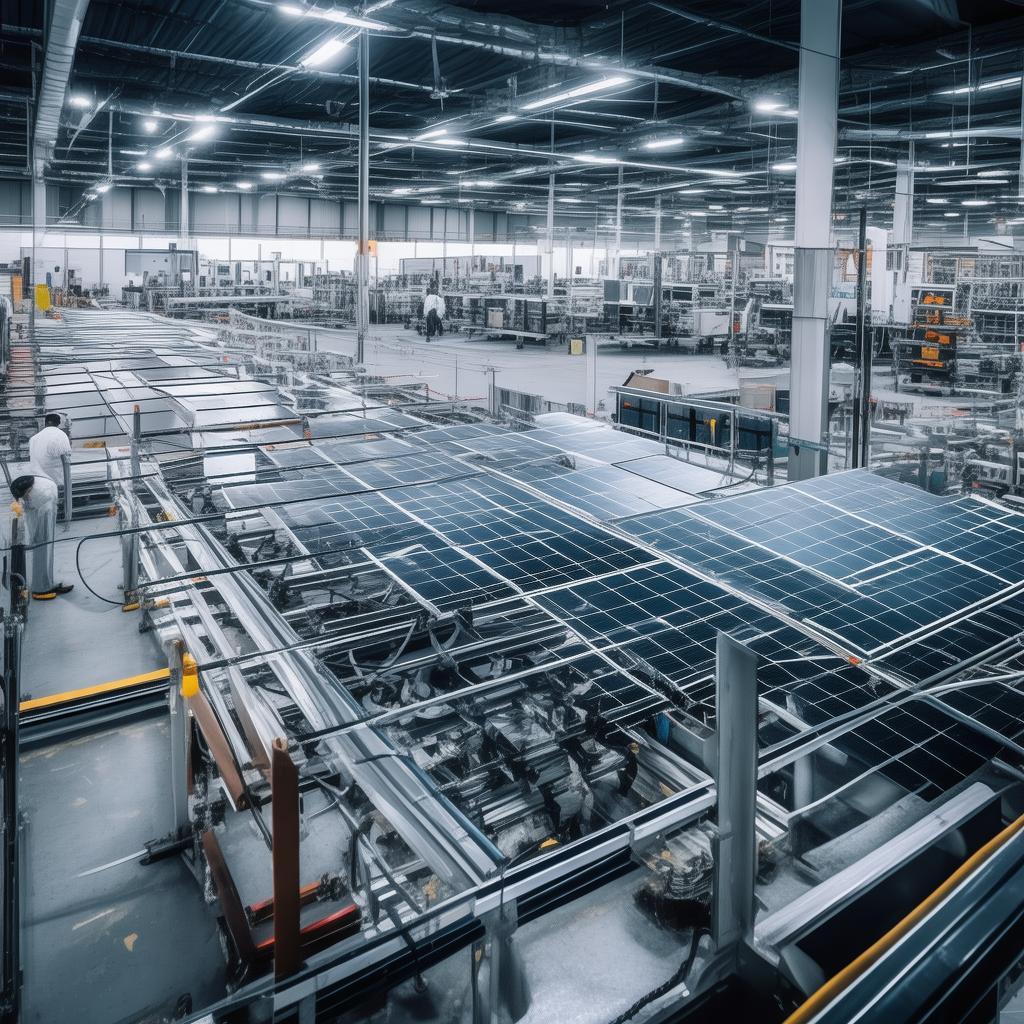
dual glass solar panels
Our dual glass solar panels represent the pinnacle of photovoltaic technology, engineered for superior durability and performance in demanding environments. Unlike traditional single-glass modules,
Dual Glass Solar Panels
Product Overview
Our dual glass solar panels represent the pinnacle of photovoltaic technology, engineered for superior durability and performance in demanding environments. Unlike traditional single-glass modules, these panels feature tempered glass on both the front and back surfaces, providing exceptional protection against environmental stressors such as hail, wind, snow, and thermal cycling. This bifacial design not only enhances energy yield through rear-side power generation but also extends the operational lifespan, making them ideal for international trade and large-scale deployments.
Designed with cutting-edge cell technology, our dual glass solar panels achieve high module efficiency rates, ensuring maximum return on investment for commercial and utility-scale projects. They are fully compliant with international standards like IEC 61215 and IEC 61730, offering peace of mind for global buyers. Whether you're sourcing for rooftop installations, ground-mounted systems, or floating solar farms, these panels deliver reliable power output even in harsh climates, from scorching deserts to frigid winters.
Key Features
- Bifacial Design: Captures sunlight from both sides, boosting energy production by up to 30% compared to monofacial panels, optimizing land use and performance in reflective environments.
- Double Glass Encapsulation: Front and rear tempered glass layers provide PID resistance, enhanced mechanical load capacity (up to 5400 Pa snow load and 2400 Pa wind load), and superior moisture ingress protection.
- High-Efficiency PERC Cells: Utilizes advanced Passivated Emitter Rear Cell technology for efficiencies exceeding 22%, ensuring top-tier power output per square meter.
- Anti-Reflective Coating: Minimizes light reflection, maximizing photon absorption and maintaining consistent performance under diffuse light conditions.
- Low-Light Performance: Excellent output in dawn, dusk, and cloudy conditions, ideal for regions with variable weather patterns.
- Fire Safety Rating: Class A fire resistance, meeting stringent safety requirements for commercial buildings and infrastructure projects.
- Long-Term Reliability: 30-year linear power warranty with minimal degradation (less than 0.55% annually), backed by rigorous testing.
Technical Specifications
| Parameter | Value |
|---|---|
| Module Type | Bifacial Dual Glass Solar Panels |
| Power Output (Pmax) | 550W - 600W (customizable ranges available) |
| Module Efficiency | 21.5% - 22.8% |
| Cell Type | N-Type TOPCon or PERC (144 half-cut cells) |
| Dimensions (L x W x H) | 2278 x 1134 x 30 mm |
| Weight | 28.5 kg |
| Front Glass | 2.0 mm tempered glass with AR coating |
| Back Glass | 2.0 mm tempered glass |
| Junction Box | IP68 rated, 3 diodes |
| Cable | 4.0 mm², 1400 mm length (customizable) |
| Connectors | MC4 compatible |
| Maximum System Voltage | 1500V DC |
| Operating Temperature | -40°C to +85°C |
| Mechanical Load | 5400 Pa / 2400 Pa |
| Hail Resistance | 25 mm hail at 23 m/s |
| Warranty | 12 years product, 30 years linear power output |
| Certifications | IEC 61215, IEC 61730, UL 61730, CE, TUV |
Application Scenarios
Dual glass solar panels excel in a wide array of applications, thanks to their robust construction and bifacial energy capture. In utility-scale solar farms, they maximize ground albedo reflection for higher yields on flat or elevated terrains. For commercial rooftops, the double glass design withstands heavy snow accumulation and high winds, ensuring uninterrupted operation.
In residential installations, their sleek aesthetics and low degradation rate appeal to homeowners seeking long-term energy independence. Floating solar projects benefit from the panels' water resistance and enhanced cooling from water proximity, boosting efficiency by 10-15%. Harsh environments like deserts or coastal areas leverage their salt mist and ammonia corrosion resistance, while agrivoltaic setups allow dual land use for farming and power generation under the panels.
Additionally, dual glass solar panels are perfect for building-integrated photovoltaics (BIPV), where their transparency options and durability integrate seamlessly into facades or canopies, supporting sustainable architecture worldwide.
Advantages
Opting for dual glass solar panels provides distinct edges over conventional modules. The elimination of a polymer backsheet reduces microcracking risks and potential induced degradation (PID), leading to a degradation rate under 0.4% per year—far superior to single-glass alternatives. This translates to sustained higher energy production over decades.
Mechanically, they handle extreme loads: certified for 5400 Pa front-side pressure, ideal for snow-prone regions, and 2400 Pa rear-side, perfect for high-wind zones. Bifaciality unlocks additional revenue in albedo-rich sites, with rear-side efficiency up to 80% of front-side output. Environmentally, their recyclability and lack of fluorinated polymers align with ESG goals, appealing to eco-conscious buyers.
Economically, lower levelized cost of energy (LCOE) results from higher upfront efficiency and extended warranties, minimizing O&M costs. In international trade, their compact design optimizes shipping containers, reducing logistics expenses for bulk orders.
Why Choose Us
As a leading manufacturer of dual glass solar panels, we prioritize innovation and quality at every stage. Our state-of-the-art production lines incorporate automated processes and EL testing for zero-defect modules. We hold ISO 9001, ISO 14001, and ISO 45001 certifications, ensuring consistent excellence.
With vertical integration from silicon ingots to final assembly, we control costs without compromising standards. Our R&D team continuously advances TOPCon and HJT technologies, delivering next-gen dual glass solar panels. Global supply chain reliability means on-time deliveries, supported by warehouses in key markets. Rigorous third-party testing from TUV, UL, and RETC validates performance claims, building trust with B2B partners worldwide.
We offer flexible OEM/ODM services, customizing power ratings, dimensions, and branding to meet specific project needs, backed by comprehensive technical support.
FAQ
Q: What makes dual glass solar panels more durable than single-glass panels?
A: The rear glass layer replaces fragile backsheets, offering superior resistance to moisture, mechanical stress, and UV degradation, with proven 30-year field performance.
Q: Are these panels suitable for bifacial mounting configurations?
A: Yes, optimized for elevated or white-surface mounts to maximize bifacial gain, with up to 25-30% additional yield depending on ground reflectivity.
Q: What is the bifaciality factor of your dual glass solar panels?
A: Typically 70-80%, ensuring substantial rear-side contribution under real-world conditions.
Q: Do they perform well in hot climates?
A: Absolutely, with a low temperature coefficient (-0.34%/°C) and enhanced rear ventilation, maintaining efficiency above 90% at elevated temperatures.
Q: What warranties are provided?
A: 12 years on product materials and workmanship, plus a 30-year linear power output warranty guaranteeing at least 84.8% output at year 30.
Q: Are custom sizes or power outputs available for bulk orders?
A: Yes, our flexible manufacturing supports tailored specifications for international projects, with minimum order quantities starting at 10MW.
Q: How do dual glass solar panels contribute to sustainability?
A: Fully recyclable glass components, no hazardous materials, and extended lifespan reduce waste and lifecycle carbon footprint by 20% versus traditional panels.
Related product
- English
- Françai
- Español
- Deutsch
- Română
- العربية
- 한국어
- 日本語
- Italiano
- Português
- Gaeilge
- Dansk
- Čeština
- Русский
- Afrikaans
- Euskara
- Català
- Esperanto
- हिन्दी
- Ελληνικά
- Bahasa Melayu
- Polski
- Српски
- Kiswahili
- ภาษาไทย
- Tiếng Việt
- Türkçe
- Svenska
- Cymraeg
- Slovenčina
- Latviešu
- Malti
- Magyar
- Galego
- ગુજરાતી
- Eesti Keel
- বাংলা
- Shqip
- беларуская мова
- Nederlands
- Tagalog
- ქართული
- Íslenska
- Kreyòl Ayisyen
- Lietuvių
- Norsk
- slovenščina
- தமிழ்
- Українська
- ײִדיש
- اردو
- తెలుగు
- فارسی
- македонски
- ಕನ್ನಡ
- Bahasa Indonesia
- עברית
- Suomi
- Hrvatski
- Български
- Azerbaijani