

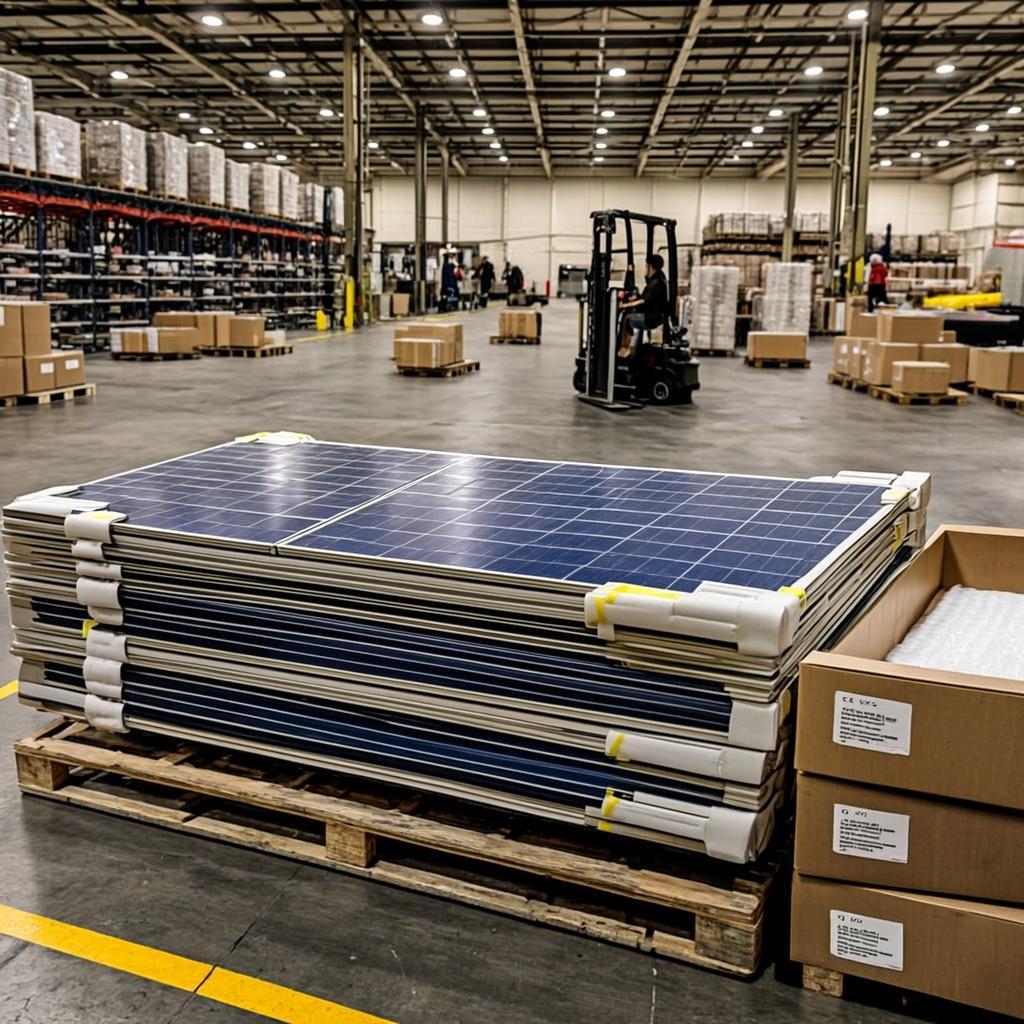
different types of solar panels
Discover our comprehensive selection of different types of solar panels, engineered for superior performance in diverse industrial applications worldwide. As a leading supplier in the international
Different Types of Solar Panels
Product Overview
Discover our comprehensive selection of different types of solar panels, engineered for superior performance in diverse industrial applications worldwide. As a leading supplier in the international solar energy market, we offer monocrystalline, polycrystalline, PERC, bifacial, and thin-film solar panels, each designed to meet specific efficiency, durability, and cost requirements. These different types of solar panels harness photovoltaic technology to convert sunlight into clean, reliable electricity, supporting the global shift toward sustainable energy solutions.
Monocrystalline panels, known for their high efficiency and sleek black appearance, are ideal for space-constrained installations. Polycrystalline options provide a cost-effective alternative with solid performance in larger arrays. Advanced PERC (Passivated Emitter and Rear Cell) technology enhances light absorption, boosting output by up to 5% compared to standard cells. Bifacial panels capture sunlight from both sides, maximizing energy yield in reflective environments. Thin-film varieties, including CIGS and amorphous silicon, excel in low-light conditions and flexible mounting scenarios.
Our different types of solar panels undergo rigorous testing to comply with international standards like IEC 61215 and UL 1703, ensuring longevity and reliability. Whether you're outfitting commercial rooftops, utility-scale farms, or remote industrial sites, our panels deliver optimal return on investment through reduced levelized cost of energy (LCOE). With power ratings from 300W to over 600W per panel, we cater to projects of all scales, backed by customizable configurations for maximum system efficiency.
Key Features
- High Efficiency Ratings: Ranging from 18% to 23% across different types of solar panels, ensuring maximum energy harvest even in suboptimal conditions.
- Advanced Cell Technology: Multi-busbar (MBB) designs and half-cut cells minimize resistance losses and micro-cracks for enhanced durability.
- Tempered Glass and Robust Framing: 3.2mm anti-reflective coated glass with anodized aluminum frames withstands hail, wind loads up to 5400Pa, and snow loads up to 2400Pa.
- Bifacial Capabilities: Select models generate 10-30% additional power from rear-side illumination, perfect for ground-mounted systems.
- Low Degradation Rates: First-year degradation under 2%, with annual rates below 0.55% for 25-30 year linear performance warranties.
- Versatile Mounting Compatibility: Designed for flush roof, tilted racking, and tracking systems, adaptable to various types of solar panels installations.
- Certifications and Safety: PID-free, salt mist, and ammonia resistant, certified by TUV, CE, and INMETRO for global deployment.
- Smart Monitoring Integration: Compatible with IoT-enabled inverters for real-time performance tracking and predictive maintenance.
Technical Specifications
| Parameter | Monocrystalline | Polycrystalline | PERC Monocrystalline | Bifacial | Thin-Film (CIGS) |
|---|---|---|---|---|---|
| Max Power (Pmax) | 400-550W | 370-500W | 450-600W | 470-620W | 100-200W/m² |
| Efficiency | 20-22% | 17-19% | 21-23% | 21-24% (front) | 15-18% |
| Dimensions (mm) | 1722x1134x30 | 1960x992x35 | 2278x1134x30 | 2278x1134x30 | Flexible: 1200x600x2 |
| Cell Type | 166/182mm half-cut | 156mm full-cut | 182mm PERC half-cut | 182mm glass-glass | CIGS thin-film |
| Warranty | 12/30 years | 12/25 years | 12/30 years | 12/30 years | 10/25 years |
| Temperature Coefficient (Pmax) | -0.35%/°C | -0.39%/°C | -0.34%/°C | -0.30%/°C | -0.40%/°C |
| Operating Temperature | -40°C to +85°C | -40°C to +85°C | -40°C to +85°C | -40°C to +85°C | -40°C to +85°C |
Application Scenarios
Our different types of solar panels are tailored for a wide array of B2B applications, ensuring seamless integration into industrial workflows. In commercial and industrial rooftops, high-efficiency monocrystalline and PERC panels optimize limited space while minimizing payback periods. Utility-scale solar farms benefit from polycrystalline and bifacial models, which offer scalability and bifacial gains on expansive ground mounts with albedo surfaces like white gravel.
For off-grid industrial operations, such as mining sites or remote telecom towers, thin-film panels provide lightweight, flexible solutions resilient to shading and high temperatures. Agricultural agrivoltaic systems pair bifacial panels with crop cultivation, enhancing land-use efficiency. Floating solar projects on reservoirs leverage durable polycrystalline arrays resistant to humidity. In urban high-rises, sleek monocrystalline designs blend aesthetically while powering HVAC and lighting systems.
These versatile types of solar panels support hybrid setups with energy storage, enabling peak shaving and demand response for energy-intensive manufacturing. Across regions from sun-drenched deserts to cloudy latitudes, our panels adapt via low-light performance and wide temperature tolerances, driving ESG compliance and operational resilience.
Advantages
- Superior Energy Yield: Among different types of solar panels, our PERC and bifacial options outperform industry averages, delivering up to 25% more kWh per installed kW.
- Cost-Competitive: Balanced pricing across types reduces CAPEX, with polycrystalline offering the best value for high-volume deployments.
- Long-Term Reliability: Anti-LeTID (Light and Elevated Temperature Induced Degradation) treatments ensure consistent output over decades.
- Environmental Sustainability: Lead-free materials and recyclable frames align with circular economy principles, minimizing ecological footprint.
- Global Supply Chain: Vertically integrated manufacturing guarantees consistent quality and on-time delivery for international projects.
- Performance Guarantees: Bankable warranties backed by third-party insurers, providing procurement security for EPC firms.
Why Choose Us
As a trusted exporter of different types of solar panels, we stand out through our decade-long expertise in photovoltaic innovation and supply chain mastery. Our state-of-the-art Tier 1 facilities produce panels with A-grade cells, achieving defect rates below 0.1%. We hold ISO 9001, ISO 14001, and OHSAS 18001 certifications, ensuring ethical, high-quality production.
Our B2B focus includes tailored solutions: from module-level customization to full-system engineering support. With a global network spanning Europe, Asia, the Americas, and Africa, we facilitate seamless logistics, competitive MOQs, and flexible payment terms. Rigorous quality control—including EL imaging, flash testing, and thermal cycling—guarantees every panel meets or exceeds specifications. Partner with us for proven performance, unwavering support, and a commitment to powering your sustainable future.
FAQ
What are the main different types of solar panels you offer?
We provide monocrystalline, polycrystalline, PERC monocrystalline, bifacial, and thin-film (CIGS) panels, each optimized for specific efficiency, cost, and application needs.
How do I choose the right type of solar panel for my project?
Consider factors like space availability, budget, irradiance levels, and mounting type. High-efficiency monocrystalline suits rooftops; bifacial excels in ground-mounts. Our experts offer free consultations.
What warranties come with your solar panels?
Product warranties range from 12 years (material) to 30 years (linear power), with polycrystalline at 25 years. Bifacial models include rear-side performance guarantees.
Are your panels suitable for harsh environments?
Yes, all types of solar panels are PID-resistant, salt mist certified, and rated for extreme temperatures, ideal for marine, desert, or agricultural settings.
Can you customize panels for large-scale projects?
Absolutely. We support OEM branding, custom dimensions, and power outputs, with capacities exceeding 10GW annually for utility-scale demands.
What is the lead time for orders?
Standard orders ship in 7-15 days; large projects within 30-45 days, depending on type and volume.
Do you provide testing and certification reports?
Every panel includes detailed datasheets, EL images, and certifications like IEC, UL, and MCS for bankability.
Related product
- English
- Françai
- Español
- Deutsch
- Română
- العربية
- 한국어
- 日本語
- Italiano
- Português
- Gaeilge
- Dansk
- Čeština
- Русский
- Afrikaans
- Euskara
- Català
- Esperanto
- हिन्दी
- Ελληνικά
- Bahasa Melayu
- Polski
- Српски
- Kiswahili
- ภาษาไทย
- Tiếng Việt
- Türkçe
- Svenska
- Cymraeg
- Slovenčina
- Latviešu
- Malti
- Magyar
- Galego
- ગુજરાતી
- Eesti Keel
- বাংলা
- Shqip
- беларуская мова
- Nederlands
- Tagalog
- ქართული
- Íslenska
- Kreyòl Ayisyen
- Lietuvių
- Norsk
- slovenščina
- தமிழ்
- Українська
- ײִדיש
- اردو
- తెలుగు
- فارسی
- македонски
- ಕನ್ನಡ
- Bahasa Indonesia
- עברית
- Suomi
- Hrvatski
- Български
- Azerbaijani