

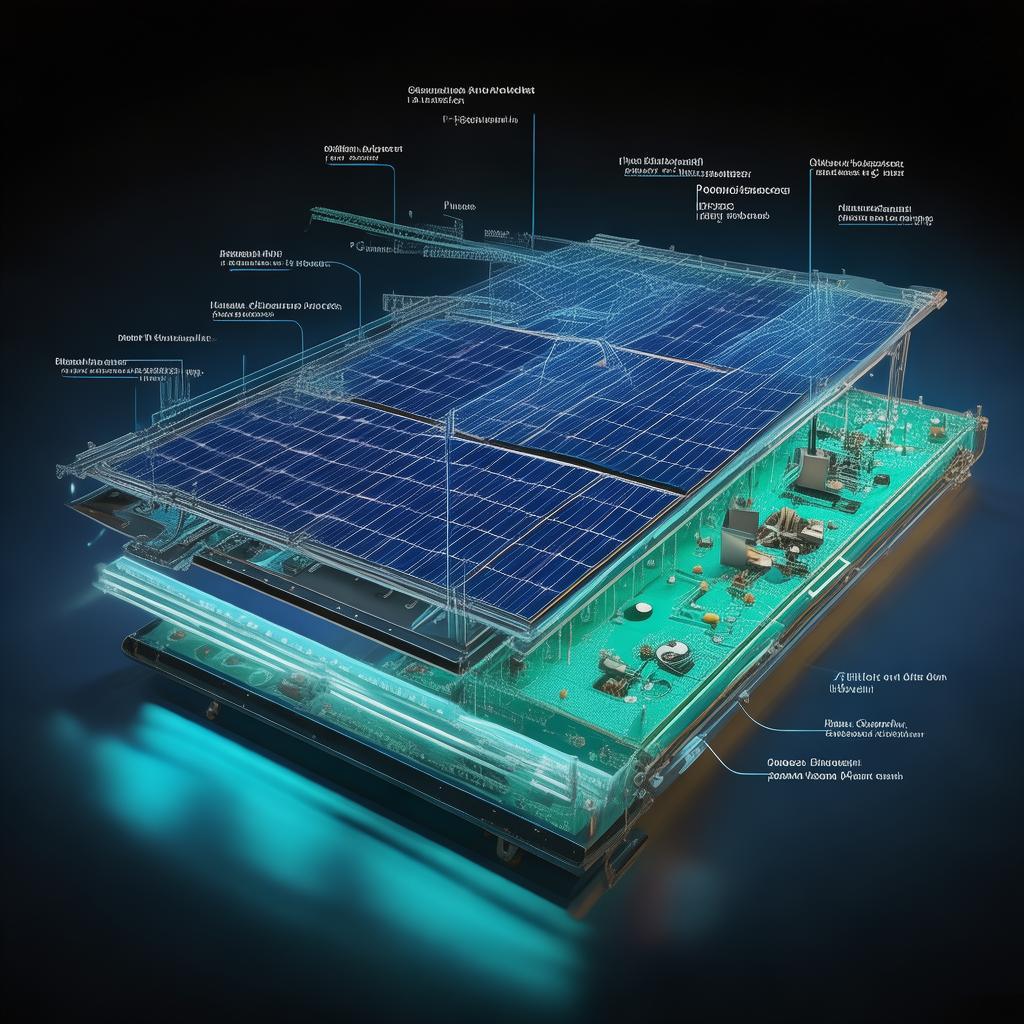
buy bifacial solar panels
When you buy bifacial solar panels, you're investing in cutting-edge photovoltaic technology that captures sunlight from both sides of the module, delivering up to 30% more energy output compared to
Buy Bifacial Solar Panels: Maximize Energy Yield with Dual-Side Technology
Product Overview
When you buy bifacial solar panels, you're investing in cutting-edge photovoltaic technology that captures sunlight from both sides of the module, delivering up to 30% more energy output compared to traditional monofacial panels. Ideal for international B2B buyers seeking reliable, high-performance solutions for large-scale solar projects, our bifacial solar panels utilize advanced N-type TOPCon cells, ensuring superior efficiency and longevity in diverse environmental conditions.
These panels are engineered for optimal bifaciality—typically 70-80%—allowing the rear side to generate additional power from reflected and diffused light. This makes them perfect for ground-mounted systems, snowy regions, or reflective surfaces like white roofs or gravel fields. As global demand surges for sustainable energy, buying bifacial solar panels positions your business at the forefront of renewable innovation, reducing levelized cost of energy (LCOE) and accelerating ROI.
Our offerings comply with international standards such as IEC 61215, IEC 61730, and UL 61730, backed by rigorous third-party testing. Whether you're outfitting utility-scale farms, commercial installations, or distributed generation projects, these panels provide unmatched durability against PID, LID, and salt mist corrosion. Explore why industry leaders choose to buy bifacial solar panels from us for their next venture.
Key Features
- High Bifaciality: 75-80% rear-side efficiency, boosting overall yield by capturing albedo-reflected light effectively.
- N-Type TOPCon Technology: Delivers 22-23% cell efficiency with minimal degradation (less than 0.4% annually).
- Half-Cut Cell Design: Reduces shading losses and hot-spot risks, enhancing reliability in partial shading scenarios.
- Multi-Busbar (MBB) Configuration: Optimizes current collection, lowering resistance and improving low-light performance.
- Transparent Backsheet: POE encapsulation for UV resistance and higher transmittance, maximizing rear-side generation.
- Anti-Reflection Coating: Lowers reflectance to under 2%, ensuring peak front-side absorption.
- Wind and Snow Load Resistance: Up to 5400 Pa front and 2400 Pa rear, suitable for harsh climates.
- 30-Year Linear Power Warranty: Guarantees at least 84.8% output after 30 years, with first-year degradation under 2%.
Technical Specifications
| Parameter | Value | Unit |
|---|---|---|
| Peak Power (Pmax) | 550-585 | W |
| Module Efficiency | 21.5-22.8 | % |
| Bifaciality | 75-80 | % |
| Cell Type | N-Type TOPCon, 182mm | - |
| Number of Cells | 144 (2 x 72 half-cut) | - |
| Dimensions (L x W x H) | 2278 x 1134 x 30 | mm |
| Weight | 27.3 | kg |
| Front Glass | 3.2mm Tempered, AR Coated | - |
| Rear Glass | 2.0mm Tempered | - |
| Frame | Anodized Aluminum Alloy | - |
| Junction Box | IP68 Rated, 3 Diodes | - |
| Cable | 4.0mm², 1400mm Length | - |
| Max System Voltage | 1500 | DC V |
| Temperature Coefficient (Pmax) | -0.30 | /%°C |
| Operating Temperature | -40 to +85 | °C |
| Wind Load | 2400/5400 | Pa (Rear/Front) |
| Snow Load | 5400 | Pa |
Note: Specifications are STC (Standard Test Conditions: 1000 W/m² irradiance, 25°C cell temperature, AM 1.5 spectrum). Actual bifacial gain depends on installation height, albedo, and tilt angle.
Application Scenarios
Bifacial solar panels excel in a variety of application scenarios where maximizing energy harvest is critical. For utility-scale solar farms, elevate modules 1-2 meters above ground with high-albedo covers like white gravel or TPO membranes to leverage rear-side generation, achieving 10-30% extra yield. When you buy bifacial solar panels for these projects, expect superior performance in diffuse light conditions common in Europe and North America.
In commercial and industrial rooftops, especially on reflective surfaces such as logistics warehouses or data centers, bifacial panels outperform monofacial alternatives by utilizing bounced light from metal or white coatings. They're also ideal for agrivoltaics, combining solar generation with crop cultivation under raised panels, preserving farmland while generating clean power.
For challenging environments like deserts, coastal areas, or snowy regions, their robustness against sand abrasion, salt corrosion, and snow reflection makes them a top choice. Floating solar installations benefit from water's high albedo (up to 10%), and vertical bifacial setups in urban carports or noise barriers deliver space-efficient power. Globally, buyers turn to bifacial technology for off-grid systems in remote mining operations or hybrid wind-solar parks, ensuring resilient energy supply.
Advantages
Opting to buy bifacial solar panels unlocks several competitive advantages over conventional modules. Firstly, the dual-sided energy capture significantly lowers the cost per watt-hour, with real-world gains of 15-25% in optimal setups, directly impacting project economics for B2B stakeholders.
Durability stands out: N-type cells exhibit near-zero light-induced degradation (LID) and potential-induced degradation (PID), outperforming P-type by twofold in long-term reliability. This translates to a lower degradation rate, preserving value over 25-30 years.
Versatility in system design allows for snow-elevated or tracker-mounted arrays, adapting to site-specific albedo without custom engineering. Lower temperature coefficients ensure stable output in hot climates, while excellent low-irradiance response suits cloudy latitudes.
From an environmental perspective, higher yields mean fewer panels per MW, reducing material use, transportation emissions, and land footprint. Certified for recyclability, they align with ESG goals. Economically, faster payback periods—often under 5 years—appeal to investors, making bifacial the smart choice for forward-thinking procurement teams.
Why Choose Us
As a premier supplier in the international solar trade, we empower businesses to buy bifacial solar panels with confidence through our unwavering commitment to quality and innovation. Our state-of-the-art manufacturing facilities adhere to ISO 9001 and ISO 14001 standards, utilizing automated lines for precision assembly and minimal defect rates below 0.1%.
We offer tier-1 bankability, with modules listed on global platforms like PV Magazine and BNEF. Extensive certifications—including TUV, CE, INMETRO, and MCS—ensure seamless market access across continents. Our R&D team continuously refines bifacial tech, incorporating latest advancements like larger wafer sizes for future-proofing your investments.
Supply chain stability, flexible MOQs from 100kW to MW-scale, and competitive lead times set us apart. Partner with us for tailored solutions, from performance modeling to logistics optimization, guaranteeing your projects exceed expectations.
FAQ
Q: What makes bifacial solar panels better for buying in bulk?
A: Bifacial panels offer higher energy density and yield, reducing BOS costs and land use. When you buy bifacial solar panels in volume, economies of scale amplify savings, with proven 20%+ LCOE reductions in field tests.
Q: How much extra power can I expect from the rear side?
A: Bifacial gain varies: 5-10% on standard ground mounts, up to 30% with optimized albedo and elevation. Tools like PVsyst simulations help predict site-specific gains accurately.
Q: Are these panels suitable for all mounting systems?
A: Yes, compatible with fixed-tilt, single/double-axis trackers, and east-west configurations. Rear-side access requires at least 30cm clearance for optimal performance.
Q: What warranties are provided?
A: 12-15 years product warranty, 30 years linear power output (84.8% at year 30), covering workmanship and performance.
Q: Do bifacial panels perform well in low-light or shaded areas?
A: Exceptionally so, thanks to half-cut cells and MBB design, maintaining high efficiency down to 200 W/m² irradiance.
Q: How do I calculate the bifacial gain for my project?
A: Factor albedo (soil: 0.2, snow: 0.9), height-to-row pitch ratio, and tilt. Our technical team provides free modeling support upon inquiry.
Q: Are there any special installation requirements?
A: Standard solar practices apply, but prioritize reflective ground covers and ventilation. No unique tools needed beyond typical racking.
Q: Can I buy bifacial solar panels for residential use?
A: Primarily B2B focused, but scalable for premium residential or C&I roofs where space is limited and yield maximization is key.
Related product
- English
- Françai
- Español
- Deutsch
- Română
- العربية
- 한국어
- 日本語
- Italiano
- Português
- Gaeilge
- Dansk
- Čeština
- Русский
- Afrikaans
- Euskara
- Català
- Esperanto
- हिन्दी
- Ελληνικά
- Bahasa Melayu
- Polski
- Српски
- Kiswahili
- ภาษาไทย
- Tiếng Việt
- Türkçe
- Svenska
- Cymraeg
- Slovenčina
- Latviešu
- Malti
- Magyar
- Galego
- ગુજરાતી
- Eesti Keel
- বাংলা
- Shqip
- беларуская мова
- Nederlands
- Tagalog
- ქართული
- Íslenska
- Kreyòl Ayisyen
- Lietuvių
- Norsk
- slovenščina
- தமிழ்
- Українська
- ײִדיש
- اردو
- తెలుగు
- فارسی
- македонски
- ಕನ್ನಡ
- Bahasa Indonesia
- עברית
- Suomi
- Hrvatski
- Български
- Azerbaijani