

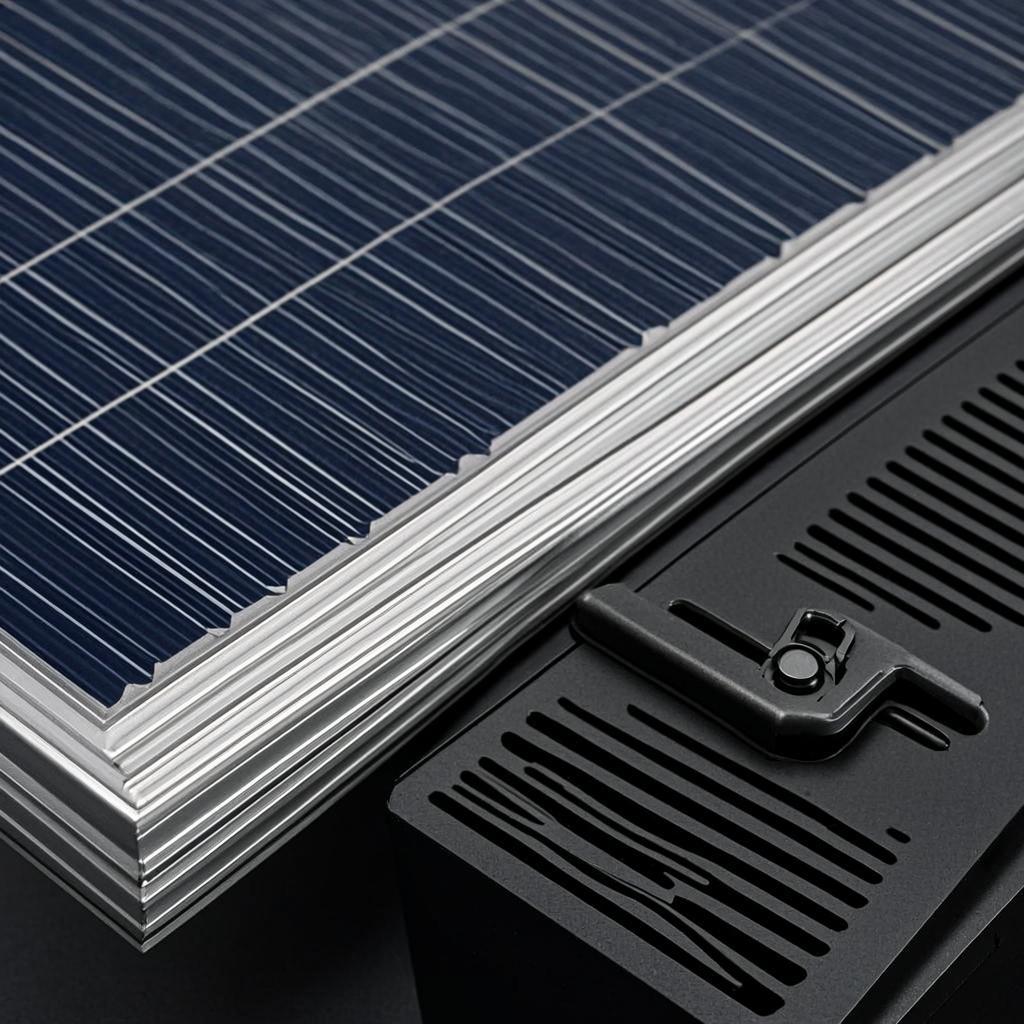
bifacial vs monofacial solar
In the evolving landscape of renewable energy, understanding bifacial vs monofacial solar panels is crucial for businesses seeking maximum return on investment. Monofacial solar panels, the
Bifacial vs Monofacial Solar: Comprehensive Comparison for Optimal Energy Yield
Product Overview
In the evolving landscape of renewable energy, understanding bifacial vs monofacial solar panels is crucial for businesses seeking maximum return on investment. Monofacial solar panels, the traditional choice, feature cells that capture sunlight exclusively from the front side, typically achieving efficiencies between 20% and 22%. These panels use a solid backsheet, making them reliable and cost-effective for standard installations.
Bifacial solar panels, on the other hand, represent a technological leap forward. By capturing sunlight from both the front and rear sides, they can generate up to 30% more energy compared to monofacial counterparts, depending on installation conditions. The transparent or patterned backsheet allows diffuse and reflected light—such as from ground albedo or nearby surfaces—to contribute to power output. This bifacial vs monofacial solar distinction becomes especially pronounced in environments with high reflectivity, like snowy fields or white gravel roofs.
When evaluating bifacial vs monofacial solar, key considerations include upfront costs, where monofacial panels remain more affordable, versus long-term energy production gains from bifacial modules. Our high-quality selections from leading manufacturers ensure compatibility with diverse systems, from utility-scale farms to commercial rooftops. This overview highlights how bifacial technology addresses limitations of monofacial panels, offering superior performance in modern photovoltaic deployments.
Key Features
Monofacial Solar Panels
- Proven Reliability: Decades of field-tested performance with minimal degradation rates under 0.5% annually.
- Cost-Effective: Lower manufacturing costs translate to competitive pricing for large-scale projects.
- Versatile Design: Standard PERC or half-cut cell technology for uniform front-side absorption.
- Easy Integration: Compatible with most existing mounting systems and inverters without modifications.
Bifacial Solar Panels
- Dual-Side Generation: Bifaciality factor of 70-80%, enabling rear-side contribution of 5-30% additional power.
- Higher Efficiency: Front-side efficiency up to 23%, with total yield boosted by environmental reflections.
- Advanced Cell Tech: N-type TOPCon or HJT cells for low LID/LETID and excellent low-light performance.
- Durability: Enhanced PID resistance and salt mist corrosion rating for harsh environments.
Comparing bifacial vs monofacial solar features reveals bifacial's edge in energy density, while monofacial excels in simplicity and initial economics.
Technical Specifications
| Parameter | Monofacial Solar | Bifacial Solar |
|---|---|---|
| Cell Type | PERC Monocrystalline | N-TOPCon or HJT Bifacial |
| Front Efficiency | 20.5% - 22.0% | 21.5% - 23.5% |
| Bifaciality Factor | N/A | 70% - 80% |
| Power Output (STC) | 400W - 550W | 450W - 620W (front only) |
| Dimensions (mm) | 1722 x 1134 x 30 | 1722 x 1134 x 30 |
| Weight (kg) | 21-23 | 22-24 |
| Temperature Coefficient (Pmax) | -0.35%/°C | -0.30%/°C |
| Warranty | 12-15 years product, 25-30 years linear power | 12-15 years product, 30 years linear power |
| Max Rear Gain | N/A | 5-30% (albedo dependent) |
| Frame | Anodized Aluminum | Anodized Aluminum (elevated for airflow) |
These specifications underscore the bifacial vs monofacial solar performance gap, with bifacial modules delivering measurable advantages in real-world output.
Application Scenarios
Bifacial vs monofacial solar choices depend on site-specific factors. Monofacial panels thrive in shaded or low-albedo environments, such as urban rooftops with dark surfaces or forested areas. Their straightforward design suits residential and small commercial setups where rear-side gain is negligible.
Bifacial panels excel in ground-mounted utility-scale projects on reflective terrains like deserts, snow-covered regions, or white-pebble ballasted roofs. Elevated installations at 0.5-1.5m height maximize rear irradiance. They are ideal for agrivoltaics, where crops beneath panels reflect light, boosting dual land use efficiency. In floating solar farms, water reflections enhance bifacial yields by 10-15% over monofacial.
Hybrid scenarios combine both: monofacial for cost-sensitive sections, bifacial for high-yield zones. Our expertise guides optimal selection in bifacial vs monofacial solar deployments worldwide.
Advantages
Delving deeper into bifacial vs monofacial solar, bifacial modules offer compelling superiorities. Energy yield increases of 10-25% reduce LCOE by up to 15%, accelerating payback periods. Their tolerance to high temperatures and low irradiance outperforms monofacial in diverse climates.
Monofacial advantages include lower BOS costs—no need for elevated racking—and simpler certification processes. However, bifacial's bankability shines with extended warranties and first-year degradation under 1%.
- ROI Boost: Bifacial recovers premium in 1-3 years via higher kWh production.
- Sustainability: Less land per MWp with bifacial density.
- Future-Proofing: Aligns with grid demands for higher capacity factors.
Overall, bifacial vs monofacial solar tilts toward bifacial for forward-thinking B2B projects.
Why Choose Us
As specialists in bifacial vs monofacial solar, we provide tailored solutions from tier-1 suppliers. Our portfolio spans 400W+ monofacial for budget installs to 600W+ bifacial for premium yields. Rigorous quality control ensures IEC-certified panels with traceable supply chains.
We offer simulation tools modeling bifacial vs monofacial solar performance via PVsyst, factoring albedo and tilt. Global logistics, flexible MOQs, and technical support empower your projects. Partner with us for data-driven decisions maximizing PV economics.
FAQ
Q: What is the main difference in bifacial vs monofacial solar?
A: Monofacial captures light from one side; bifacial from both, yielding 5-30% more energy.
Q: Are bifacial panels more expensive than monofacial?
A: Initially 5-15% higher, but lower LCOE due to superior production offsets costs quickly.
Q: What albedo is best for bifacial vs monofacial solar?
A: Bifacial thrives above 20% albedo (snow: 80%, sand: 40%); monofacial is albedo-agnostic.
Q: Can I mix bifacial and monofacial in one array?
A: Yes, with proper string design and inverter matching for optimal performance.
Q: How does bifacial perform in hot climates?
A: Better than monofacial, with lower temp coefficients and rear cooling from elevation.
Q: What warranty differences in bifacial vs monofacial solar?
A: Bifacial often includes 30-year power warranties vs 25 years for monofacial.
Q: Is bifacial suitable for rooftop installations?
A: Yes, on flat or reflective roofs; ground mount maximizes gains over monofacial.
Related product
- English
- Françai
- Español
- Deutsch
- Română
- العربية
- 한국어
- 日本語
- Italiano
- Português
- Gaeilge
- Dansk
- Čeština
- Русский
- Afrikaans
- Euskara
- Català
- Esperanto
- हिन्दी
- Ελληνικά
- Bahasa Melayu
- Polski
- Српски
- Kiswahili
- ภาษาไทย
- Tiếng Việt
- Türkçe
- Svenska
- Cymraeg
- Slovenčina
- Latviešu
- Malti
- Magyar
- Galego
- ગુજરાતી
- Eesti Keel
- বাংলা
- Shqip
- беларуская мова
- Nederlands
- Tagalog
- ქართული
- Íslenska
- Kreyòl Ayisyen
- Lietuvių
- Norsk
- slovenščina
- தமிழ்
- Українська
- ײִדיש
- اردو
- తెలుగు
- فارسی
- македонски
- ಕನ್ನಡ
- Bahasa Indonesia
- עברית
- Suomi
- Hrvatski
- Български
- Azerbaijani