

bifacial vs monofacial solar panel cost
In the rapidly evolving solar energy market, understanding bifacial vs monofacial solar panel cost is crucial for B2B buyers seeking optimal return on investment. Monofacial solar panels, the
Bifacial vs Monofacial Solar Panel Cost: Comprehensive Comparison Guide
Product Overview
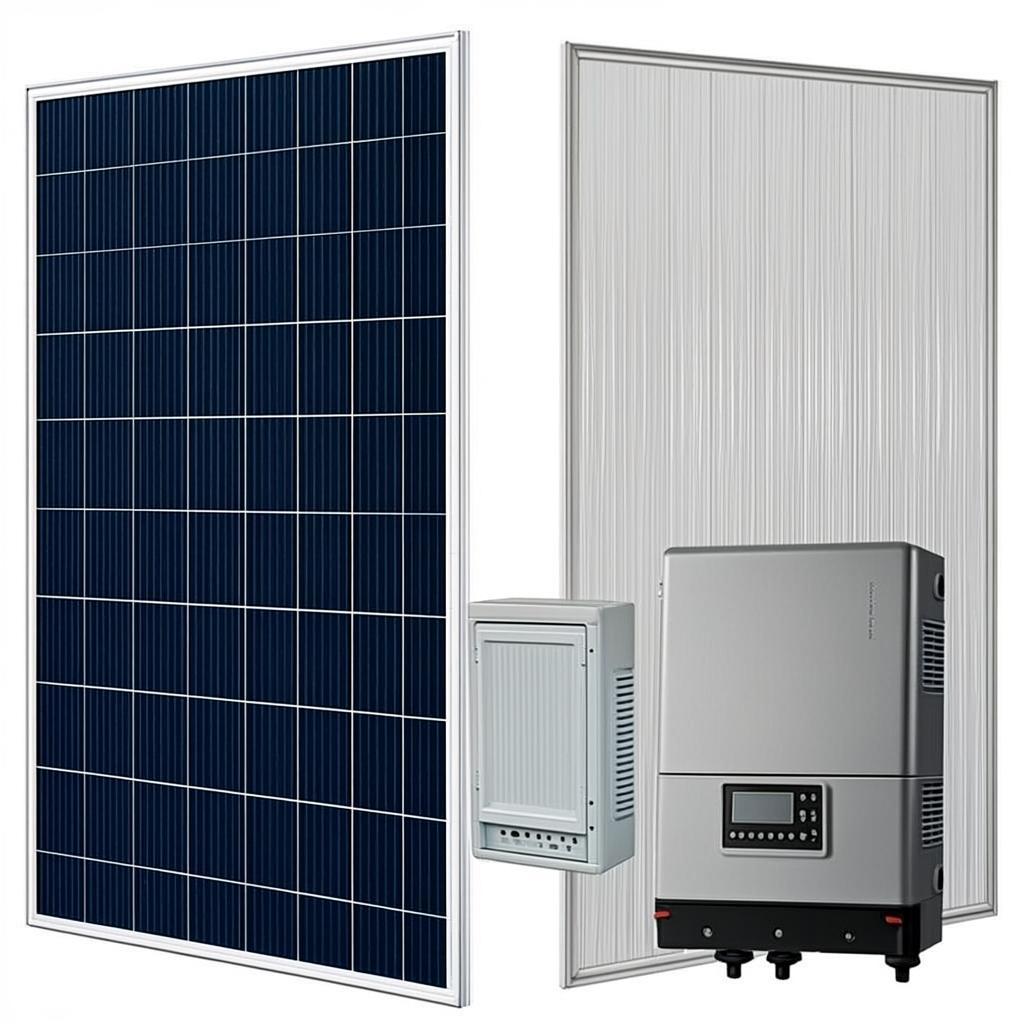
In the rapidly evolving solar energy market, understanding bifacial vs monofacial solar panel cost is crucial for B2B buyers seeking optimal return on investment. Monofacial solar panels, the traditional choice, capture sunlight only on their front surface, offering reliable performance at a lower upfront price. Bifacial panels, however, represent the next generation, harnessing sunlight from both front and rear sides to boost energy yield by up to 30% in ideal conditions.
This enhanced efficiency directly impacts the bifacial vs monofacial solar panel cost equation. While bifacial modules may carry a 10-20% higher initial price tag—typically ranging from $0.25 to $0.40 per watt compared to $0.20 to $0.35 for monofacial—the long-term savings through higher output and durability make them a superior choice for large-scale projects. Our analysis draws from industry data, including NREL reports and global market trends, to provide an authoritative breakdown tailored for international trade professionals.
Key factors influencing bifacial vs monofacial solar panel cost include manufacturing technology (PERC vs N-type cells), albedo reflectivity of installation sites, and system-level optimizations. For instance, bifacial panels excel in ground-mounted arrays with reflective surfaces like white gravel or snow, amplifying rear-side generation and reducing levelized cost of energy (LCOE) over 25-30 years.
Key Features
- Dual-Side Power Generation: Bifacial panels capture diffuse and reflected light on the rear, delivering 5-30% more energy than monofacial equivalents, directly offsetting higher bifacial vs monofacial solar panel cost.
- Advanced Cell Technology: Utilizes high-efficiency N-type or TOPCon cells with bifaciality ratios of 70-90%, ensuring superior low-light performance compared to standard monofacial PERC cells.
- Enhanced Durability: Tempered glass on both sides provides PID resistance and better wind/snow load tolerance (up to 5400 Pa front, 2400 Pa rear), minimizing degradation rates below 0.4% annually.
- Frame and Encapsulation: Robust aluminum frames with corrosion-resistant coatings, optimized for bifacial light transmission without compromising monofacial-like aesthetics.
- Certifications: IEC 61215, UL 61730 compliant, with salt mist and ammonia resistance for diverse environments, making them ideal for cost-sensitive bifacial vs monofacial solar panel cost evaluations.
These features position bifacial panels as a premium yet cost-effective upgrade, particularly when factoring in total lifecycle economics rather than sticker price alone.
Technical Specifications
| Parameter | Bifacial Solar Panel | Monofacial Solar Panel | Cost Implication (Bifacial vs Monofacial Solar Panel Cost) |
|---|---|---|---|
| Power Output (STC) | 550-600W | 500-550W | Higher upfront (~15% more), but 20%+ energy yield reduces $/kWh |
| Efficiency | 21.5-22.5% | 20-21% | Premium pricing justified by superior performance per square meter |
| Bifaciality Ratio | 70-85% | N/A | Enables rear gain, lowering LCOE by 10-15% over lifecycle |
| Dimensions (mm) | 2278 x 1134 x 30 | 2278 x 1134 x 30 | Similar footprint; bifacial maximizes land use efficiency |
| Weight (kg) | 27-28 | 25-26 | Marginal increase; offset by fewer modules needed |
| Cost per Watt (USD) | $0.28-$0.38 | $0.22-$0.32 | 10-20% premium; payback in 1-3 years via higher production |
| Warranty (Product/Performance) | 12/30 years (80% at 30 yrs) | 12/25 years (80% at 25 yrs) | Extended life reduces replacement costs long-term |
| Temperature Coefficient (Pmax) | -0.30%/°C | -0.35%/°C | Better hot climate performance lowers effective cost |
This table highlights how bifacial vs monofacial solar panel cost differences translate to real-world value, with bifacial options often achieving faster ROI in high-albedo environments.
Application Scenarios
Bifacial panels shine in utility-scale solar farms, commercial rooftops with reflective membranes, and agrivoltaic setups where ground cover enhances rear irradiance. For example, in desert projects with sandy albedo, bifacial modules can add 10-15% gain, making their cost premium negligible.
Monofacial panels remain suitable for shaded residential roofs or budget-constrained off-grid systems where rear-side capture is minimal. When assessing bifacial vs monofacial solar panel cost for ground-mount arrays, bifacial typically wins with LCOE reductions of 5-12%, per IRENA studies.
Other scenarios include floating solar (with water reflection boosting bifacial output by 20%) and snowy regions, where bifacial vs monofacial solar panel cost favors the former due to year-round optimization.
Advantages
The primary advantage in bifacial vs monofacial solar panel cost lies in total energy harvest: bifacial panels generate more kWh per installed watt, slashing operational expenses. Industry benchmarks show bifacial LCOE at $0.025-0.035/kWh versus $0.030-0.045 for monofacial, a 15-25% edge.
- Energy Payback Time: Bifacial recovers manufacturing energy in 8-12 months, faster than monofacial's 10-14 months.
- Lower BOS Costs: Higher efficiency means fewer racks, inverters, and cabling—up to 10% system savings.
- Future-Proofing: Compatible with trackers and emerging tech, ensuring sustained competitiveness.
- Environmental Edge: Reduced carbon footprint per kWh aligns with ESG goals for corporate buyers.
These benefits make bifacial panels a strategic choice despite initial bifacial vs monofacial solar panel cost variances, especially for projects exceeding 1MW.
Why Choose Us
As a leading international supplier, we specialize in tier-1 bifacial and monofacial modules, offering transparent pricing that demystifies bifacial vs monofacial solar panel cost. Our portfolio includes top manufacturers with bankable warranties and rapid lead times for global shipments.
We provide customized comparisons, including site-specific modeling via PVsyst, to demonstrate precise ROI. With competitive bulk pricing—bifacial from $0.29/W for 100MW+ orders—and logistics optimized for EU, US, and APAC markets, we ensure the best value. Our commitment to quality control, including EL testing on 100% of panels, guarantees reliability that outperforms market averages.
FAQ
Q: What is the main difference in bifacial vs monofacial solar panel cost?
A: Bifacial panels cost 10-20% more upfront ($0.28-$0.38/W vs $0.22-$0.32/W) but deliver higher yields, achieving payback in 1-3 years and lower LCOE.
Q: Are bifacial panels worth the extra cost for all projects?
A: Ideal for ground-mount or reflective surfaces; monofacial suffices for shaded or flat roofs where rear gain is under 5%.
Q: How does installation affect bifacial vs monofacial solar panel cost?
A: Bifacial requires elevated mounting (0.5-1m height) for optimal rear exposure, adding minor BOS costs offset by energy gains.
Q: What is the typical bifacial gain in real-world bifacial vs monofacial solar panel cost scenarios?
A: 5-15% average, up to 30% in high-albedo sites like deserts or snowfields, per field tests.
Q: Do bifacial panels have higher degradation rates?
A: No—often lower at 0.4%/year vs 0.5% for monofacial, extending profitable lifespan.
Q: How do global tariffs impact bifacial vs monofacial solar panel cost?
A: We source from multiple origins to mitigate duties, maintaining stable pricing for importers.
Related product
- English
- Françai
- Español
- Deutsch
- Română
- العربية
- 한국어
- 日本語
- Italiano
- Português
- Gaeilge
- Dansk
- Čeština
- Русский
- Afrikaans
- Euskara
- Català
- Esperanto
- हिन्दी
- Ελληνικά
- Bahasa Melayu
- Polski
- Српски
- Kiswahili
- ภาษาไทย
- Tiếng Việt
- Türkçe
- Svenska
- Cymraeg
- Slovenčina
- Latviešu
- Malti
- Magyar
- Galego
- ગુજરાતી
- Eesti Keel
- বাংলা
- Shqip
- беларуская мова
- Nederlands
- Tagalog
- ქართული
- Íslenska
- Kreyòl Ayisyen
- Lietuvių
- Norsk
- slovenščina
- தமிழ்
- Українська
- ײִדיש
- اردو
- తెలుగు
- فارسی
- македонски
- ಕನ್ನಡ
- Bahasa Indonesia
- עברית
- Suomi
- Hrvatski
- Български
- Azerbaijani