

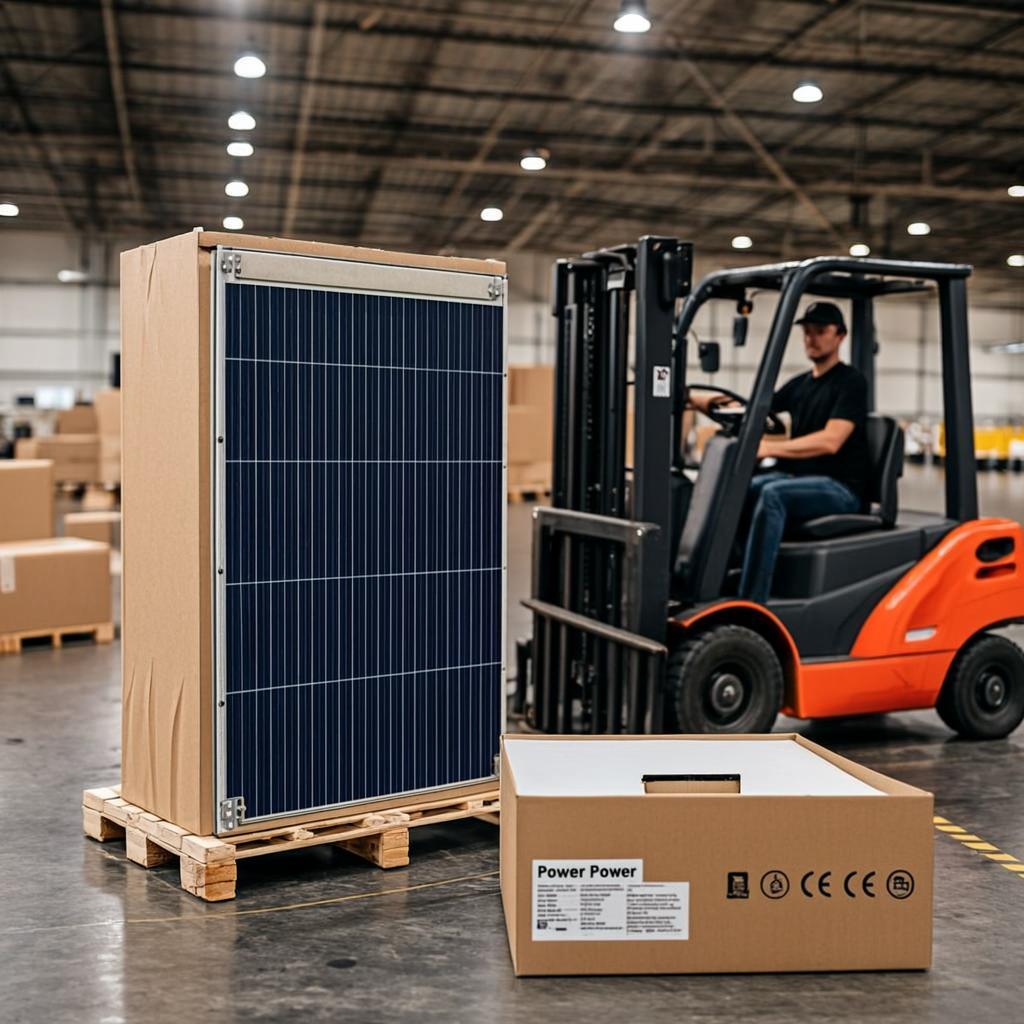
bifacial vertical solar panels
Discover the future of solar energy with our premium bifacial vertical solar panels, engineered for maximum efficiency in diverse installations. Unlike traditional horizontal panels, bifacial
Bifacial Vertical Solar Panels
Product Overview
Discover the future of solar energy with our premium bifacial vertical solar panels, engineered for maximum efficiency in diverse installations. Unlike traditional horizontal panels, bifacial vertical solar panels capture sunlight on both the front and rear surfaces, leveraging reflected light from the ground or surrounding surfaces to boost energy yield by up to 30%. This innovative vertical mounting orientation minimizes soiling, reduces maintenance needs, and optimizes land use, making them ideal for high-density applications.
Designed for international B2B markets, our bifacial vertical solar panels utilize advanced N-type TOPCon cell technology, delivering superior performance in low-light conditions and high-temperature environments. With a sleek, durable frame and tempered glass on both sides, these panels withstand harsh weather, from coastal winds to desert sands. Perfect for ground-mounted arrays, vertical facades, and agrivoltaic systems, they represent a reliable solution for commercial and utility-scale projects seeking higher ROI through enhanced bifaciality factors—typically 70-80% rear-side efficiency.
Our bifacial vertical solar panels are certified to international standards, including IEC 61215 and IEC 61730, ensuring seamless integration into global supply chains. Whether you're developing solar farms in Europe, rooftop systems in Asia, or off-grid solutions in Africa, these panels provide consistent power generation, shading tolerance, and a 30-year linear power warranty, positioning them as a cornerstone for sustainable energy infrastructure.
Key Features
- High Bifaciality: Up to 80% bifacial factor, enabling dual-sided energy capture for increased output without additional footprint.
- Vertical Mounting Compatibility: Optimized for 90-degree installations, reducing dust accumulation and O&M costs by 50% compared to tilted panels.
- Advanced TOPCon Cells: N-type passivation technology achieves 22-24% efficiency, with minimal degradation (less than 0.4% annually).
- Robust Construction: Anodized aluminum frame, 2.0mm dual-glass encapsulation, and PID resistance for longevity in extreme climates.
- Low-Light Performance: Excellent responsiveness at dawn, dusk, and cloudy days, ensuring stable generation.
- Customizable Dimensions: Available in various sizes to fit vertical agrivoltaics, noise barriers, or building-integrated photovoltaics (BIPV).
- Certifications: UL, TUV, CE, and Salt Mist Corrosion certified for global deployment.
Technical Specifications
| Parameter | Value |
|---|---|
| Product Series | Bifacial Vertical Solar Panels (Vertical Mount Optimized) |
| Maximum Power (Pmax) | 550W - 620W |
| Module Efficiency | 22.5% - 24.0% |
| Bifaciality Factor | 70-80% |
| Cell Type | N-type TOPCon, 182mm / 210mm half-cut |
| Number of Cells | 144 (2 x 72) or 120 (2 x 60) |
| Dimensions (L x W x H) | 2382 x 1134 x 30mm / Custom vertical formats |
| Weight | 31.5 - 33.5 kg |
| Front Glass | 2.0mm tempered glass with AR coating |
| Back Glass | 2.0mm tempered glass |
| Frame | Anodized aluminum alloy, silver/black |
| Junction Box | IP68 rated, 3 diodes |
| Cable | 4.0mm², 300mm length (customizable) |
| Connector | MC4 compatible |
| Operating Temperature | -40°C to +85°C |
| Max Wind Load / Snow Load | 2400 Pa / 5400 Pa |
| Warranty | 12 years product, 30 years linear power (84.8% at year 30) |
| Certifications | IEC 61215, IEC 61730, UL 61730, CE, INMETRO |
Note: Specifications subject to final design; rear-side gain depends on albedo and installation height. Custom configurations available for specific bifacial vertical solar panels projects.
Application Scenarios
Bifacial vertical solar panels excel in scenarios where space is premium and vertical orientation maximizes returns. In utility-scale solar farms, vertical bifacial setups enable denser packing, higher ground coverage ratios (up to 80%), and dual-use land for agriculture—known as agrivoltaics. Panels mounted on north-south fences allow crops to grow beneath while harvesting reflected light from soil.
For urban environments, integrate bifacial vertical solar panels into building facades, sound barriers along highways, or parking canopies. Their slim profile and vertical alignment blend seamlessly with architecture, supporting net-zero buildings and BIPV initiatives. In off-grid and remote areas, such as deserts or islands, vertical mounting combats sand accumulation, ensuring reliable power for water pumping, telecom towers, or microgrids.
Industrial applications include vertical walls in factories for self-consumption, reducing peak demand charges. In snowy regions, upright positioning sheds snow naturally, outperforming tilted arrays. Globally, projects in Germany, Australia, and the Middle East demonstrate 20-30% higher yields with bifacial vertical solar panels, proving their versatility across latitudes and climates.
Advantages
Opting for bifacial vertical solar panels offers distinct edges over monofacial or horizontal alternatives. First, enhanced energy yield: Dual-sided absorption from albedo (ground reflection) delivers 10-30% more kWh per panel, shortening payback periods to under 5 years in optimal setups.
Second, space efficiency: Vertical installation requires no tracking systems, cuts BOS costs by 15-20%, and allows under-panel land use for farming, livestock, or parking—crucial for land-scarce markets.
Third, durability and low maintenance: Reduced soiling (self-cleaning via rain and wind) lowers cleaning frequency by 70%. Excellent temperature coefficient (-0.28%/°C) maintains output in hot climates, with half-cut cells minimizing micro-cracks.
Additionally, bifacial vertical solar panels provide shading resilience, ideal for row spacing in large arrays, and year-round consistency without seasonal tilt adjustments. Environmentally, they support biodiversity by shading crops and reducing water use for cleaning. Economically, higher specific power (W/m² vertical) boosts IRR for EPC firms and investors.
Why Choose Us
As a leading manufacturer of bifacial vertical solar panels, we combine cutting-edge R&D with scalable production capacity exceeding 5GW annually. Our state-of-the-art facilities in Asia ensure Tier 1 quality, verified by PVEL and RETC tests, with bankability for financing large projects.
We prioritize customization: Tailor bifacial vertical solar panels to your voltage, dimensions, or aesthetics. Our global supply chain guarantees on-time delivery to Europe, Americas, and beyond, with flexible MOQs for distributors and developers.
Backed by 15+ years in photovoltaics, we offer full lifecycle support—from simulation modeling for bifacial gains to post-installation monitoring. Certifications like ISO 9001, ISO 14001, and REACH compliance underscore our commitment to excellence. Partner with us for proven performance, competitive pricing, and panels that outperform in real-world vertical deployments.
FAQ
Q: What makes bifacial vertical solar panels more efficient than standard panels?
A: They capture direct light on the front and diffuse/reflected light on the back, with vertical orientation optimizing albedo capture and minimizing soiling for 20-30% higher yields.
Q: Are bifacial vertical solar panels suitable for all climates?
A: Yes, their robust design handles -40°C to +85°C, high winds, snow, and salt mist, with proven installations in deserts, tropics, and polar regions.
Q: How much rear-side gain can I expect?
A: Typically 10-25%, depending on surface albedo (e.g., 20% on grass, 40% on white gravel) and mounting height (optimal 1-2m above ground).
Q: Do they require special inverters or mounting?
A: Compatible with standard string inverters; vertical racking is simpler and cheaper than trackers, with north-south orientation recommended.
Q: What warranties are provided?
A: 12-year product warranty and 30-year linear power warranty, guaranteeing at least 84.8% output at year 30.
Q: Can bifacial vertical solar panels be used in agrivoltaics?
A: Absolutely—vertical setup provides ample shade for crops, increasing land productivity by combining energy and agriculture.
Q: How do I calculate energy output for my project?
A: Use PVsyst or our simulation tools, factoring in local albedo, tilt (90°), and bifaciality for accurate bifacial vertical solar panels modeling.
Related product
- English
- Françai
- Español
- Deutsch
- Română
- العربية
- 한국어
- 日本語
- Italiano
- Português
- Gaeilge
- Dansk
- Čeština
- Русский
- Afrikaans
- Euskara
- Català
- Esperanto
- हिन्दी
- Ελληνικά
- Bahasa Melayu
- Polski
- Српски
- Kiswahili
- ภาษาไทย
- Tiếng Việt
- Türkçe
- Svenska
- Cymraeg
- Slovenčina
- Latviešu
- Malti
- Magyar
- Galego
- ગુજરાતી
- Eesti Keel
- বাংলা
- Shqip
- беларуская мова
- Nederlands
- Tagalog
- ქართული
- Íslenska
- Kreyòl Ayisyen
- Lietuvių
- Norsk
- slovenščina
- தமிழ்
- Українська
- ײִדיש
- اردو
- తెలుగు
- فارسی
- македонски
- ಕನ್ನಡ
- Bahasa Indonesia
- עברית
- Suomi
- Hrvatski
- Български
- Azerbaijani