


Bifacial Solar Panels vs Monofacial: Maximizing Energy Yield for Commercial & Utility-Scale Projects
In the competitive landscape of solar energy, selecting the right photovoltaic technology is paramount for optimizing return on investment. The debate between bifacial solar panels vs monofacial units is central to this decision. Our advanced bifacial solar modules are engineered to capture sunlight from both sides, converting reflected and albedo light into additional clean energy. Designed for demanding commercial, industrial, and utility-scale applications, they represent the next evolution in solar efficiency, delivering superior energy density and long-term project value.
Product Overview
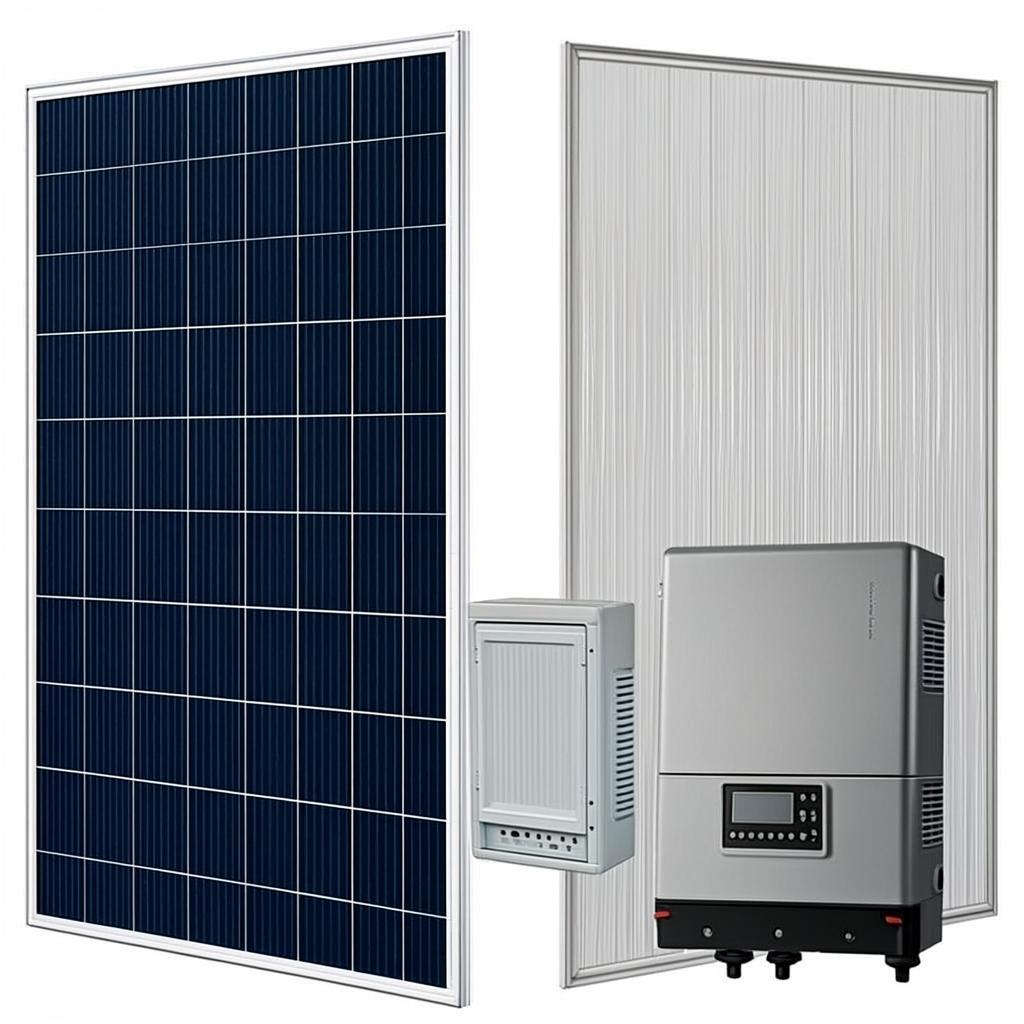
Our high-efficiency bifacial solar panels utilize monocrystalline PERC cells and a transparent backsheet or dual-glass design. This innovative construction allows the rear side to capture sunlight reflected from the ground or surrounding surfaces, generating up to 30% more energy compared to traditional monofacial panels under optimal conditions. When evaluating bifacial solar panels vs monofacial for your project, our solution offers a compelling upgrade, transforming previously wasted light into a valuable revenue stream. They are the ideal choice for installations with high albedo surfaces (e.g., white gravel, concrete, sand) or elevated mounting systems.
Key Features
- Dual-Side Energy Harvesting: Generates power from both front and rear sides, significantly boosting total system output.
- Enhanced Durability: Featuring a robust dual-glass construction (optional), these panels offer superior resistance to humidity, PID (Potential Induced Degradation), and mechanical stress, ensuring a longer operational lifespan exceeding 30 years.
- Lower Levelized Cost of Energy (LCOE): The increased energy yield per panel reduces the effective cost per kilowatt-hour, improving the financial metrics of your solar farm.
- Excellent Low-Light Performance: Advanced cell technology ensures stable power generation during early morning, late evening, and overcast conditions.
- Reduced Land Footprint: Achieve higher power output from the same area, maximizing energy density for space-constrained projects.
Technical Specifications
| Parameter | Specification |
|---|---|
| Model | BP-550M-BF |
| Cell Type | Monocrystalline PERC, Bifacial |
| Front Side Power (Pmax) | 550 W |
| Bifaciality Factor | > 70% |
| Module Efficiency | 21.5% |
| Dimensions (L x W x H) | 2278 mm x 1134 mm x 35 mm |
| Weight | 32.5 kg |
| Frame | Anodized Aluminum Alloy |
| Front Glass / Rear Sheet | 3.2 mm High-Transmission Tempered Glass / 2.0 mm Tempered Glass |
| Power Warranty | 30-year linear performance warranty (92% output at year 30) |
| Product Warranty | 15 years |
Application Scenarios
The superior performance of bifacial technology is unlocked in specific environments. Key applications include:
- Large-Scale Solar Farms: Ground-mounted systems with tracking or fixed-tilt structures, especially over reflective surfaces like sand, white gravel, or concrete.
- Commercial & Industrial Rooftops: Elevated installations on flat roofs with high-albedo membranes.
- Carport & Canopy Structures: The elevated design and light-colored ground beneath create ideal conditions for rear-side gain.
- Agricultural & Aquavoltaic Projects: Installations over water bodies or certain crops benefit from high reflectivity.
- Noise Barriers & Vertical Installations: Perfect for dual-purpose structures along highways or property boundaries.
Advantages: Bifacial vs Monofacial
The core comparison of bifacial solar panels vs monofacial alternatives highlights distinct advantages for system owners:
- Higher Energy Yield: The most significant advantage. Bifacial panels consistently produce 5-30% more energy annually, depending on installation geometry and ground albedo.
- Better ROI Over Project Lifetime: While the initial capex may be slightly higher, the increased energy production leads to a lower LCOE and faster payback period.
- Superior Durability: Dual-glass bifacial panels often have longer warranties and better degradation rates due to their hermetic, corrosion-resistant design.
- Reduced Soiling Impact: Snow, dust, or debris on the front side can be partially compensated by rear-side generation.
- Future-Proofing: As energy prices fluctuate, having a higher-yielding asset provides greater financial resilience.
Why Choose Our Bifacial Solar Panels?
As a leading manufacturer, we provide more than just a product; we deliver a performance-optimized solution.
- Proven Bankability & Quality: Our panels are certified by TÜV, UL, and IEC, and our company is listed on top-tier bankability reports.
- Comprehensive Technical Support: Our engineering team assists with yield simulations comparing bifacial solar panels vs monofacial options for your specific site to model accurate ROI.
- Global Logistics & Warranty: We manage seamless supply chain logistics and honor our industry-leading warranties through a global network.
- OEM & Customization Available: We can tailor specifications, branding, and packaging to meet large project or distributor requirements.
- Sustainable Manufacturing: Committed to green production processes, minimizing the carbon footprint of our products from factory to field.
Frequently Asked Questions (FAQ)
1. Are bifacial panels always better than monofacial panels?
Not always. Bifacial panels deliver maximum advantage in installations with high reflectivity (albedo) and elevated mounting (e.g., ground mounts, trackers). For standard dark-roof residential installations with low mounting, the gain may be minimal, making monofacial a cost-effective choice. A site-specific analysis is crucial.
2. How much more energy can I expect from bifacial panels?
Energy gain typically ranges from 5% to 30%. It depends on key factors: ground albedo (20% for grass, >50% for white concrete), mounting height, row spacing, and use of trackers. We provide detailed simulation reports for your project.
3. Is the installation different for bifacial modules?
The mechanical installation process is similar. However, system design requires careful consideration. To maximize gain, installers should optimize ground cover ratio, minimize rear-side shading from racking, and consider using reflective ground covers.
4. Do bifacial panels cost much more?
The price premium has narrowed significantly. When considering the total system cost and the increased energy output (W/kWh), bifacial technology often offers a lower Levelized Cost of Energy (LCOE), providing a superior lifetime value.
5. How do I maintain the rear side of the panel?
Minimal maintenance is required. Keeping the ground beneath clean and reflective (e.g., light-colored gravel) enhances performance. The rear glass is generally self-cleaning with rain.
Ready to harness the power of dual-side technology? Contact our technical sales team today for a customized yield comparison and quote. Let us demonstrate how our bifacial solution can maximize the financial return of your next solar project.