

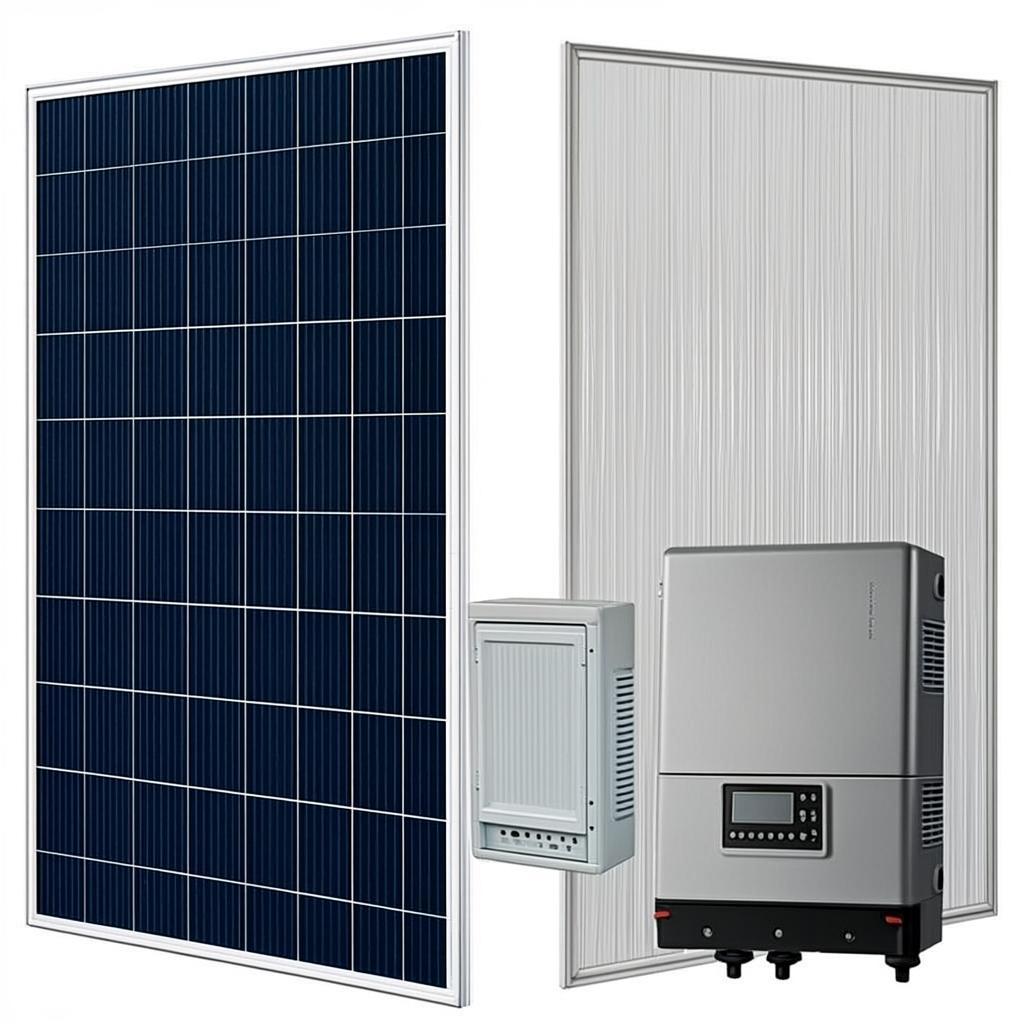
bifacial solar panel vs monofacial
In the competitive landscape of renewable energy solutions, the debate of bifacial solar panel vs monofacial continues to shape procurement decisions for industrial buyers worldwide. Monofacial solar
Bifacial Solar Panel vs Monofacial: Comprehensive Comparison for Optimal Energy Yield
1. Product Overview
In the competitive landscape of renewable energy solutions, the debate of bifacial solar panel vs monofacial continues to shape procurement decisions for industrial buyers worldwide. Monofacial solar panels, the traditional standard, feature cells that capture sunlight exclusively from the front side, relying on a solid backsheet for protection. This design delivers reliable performance in standard conditions but limits overall energy capture.
Bifacial solar panels, on the other hand, represent a technological leap forward. By utilizing transparent or high-transmission backsheets and glass-glass encapsulation, they harness sunlight from both the front and rear surfaces. This dual-sided absorption can boost energy yield by 10-30%, depending on installation and environmental factors. When evaluating bifacial solar panel vs monofacial, bifacial modules excel in diverse applications, from utility-scale farms to commercial rooftops, offering superior return on investment (ROI) through enhanced efficiency and longevity.
Our bifacial panels are engineered with cutting-edge N-type TOPCon or HJT cell technology, achieving bifaciality ratios above 80%. This makes them ideal for international trade partners seeking scalable, high-performance solutions. Understanding bifacial solar panel vs monofacial reveals why forward-thinking businesses are transitioning to bifacial for future-proof energy systems.
2. Key Features
- Dual-Side Power Generation: Unlike monofacial panels, bifacial models capture reflected and diffuse light from the rear, maximizing output in real-world conditions.
- Superior Efficiency: Front-side efficiencies up to 22.5%, with total yields surpassing monofacial by 15-25% in optimal setups.
- Glass-Glass Construction: Enhanced durability with PID resistance and 30-year linear power warranties, outperforming monofacial backsheet designs.
- High Bifaciality: Ratios of 70-85%, ensuring consistent rear-side contribution regardless of albedo.
- Advanced Cell Technology: N-type cells minimize light-induced degradation (LID) and offer better low-light performance than P-type monofacial alternatives.
- Versatile Mounting: Compatible with elevated structures, trackers, and reflective surfaces, where monofacial panels underperform.
- Environmental Resilience: Salt mist and ammonia resistance certified, ideal for coastal or agrivoltaic installations.
These features position bifacial panels as the clear winner in bifacial solar panel vs monofacial comparisons, delivering measurable gains in energy harvest and system economics.
3. Technical Specifications
| Parameter | Monofacial Panel | Bifacial Panel |
|---|---|---|
| Cell Type | P-type PERC | N-type TOPCon / HJT |
| Front Efficiency | 20.5-21.5% | 21.5-23.0% |
| Bifaciality Ratio | N/A | 70-85% |
| Power Output (STC) | 400-550W | 450-700W |
| Dimensions (mm) | 1722 x 1134 x 30 | 2382 x 1134 x 30 |
| Weight (kg) | 21-23 | 28-32 |
| Encapsulation | Glass + Backsheet | Glass + Glass |
| Temperature Coefficient (Pmax) | -0.35%/°C | -0.30%/°C |
| Maximum System Voltage | 1500V DC | 1500V DC |
| Warranty (Product / Linear Power) | 12 / 25 years | 15 / 30 years |
| Certifications | IEC 61215, UL 1703 | IEC 61215/61730, UL 61730, CE |
| Energy Yield Gain (vs Monofacial) | Baseline | 10-30% (ground mount) |
This side-by-side technical breakdown underscores the advantages in bifacial solar panel vs monofacial, with bifacial specs tailored for high-yield deployments.
4. Application Scenarios
When considering bifacial solar panel vs monofacial, application suitability is paramount. Monofacial panels remain viable for shaded rooftops or budget-constrained residential setups, where rear-side gain is negligible.
Bifacial panels shine in:
- Utility-Scale Solar Farms: Elevated racking over high-albedo surfaces (white gravel, snow) amplifies rear-side output by 20-30%.
- Commercial & Industrial Rooftops: Flat or metal roofs with reflective coatings enhance bifacial performance without structural modifications.
- Agrivoltaics: Dual-use in agriculture, allowing shade-tolerant crops beneath panels while boosting yields via ground reflection.
- Snowy or Desert Regions: Superior capture of reflected light from snow or sand outperforms monofacial in extreme climates.
- Tracker Systems: Optimized tilt angles maximize bifacial gains, ideal for large-scale tracking arrays.
Global projects demonstrate bifacial's edge, with installations in Europe, the Middle East, and Asia yielding 15% higher kWh per kWp than monofacial counterparts.
5. Advantages
The bifacial solar panel vs monofacial analysis reveals compelling advantages for bifacial technology:
- Higher Energy Production: Real-world gains of 10-30% reduce levelized cost of energy (LCOE) by optimizing land use.
- Longer Lifespan: Glass-glass design resists microcracks and degradation, ensuring 90% output after 25 years.
- Better Economics: Shorter payback periods (4-6 years) and increased IRR for investors.
- Low-Light Excellence: Dawn, dusk, and cloudy days see 5-10% more output than monofacial.
- Sustainability: Reduced carbon footprint per kWh due to higher yields from the same footprint.
- Future-Proofing: Compatible with emerging trackers and bifacial-optimized inverters.
These benefits make bifacial the strategic choice for B2B buyers prioritizing performance over initial cost.
6. Why Choose Us
As a leading manufacturer in the solar industry, we specialize in premium bifacial panels that dominate bifacial solar panel vs monofacial benchmarks. Our state-of-the-art facilities employ automated production lines, ensuring batch-to-batch consistency with <1% power tolerance.
Key differentiators include:
- Tier 1 bankability with BloombergNEF listing.
- Customizable solutions for OEMs and EPCs, from 500W to 700W+ modules.
- Rigorous third-party testing (TUV, UL, IEC) for global compliance.
- Supply chain resilience with in-house cell production, mitigating shortages.
- Technical support for system design, including albedo modeling and yield simulations.
Partner with us for bifacial excellence that outpaces monofacial alternatives in every metric.
7. FAQ
Q: What is the main difference in bifacial solar panel vs monofacial?
A: Bifacial panels generate power from both sides, yielding 10-30% more energy than monofacial's front-only capture.
Q: Are bifacial panels more expensive upfront?
A: Yes, typically 5-15% higher, but faster ROI from superior yields offsets this within 1-2 years.
Q: What albedo is best for bifacial panels?
A: Albedo >20% (e.g., white surfaces, snow) maximizes gains; simulations can predict site-specific performance.
Q: Can bifacial panels replace monofacial in all projects?
A: Ideal for open areas; monofacial suits heavily shaded or vertical installs.
Q: How do warranties compare in bifacial solar panel vs monofacial?
A: Bifacial offers 30-year linear warranties vs 25 years for monofacial, with first-year degradation <1%.
Q: Are bifacial panels suitable for rooftop mounting?
A: Yes, especially flat roofs with reflective membranes; gains of 5-15% over monofacial.
Q: What cell technologies drive bifacial advantages?
A: N-type TOPCon and HJT provide higher bifaciality and lower degradation than monofacial PERC.