

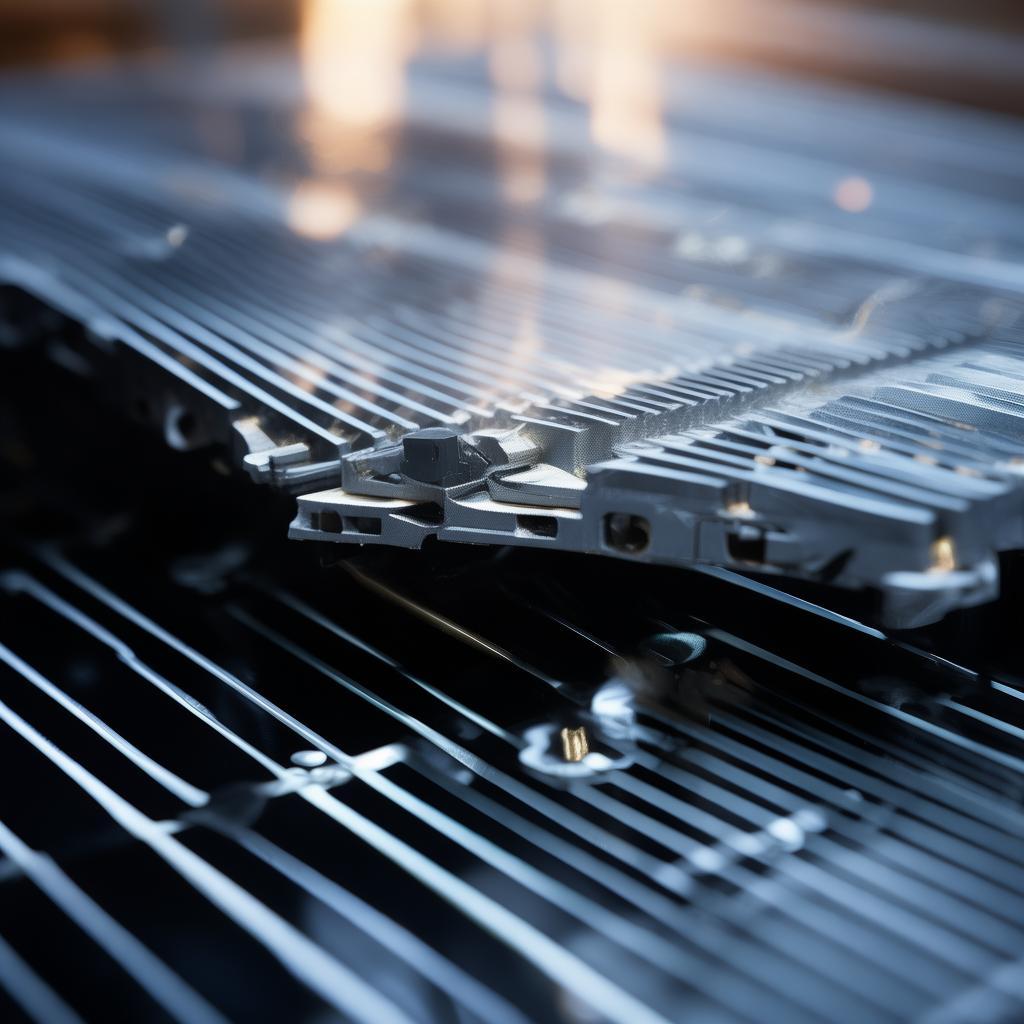
bifacial solar panel price
Discover the future of solar energy with our high-efficiency bifacial solar panel price offerings, designed specifically for international B2B buyers seeking maximum return on investment. Bifacial
Bifacial Solar Panel Price: Premium Performance at Competitive Rates
Product Overview
Discover the future of solar energy with our high-efficiency bifacial solar panel price offerings, designed specifically for international B2B buyers seeking maximum return on investment. Bifacial solar panels represent a cutting-edge advancement in photovoltaic technology, capable of generating power from both the front and rear sides. This dual-sided energy capture boosts overall yield by up to 30% compared to traditional monofacial panels, making them ideal for utility-scale projects, commercial installations, and large-scale ground-mounted systems.
Our bifacial solar panels are engineered with premium N-type TOPCon cells, delivering superior bifaciality factors of 70-80%. When considering bifacial solar panel price, factors such as power output ranging from 500W to 700W per panel, long-term degradation rates below 0.4% annually, and robust warranties up to 30 years ensure exceptional value. Priced competitively for bulk orders, these panels offer a lower levelized cost of energy (LCOE), helping importers and distributors maximize margins in global markets. Whether you're optimizing for high-albedo surfaces like white gravel or snow-covered terrains, our panels provide reliable performance in diverse climates, from arid deserts to temperate zones.
Backed by rigorous testing under IEC standards, our bifacial modules undergo accelerated stress tests for PID resistance, salt mist corrosion, and ammonia exposure. This ensures durability in harsh environments, directly impacting the long-term bifacial solar panel price effectiveness. With customizable configurations for container loading and flexible financing options, we cater to wholesalers worldwide, delivering panels that outperform expectations while maintaining affordability.
Key Features
- High Bifaciality: Up to 80% rear-side efficiency, harnessing reflected irradiance for additional power gains, influencing optimal bifacial solar panel price per watt.
- Advanced N-TOPCon Technology: Next-generation cells with passivated contacts for minimized recombination losses and enhanced low-light performance.
- Ultra-Low Degradation: First-year degradation <1%, annual <0.4%, ensuring sustained output over 30+ years.
- Robust Framing: Anodized aluminum alloy frame with reinforced corners, wind load up to 5400Pa, snow load 8000Pa.
- Superior Encapsulation: POE front/back sheets and multi-busbar design for reduced shading losses and higher energy yield.
- Certifications: TUV, UL, CE, INMETRO, ensuring compliance for global deployment.
- Smart Manufacturing: Automated production lines for consistency, directly supporting competitive bifacial solar panel price structures.
Technical Specifications
| Parameter | Specification |
|---|---|
| Module Type | Bifacial N-TOPCon Glass-Glass |
| Power Output (Front Side) | 550W - 700W |
| Bifaciality Factor | 70-80% |
| Module Efficiency (Front) | Up to 22.5% |
| Dimensions (L x W x H) | 2384 x 1303 x 33 mm |
| Weight | 32.5 kg |
| Cell Type | 182mm N-TOPCon Half-Cut |
| Number of Cells | 144 (6x24) |
| Maximum System Voltage | 1500V DC |
| Temperature Coefficient (Pmax) | -0.30%/°C |
| Operating Temperature | -40°C to +85°C |
| Warranty | 30 years linear power, 12 years product |
| Junction Box | IP68 rated, 3 diodes |
| Cable | 4mm², 1400mm length |
Note: Specifications subject to slight variations based on model; contact for detailed STC data sheets. These specs contribute to the attractive bifacial solar panel price by balancing performance and cost.
Application Scenarios
Bifacial solar panels excel in a variety of deployment scenarios where rear-side generation can be maximized, offering superior economics tied to bifacial solar panel price. In utility-scale solar farms on reflective ground covers like white pebbles or TPO membranes, bifacial gains of 15-25% are common, reducing the required array footprint and accelerating ROI.
For commercial rooftops with light-colored surfaces, these panels integrate seamlessly into flat or low-slope designs, capturing bounced light from HVAC units or surrounding structures. Agrivoltaic applications benefit immensely, allowing dual land use for farming and energy production—shade-tolerant crops beneath elevated bifacial arrays thrive while panels stay cooler, enhancing efficiency.
Ground-mounted trackers amplify bifacial advantages, with rear irradiance boosted by tilted orientations. In snowy regions, elevated albedo from snow reflection yields even higher outputs during winter months. Floating solar projects on reservoirs leverage water reflection for up to 10% extra yield. Our panels are also suited for off-grid industrial sites, remote mining operations, and large-scale carports, where space efficiency and durability justify the investment in premium bifacial solar panel price options.
Advantages
Opting for bifacial solar panels provides distinct advantages that underscore their value proposition beyond mere bifacial solar panel price. The primary benefit is increased energy harvest: rear-side contribution can add 5-30% more kWh annually, depending on installation height, ground reflectivity, and tilt angle. This translates to shorter payback periods, often under 5 years in optimal setups.
Energy yield gains are complemented by lower BOS (balance of system) costs due to higher power density—fewer panels mean reduced racking, cabling, and labor. N-type cells offer inherent resistance to LID (light-induced degradation) and LeTID, outperforming P-type PERC in long-term reliability. Glass-glass construction enhances mechanical strength and UV resistance, ideal for high-wind or hail-prone areas.
From an economic standpoint, bifacial technology future-proofs investments amid rising electricity tariffs and carbon regulations. Independent studies, such as those from DNV GL, confirm bifacial arrays achieve 10-15% lower LCOE. Our panels' low temperature coefficient ensures stable performance in hot climates, while half-cut cells minimize micro-crack risks. Collectively, these factors make bifacial solar panels a strategic choice for B2B buyers prioritizing total lifecycle value over upfront bifacial solar panel price.
Why Choose Us
As a leading manufacturer in the photovoltaic industry, we deliver unmatched quality at the most competitive bifacial solar panel price for international trade. Our state-of-the-art Tier 1 facilities boast automated lines with yields exceeding 99%, ensuring batch-to-batch consistency verified by EL inspections and third-party audits from TÜV Rheinland and UL Solutions.
We offer flexible MOQs starting at 100kW pallets, with full-container loading optimizations to cut logistics costs. Certifications like IEC 61215/61730, UL 61730, and ISO 9001/14001/45001 guarantee compliance across EU, US, Latin America, and Asia-Pacific markets. Our R&D team continuously innovates, incorporating bifacial-optimized string inverters and monitoring solutions.
Transparent pricing tiers scale with volume, including FOB/CIF terms and LC payments. With over 10GW shipped globally, our track record includes landmark projects in the Middle East and Australia. We provide comprehensive support—from datasheets and simulations via PVSyst to post-sales PID recovery services—empowering partners to succeed in competitive tenders.
FAQ
Q: What factors influence bifacial solar panel price?
A: Key determinants include power rating, bifaciality percentage, cell technology (e.g., TOPCon vs. PERC), frame material, and order volume. Higher wattage and advanced features command premiums, but bulk discounts yield rates as low as $0.25/Wp.
Q: How much extra power do bifacial panels generate?
A: Typically 10-25% more than monofacial equivalents, site-specific based on ground albedo (e.g., 20% for grass, 40% for snow).
Q: Are bifacial solar panels suitable for all installations?
A: Best for ground-mount with 0.5-1m height; less gain on dark roofs. Simulations recommended for precise yield forecasts.
Q: What warranties are provided?
A: 12-15 years product workmanship, 30 years linear power output to 87% at year 30.
Q: How does bifacial solar panel price compare to monofacial?
A: 10-20% higher upfront, but 15-30% faster payback due to yield gains, lowering LCOE by 8-12%.
Q: What shipping and packaging options are available?
A: Palletized for LCL, 36 panels per 40HQ container, steel-frame protection for safe transit.
Related product
- English
- Françai
- Español
- Deutsch
- Română
- العربية
- 한국어
- 日本語
- Italiano
- Português
- Gaeilge
- Dansk
- Čeština
- Русский
- Afrikaans
- Euskara
- Català
- Esperanto
- हिन्दी
- Ελληνικά
- Bahasa Melayu
- Polski
- Српски
- Kiswahili
- ภาษาไทย
- Tiếng Việt
- Türkçe
- Svenska
- Cymraeg
- Slovenčina
- Latviešu
- Malti
- Magyar
- Galego
- ગુજરાતી
- Eesti Keel
- বাংলা
- Shqip
- беларуская мова
- Nederlands
- Tagalog
- ქართული
- Íslenska
- Kreyòl Ayisyen
- Lietuvių
- Norsk
- slovenščina
- தமிழ்
- Українська
- ײִדיש
- اردو
- తెలుగు
- فارسی
- македонски
- ಕನ್ನಡ
- Bahasa Indonesia
- עברית
- Suomi
- Hrvatski
- Български
- Azerbaijani