

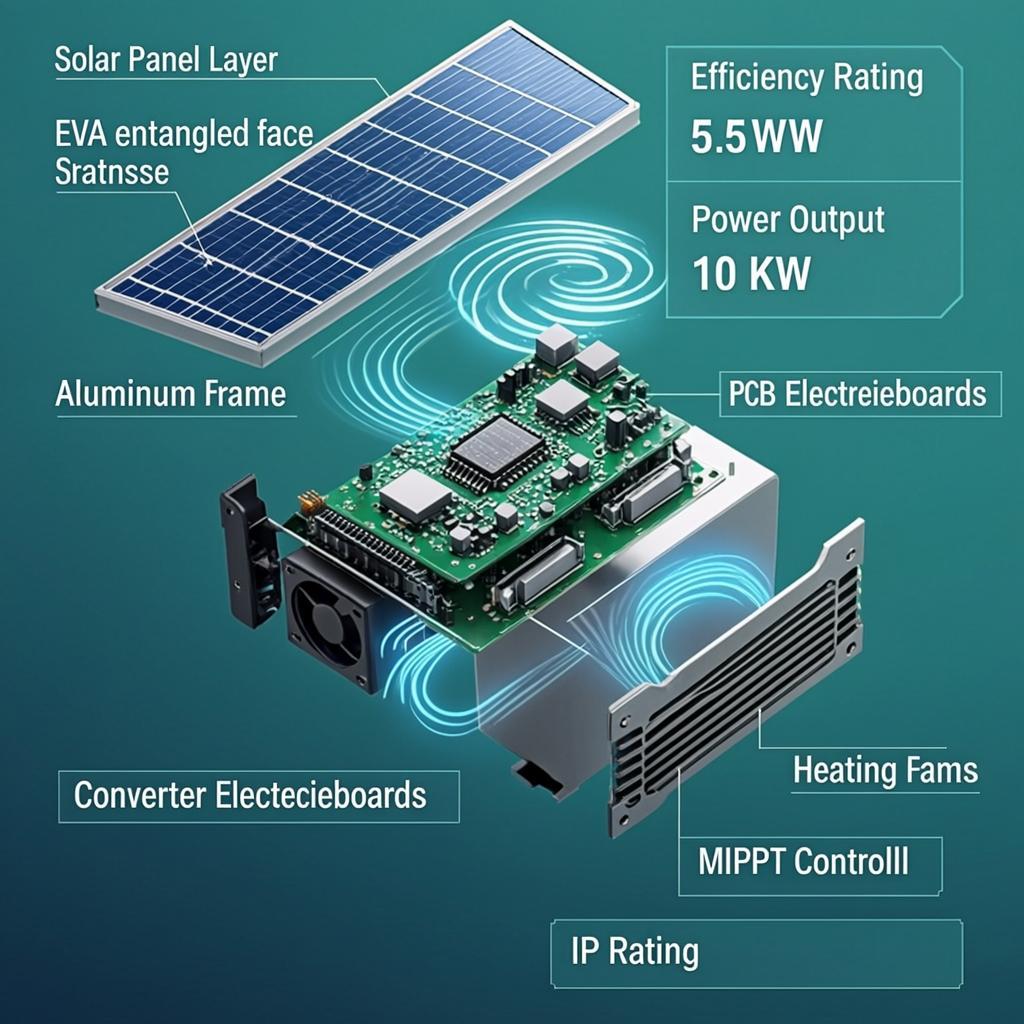
bifacial solar panel mounting
Our bifacial solar panel mounting systems are engineered for maximum energy yield in modern photovoltaic installations. Designed specifically for bifacial solar panels, which capture sunlight from
Bifacial Solar Panel Mounting
Product Overview
Our bifacial solar panel mounting systems are engineered for maximum energy yield in modern photovoltaic installations. Designed specifically for bifacial solar panels, which capture sunlight from both front and rear surfaces, these mounting structures elevate panels to optimal heights, ensuring unobstructed rear-side light exposure and superior airflow. Ideal for utility-scale solar farms, commercial ground-mount projects, and agrivoltaic applications, our bifacial solar panel mounting solutions deliver unmatched durability and performance in diverse environmental conditions.
Constructed from high-grade aluminum alloy and stainless steel components, the bifacial solar panel mounting system resists corrosion, withstands extreme weather, and supports panel tilts from 0° to 60° for site-specific optimization. With pre-assembled modules and tool-free installation options, deployment time is reduced by up to 40%, making it a preferred choice for international EPC contractors and solar developers seeking reliable, scalable infrastructure.
Key Features
- Optimized for Bifacial Efficiency: Rear-side elevation of 30-50 cm allows 10-30% additional energy harvest from ground-reflected irradiance.
- Modular Design: Scalable from small arrays to multi-MW projects, with universal compatibility for 60-cell, 72-cell, and half-cut bifacial modules up to 2.5m x 1.3m.
- Adjustable Tilt Mechanism: Precision-engineered rails and clamps enable seasonal or fixed-angle adjustments for latitude-specific performance.
- Anti-Corrosion Protection: Anodized aluminum and hot-dip galvanized steel ensure 25+ year lifespan in coastal, desert, or high-humidity environments.
- Wind and Snow Load Certified: Engineered to ASCE 7-16 standards, supporting wind speeds up to 160 km/h and snow loads up to 2.4 kN/m².
- Easy Installation: Snap-fit connectors and self-drilling screws minimize labor; no welding required on-site.
- Ground Compatibility: Driven pile, helical pile, or ballast options for various soil types, including rocky terrains.
Technical Specifications
| Parameter | Specification |
|---|---|
| Material | 6063-T6 Aluminum Alloy (rails & posts), Q235B Galvanized Steel (foundation) |
| Panel Compatibility | Bifacial modules: 1080-2500mm length, 990-1400mm width, 30-50mm frame thickness |
| Max Panel Weight | 35 kg per panel |
| Tilt Angle Range | 0° - 60° adjustable |
| Rear Clearance Height | 300-800 mm (customizable) |
| Wind Load Resistance | Up to 2.4 kN/m² (160 km/h gusts) |
| Snow Load Resistance | Up to 2.4 kN/m² |
| Foundation Options | Driven piles (C/Z purlins), helical piles, concrete ballast, ground screws |
| Module Orientation | Portrait or landscape |
| Row Spacing | 2.5-4.0 m (optimized for bifacial albedo) |
| Surface Treatment | Anodized (Al), Hot-dip galvanization (≥80μm, steel) |
| Certifications | ASCE 7-16, UL 2703, AS/NZS 1170, IEC 61215 (structural) |
| Warranty | 10 years structural, 25 years corrosion |
| Packaging | Standard export pallets; 20ft container holds ~500 panels worth |
Application Scenarios
The versatility of our bifacial solar panel mounting makes it suitable for a wide array of deployment scenarios. In large-scale ground-mounted solar power plants, the elevated design maximizes bifacial gains by leveraging natural albedo from soil, gravel, or white surfaces, boosting overall system efficiency by 15-25%. For agrivoltaic projects, semi-transparent row spacing allows simultaneous crop cultivation beneath panels, preserving farmland while generating clean energy.
Commercial and industrial sites benefit from fixed-tilt bifacial solar panel mounting on open lots, where space constraints demand high land-use efficiency. In snowy regions, the adjustable tilt facilitates snow shedding, ensuring year-round performance. Coastal installations utilize corrosion-resistant materials to thrive in saline environments, while desert projects incorporate dust-resistant coatings for minimal maintenance. Our systems also support tracking hybrids, enhancing bifacial solar panel mounting adaptability for floating solar or carport integrations.
Advantages
Choosing our bifacial solar panel mounting provides distinct competitive edges in the renewable energy market. Firstly, the bifacial-optimized geometry delivers measurable ROI through increased kWh output—clients report 20%+ yield uplift compared to monofacial setups. The lightweight structure (aluminum density reduces transport costs by 30%) and modular assembly accelerate project timelines, enabling faster grid connection and revenue generation.
Durability is paramount: rigorous third-party testing confirms zero structural failures in accelerated weathering simulations equivalent to 30 years of exposure. Cost-effectiveness shines in total ownership metrics—lower BOS (balance of system) expenses due to fewer components and simplified grounding. Environmental advantages include recyclable materials (95% aluminum recovery) and minimized soil disturbance via non-penetrative options.
Furthermore, our bifacial solar panel mounting integrates seamlessly with leading inverters and trackers, supporting string optimization for bifacial modules. Customization services ensure compliance with local codes, from EU ETS standards to Australian wind zones, making it a global solution for discerning B2B buyers.
Why Choose Us
As a leading manufacturer with over 15 years in solar racking, we specialize in bifacial solar panel mounting tailored for international trade. Our state-of-the-art facilities in China produce 500MW+ annually, adhering to ISO 9001, ISO 14001, and OHSAS 18001 protocols. Every batch undergoes 100% visual inspection and load testing, backed by full traceability via QR-coded components.
We partner with Tier 1 module suppliers like LONGi, Jinko, and Trina, validating compatibility through joint labs. Export expertise covers 50+ countries, with CE, TUV, and MCS certifications streamlining customs. Engineering teams offer free layout designs using PVSyst integration, optimizing bifacial bifacial solar panel mounting for your irradiance profile. Bulk orders benefit from flexible MOQs (100kW), competitive FOB/CIF pricing, and just-in-time delivery from multiple ports.
Our commitment extends post-sale: remote monitoring compatibility and a dedicated technical support portal ensure long-term success. Choose us for proven performance, where innovation meets reliability in every bifacial solar panel mounting project.
FAQ
What makes bifacial solar panel mounting different from standard racking?
Bifacial solar panel mounting prioritizes rear-side exposure with higher elevation and optimized spacing to capture reflected light, unlike monofacial systems focused solely on front-facing tilt.
Is customization available for bifacial solar panel mounting?
Yes, we offer bespoke designs for tilt, height, foundation, and row pitch based on geotechnical surveys and energy modeling.
What is the typical installation time for bifacial solar panel mounting?
A 1MW project installs in 5-7 days with a 10-person crew, thanks to pre-galvanized, bolt-together components.
Does it support high-wind regions?
Absolutely—certified for 160 km/h, with aerodynamic profiles reducing uplift by 25% over flat mounts.
How does bifacial solar panel mounting handle snow accumulation?
Steep tilts (≥25°) and smooth surfaces promote natural shedding; optional heating kits available for extreme climates.
What maintenance is required?
Minimal: annual torque checks on clamps; anodized finishes self-clean in rain, extending lifespan without repainting.
Are spare parts readily available?
Yes, universal clamps and rails stocked globally; 48-hour dispatch for urgent needs.
Related product
- English
- Françai
- Español
- Deutsch
- Română
- العربية
- 한국어
- 日本語
- Italiano
- Português
- Gaeilge
- Dansk
- Čeština
- Русский
- Afrikaans
- Euskara
- Català
- Esperanto
- हिन्दी
- Ελληνικά
- Bahasa Melayu
- Polski
- Српски
- Kiswahili
- ภาษาไทย
- Tiếng Việt
- Türkçe
- Svenska
- Cymraeg
- Slovenčina
- Latviešu
- Malti
- Magyar
- Galego
- ગુજરાતી
- Eesti Keel
- বাংলা
- Shqip
- беларуская мова
- Nederlands
- Tagalog
- ქართული
- Íslenska
- Kreyòl Ayisyen
- Lietuvių
- Norsk
- slovenščina
- தமிழ்
- Українська
- ײִדיש
- اردو
- తెలుగు
- فارسی
- македонски
- ಕನ್ನಡ
- Bahasa Indonesia
- עברית
- Suomi
- Hrvatski
- Български
- Azerbaijani