

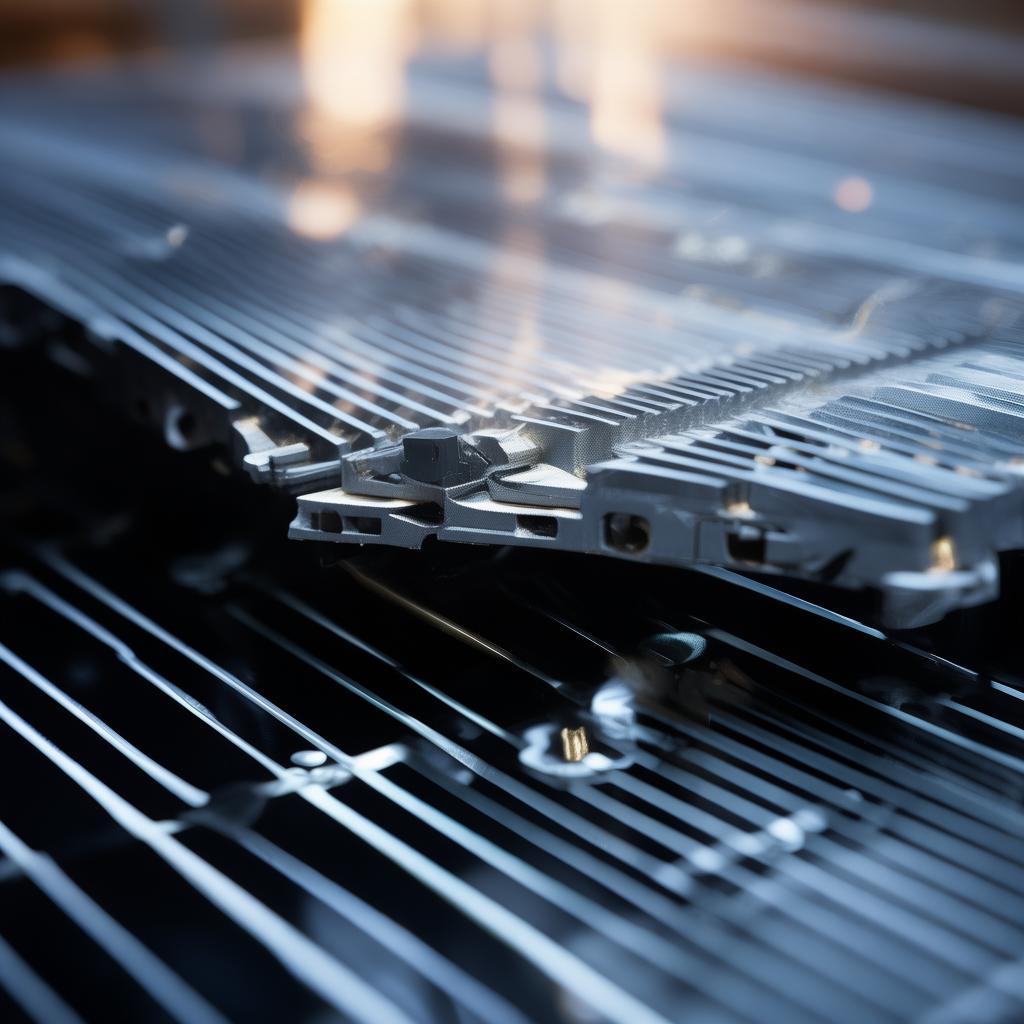
bifacial solar panel cost
Discover the optimal balance of performance and value with our bifacial solar panels, where bifacial solar panel cost meets unmatched efficiency. Bifacial solar panels capture sunlight from both
Bifacial Solar Panel Cost: High-Efficiency Solutions for Global Energy Projects
1. Product Overview
Discover the optimal balance of performance and value with our bifacial solar panels, where bifacial solar panel cost meets unmatched efficiency. Bifacial solar panels capture sunlight from both sides, generating up to 30% more energy than traditional monofacial modules. This innovative design reflects light from the ground or surrounding surfaces onto the rear side, boosting overall yield in diverse environments.
When evaluating bifacial solar panel cost, factors such as long-term energy production, durability, and reduced levelized cost of electricity (LCOE) are paramount. Our panels are engineered for commercial and utility-scale installations, offering power outputs from 400W to 700W per module. Ideal for international trade buyers seeking reliable suppliers, these panels comply with IEC, UL, and TUV standards, ensuring seamless integration into global projects.
The bifacial solar panel cost structure is transparent and competitive, factoring in premium N-type TOPCon or PERC half-cut cells for superior bifaciality ratios of 70-80%. This translates to faster ROI, making them a strategic choice for B2B partners focused on sustainable energy investments. Whether you're optimizing ground-mounted arrays or rooftop systems, our bifacial solar panel cost delivers exceptional value without compromising quality.
2. Key Features
- Bifacial Design: Captures diffuse and reflected light, increasing energy yield by 10-30% compared to monofacial panels, directly impacting bifacial solar panel cost efficiency.
- High-Efficiency Cells: Utilizes advanced N-type TOPCon technology with efficiencies exceeding 22.5%, minimizing balance-of-system costs.
- Anti-PID and Low Degradation: First-year degradation under 2%, annual rate below 0.4%, ensuring long-term savings on bifacial solar panel cost.
- Robust Framing: Anodized aluminum frame with reinforced corners withstands 5400Pa snow and 2400Pa wind loads, ideal for harsh climates.
- Self-Cleaning Glass: Dual-glass construction with anti-reflective coating reduces maintenance, further lowering total bifacial solar panel cost.
- Multi-Busbar (MBB) Technology: Reduces shading losses and hotspots, enhancing reliability in large-scale deployments.
- Extended Warranty: 12-30 years product warranty and 25-30 years linear power warranty, protecting your investment.
3. Technical Specifications
| Parameter | Specification |
|---|---|
| Power Output (Pmax) | 450W - 700W |
| Module Efficiency | 21.5% - 23.0% |
| Bifaciality Ratio | 70% - 80% |
| Cell Type | N-type TOPCon / PERC Half-Cut |
| Dimensions (L x W x H) | 2278 x 1134 x 30mm (customizable) |
| Weight | 27.5 - 33kg |
| Front Glass | 3.2mm Tempered Glass |
| Rear Glass | 2.0mm Tempered Glass |
| Frame | Anodized Aluminum Alloy |
| Junction Box | IP68 Rated, 3 Diodes |
| Cable | 4mm², 1200mm Length |
| Operating Temperature | -40°C to +85°C |
| Maximum System Voltage | 1500V DC |
| Wind/Snow Load | 2400Pa / 5400Pa |
| Warranty | 12 years product, 30 years power output |
| Certifications | IEC 61215, IEC 61730, UL 61730, CE, TUV |
Note: Specifications subject to bifacial solar panel cost optimizations; contact for tailored configurations.
4. Application Scenarios
Bifacial solar panels excel in scenarios where bifacial solar panel cost can be offset by higher energy yields. In utility-scale solar farms, elevated mounting allows ground albedo to maximize rear-side generation, ideal for desert or snowy regions with high reflectivity.
For commercial rooftops with white membranes or metal surfaces, bifacial modules capture reflected light effectively, reducing payback periods despite initial bifacial solar panel cost. Agrivoltaics applications combine solar with agriculture; panels mounted higher permit crop growth underneath while leveraging soil reflection.
Off-grid and floating solar projects benefit from bifacial technology in water bodies, where wave reflections boost output by 15-25%. In urban environments, vertical bifacial installations on building facades optimize space and bifacial solar panel cost for B2B developers. Ground-mounted residential systems in open fields also see substantial gains, making them versatile for international markets from Europe to Asia-Pacific.
5. Advantages
Opting for bifacial solar panels provides distinct advantages over monofacial alternatives, particularly when analyzing bifacial solar panel cost holistically. The dual-sided energy capture reduces LCOE by 10-20%, as higher yields mean fewer panels for the same capacity, lowering installation and land costs.
Superior low-light performance ensures consistent output during cloudy days or early mornings, enhancing grid stability for commercial operators. Durability features like PID resistance and low temperature coefficients (as low as -0.30%/°C) minimize degradation, extending lifespan and protecting against bifacial solar panel cost overruns.
Environmental benefits include recyclable dual-glass design and reduced carbon footprint through efficient production. For B2B buyers, bulk pricing on bifacial solar panel cost scales favorably, with financing options that accelerate project viability. Ultimately, these panels deliver superior bankability, backed by bankable module warranties.
6. Why Choose Us
As a leading manufacturer in the solar industry, we specialize in bifacial solar panels with a competitive bifacial solar panel cost that prioritizes quality and innovation. Our state-of-the-art facilities produce over 5GW annually, utilizing automated lines for precision and consistency.
We hold ISO 9001, ISO 14001, and ISO 45001 certifications, ensuring ethical sourcing and sustainable practices. Partnerships with top-tier cell suppliers guarantee premium materials, while our R&D team continuously refines bifacial technology for emerging markets.
Transparent bifacial solar panel cost quotes, flexible MOQs, and global logistics make us the preferred supplier for wholesalers and EPC firms. With rigorous third-party testing and a track record of 99.5% delivery on-time, we build long-term trust. Choose us for bifacial solar panel cost savings paired with proven performance.
7. FAQ
What factors influence bifacial solar panel cost?
Bifacial solar panel cost depends on power rating, efficiency, quantity, and customizations. Higher bifaciality ratios increase upfront cost but reduce LCOE through greater yields.
Are bifacial solar panels worth the cost?
Yes, with 10-30% more energy production, bifacial solar panels offer quicker ROI, especially in reflective environments, making the bifacial solar panel cost justifiable for commercial projects.
How does installation affect bifacial solar panel cost?
Elevated racking systems optimize bifacial gain but add 5-10% to installation bifacial solar panel cost. Ground albedo testing ensures maximum returns.
What is the typical warranty on your bifacial panels?
12 years on product materials and 25-30 years on linear power output, with degradation guarantees below 0.55%/year after the first year.
Can bifacial solar panels be used in snowy regions?
Absolutely; snow reflection enhances rear-side generation, and self-cleaning glass minimizes accumulation, offsetting any initial bifacial solar panel cost premium.
How do bifacial solar panels compare to monofacial in cost per watt?
Bifacial models may cost 5-15% more per watt upfront, but lifetime energy production makes them 20-30% cheaper on a kWh basis.
Related product
- English
- Françai
- Español
- Deutsch
- Română
- العربية
- 한국어
- 日本語
- Italiano
- Português
- Gaeilge
- Dansk
- Čeština
- Русский
- Afrikaans
- Euskara
- Català
- Esperanto
- हिन्दी
- Ελληνικά
- Bahasa Melayu
- Polski
- Српски
- Kiswahili
- ภาษาไทย
- Tiếng Việt
- Türkçe
- Svenska
- Cymraeg
- Slovenčina
- Latviešu
- Malti
- Magyar
- Galego
- ગુજરાતી
- Eesti Keel
- বাংলা
- Shqip
- беларуская мова
- Nederlands
- Tagalog
- ქართული
- Íslenska
- Kreyòl Ayisyen
- Lietuvių
- Norsk
- slovenščina
- தமிழ்
- Українська
- ײִדיש
- اردو
- తెలుగు
- فارسی
- македонски
- ಕನ್ನಡ
- Bahasa Indonesia
- עברית
- Suomi
- Hrvatski
- Български
- Azerbaijani