

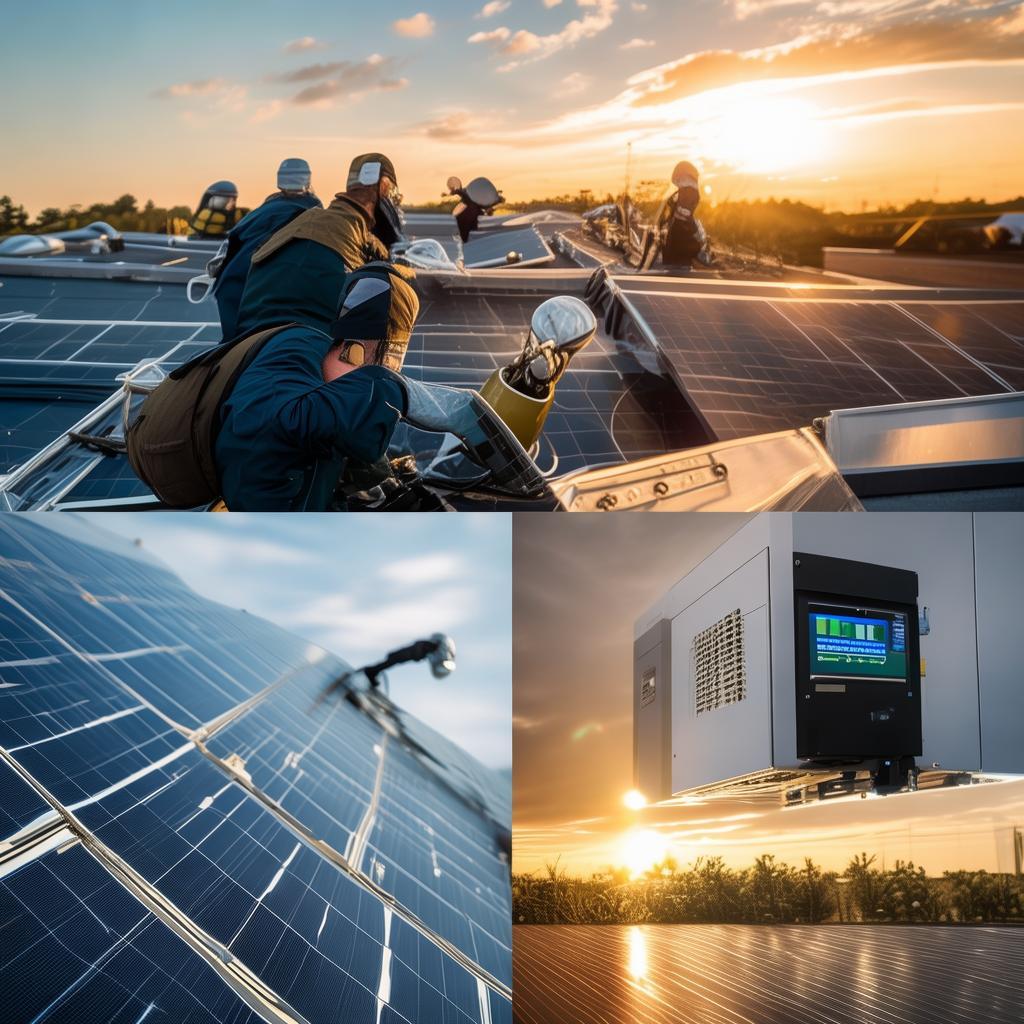
bifacial pv module
Discover the pinnacle of solar innovation with our premium bifacial PV module, engineered to harness sunlight from both sides for unprecedented energy yields. Unlike traditional monofacial panels,
Bifacial PV Module: Revolutionizing Solar Energy Efficiency
1. Product Overview
Discover the pinnacle of solar innovation with our premium bifacial PV module, engineered to harness sunlight from both sides for unprecedented energy yields. Unlike traditional monofacial panels, our bifacial PV module captures direct sunlight on the front surface while simultaneously generating power from reflected and diffused light on the rear, boosting overall performance by up to 30% in optimal conditions. Ideal for commercial and utility-scale projects, this advanced photovoltaic solution combines cutting-edge cell technology with robust module design to deliver reliable, high-output power generation.
Each bifacial PV module is meticulously crafted using high-transparency glass on both sides, advanced half-cut cell architecture, and multi-busbar (MBB) technology to minimize shading losses and enhance durability. With power outputs ranging from 550W to 600W, these modules achieve module efficiencies exceeding 22%, making them a top choice for international trade in renewable energy markets. Whether deployed in ground-mounted solar farms, commercial rooftops, or agrivoltaic systems, our bifacial PV module sets new standards for return on investment (ROI) through superior bifaciality ratios above 70% and long-term reliability backed by rigorous testing.
In an era where energy demands are surging and sustainability is paramount, the bifacial PV module represents a forward-thinking investment. Its ability to leverage albedo effects—reflecting light from surfaces like snow, sand, or white gravel—maximizes energy harvest in diverse environments, from arid deserts to cold climates. Committed to excellence, we ensure every bifacial PV module undergoes stringent quality controls, including PID resistance, salt mist corrosion testing, and ammonia resistance, guaranteeing performance under the harshest conditions.
2. Key Features
- Double-Sided Power Generation: Bifacial design with >70% bifaciality, capturing up to 30% more energy from rear-side irradiation compared to standard modules.
- Advanced Cell Technology: Utilizes N-type TOPCon or PERC cells for higher efficiency, lower degradation rates (<0.4% per year), and excellent low-light performance.
- High-Transparency Glass: 2.0mm tempered glass on both front and rear, with anti-reflective coating to optimize light transmission and minimize reflection losses.
- Half-Cut Cell Structure: Reduces resistive losses by 75% and improves shade tolerance, ensuring consistent output even under partial shading.
- Multi-Busbar (MBB) Design: 12 or 16 busbars per cell to lower current density, boost fill factor, and enhance mechanical reliability.
- Robust Frame and Junction Box: Anodized aluminum frame with reinforced corners; IP68-rated junction box with bypass diodes for superior weatherproofing.
- Certifications: IEC 61215, IEC 61730, UL 61730, CE, and ISO 9001 compliant, ensuring global market readiness.
- Easy Installation: Pre-assembled components and optimized dimensions for seamless integration into existing racking systems.
3. Technical Specifications
| Parameter | Value | Unit/Notes |
|---|---|---|
| Module Type | Bifacial PV Module (Glass/Glass) | Double-glass structure |
| Power Output (Pmax) | 550-600 | W (STC: Front side) |
| Module Efficiency | 21.5%-22.5% | Front side efficiency |
| Bifaciality | >70% | Rear side to front side power ratio |
| Cell Type | N-TOPCon or PERC Half-Cut | 182mm or 210mm cells |
| Number of Cells | 144 (6x24) or 120 (6x20) | Half-cut configuration |
| Dimensions (L x W x H) | 2278 x 1134 x 30 | mm |
| Weight | 31.5 | kg |
| Front Glass | 2.0mm Tempered, AR Coated | High transmission >91.5% |
| Rear Glass | 2.0mm Tempered | High transparency for bifacial gain |
| Frame | Anodized Aluminum Alloy | Silver, 35mm thickness |
| Junction Box | IP68 Rated | 3x20A Bypass Diodes |
| Cable | 4.0mm², 1400mm Length | MC4 Compatible |
| Maximum System Voltage | 1500V DC | Optimized for string inverters |
| Temperature Coefficient (Pmax) | -0.34%/°C | Excellent thermal stability |
| Operating Temperature | -40 to +85 | °C |
| Warranty | 30 Years Linear Power, 12 Years Product | First-year degradation <2%, annual <0.4% |
| STC Conditions | 1000W/m², 25°C, AM 1.5 | Standard Test Conditions |
4. Application Scenarios
Our bifacial PV module excels in a wide array of deployment scenarios, leveraging its dual-sided energy capture for maximum versatility. In large-scale ground-mounted solar power plants, bifacial PV modules are mounted elevated above reflective surfaces such as white gravel or concrete, achieving ground coverage ratios (GCR) of 30-50% while harvesting albedo-reflected light effectively. This setup is particularly advantageous in utility-scale projects across sunny regions like the Middle East, Australia, and the southwestern United States.
For commercial and industrial rooftops with light-colored or metal surfaces, the bifacial PV module boosts yields without requiring ground modifications. In agrivoltaic applications, modules are installed over crops, allowing dual land use—energy production alongside agriculture—while the rear-side generation utilizes light reflected from soil or vegetation. Snowy environments benefit immensely, as the bifacial PV module captures light bouncing off white snowpack, ideal for northern Europe or Canada.
Additionally, these modules thrive in floating solar farms, where water reflection enhances rear-side output by 10-20%. Desert installations capitalize on sandy albedo, and even urban carports or noise barriers integrate seamlessly, providing shaded parking with elevated energy production. With wind load ratings up to 2400Pa and snow load up to 5400Pa, the bifacial PV module adapts to diverse topographies and climates, ensuring optimal performance worldwide.
5. Advantages
The bifacial PV module offers distinct advantages over conventional monofacial panels, starting with superior energy yield. By generating power from both sides, it delivers 10-30% higher annual energy production, shortening payback periods and improving levelized cost of energy (LCOE). This bifacial gain is measurable and verifiable through advanced simulation tools like PVsyst, accounting for site-specific albedo and tilt angles.
Durability is another cornerstone: the glass-glass encapsulation provides exceptional resistance to microcracks, UV degradation, and mechanical stress, with first-year degradation under 2% and annualized rates below 0.4%. Lower temperature coefficients minimize output losses in hot climates, and PID-free technology ensures stable performance in humid or high-voltage systems.
Economically, bifacial PV modules reduce balance-of-system (BOS) costs through higher power density—fewer modules needed per MW—lowering racking, cabling, and labor expenses. Environmentally, they promote sustainability with recyclable materials and extended lifespans up to 30+ years. In performance testing, our bifacial PV modules consistently outperform competitors in low-irradiance dawn/dusk periods and diffuse light conditions, making them indispensable for modern solar portfolios.
6. Why Choose Us
As a leading manufacturer in the international solar trade, we stand out with our unwavering commitment to quality bifacial PV modules. Our state-of-the-art production facilities employ automated lines with >99% cell-to-module yield rates, utilizing raw materials from tier-1 suppliers like LONGi or Jinko for cells and Saint-Gobain for glass. Every batch undergoes electroluminescence (EL) testing, flash testing, and thermal cycling to eliminate defects before shipment.
We hold multiple international certifications, including TUV, UL, and INMETRO, facilitating seamless customs clearance for exports to Europe, North America, Latin America, and Asia-Pacific markets. Our R&D team continuously innovates, incorporating next-gen technologies like HJT or BC cells into upcoming bifacial PV module series. With flexible MOQs, competitive pricing, and just-in-time delivery from ports in Shanghai or Ningbo, we cater to EPC contractors, distributors, and developers.
Backed by a global service network, we provide detailed project simulations, installation guides, and 25-year performance warranties. Partnering with us means accessing reliable supply chains immune to shortages, proven by our delivery of over 5GW annually. Choose us for bifacial PV modules that drive project success and long-term profitability.
7. FAQ
Q: What is a bifacial PV module and how does it differ from monofacial?
A: A bifacial PV module generates electricity from both front and rear surfaces, unlike monofacial modules that only use the front. This dual capture increases energy yield by 10-30% depending on installation and albedo.
Q: What albedo conditions maximize bifacial PV module performance?
A: Ideal albedos range from 20-80%, such as white gravel (0.3-0.5), snow (0.9), or water (0.05-0.1). Simulations help optimize site-specific gains.
Q: Are bifacial PV modules suitable for rooftop installations?
A: Yes, especially on light-colored roofs. Rear-side gain is 5-15%, with no need for ground elevation.
Q: What warranties are provided with the bifacial PV module?
A: 12 years on product workmanship and 30 years linear power output, guaranteeing >84.8% at year 30.
Q: Can bifacial PV modules be used with existing inverters?
A: Absolutely, compatible with standard string inverters rated for 1500V DC systems.
Q: How do you calculate the bifacial gain for a project?
A: Use tools like PVsyst or SAM, inputting ground albedo, module height, tilt, and rear irradiance models for accurate predictions.
Related product
- English
- Françai
- Español
- Deutsch
- Română
- العربية
- 한국어
- 日本語
- Italiano
- Português
- Gaeilge
- Dansk
- Čeština
- Русский
- Afrikaans
- Euskara
- Català
- Esperanto
- हिन्दी
- Ελληνικά
- Bahasa Melayu
- Polski
- Српски
- Kiswahili
- ภาษาไทย
- Tiếng Việt
- Türkçe
- Svenska
- Cymraeg
- Slovenčina
- Latviešu
- Malti
- Magyar
- Galego
- ગુજરાતી
- Eesti Keel
- বাংলা
- Shqip
- беларуская мова
- Nederlands
- Tagalog
- ქართული
- Íslenska
- Kreyòl Ayisyen
- Lietuvių
- Norsk
- slovenščina
- தமிழ்
- Українська
- ײִדיש
- اردو
- తెలుగు
- فارسی
- македонски
- ಕನ್ನಡ
- Bahasa Indonesia
- עברית
- Suomi
- Hrvatski
- Български
- Azerbaijani