

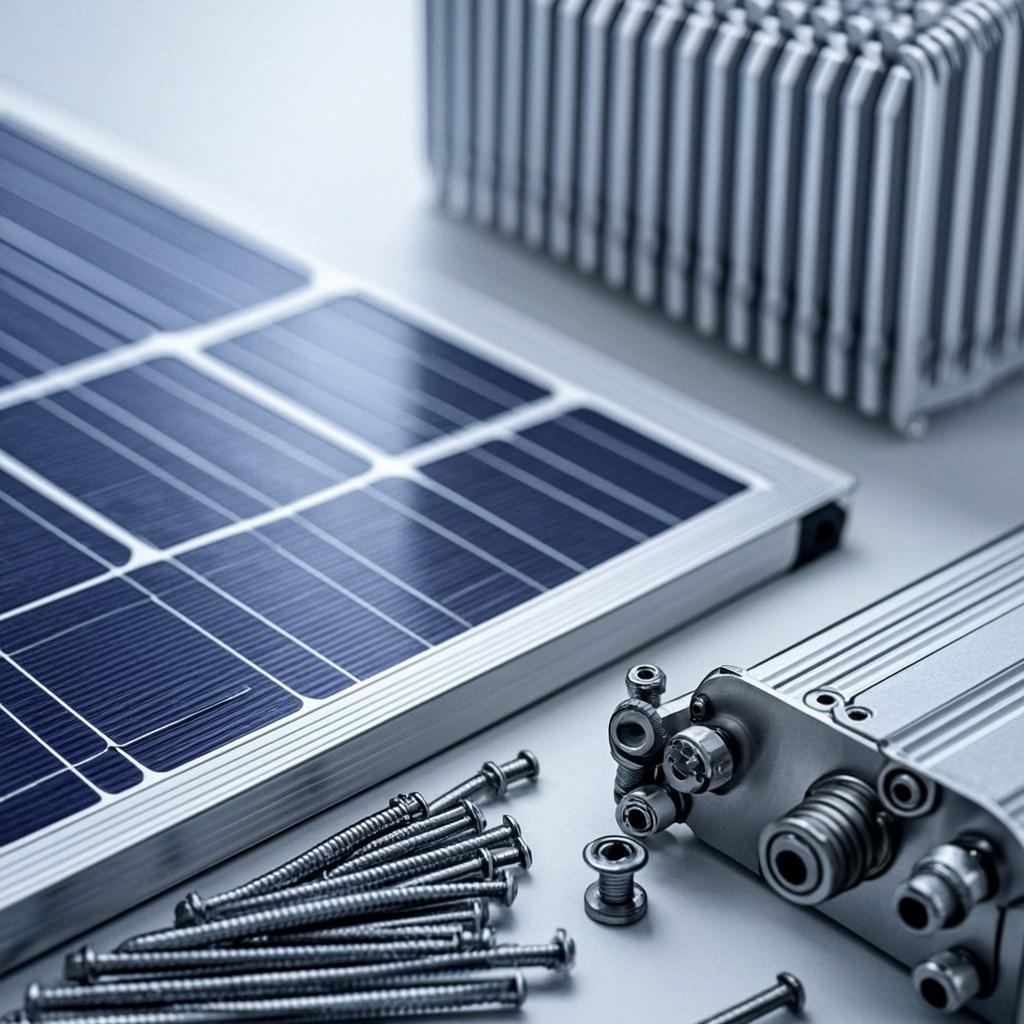
bifacial photovoltaic panels
Our bifacial photovoltaic panels represent the pinnacle of solar energy technology, designed to maximize energy harvest by capturing sunlight from both the front and rear surfaces. Unlike traditional
Bifacial Photovoltaic Panels
Product Overview
Our bifacial photovoltaic panels represent the pinnacle of solar energy technology, designed to maximize energy harvest by capturing sunlight from both the front and rear surfaces. Unlike traditional monofacial panels, bifacial photovoltaic panels utilize advanced cell technology to absorb reflected and diffused light, boosting overall efficiency by up to 30% in optimal conditions. Engineered for international trade and large-scale deployments, these panels are ideal for commercial and utility-scale projects worldwide.
Featuring high-transparency glass on both sides and PERC (Passivated Emitter and Rear Cell) or TOPCon (Tunnel Oxide Passivated Contact) architectures, our bifacial photovoltaic panels deliver superior performance in diverse environments, from snowy alpine regions to reflective desert landscapes. With power outputs ranging from 400W to 700W per panel, they offer unmatched energy density, reducing balance-of-system costs and accelerating ROI for B2B clients. Certified to international standards like IEC 61215 and IEC 61730, these panels ensure reliability and longevity, backed by a 30-year linear power warranty.
In the evolving global renewable energy market, bifacial photovoltaic panels are transforming solar farms, rooftop installations, and floating systems. Their ability to leverage albedo—the reflectivity of surrounding surfaces—makes them a strategic choice for maximizing yield per square meter, aligning perfectly with sustainability goals and energy independence initiatives.
Key Features
- High Bifaciality Ratio: Up to 80-85%, enabling significant rear-side power generation from ground reflection and diffuse light.
- Advanced Cell Technology: N-type TOPCon or HJT (Heterojunction) cells for lower degradation rates (<0.4% annually) and higher efficiency (up to 23.5%).
- Dual-Glass Design: Tempered glass on both sides for enhanced durability against PID (Potential Induced Degradation), salt mist, and ammonia corrosion.
- Optimized Frame: Anodized aluminum frames with drainage holes to prevent water accumulation and ensure IP68 junction box protection.
- Low-Light Performance: Excellent output even under cloudy skies or at dawn/dusk, ideal for high-latitude installations.
- Certifications: UL, TUV, CE, and INMETRO compliant, with fire ratings up to Class A.
- Customizable Configurations: Available in half-cut, multi-busbar (MBB), or shingled cell formats for tailored project needs.
Technical Specifications
| Parameter | Value | Unit |
|---|---|---|
| Power Output (Front Side) | 450-700 | Wp |
| Bifaciality | 70-85 | % |
| Module Efficiency | 21.5-23.5 | % |
| Dimensions (L x W x H) | 2384 x 1134 x 30 / 2094 x 1134 x 30 | mm |
| Weight | 28-35 | kg |
| Cell Type | N-type TOPCon / Mono PERC | - |
| Number of Cells | 120 (half-cut) / 144 (half-cut) | pcs |
| Maximum System Voltage | 1500 | DC V |
| Operating Temperature | -40 to +85 | °C |
| Wind Load / Snow Load | 2400 / 5400 | Pa |
| Warranty | 12 (product) / 30 (linear power) | years |
| Junction Box | IP68, 3 diodes | - |
| Cable | 4.0 mm², 1400 mm length | - |
Note: Specifications subject to customization based on model series (e.g., 72-cell or 60-cell variants). Detailed datasheets available upon request.
Application Scenarios
Bifacial photovoltaic panels excel in a wide array of deployment scenarios, leveraging their dual-sided light capture for enhanced performance. In utility-scale ground-mounted solar farms, they pair seamlessly with elevated trackers or reflective white gravel, achieving 20-30% higher yields compared to monofacial alternatives. The panels' robustness makes them suitable for harsh environments, including coastal areas with high salinity and desert regions with extreme temperatures.
For commercial rooftops, bifacial photovoltaic panels mounted on flat or reflective surfaces harness bounced light from concrete or metal, optimizing space-constrained installations. In agrivoltaics—dual-use agriculture-solar systems—they allow crops to grow beneath semi-transparent setups, promoting biodiversity while generating revenue. Floating solar projects benefit from water's high albedo (up to 10-20%), where bifacial panels float on ponds or reservoirs, minimizing land use and evaporation.
Additionally, bifacial photovoltaic panels are deployed in vertical bifacial systems for building-integrated photovoltaics (BIPV), noise barriers along highways, and off-grid applications in remote mining sites. Their versatility supports snow-prone regions, as rear-side melting from absorbed heat improves self-cleaning, ensuring consistent output year-round.
Advantages
Investing in our bifacial photovoltaic panels provides distinct competitive edges in the B2B solar market. The primary advantage lies in elevated energy production: rear-side generation can contribute 5-30% additional power, depending on installation height, albedo, and tilt angle. This translates to shorter payback periods—often 4-6 years—and higher internal rates of return (IRR) for large portfolios.
Superior temperature coefficients (<-0.30%/°C) ensure minimal losses in hot climates, while low LID (Light Induced Degradation) and LeTID (Light and Elevated Temperature Induced Degradation) rates below 1% in the first year guarantee long-term stability. The dual-glass encapsulation enhances mechanical strength, withstanding hail up to 35mm diameter at 23m/s.
From an economic standpoint, bifacial photovoltaic panels reduce LCOE (Levelized Cost of Energy) by optimizing land use—fewer panels needed for the same output. Environmentally, they support circular economy principles with recyclable materials and extended lifespans exceeding 30 years. For international traders, our panels' global compliance minimizes customs hurdles, facilitating seamless exports to Europe, Americas, Asia-Pacific, and beyond.
Why Choose Us
As a leading manufacturer of bifacial photovoltaic panels, we prioritize quality, innovation, and partnership. Our state-of-the-art production lines, equipped with automated stringers and electroluminescence testers, ensure zero-defect modules with Bankable PID testing. We hold ISO 9001, ISO 14001, and ISO 45001 certifications, reflecting our commitment to excellence and sustainability.
With over a decade in international trade, we offer flexible MOQs, OEM/ODM services, and turnkey solutions from design to logistics. Our R&D team continuously advances bifacial technology, incorporating multi-busbar designs and zero-busbar innovations for future-proof investments. Partnering with us means accessing real-time tracking, predictive maintenance via IoT integration, and a global network of distributors for rapid delivery.
Customer testimonials from EPC firms in the Middle East and Europe underscore our reliability: "These bifacial photovoltaic panels exceeded projections by 25% in yield." Choose us for panels that not only meet but redefine performance benchmarks.
FAQ
Q: What are bifacial photovoltaic panels?
A: Bifacial photovoltaic panels are solar modules that generate electricity from both front and back sides, utilizing direct, reflected, and diffuse light for higher overall efficiency.
Q: How much extra energy do bifacial photovoltaic panels produce?
A: Gains typically range from 5-30%, influenced by ground albedo, mounting height (optimal 0.5-1m), and system design. Simulations via PVsyst or SAM tools provide precise estimates.
Q: Are bifacial photovoltaic panels suitable for all installations?
A: Yes, but they shine in ground-mount, elevated, or reflective surface setups. Avoid flush rooftop mounts where rear-side gain is negligible.
Q: What maintenance do bifacial photovoltaic panels require?
A: Minimal—self-cleaning dual-glass reduces dust buildup. Annual inspections for framing and electricals suffice; rear-side heat aids snow/ice removal.
Q: Do they come with performance warranties?
A: Yes, 30-year linear power warranty guarantees at least 84.8% output at year 30, with first-year degradation <2% and annual <0.55% thereafter.
Q: Can bifacial photovoltaic panels be integrated with trackers?
A: Absolutely; single- or dual-axis trackers amplify bifacial gains to 35-50%, ideal for utility-scale projects.
Q: What certifications do your bifacial photovoltaic panels have?
A: IEC 61215/61730, UL 61730, CE, TUV, and salt mist/ammonia tests per IEC 61701/62716, ensuring global market access.
Related product
- English
- Françai
- Español
- Deutsch
- Română
- العربية
- 한국어
- 日本語
- Italiano
- Português
- Gaeilge
- Dansk
- Čeština
- Русский
- Afrikaans
- Euskara
- Català
- Esperanto
- हिन्दी
- Ελληνικά
- Bahasa Melayu
- Polski
- Српски
- Kiswahili
- ภาษาไทย
- Tiếng Việt
- Türkçe
- Svenska
- Cymraeg
- Slovenčina
- Latviešu
- Malti
- Magyar
- Galego
- ગુજરાતી
- Eesti Keel
- বাংলা
- Shqip
- беларуская мова
- Nederlands
- Tagalog
- ქართული
- Íslenska
- Kreyòl Ayisyen
- Lietuvių
- Norsk
- slovenščina
- தமிழ்
- Українська
- ײִדיש
- اردو
- తెలుగు
- فارسی
- македонски
- ಕನ್ನಡ
- Bahasa Indonesia
- עברית
- Suomi
- Hrvatski
- Български
- Azerbaijani