

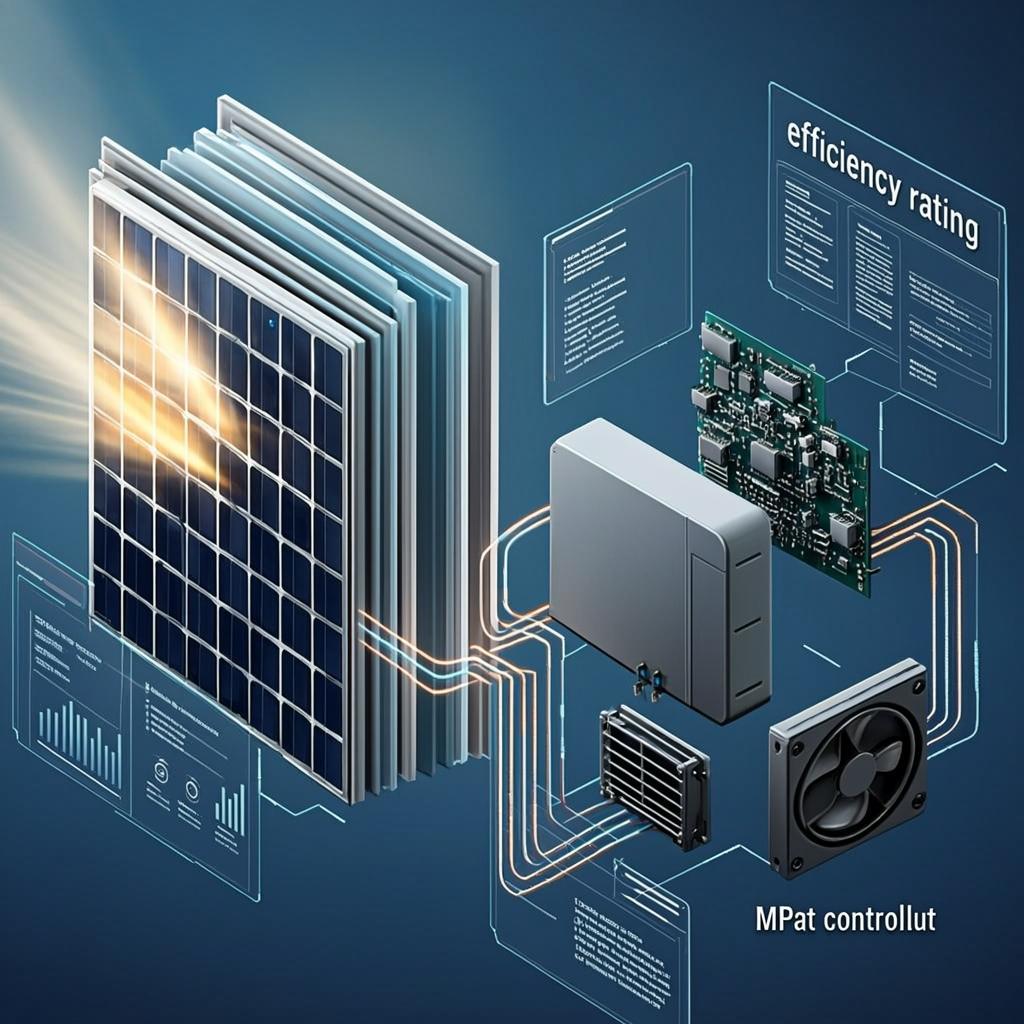
bifacial panels
Our bifacial panels represent the pinnacle of solar photovoltaic technology, designed to capture sunlight from both sides for maximum energy yield. Unlike traditional monofacial panels that only
Bifacial Panels
1. Product Overview
Our bifacial panels represent the pinnacle of solar photovoltaic technology, designed to capture sunlight from both sides for maximum energy yield. Unlike traditional monofacial panels that only absorb light on the front surface, bifacial panels harness reflected and diffused light from the rear, boosting overall efficiency by up to 30% in optimal conditions. Engineered for international trade and large-scale deployments, these panels are ideal for commercial, industrial, and utility-scale projects worldwide.
Manufactured with cutting-edge PERC (Passivated Emitter and Rear Cell) or TOPCon (Tunnel Oxide Passivated Contact) cell technology, our bifacial panels deliver reliable performance across diverse climates. They feature high-transparency glass on both sides, advanced encapsulants, and robust aluminum frames to withstand harsh environmental conditions, including high winds, snow loads, and salt mist corrosion. With power outputs ranging from 500W to 700W per panel, these bifacial panels are optimized for ground-mounted systems, rooftop installations, and agrivoltaic applications, making them a smart choice for B2B buyers seeking long-term ROI in renewable energy investments.
The bifacial design not only enhances energy production but also reduces the levelized cost of electricity (LCOE) by maximizing land use efficiency. Certified to international standards like IEC 61215, IEC 61730, and UL 1703, our bifacial panels ensure compliance and peace of mind for global importers and distributors. Whether you're equipping solar farms in sunny deserts or floating arrays on water bodies, these panels provide superior bifaciality factors of 70-80%, translating to real-world gains in kWh per square meter.
2. Key Features
- Double-Sided Power Generation: Bifacial panels capture up to 30% more energy from albedo reflection, ideal for white gravel, snow-covered, or water-reflective surfaces.
- High Efficiency Cells: Utilizes N-type TOPCon or HJT (Heterojunction) cells with module efficiencies exceeding 22%, ensuring top-tier performance.
- Anti-PID and Low LID: Advanced passivation technology minimizes Potential Induced Degradation (PID) and Light Induced Degradation (LID) to less than 1% in the first year.
- Robust Framing: Anodized aluminum frames with 35mm thickness support snow loads up to 5400Pa and wind loads up to 2400Pa.
- Superior Glass: 2.0mm dual-glass or tempered low-iron glass on both sides for enhanced durability and light transmission.
- Extended Warranty: 30-year linear power warranty guaranteeing 84.8% output at year 30, backed by third-party testing.
- Smart Compatibility: Optimized for bifacial panels in tracker systems and floating PV, with MC4 connectors for seamless integration.
- Environmental Resilience: Salt mist and ammonia corrosion resistant, perfect for coastal or agricultural bifacial panel deployments.
3. Technical Specifications
| Parameter | Specification |
|---|---|
| Module Type | Bifacial Glass-Glass / Glass-Backsheet |
| Power Output (Pmax) | 500W - 700W (customizable ranges) |
| Module Efficiency | 21.5% - 23.5% |
| Bifaciality Factor | 70% - 80% |
| Cell Type | N-type TOPCon / HJT / PERC |
| Number of Cells | 132 half-cut / 144 half-cut / 156 half-cut |
| Dimensions (L x W x H) | 2382 x 1134 x 35mm / Custom sizes available |
| Weight | 28 - 35 kg |
| Front Glass | 2.0mm tempered low-iron glass |
| Rear Glass / Backsheet | 2.0mm high-transparency glass / Fluoropolymer backsheet |
| Frame | Anodized silver aluminum alloy |
| Junction Box | IP68 rated, 3 diodes |
| Cable | 4mm², 1400mm length (customizable) |
| Connector | MC4 compatible |
| Maximum System Voltage | 1500V DC |
| Temperature Coefficient (Pmax) | -0.30% / °C |
| Operating Temperature | -40°C to +85°C |
| Mechanical Load | 5400Pa snow / 2400Pa wind |
| Warranty | 12-year product / 30-year linear power |
| Certifications | IEC 61215, IEC 61730, UL 1703, CE, TUV |
4. Application Scenarios
Bifacial panels excel in a variety of real-world scenarios where maximizing energy harvest is critical. In large-scale solar farms on reflective terrains like deserts or white-pebbled grounds, the rear-side generation of bifacial panels can add 10-25% extra yield, significantly reducing payback periods. For commercial rooftops with light-colored surfaces, these panels optimize space utilization without compromising aesthetics.
In agrivoltaic setups, bifacial panels allow sunlight to filter through to crops below while generating power from both sides, promoting dual land use in farming regions. Floating solar installations benefit immensely, as water's high albedo (up to 20%) amplifies bifacial gains, making these panels perfect for reservoirs and hydropower-adjacent sites. Utility-scale tracker systems leverage the vertical bifaciality for even higher production during low-sun-angle periods.
Additionally, bifacial panels are deployed in snowy environments where rear-side melting extends operational hours, and in urban carports or canopies where ground reflection is predictable. Their versatility supports off-grid industrial applications, such as mining operations or remote data centers, ensuring reliable power in challenging locales.
5. Advantages
Opting for our bifacial panels provides distinct advantages over conventional solar solutions. The core benefit lies in elevated energy density: bifacial panels produce more kWh per watt installed, lowering BOS (Balance of System) costs and accelerating project ROI. Studies from independent bodies like NREL confirm 5-30% gains depending on installation height and ground reflectivity.
Durability is unmatched, with glass-glass constructions resisting microcracks and UV degradation far better than backsheet modules. Lower temperature coefficients minimize output losses in hot climates, while anti-PID measures ensure stable performance over decades. Economically, bifacial panels reduce LCOE by 10-15% in ground-mount arrays, appealing to investors focused on bankability.
From an environmental standpoint, higher yields mean fewer panels for the same capacity, cutting transportation emissions and material use. Our bifacial panels also feature recyclable components, aligning with global sustainability mandates like the EU's Green Deal. In essence, they offer superior bifacial performance without trade-offs in reliability or cost-effectiveness.
6. Why Choose Us
As a leading manufacturer in the international trade of bifacial panels, we prioritize quality, innovation, and partnership. Our state-of-the-art production lines incorporate automated processes and AI-driven quality control, achieving defect rates below 0.1%. With Tier 1 bankability status from BNEF, our bifacial panels are trusted by EPC firms and developers across Europe, Asia, and the Americas.
We offer flexible OEM/ODM services, from custom power ratings to branded packaging, ensuring seamless integration into your supply chain. Rigorous testing in Salt Lake City and TÜV labs validates performance claims, while our global logistics network guarantees timely deliveries. Committed to transparency, we provide full traceability via blockchain-enabled certificates.
Our R&D team continuously advances bifacial technology, incorporating bifacial-optimized half-cut cells and multi-busbar designs. Partnering with us means accessing exclusive data on bifacial modeling tools and yield simulators, empowering informed decisions for your projects.
7. FAQ
Q: What makes bifacial panels more efficient than monofacial ones?
A: Bifacial panels generate power from both front and rear surfaces, capturing reflected light (albedo) that monofacial panels miss, yielding 5-30% more energy based on installation specifics.
Q: Are bifacial panels suitable for all mounting types?
A: Yes, they perform best in ground-mount, tilted trackers, or elevated systems (0.5-2m height) with reflective surfaces, but are adaptable to rooftops with proper design.
Q: What is the bifaciality factor, and why does it matter?
A: It's the ratio of rear to front power output under standard conditions (typically 70-80% for our panels). Higher factors mean greater gains from diffuse light.
Q: Do bifacial panels require special inverters or monitoring?
A: Standard string inverters work fine; enhanced bifacial modeling in software like PVSyst optimizes system design for maximum bifacial panel benefits.
Q: How do warranties apply to bifacial output?
A: Our 30-year warranty covers both sides proportionally, with first-year degradation <2% and annual <0.55% thereafter, verified by EL imaging and flash testing.
Q: Can bifacial panels be used in shaded areas?
A: They tolerate partial shading better due to half-cut cells, but optimal performance requires minimizing front-side shadows for full bifacial utilization.
Q: What certifications do your bifacial panels hold?
A: IEC 61215/61730 for durability, UL 1703 for fire safety, CE for Europe, and ISO 9001/14001 for manufacturing excellence.
Related product
- English
- Françai
- Español
- Deutsch
- Română
- العربية
- 한국어
- 日本語
- Italiano
- Português
- Gaeilge
- Dansk
- Čeština
- Русский
- Afrikaans
- Euskara
- Català
- Esperanto
- हिन्दी
- Ελληνικά
- Bahasa Melayu
- Polski
- Српски
- Kiswahili
- ภาษาไทย
- Tiếng Việt
- Türkçe
- Svenska
- Cymraeg
- Slovenčina
- Latviešu
- Malti
- Magyar
- Galego
- ગુજરાતી
- Eesti Keel
- বাংলা
- Shqip
- беларуская мова
- Nederlands
- Tagalog
- ქართული
- Íslenska
- Kreyòl Ayisyen
- Lietuvių
- Norsk
- slovenščina
- தமிழ்
- Українська
- ײִדיש
- اردو
- తెలుగు
- فارسی
- македонски
- ಕನ್ನಡ
- Bahasa Indonesia
- עברית
- Suomi
- Hrvatski
- Български
- Azerbaijani