

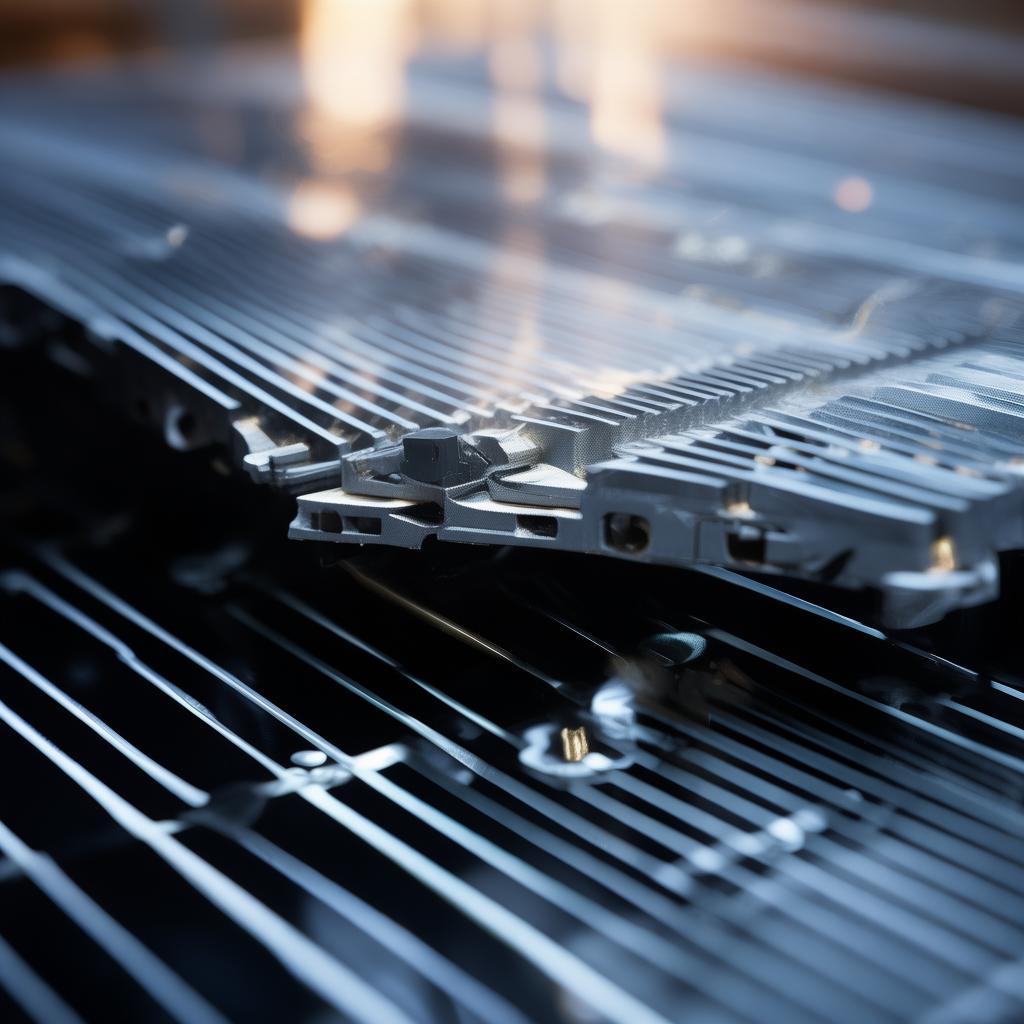
bifacial panel price
Discover our premium bifacial solar panels, engineered for maximum energy yield and long-term reliability in diverse global markets. Bifacial panels represent the next evolution in photovoltaic
Bifacial Solar Panels - Competitive Bifacial Panel Price for International Buyers
Product Overview
Discover our premium bifacial solar panels, engineered for maximum energy yield and long-term reliability in diverse global markets. Bifacial panels represent the next evolution in photovoltaic technology, capturing sunlight from both the front and rear sides to boost overall performance by up to 30% compared to traditional monofacial modules. Ideal for commercial, industrial, and utility-scale projects, our bifacial panels offer an unbeatable combination of high efficiency, durability, and value.
When evaluating bifacial panel price, factors such as power output, bifaciality ratio, and certifications play a crucial role. Our models deliver power ratings from 540W to 700W, with efficiencies exceeding 22%, ensuring superior return on investment. Priced competitively for bulk international trade, we provide transparent quoting based on volume, customization, and delivery terms. Whether you're sourcing for ground-mounted solar farms or rooftop installations, our bifacial panel price structure supports scalable deployments without compromising quality.
Manufactured with top-tier N-type TOPCon or PERC half-cut cell technology, these panels withstand harsh environmental conditions, including high winds, snow loads, and PID resistance. Backed by rigorous testing to IEC standards, they guarantee optimal performance across latitudes. For importers and distributors, our bifacial panel price includes flexible MOQs starting at 100kW pallets, facilitating seamless integration into your supply chain.
Key Features
- High Bifaciality: Up to 80% bifaciality ratio, enabling 10-30% additional energy gain from rear-side irradiation, directly impacting ROI and making our bifacial panel price even more attractive.
- Advanced Cell Technology: N-type TOPCon cells with passivation emitter rear cell design for lower degradation rates (<0.4% annually) and higher low-light performance.
- Robust Framing: Anodized aluminum alloy frame with reinforced corners, certified for 5400Pa snow load and 2400Pa wind load.
- Superior Encapsulation: Multi-layer POE/ETFE encapsulant for enhanced UV resistance, anti-PID, and salt mist corrosion protection, ideal for coastal installations.
- Smart Junction Box: IP68-rated with bypass diodes and optional MLPE compatibility for rapid monitoring and maintenance.
- Easy Installation: Optimized dimensions and weight for vertical or horizontal mounting, reducing labor costs in large-scale bifacial panel price-sensitive projects.
- Certifications: UL, TUV, CE, INMETRO, and Retie compliant, ensuring global market access.
Technical Specifications
| Parameter | 540-560W Series | 600-625W Series | 650-700W Series |
|---|---|---|---|
| Module Type | Glass-Glass Bifacial PERC Half-Cut | Glass-Glass Bifacial TOPCon Half-Cut | Glass-Glass Bifacial TOPCon Half-Cut |
| Maximum Power (Pmax) - Front Side | 540-560W | 600-625W | 650-700W |
| Power Gain - Rear Side (Bifaciality) | 70-75% | 75-80% | 80-85% |
| Module Efficiency | 21.3-22.1% | 22.1-23.0% | 23.0-23.8% |
| Dimensions (L x W x H) | 2256 x 1134 x 30mm | 2382 x 1134 x 30mm | 2465 x 1134 x 30mm |
| Weight | 27.3kg | 28.5kg | 29.8kg |
| Cell Type | 182mm Half-Cut, 144 Cells | 182mm Half-Cut, 144 Cells | 210mm Half-Cut, 132 Cells |
| Front Glass | 2.0mm Tempered Glass | 2.0mm Tempered Glass | 2.0mm Tempered Glass |
| Rear Glass | 2.0mm Tempered Glass | 2.0mm Tempered Glass | 2.0mm Tempered Glass |
| Frame | Anodized Aluminum Alloy, Black | Anodized Aluminum Alloy, Black | Anodized Aluminum Alloy, Black |
| Junction Box | IP68, 3x20A Diodes | IP68, 3x20A Diodes | IP68, 3x30A Diodes |
| Cable | 4mm², 400mm Length | 4mm², 400mm Length | 6mm², 400mm Length |
| Mechanical Load | 5400Pa Snow / 2400Pa Wind | 5400Pa Snow / 2400Pa Wind | 5400Pa Snow / 2400Pa Wind |
| Warranty | 12 Years Product / 30 Years Linear Power | 12 Years Product / 30 Years Linear Power | 12 Years Product / 30 Years Linear Power |
| Temperature Coefficient (Pmax) | -0.34%/°C | -0.30%/°C | -0.30%/°C |
| NMOT | 45 ± 2°C | 45 ± 2°C | 45 ± 2°C |
Note: Specifications subject to final datasheet. Bifacial panel price varies by series, quantity, and configuration. Energy yield calculations assume albedo of 20-30% for rear-side gain.
Application Scenarios
Bifacial solar panels excel in environments where rear-side exposure is maximized, offering versatile deployment options for international projects. In large-scale ground-mounted solar farms, elevated racking systems capture reflected light from soil, white gravel, or snow, amplifying output and justifying the bifacial panel price through higher kWh production.
For commercial rooftops with light-colored surfaces or green roofs, bifacial modules provide elevated energy harvest without additional footprint. Agrivoltaic applications—combining solar with agriculture—benefit from partial shading tolerance and dual land use, popular in Europe and Asia. Utility-scale trackers further enhance bifacial gains up to 25%, ideal for desert regions with high albedo sands.
Off-grid and hybrid systems in remote areas leverage their low degradation for reliable power. Floating solar farms on reservoirs utilize water reflection for 10-15% extra yield. When assessing bifacial panel price against performance, these scenarios deliver payback periods under 4 years in sunny climates.
Advantages
Opting for bifacial panels over monofacial alternatives yields measurable superiorities. The primary advantage lies in bifacial energy gain, translating to 15-30% more annual output depending on installation height, ground reflectivity, and tilt angle. This directly offsets the bifacial panel price premium, often achieving cost parity within the first year.
Enhanced durability stems from glass-glass construction, reducing micro-crack risks and LID/LETID by 90%. Lower BOS costs arise from fewer modules needed for the same capacity, streamlining logistics and installation. Environmental resilience includes fire class A and ammonia/salt resistance for agrivoltaic and marine projects.
Long-term value is assured with <1% first-year degradation and 87% output at year 30, surpassing industry averages. Scalable manufacturing ensures consistent bifacial panel price stability amid supply chain fluctuations, empowering B2B buyers with predictable budgeting.
Why Choose Us
As a leading manufacturer in the photovoltaic sector, we specialize in high-performance bifacial solutions tailored for international trade. Our state-of-the-art production lines, automated with diamond wire slicing and electroless plating, deliver defect-free modules at scale. Vertically integrated supply—from silicon ingots to modules—eliminates intermediaries, securing the most competitive bifacial panel price without quality trade-offs.
With over 10GW shipped globally, we hold ISO 9001, ISO 14001, and ISO 45001 certifications, plus bankable warranties from third-party insurers. Dedicated R&D invests in next-gen HJT and BC technologies, keeping our bifacial panel price ahead of market curves. Global logistics networks ensure FOB/CIF delivery to major ports, with full traceability via blockchain serialization.
Customer-centric support includes customized BOMs, predictive yield modeling, and post-sales performance audits. For discerning B2B partners, our bifacial panel price reflects unmatched TCO, positioning your projects for sustained profitability.
FAQ
What factors influence bifacial panel price?
Bifacial panel price depends on power rating, technology (PERC vs. TOPCon), order volume, packaging, and certifications. Bulk orders (1MW+) enjoy tiered discounts, while custom framing adds 5-10%.
How is bifacial gain calculated?
Gain = (Rear irradiance × Bifaciality) × Albedo × System Gain Factor. Tools like PVsyst simulate site-specific yields, typically 10-25% over monofacial.
Are these panels suitable for all climates?
Yes, with wide operating range (-40°C to +85°C) and anti-PID/LID coatings. They perform exceptionally in high-albedo snowy or sandy areas.
What is the lead time for orders?
Standard models: 10-15 days for 1-5MW; 20-30 days for larger volumes. Rush options available at adjusted bifacial panel price.
Do you offer third-party testing reports?
Absolutely. Each batch includes EL imaging, flash test, and salt mist reports from TUV or UL, accessible via our portal.
Can bifacial panels be mixed with monofacial in the same array?
Recommended to segregate strings for optimal MPPT, but compatible via module-level power electronics.
What payment terms are available?
LC at sight, T/T 30/70, or DP for established buyers, minimizing risk in bifacial panel price negotiations.
Related product
- English
- Françai
- Español
- Deutsch
- Română
- العربية
- 한국어
- 日本語
- Italiano
- Português
- Gaeilge
- Dansk
- Čeština
- Русский
- Afrikaans
- Euskara
- Català
- Esperanto
- हिन्दी
- Ελληνικά
- Bahasa Melayu
- Polski
- Српски
- Kiswahili
- ภาษาไทย
- Tiếng Việt
- Türkçe
- Svenska
- Cymraeg
- Slovenčina
- Latviešu
- Malti
- Magyar
- Galego
- ગુજરાતી
- Eesti Keel
- বাংলা
- Shqip
- беларуская мова
- Nederlands
- Tagalog
- ქართული
- Íslenska
- Kreyòl Ayisyen
- Lietuvių
- Norsk
- slovenščina
- தமிழ்
- Українська
- ײִדיש
- اردو
- తెలుగు
- فارسی
- македонски
- ಕನ್ನಡ
- Bahasa Indonesia
- עברית
- Suomi
- Hrvatski
- Български
- Azerbaijani