

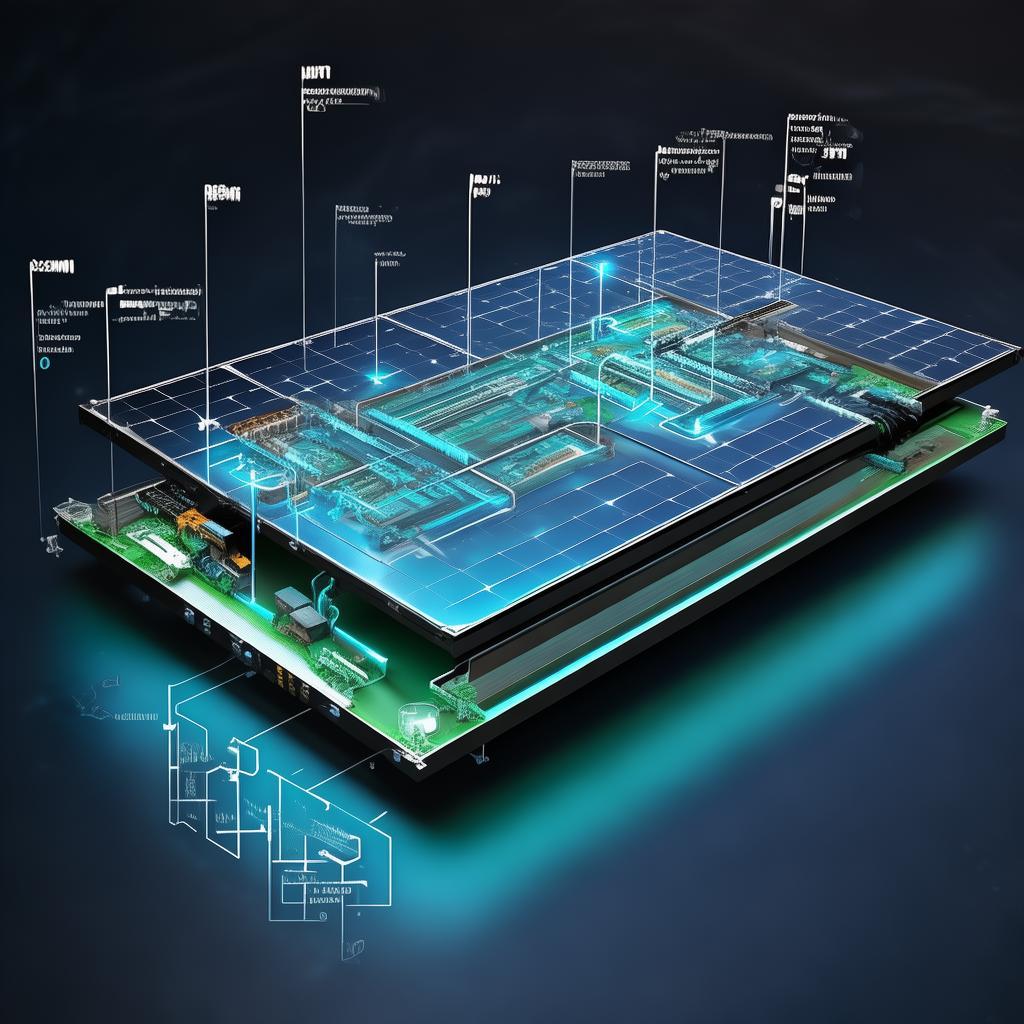
bifacial monocrystalline
Our bifacial monocrystalline solar panels represent the pinnacle of photovoltaic technology, designed to maximize energy yield in diverse environmental conditions. Unlike traditional monofacial
Bifacial Monocrystalline Solar Panels
1. Product Overview
Our bifacial monocrystalline solar panels represent the pinnacle of photovoltaic technology, designed to maximize energy yield in diverse environmental conditions. Unlike traditional monofacial panels, bifacial monocrystalline modules capture sunlight on both the front and rear surfaces, harnessing reflected and diffused light to boost overall performance by up to 30%. Crafted from high-purity N-type monocrystalline silicon cells, these panels deliver superior efficiency rates exceeding 22%, making them an ideal choice for large-scale commercial and utility projects worldwide.
Engineered for durability and reliability, our bifacial monocrystalline solar panels undergo rigorous testing to withstand harsh weather, from high winds to heavy snow loads. With advanced half-cut cell technology and multi-busbar design, they minimize power losses and enhance energy output even under partial shading. As international trade experts, we supply these premium bifacial monocrystalline solutions to importers, distributors, and EPC contractors seeking top-tier performance backed by international certifications such as IEC, UL, and TUV.
Whether you're outfitting ground-mounted solar farms or elevated tracking systems, our bifacial monocrystalline panels offer unmatched bifaciality factors of 70-80%, ensuring higher return on investment through increased kWh production over their 30+ year lifespan. This makes them a strategic asset in the global shift toward sustainable energy.
2. Key Features
- High Bifaciality: Up to 80% rear-side efficiency, capturing albedo-reflected light for substantial energy gains in reflective environments like white gravel or snow-covered terrains.
- Monocrystalline Excellence: Premium N-type cells with efficiencies over 22.5%, providing low degradation rates below 0.4% annually.
- Half-Cut Cell Design: Reduces resistive losses by 75% and improves shade tolerance, optimizing output in real-world installations.
- Multi-Busbar (MBB) Technology: Enhances current collection and lowers hotspot risks, boosting reliability for bifacial monocrystalline performance.
- Anti-PID and Anti-LID: Potential induced degradation and light-induced degradation resistance ensure long-term stability.
- Robust Framing: Anodized aluminum frame with reinforced corners, rated for 5400 Pa snow load and 2400 Pa wind load.
- Self-Cleaning Glass: Dual-glass construction with anti-reflective coating minimizes dust accumulation on both sides.
- Extended Warranty: 30-year linear power warranty guaranteeing at least 84.8% output after 30 years.
3. Technical Specifications
| Parameter | Value |
|---|---|
| Product Series | Bifacial Monocrystalline |
| Power Output (Pmax) | 550W - 600W (customizable) |
| Module Efficiency | 21.5% - 22.8% |
| Bifaciality Factor | 70% - 80% |
| Cell Type | N-type Monocrystalline, 182mm Half-Cut |
| Number of Cells | 144 (6x24) |
| Dimensions (L x W x H) | 2278 x 1134 x 30 mm |
| Weight | 28.5 kg |
| Front Glass | 2.0 mm Tempered Glass with AR Coating |
| Back Glass | 2.0 mm Tempered Glass |
| Frame | Anodized Aluminum Alloy, Black/Silver |
| Junction Box | IP68 Rated, 3 Diodes |
| Cable | 4mm², 1400mm Length (Customizable) |
| Connectors | MC4 Compatible |
| Maximum System Voltage | 1500V DC |
| Operating Temperature | -40°C to +85°C |
| Max Snow Load | 5400 Pa |
| Max Wind Load | 2400 Pa |
| Power Tolerance | 0 ~ +5W |
| Warranty | 12-year Product, 30-year Linear Power |
| Certifications | IEC 61215, IEC 61730, UL 61730, CE, TUV |
Note: Specifications are subject to slight variations based on production batches. Contact us for the latest datasheet tailored to your bifacial monocrystalline requirements.
4. Application Scenarios
Bifacial monocrystalline solar panels excel in a wide array of deployment scenarios, leveraging their dual-sided light absorption for optimal performance. In utility-scale solar farms, they are mounted on elevated trackers or fixed-tilt systems over highly reflective surfaces such as white pebbles or TPO membranes, yielding 20-30% more energy than standard panels.
For commercial rooftops, bifacial monocrystalline modules shine in setups with light-colored roofing materials, where rear-side generation significantly offsets shading from HVAC units or parapets. Ground-mounted installations in snowy regions benefit from their ability to capture reflected light post-melt, ensuring consistent output throughout the year.
These panels are also ideal for agrivoltaics, combining solar energy with agriculture by allowing light penetration to crops below while harvesting upper and lower irradiance. In floating solar projects, bifacial monocrystalline technology captures water-reflected light, enhancing efficiency in space-constrained aquatic environments. Additionally, they perform exceptionally in desert installations with sand-reflective albedo, minimizing soiling losses common in monofacial designs.
5. Advantages
Opting for bifacial monocrystalline solar panels provides distinct advantages over conventional alternatives. The core benefit lies in their bifacial design, which generates power from both sides, resulting in higher specific yield per square meter—critical for land-scarce markets. This translates to lower levelized cost of energy (LCOE), with studies showing up to 15% reductions in projects utilizing bifacial monocrystalline technology.
Monocrystalline cells offer superior temperature coefficients (-0.30%/°C), maintaining output in hot climates better than polycrystalline options. Low degradation rates preserve value over decades, supported by our first-year degradation under 2% and annual rates below 0.4%. Enhanced mechanical strength suits high-wind zones, while PID resistance eliminates performance drops in large arrays.
From an economic standpoint, bifacial monocrystalline panels reduce BOS (balance of system) costs by enabling fewer modules for the same capacity, streamlining logistics and installation. Their versatility across orientations and elevations minimizes micro-optimizations, appealing to international buyers focused on scalability and bankability.
6. Why Choose Us
As a leading manufacturer and exporter of bifacial monocrystalline solar panels, we prioritize quality at every stage—from automated PERC cell production to AI-driven module assembly. Our facilities boast A-grade silicon sourcing and Tier 1 bankability, ensuring every bifacial monocrystalline panel meets or exceeds global standards.
With over a decade in international trade, we offer flexible MOQs, OEM customization, and rapid lead times to 60 countries. Rigorous third-party testing by TÜV Rheinland and UL validates our claims, while our 24/7 technical support empowers partners worldwide. Choose us for bifacial monocrystalline excellence that drives your projects forward with reliability and innovation.
7. FAQ
What is a bifacial monocrystalline solar panel?
A bifacial monocrystalline solar panel uses high-efficiency monocrystalline silicon cells transparent to rear-side light, allowing energy generation from both front and back surfaces for increased total output.
How much extra energy do bifacial monocrystalline panels produce?
Gains vary by installation: 5-10% on standard ground mounts, up to 30% on reflective surfaces or trackers. Real-world bifaciality determines precise uplift.
Are bifacial monocrystalline panels suitable for all roof types?
Yes, but optimal on light-colored or reflective roofs. For dark surfaces, ground or tracker mounts maximize bifacial monocrystalline benefits.
What maintenance do bifacial monocrystalline panels require?
Minimal: self-cleaning glass reduces washing needs. Annual inspections for framing and cabling suffice, with dual-glass preventing microcracks.
Do you offer customization for bifacial monocrystalline products?
Absolutely. Power ratings, dimensions, framing colors, and cabling lengths can be tailored to project specs without compromising quality.
What warranties apply to your bifacial monocrystalline solar panels?
12 years on product materials/workmanship, 30 years linear power output (to 84.8% at year 30), backed by insurance for global peace of mind.
Are your bifacial monocrystalline panels certified for international markets?
Yes, compliant with IEC 61215/61730, UL, CE, INMETRO, and more, facilitating seamless customs clearance and system integration worldwide.
Related product
- English
- Françai
- Español
- Deutsch
- Română
- العربية
- 한국어
- 日本語
- Italiano
- Português
- Gaeilge
- Dansk
- Čeština
- Русский
- Afrikaans
- Euskara
- Català
- Esperanto
- हिन्दी
- Ελληνικά
- Bahasa Melayu
- Polski
- Српски
- Kiswahili
- ภาษาไทย
- Tiếng Việt
- Türkçe
- Svenska
- Cymraeg
- Slovenčina
- Latviešu
- Malti
- Magyar
- Galego
- ગુજરાતી
- Eesti Keel
- বাংলা
- Shqip
- беларуская мова
- Nederlands
- Tagalog
- ქართული
- Íslenska
- Kreyòl Ayisyen
- Lietuvių
- Norsk
- slovenščina
- தமிழ்
- Українська
- ײִדיש
- اردو
- తెలుగు
- فارسی
- македонски
- ಕನ್ನಡ
- Bahasa Indonesia
- עברית
- Suomi
- Hrvatski
- Български
- Azerbaijani