

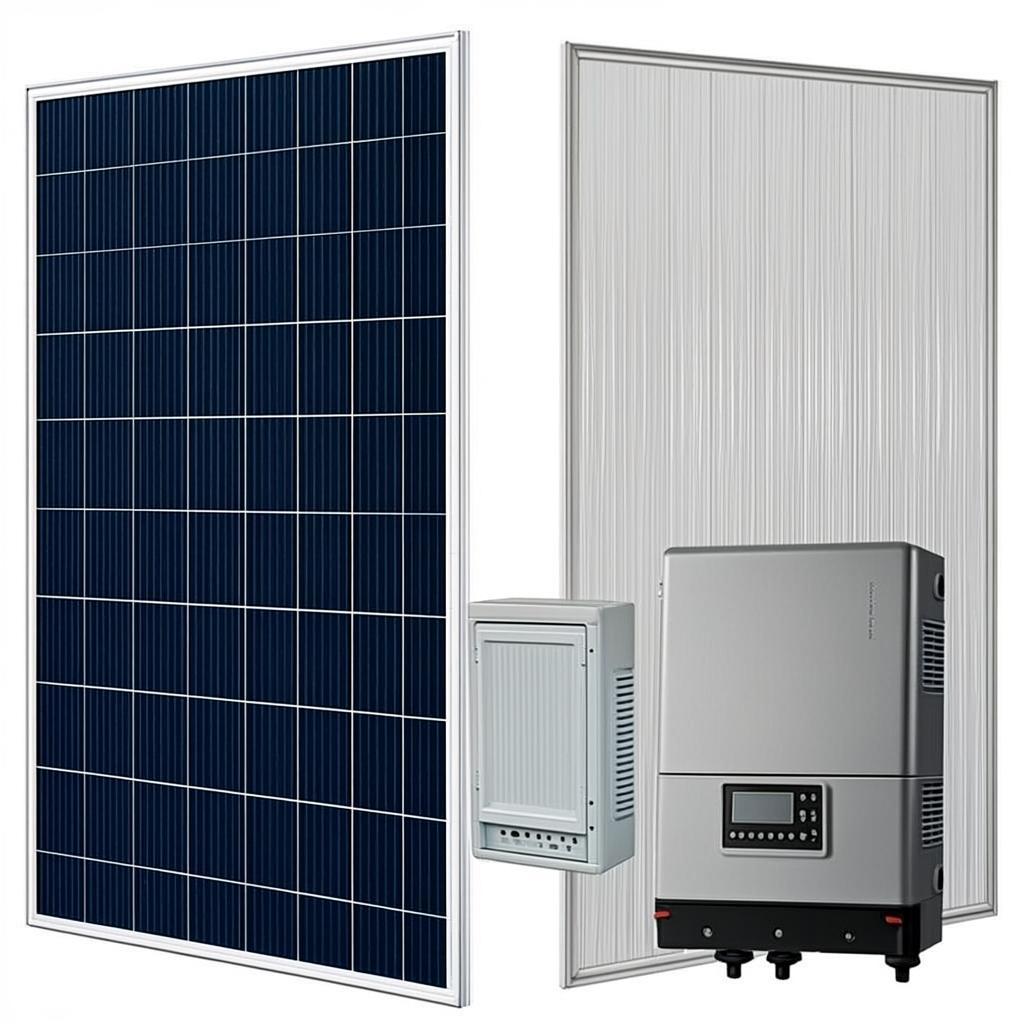
bifacial mono solar panel
Our bifacial mono solar panel represents the pinnacle of photovoltaic technology, designed to maximize energy yield in diverse environmental conditions. Unlike traditional monofacial panels, this
Bifacial Mono Solar Panel - High-Efficiency Dual-Side Power Generation
Product Overview
Our bifacial mono solar panel represents the pinnacle of photovoltaic technology, designed to maximize energy yield in diverse environmental conditions. Unlike traditional monofacial panels, this bifacial mono solar panel captures sunlight from both the front and rear surfaces, boosting overall power output by up to 30% depending on installation and albedo. Engineered with premium N-type monocrystalline cells, it delivers exceptional efficiency rates exceeding 22%, making it an ideal choice for large-scale solar projects, commercial installations, and utility-grade power plants.
Each bifacial mono solar panel is meticulously manufactured using advanced passivation emitter rear cell (PERC) technology combined with bifacial architecture, ensuring superior performance in high-temperature environments and partial shading scenarios. With a robust anodized aluminum frame and high-transmission glass on both sides, these panels withstand harsh weather, from coastal salt mist to desert sands. Available in power ratings from 540W to 600W, our bifacial mono solar panels are certified to international standards including IEC 61215, IEC 61730, and UL 61730, guaranteeing reliability and safety for global deployments.
In the evolving landscape of renewable energy, investing in a bifacial mono solar panel means future-proofing your energy infrastructure. These panels not only offer higher energy production per square meter but also extend project lifespans through reduced degradation rates—less than 0.4% annually. Whether you're optimizing ground-mounted arrays or exploring agrivoltaic applications, our bifacial mono solar panels provide a competitive edge in levelized cost of energy (LCOE).
Key Features
- Bifacial Design: Generates power from both sides, leveraging reflected light for additional yield up to 25-30% in optimal conditions.
- Monocrystalline N-Type Cells: High-efficiency cells with lower LID/LETID effects, ensuring long-term stability and minimal light-induced degradation.
- Anti-PID Technology: Prevents potential induced degradation, maintaining peak performance over 30 years.
- Double Glass Construction: Enhanced durability with 2.0mm tempered glass on front and back, offering superior resistance to hail, wind, and micro-cracks.
- Optimized Frame: Silver-anodized aluminum alloy frame with drainage holes, supporting up to 5400Pa snow load and 2400Pa wind load.
- Low-Light Performance: Excellent output even during dawn, dusk, or cloudy days, ideal for regions with variable irradiance.
- Multi-Busbar (MBB) Technology: Reduces resistive losses and improves energy capture across the bifacial mono solar panel surface.
- Pre-Assembled Junction Box: IP68-rated with bypass diodes, simplifying installation and enhancing safety.
Technical Specifications
| Parameter | Value |
|---|---|
| Model | Bifacial Mono Solar Panel BSM550-72HD |
| Peak Power (Pmax) | 550W (front side) / Up to 700W (bifacial gain included) |
| Module Efficiency | 21.5% (front) / Bifaciality > 70% |
| Cell Type | N-Type Monocrystalline, 182mm half-cut |
| Number of Cells | 144 (2 x 72) |
| Dimensions (L x W x H) | 2278 x 1134 x 30mm |
| Weight | 27.3 kg |
| Front Glass | 2.0mm tempered glass with AR coating |
| Back Glass | 2.0mm tempered glass |
| Frame | Anodized silver aluminum alloy |
| Junction Box | IP68, 3 diodes |
| Cable | 4.0mm², 300mm length (customizable) |
| Connectors | MC4 compatible |
| Maximum System Voltage | 1500V DC |
| Temperature Coefficient (Pmax) | -0.34%/°C |
| Operating Temperature | -40°C to +85°C |
| Maximum Load | 5400Pa (snow) / 2400Pa (wind) |
| Warranty | 12 years product / 30 years linear power output |
| Certifications | IEC 61215, IEC 61730, UL 61730, CE, INMETRO |
Note: Specifications are STC (Standard Test Conditions: 1000W/m² irradiance, 25°C cell temperature, AM 1.5 spectrum). Bifacial gain varies by installation height, ground reflectivity, and tilt angle.
Application Scenarios
Bifacial mono solar panels excel in a wide array of deployment scenarios where maximizing energy harvest is paramount. In large-scale utility solar farms, their ability to utilize rear-side irradiance from ground reflection makes them perfect for flat or elevated mounting systems, significantly reducing balance-of-system costs per watt.
For commercial and industrial rooftops, bifacial mono solar panels offer elevated installations that capture reflected light from light-colored surfaces like concrete or white membranes, ideal for warehouses, factories, and office buildings seeking to offset high energy demands.
Agrivoltaic projects benefit immensely, as these panels allow shade-tolerant crops to grow beneath while harvesting diffuse light from above and below. Snow-covered regions see amplified gains during winter months due to high albedo from snow reflection.
Additionally, bifacial mono solar panels are suited for floating solar installations, where water reflection boosts yields, and roadside or parking canopy systems, enhancing urban energy production without compromising land use.
Advantages
Opting for our bifacial mono solar panel unlocks several competitive advantages over conventional solar solutions. The dual-sided energy capture inherently increases annual energy production (AEP) by 10-30%, translating to shorter payback periods and higher internal rates of return (IRR) for investors.
With N-type cells, these panels exhibit superior resistance to degradation mechanisms like PID and LID, boasting first-year degradation under 1% and annual rates below 0.4%, far surpassing many p-type alternatives. This longevity minimizes O&M costs and ensures predictable revenue streams under power purchase agreements (PPAs).
Mechanically robust, the double-glass design and reinforced frame provide unmatched durability, certified for extreme conditions including salt mist corrosion (IEC 61701) and ammonia exposure (IEC 62716), perfect for agrivoltaics near livestock or coastal farms.
From an economic standpoint, bifacial mono solar panels lower the LCOE through higher specific yields, enabling developers to achieve grid parity faster. Their versatility in tracker systems further amplifies performance, with studies showing up to 15% gains in single-axis tracking configurations.
Why Choose Us
As a leading manufacturer of bifacial mono solar panels, we prioritize quality at every stage—from automated cell stringing to electroluminescence (EL) testing. Our state-of-the-art production lines adhere to Six Sigma standards, ensuring batch-to-batch consistency and defect rates below 0.1%.
We offer full customization options, including power ratings, dimensions, and connector types, tailored to your project's specifics. Backed by Tier 1 bankability, our panels are qualified by major EPC firms and integrated into EPC portfolios worldwide.
Global supply chain reliability, with automated warehousing and logistics partners, guarantees on-time delivery to over 80 countries. Comprehensive technical support, including PID simulations and yield modeling, empowers your team from design to commissioning.
FAQ
What is a bifacial mono solar panel?
A bifacial mono solar panel uses monocrystalline silicon cells transparent to rear-side light, allowing energy generation from both front and back surfaces for enhanced output.
How much extra power does the bifacial side contribute?
Typically 10-30%, influenced by ground albedo (e.g., 20% for grass, 80% for snow), mounting height (optimal 0.5-1m), and tilt angle.
Are bifacial mono solar panels compatible with existing inverters and trackers?
Yes, they integrate seamlessly with standard string inverters and single/dual-axis trackers, often outperforming monofacial panels in these setups.
What maintenance do bifacial mono solar panels require?
Minimal; periodic cleaning of both sides and frame drainage checks suffice, thanks to self-cleaning glass and hydrophobic coatings.
Do they perform well in shaded or low-light conditions?
Exceptionally, due to half-cut cells and MBB design, reducing shading losses by up to 50% compared to full-cell modules.
What warranties are provided?
12 years on product workmanship, 30 years on linear power output (guaranteed 84.8% at year 30), with optional extended coverage.
Can bifacial mono solar panels be used in rooftop installations?
Yes, especially tilted or racked systems over reflective surfaces; however, ground-mount yields more bifacial gain.
Related product
- English
- Françai
- Español
- Deutsch
- Română
- العربية
- 한국어
- 日本語
- Italiano
- Português
- Gaeilge
- Dansk
- Čeština
- Русский
- Afrikaans
- Euskara
- Català
- Esperanto
- हिन्दी
- Ελληνικά
- Bahasa Melayu
- Polski
- Српски
- Kiswahili
- ภาษาไทย
- Tiếng Việt
- Türkçe
- Svenska
- Cymraeg
- Slovenčina
- Latviešu
- Malti
- Magyar
- Galego
- ગુજરાતી
- Eesti Keel
- বাংলা
- Shqip
- беларуская мова
- Nederlands
- Tagalog
- ქართული
- Íslenska
- Kreyòl Ayisyen
- Lietuvių
- Norsk
- slovenščina
- தமிழ்
- Українська
- ײִדיש
- اردو
- తెలుగు
- فارسی
- македонски
- ಕನ್ನಡ
- Bahasa Indonesia
- עברית
- Suomi
- Hrvatski
- Български
- Azerbaijani