

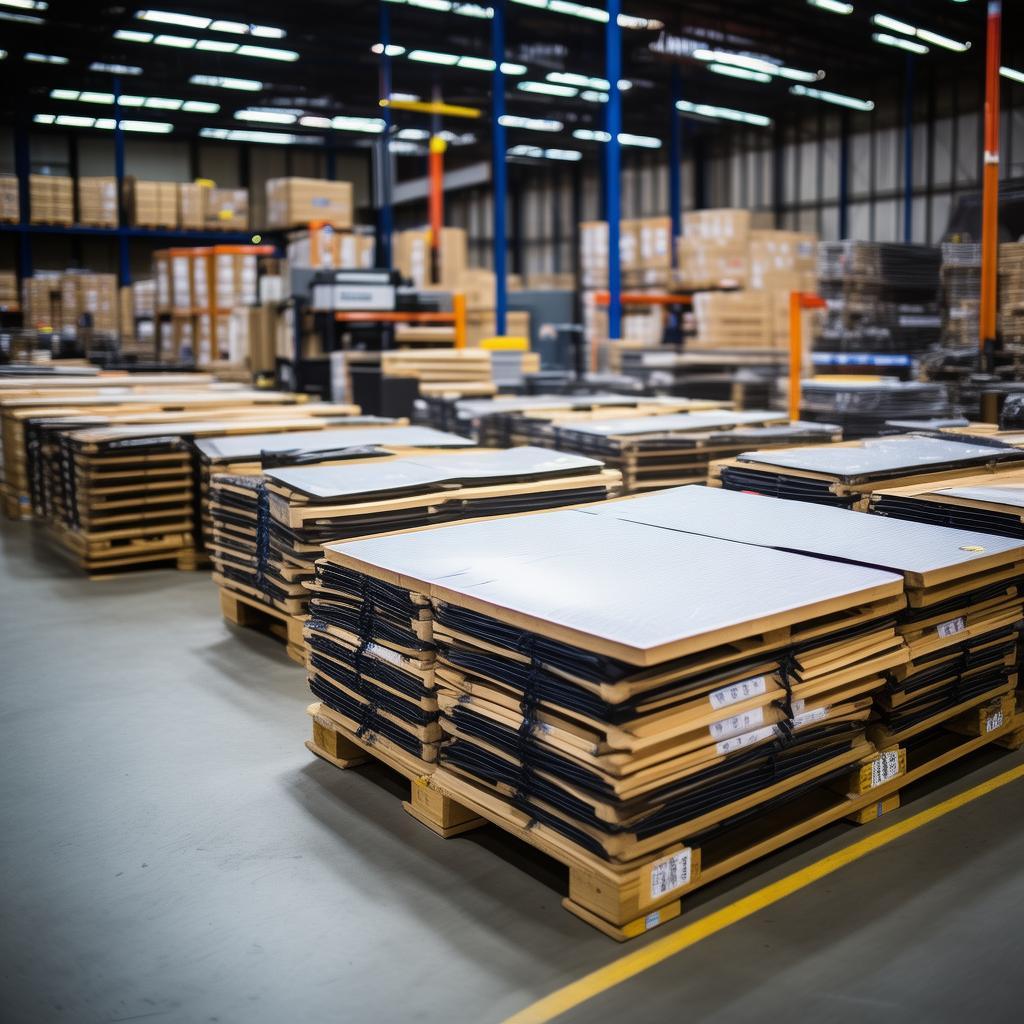
bifacial mono perc
Discover the pinnacle of solar energy innovation with our bifacial mono PERC solar panels, engineered for superior performance in diverse environmental conditions. These advanced photovoltaic modules
Bifacial Mono PERC Solar Panels
Product Overview
Discover the pinnacle of solar energy innovation with our bifacial mono PERC solar panels, engineered for superior performance in diverse environmental conditions. These advanced photovoltaic modules utilize Passivated Emitter and Rear Cell (PERC) technology combined with monocrystalline silicon cells, enabling them to capture sunlight from both the front and rear surfaces. This bifacial design significantly boosts energy yield, making our bifacial mono PERC panels an ideal choice for commercial and utility-scale installations worldwide.
Our bifacial mono PERC modules achieve exceptional power outputs, typically ranging from 540W to 600W per panel, with module efficiencies exceeding 21%. The PERC passivation layer minimizes electron recombination at the rear, enhancing overall electrical performance while the bifacial structure allows for additional generation from reflected albedo light—up to 30% more energy in optimal setups. Built with high-transmission glass on both sides and robust aluminum frames, these panels withstand harsh weather, from high winds to heavy snow loads, ensuring long-term reliability.
In the competitive landscape of international solar trade, our bifacial mono PERC solar panels stand out for their balance of high efficiency, durability, and cost-effectiveness. They comply with international standards such as IEC 61215 and IEC 61730, and are certified for PID resistance, salt mist corrosion, and ammonia resistance—perfect for agrivoltaic, floating solar, and ground-mounted systems. Whether you're sourcing for large-scale solar farms or distributed generation projects, these bifacial mono PERC panels deliver unmatched return on investment through elevated bifaciality factors of 70-80%.
Key Features
- Half-Cut Cell Technology: Reduces shading losses and hotspots, improving reliability and output under partial shading conditions common in bifacial mono PERC deployments.
- Bifacial Design: Dual-glass construction captures diffuse and reflected light, boosting energy production by 10-30% compared to traditional monofacial panels.
- Advanced PERC Cells: Monocrystalline cells with PERC passivation deliver high efficiency (up to 22.5% cell efficiency) and low temperature coefficients for consistent performance in hot climates.
- Multi-Busbar (MBB) Configuration: Optimizes current collection, lowers resistive losses, and enhances durability against microcracks.
- Low-Light Performance: Superior output in dawn, dusk, and cloudy conditions, maximizing annual energy harvest for bifacial mono PERC systems.
- Robust Encapsulation: UV-resistant POE encapsulant and tempered glass ensure a 30-year linear power warranty with minimal degradation (less than 0.55% annually).
- Easy Installation: Lightweight design with pre-drilled frames and compatible mounting systems for rapid deployment in global projects.
Technical Specifications
| Parameter | Value |
|---|---|
| Module Type | Bifacial Mono PERC |
| Maximum Power (Pmax) - Front Side | 550-600W |
| Bifaciality Factor | 70-80% |
| Module Efficiency (Front Side) | 21.3-21.8% |
| Dimensions (L x W x H) | 2278 x 1134 x 30mm |
| Weight | 27.5-28.5 kg |
| Cell Type | Monocrystalline PERC, 182mm half-cut, 144 cells |
| Front Glass | 2.0mm tempered glass with AR coating |
| Rear Glass | 2.0mm tempered glass |
| Frame | Anodized aluminum alloy, silver |
| Junction Box | IP68 rated, 3 diodes |
| Cable | 4.0mm², 300mm length (customizable) |
| Operating Temperature | -40°C to +85°C |
| Maximum System Voltage | 1500V DC |
| Wind Load | 2400 Pa |
| Snow Load | 5400 Pa |
| Warranty | 12-year product, 30-year linear power output |
| Certifications | IEC 61215, IEC 61730, UL 61730, CE, INMETRO |
Note: Specifications subject to minor variations based on production batches. Contact for detailed datasheets on bifacial mono PERC customization options.
Application Scenarios
Bifacial mono PERC solar panels excel in a wide array of deployment scenarios, leveraging their ability to harvest light from both sides for maximized energy production. In large-scale utility solar farms, elevated mounting structures allow ground-reflected light to reach the rear side, increasing yields by 15-25% on white gravel or high-albedo surfaces. For commercial rooftops with reflective membranes, these panels deliver superior performance without additional infrastructure costs.
Agrivoltaic applications benefit immensely from bifacial mono PERC technology, where panels are mounted higher to permit crop growth underneath while capturing diffuse light from vegetation and soil. Floating solar installations on reservoirs utilize the water's high reflectivity (albedo up to 10%), making bifacial mono PERC panels a top choice for space-constrained regions like Southeast Asia and Europe.
In snowy or desert environments, the rear-side generation from reflected light ensures consistent output. Bifacial mono PERC modules are also ideal for carports, canopies, and tracking systems, where dynamic orientation optimizes bifacial gains. Their versatility supports hybrid projects integrating battery storage or EV charging, aligning with global trends in sustainable energy infrastructure.
Advantages
Opting for bifacial mono PERC solar panels provides distinct advantages over conventional monofacial alternatives. The core benefit lies in elevated energy density: bifacial modules generate 10-30% more kWh per square meter, shortening payback periods and improving levelized cost of energy (LCOE) in international projects. This is particularly valuable in land-scarce markets where maximizing output per footprint is critical.
Durability is unmatched, with dual-glass lamination offering superior resistance to PID, LID, and mechanical stress—resulting in degradation rates below 0.4% per year after the first year. The PERC cell architecture ensures low light-induced degradation (LID <2% in first year), while multi-busbar design mitigates risks from micro-cracks during transportation and installation.
Economically, bifacial mono PERC panels reduce balance-of-system (BOS) costs through higher power ratings per panel, fewer mounts, and optimized string designs. Environmentally, their extended lifespan and recyclability support ESG goals for B2B buyers. In performance testing, these panels consistently outperform in real-world conditions, with bifacial gains verified by third-party simulations like PVSyst.
Why Choose Us
As a leading supplier in the international solar trade, we specialize in premium bifacial mono PERC solar panels backed by state-of-the-art manufacturing facilities adhering to Tier 1 standards. Our panels undergo rigorous automated testing, including electroluminescence (EL) inspection for zero defect tolerance. With automated production lines ensuring batch consistency, we deliver scalable volumes for projects from 1MW to gigawatt-scale.
We prioritize supply chain transparency, sourcing from vetted monocrystalline silicon producers to mitigate risks in global markets. Comprehensive quality assurance includes salt spray, fire rating, and mechanical load testing beyond IEC requirements. Our bifacial mono PERC portfolio is customizable—tailored cell sizes, power bins, and connectors to fit your engineering needs.
Trusted by EPC firms across Europe, Asia, and the Americas, we offer competitive lead times, flexible financing, and technical support from design to commissioning. Choose us for reliability that powers your success in the bifacial mono PERC era.
FAQ
What is the bifacial gain of these mono PERC panels?
Bifacial gain typically ranges from 10-30%, depending on installation height, surface albedo, and tilt angle. Simulations recommend 1-1.5m ground clearance on reflective surfaces for optimal results.
Are bifacial mono PERC panels suitable for all climates?
Yes, their low temperature coefficient (-0.34%/°C for Pmax) and robust construction make them ideal for hot deserts, cold winters, and humid coastal areas.
What warranties are provided?
12 years on product workmanship and 30 years on linear power output, guaranteeing at least 84.8% performance at year 30.
Can these panels be used in tracking systems?
Absolutely. Bifacial mono PERC excels in single- or dual-axis trackers, where rear-side exposure is maximized for up to 35% additional yield.
How do bifacial mono PERC panels compare to TOPCon or HJT?
While TOPCon/HJT offer marginal efficiency edges, bifacial mono PERC provides proven bankability, lower upfront costs, and immediate availability for large deployments.
Are customization options available?
Yes, including power output tuning, cable lengths, junction box positions, and frame colors to meet specific project requirements.
Related product
- English
- Françai
- Español
- Deutsch
- Română
- العربية
- 한국어
- 日本語
- Italiano
- Português
- Gaeilge
- Dansk
- Čeština
- Русский
- Afrikaans
- Euskara
- Català
- Esperanto
- हिन्दी
- Ελληνικά
- Bahasa Melayu
- Polski
- Српски
- Kiswahili
- ภาษาไทย
- Tiếng Việt
- Türkçe
- Svenska
- Cymraeg
- Slovenčina
- Latviešu
- Malti
- Magyar
- Galego
- ગુજરાતી
- Eesti Keel
- বাংলা
- Shqip
- беларуская мова
- Nederlands
- Tagalog
- ქართული
- Íslenska
- Kreyòl Ayisyen
- Lietuvių
- Norsk
- slovenščina
- தமிழ்
- Українська
- ײִדיש
- اردو
- తెలుగు
- فارسی
- македонски
- ಕನ್ನಡ
- Bahasa Indonesia
- עברית
- Suomi
- Hrvatski
- Български
- Azerbaijani