

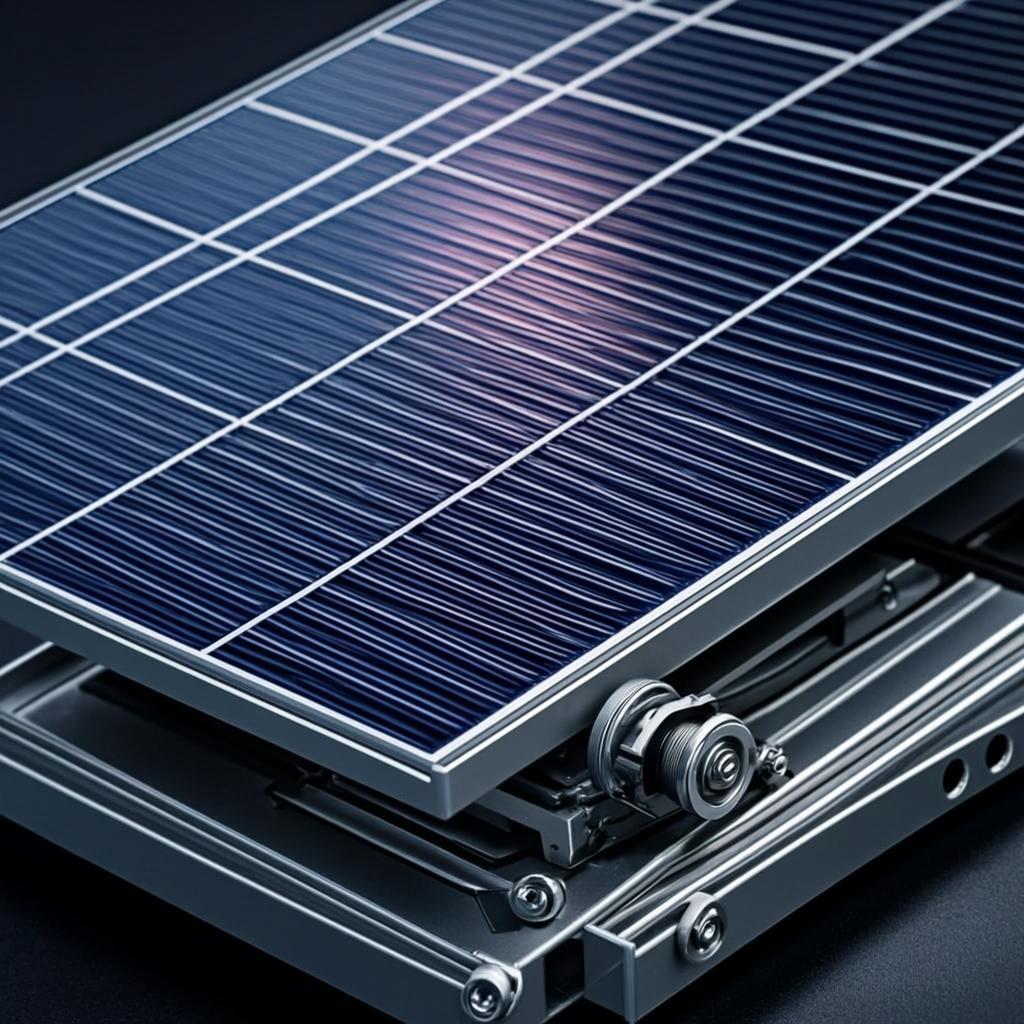
bifacial module
Our bifacial module represents the pinnacle of photovoltaic innovation, designed to maximize energy yield by harnessing sunlight from both the front and rear surfaces. Unlike traditional monofacial
Bifacial Module
1. Product Overview
Our bifacial module represents the pinnacle of photovoltaic innovation, designed to maximize energy yield by harnessing sunlight from both the front and rear surfaces. Unlike traditional monofacial panels, this advanced bifacial module captures reflected and diffused light from the ground, surrounding surfaces, and even the atmosphere, delivering up to 30% higher energy production in optimal conditions. Engineered for international markets, our bifacial modules are ideal for utility-scale solar farms, commercial rooftops, and ground-mounted installations where albedo enhancement can significantly boost performance.
Built with high-transparency glass on both sides and premium N-type TOPCon cells, the bifacial module ensures superior bifaciality ratios exceeding 70%, translating to real-world gains in diverse environments—from snowy landscapes to reflective deserts. Certified to international standards including IEC 61215, IEC 61730, and UL 61730, these modules offer unmatched reliability and a 30-year linear power warranty, guaranteeing at least 84.8% output after three decades. As a trusted supplier in the global solar trade, we deliver bifacial modules that empower B2B partners to meet aggressive renewable energy targets with proven efficiency and durability.
2. Key Features
- High Bifaciality: Bifaciality factor of 70-80%, enabling substantial rear-side power generation for enhanced overall yield.
- Advanced Cell Technology: Utilizes N-type TOPCon cells with efficiency up to 23.5%, minimizing degradation and light-induced degradation (LID) to less than 1% in the first year.
- Dual-Glass Design: Tempered glass on both sides provides exceptional resistance to PID (Potential Induced Degradation), microcracks, and environmental stressors like hail and wind.
- Optimized Frame: Anodized aluminum frame with enhanced corrosion resistance, supporting installation angles from 0° to 60° for maximum bifacial gain.
- Smart Junction Box: IP68-rated with bypass diodes and optional monitoring capabilities for real-time performance tracking.
- Versatile Mounting: Compatible with trackers, fixed-tilt systems, and vertical installations, making the bifacial module suitable for agrivoltaics and building-integrated photovoltaics (BIPV).
3. Technical Specifications
| Parameter | Value | Unit |
|---|---|---|
| Module Type | Bifacial TOPCon Glass-Glass | - |
| Nominal Power (Front Side) | 600-700 | Wp |
| Power Tolerance | 0 / +3 | % |
| Module Efficiency (Front Side) | 22.5 - 23.5 | % |
| Bifaciality | ≥70 | % |
| Maximum Rear-Side Gain | Up to 30 | % |
| Cell Type | N-type TOPCon, 182mm | - |
| Number of Cells | 132 (6x22) | pcs |
| Dimensions (L x W x H) | 2382 x 1134 x 30 | mm |
| Weight | 33.5 | kg |
| Front Glass | 2.0mm Tempered Glass, AR Coated | - |
| Back Glass | 2.0mm Tempered Glass, High Transparency | - |
| Frame | Anodized Aluminum Alloy, Silver | - |
| Junction Box | IP68, 3 Diodes | - |
| Cable | 4.0mm², 1400mm (Customizable) | - |
| Connector | MC4 Compatible | - |
| Maximum System Voltage | 1500 | VDC |
| Operating Temperature | -40 to +85 | °C |
| Wind Load | 2400 | Pa |
| Snow Load | 5400 | Pa |
| Hail Test | 35mm @ 90km/h | - |
| Warranty | 12 years Product, 30 years Linear Power | - |
Note: Specifications are subject to slight variations based on production batches. Detailed STC (Standard Test Conditions: 1000W/m², 25°C, AM 1.5) data available upon request.
4. Application Scenarios
Utility-Scale Solar Farms
The bifacial module excels in large-scale ground-mounted arrays, where high albedo surfaces like white gravel or sand amplify rear-side generation. Deployed on single-axis trackers, it achieves energy yields 15-25% above monofacial counterparts, optimizing LCOE for developers targeting GW-scale projects.
Commercial and Industrial Rooftops
For flat or reflective rooftops, the bifacial module captures bounce-back light from TPO membranes or metal surfaces, ideal for warehouses, factories, and distribution centers. Its low weight and PID resistance ensure seamless integration without structural reinforcements.
Agrivoltaics and Vertical Installations
In dual-use agricultural settings, bifacial modules mounted vertically or at low tilts allow shade-tolerant crops beneath while generating power from both direct sunlight and ground reflection. Perfect for greenhouses, orchards, and noise-barrier applications along highways.
Harsh Environments
From desert dunes to alpine snowfields, the robust dual-glass bifacial module withstands extreme conditions, with self-cleaning properties reducing maintenance costs in dusty or polluted regions.
5. Advantages
Choosing our bifacial module provides distinct competitive edges in the solar market. First, its superior bifacial performance delivers measurable ROI improvements—independent studies show 10-30% higher specific yields depending on ground cover. The N-type cell architecture eliminates boron-oxygen degradation (BoID), ensuring annual degradation rates below 0.4% after the first year, far surpassing PERC modules.
Durability is paramount: the glass-glass encapsulation offers mechanical load capacity exceeding industry norms, with ammonia and salt mist certifications for agrivoltaic and coastal deployments. Lower temperature coefficients (-0.30%/°C) maintain output in hot climates, while half-cut cell design minimizes shading losses and hotspots.
Economically, the bifacial module reduces BOS (Balance of System) costs through higher power density, fewer foundations, and tracker compatibility. Environmentally, its extended lifespan and recyclable materials align with ESG goals, supporting sustainable procurement mandates worldwide.
6. Why Choose Us
As a leading manufacturer in the international solar trade, we specialize in premium bifacial modules backed by state-of-the-art automated production lines adhering to ISO 9001 and ISO 14001 standards. Our vertically integrated supply chain—from silicon ingots to final assembly—ensures consistent quality and competitive pricing for bulk orders.
We offer tailored solutions, including custom dimensions, frameless options, and rapid prototyping for OEM partners. Global logistics networks facilitate seamless delivery to Europe, Americas, Asia-Pacific, and beyond, with full documentation for customs clearance. Rigorous third-party testing by TÜV, UL, and PVEL confirms bankability, while our dedicated R&D team continuously innovates to stay ahead of market demands. Partner with us for bifacial modules that drive your projects to peak performance.
7. FAQ
What is a bifacial module?
A bifacial module is a solar panel that generates electricity from both front and back sides, leveraging reflected light for increased energy output compared to standard panels.
How much additional power can a bifacial module generate?
Rear-side gains typically range from 5-30%, influenced by installation height, albedo (reflectivity), and tilt angle. Simulations via PVsyst or SAM tools provide site-specific projections.
Is the bifacial module suitable for all installation types?
Yes, it performs optimally on ground mounts and trackers but also excels on reflective rooftops. Minimum rear-side clearance of 50cm is recommended for maximum gains.
What warranties are provided?
12-year product workmanship warranty and 30-year linear power output warranty, with first-year degradation <1% and annual <0.4% thereafter.
Are bifacial modules cost-effective?
Absolutely—the higher upfront efficiency lowers LCOE over the lifecycle, especially in high-irradiance regions or with albedo optimization.
Do you offer certifications for international markets?
Yes, including IEC, UL, CE, INMETRO, and others. Full compliance reports available for due diligence.
Related product
- English
- Françai
- Español
- Deutsch
- Română
- العربية
- 한국어
- 日本語
- Italiano
- Português
- Gaeilge
- Dansk
- Čeština
- Русский
- Afrikaans
- Euskara
- Català
- Esperanto
- हिन्दी
- Ελληνικά
- Bahasa Melayu
- Polski
- Српски
- Kiswahili
- ภาษาไทย
- Tiếng Việt
- Türkçe
- Svenska
- Cymraeg
- Slovenčina
- Latviešu
- Malti
- Magyar
- Galego
- ગુજરાતી
- Eesti Keel
- বাংলা
- Shqip
- беларуская мова
- Nederlands
- Tagalog
- ქართული
- Íslenska
- Kreyòl Ayisyen
- Lietuvių
- Norsk
- slovenščina
- தமிழ்
- Українська
- ײִדיש
- اردو
- తెలుగు
- فارسی
- македонски
- ಕನ್ನಡ
- Bahasa Indonesia
- עברית
- Suomi
- Hrvatski
- Български
- Azerbaijani