

bi facial
Our bi facial solar panels represent the pinnacle of photovoltaic innovation, designed to capture sunlight from both the front and rear sides for unprecedented energy production. Unlike traditional
Premium Bi Facial Solar Panels for Maximum Energy Yield
1. Product Overview
Our bi facial solar panels represent the pinnacle of photovoltaic innovation, designed to capture sunlight from both the front and rear sides for unprecedented energy production. Unlike traditional mono-facial panels, bi facial technology harnesses reflected and diffused light, boosting overall efficiency by up to 30% in optimal conditions. Engineered for international trade and large-scale deployments, these bi facial modules are ideal for commercial, industrial, and utility-scale projects worldwide.
Each bi facial panel is meticulously crafted using high-quality N-type TOPCon cells, ensuring superior performance in diverse climates—from scorching deserts to snowy highlands. With a robust bifaciality factor exceeding 70%, our bi facial solar panels deliver reliable power generation even on non-optimal surfaces like white gravel or snow-covered ground. Backed by rigorous testing to international standards such as IEC 61215 and IEC 61730, these panels offer a 30-year linear power warranty, guaranteeing at least 84.95% output after three decades.
Whether you're outfitting a rooftop array, ground-mounted farm, or floating solar system, our bi facial solutions provide a future-proof investment in renewable energy. By integrating advanced glass-glass encapsulation and anti-PID technology, these bi facial panels minimize degradation and maximize ROI for B2B buyers seeking sustainable energy infrastructure.
2. Key Features
- High Bifaciality: Greater than 70% bifaciality ratio enables significant rear-side power gain, optimizing energy harvest in various installations.
- Advanced TOPCon Cells: N-type tunnel oxide passivated contact cells deliver efficiencies up to 22.5%, with low LID and LeTID for long-term stability.
- Glass-Glass Construction: Dual tempered glass design enhances durability, UV resistance, and microcrack tolerance, ideal for harsh environments.
- Anti-PID and Anti-Snail Trail: Proprietary coatings prevent potential induced degradation and discoloration, ensuring consistent bi facial performance.
- Low Temperature Coefficient: Superior thermal performance with a Pmax coefficient of -0.30%/°C, maintaining output in high-heat scenarios.
- Optimized Frame and Junction Box: Anodized aluminum frame with drainage holes and IP68-rated junction box for corrosion resistance and easy installation.
- Certifications: UL, CE, TUV, and INMETRO certified, compliant with global safety and performance standards for seamless international deployment.
3. Technical Specifications
| Parameter | Specification |
|---|---|
| Model Series | Bi Facial TOPCon 72H (Bifacial) |
| Maximum Power (Pmax) - Front Side | 580-600W |
| Maximum Power (Pmax) - Bifacial Gain | Up to 30% additional yield |
| Module Efficiency (Front Side) | 22.0% - 22.7% |
| Bifaciality | ≥70% |
| Cell Type | N-type TOPCon, 182mm x 182mm (72 cells) |
| Dimensions (L x W x H) | 2278 x 1134 x 30mm |
| Weight | 31.8kg |
| Front Glass | 2.0mm tempered glass with AR coating |
| Back Glass | 2.0mm tempered glass |
| Frame | Anodized silver aluminum alloy |
| Junction Box | IP68 rated, 3 diodes |
| Cable | 4.0mm², 1400mm length (customizable) |
| Operating Temperature | -40°C to +85°C |
| Maximum System Voltage | 1500V DC |
| Wind Load / Snow Load | 2400Pa / 5400Pa |
| Warranty | 15-year product, 30-year linear power |
| Packaging | 36 pieces per pallet, 864 pieces per 40HQ |
4. Application Scenarios
Bi facial solar panels excel in a wide array of deployment scenarios, leveraging their dual-sided light absorption for enhanced performance. In ground-mounted solar farms, the elevated structure allows albedo reflection from light-colored soils or covers, yielding 10-25% more energy compared to mono-facial alternatives. For commercial rooftops, bi facial modules mounted vertically or on white membranes capture diffuse light effectively, ideal for urban environments with shading challenges.
In agrivoltaics, bi facial panels are installed above crops, permitting sunlight penetration to the ground while generating power from both sides—perfect for dual land-use in agricultural regions. Floating solar systems benefit immensely, as water reflection boosts rear-side generation by up to 30%. Additionally, bi facial technology shines in desert installations, where reflective sand enhances output, and snow-prone areas, reflecting off white surfaces for winter reliability.
Our bi facial panels are also suited for carports and canopies, providing shade and power simultaneously, and building-integrated photovoltaics (BIPV) in facades, where vertical orientation maximizes bifacial gains. These versatile applications make bi facial solar panels a cornerstone for global renewable projects aiming for higher capacity factors and reduced LCOE.
5. Advantages
Opting for our bi facial solar panels unlocks multiple competitive edges in the photovoltaic market. The core advantage lies in superior energy yield: bifacial capture translates to 5-30% more kWh per installed kW, directly lowering the levelized cost of electricity (LCOE) and accelerating payback periods. This is particularly pronounced in high-albedo environments, where rear-side contributions can exceed 20% of total output.
Durability is paramount; glass-glass lamination resists moisture ingress, hail impacts up to 25mm, and ammonia corrosion, extending lifespan beyond 30 years. Low degradation rates—under 0.4% annually—ensure sustained performance, backed by bankable warranties. From an economic standpoint, bi facial panels reduce BOS costs through higher power density, fewer modules needed, and simplified tracking systems.
Environmentally, bi facial technology minimizes land use intensity, supporting sustainable development goals. Our panels' recyclable materials and lead-free design align with ESG criteria for institutional investors. In summary, the advantages of bi facial solar panels—higher yields, robustness, and cost-efficiency—position them as the smart choice for forward-thinking B2B energy procurers.
6. Why Choose Us
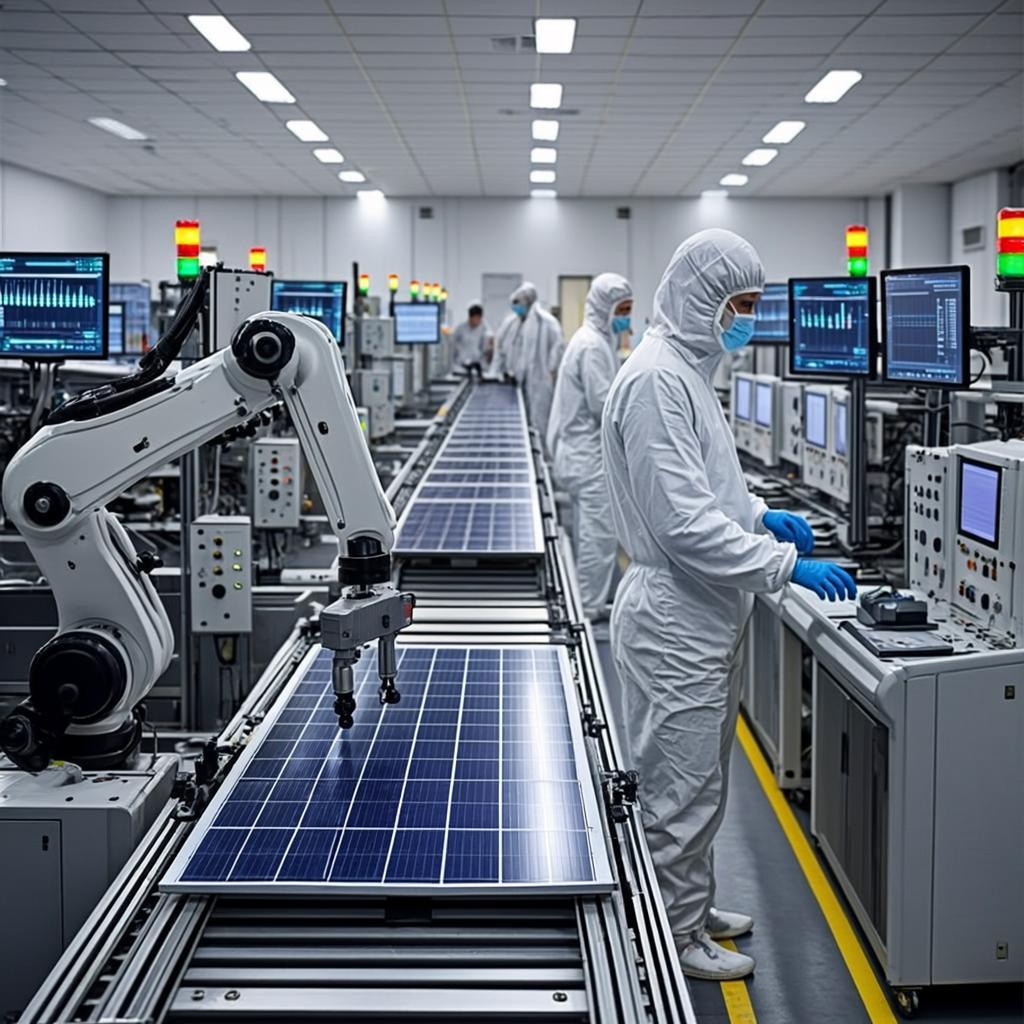
As a leading manufacturer in the bi facial solar panel sector, we combine cutting-edge R&D with scalable production capacity exceeding 10GW annually. Our state-of-the-art facilities employ automated lines for precision assembly, ensuring batch-to-batch consistency verified by third-party auditors like TÜV Rheinland. We prioritize supply chain transparency, sourcing cells from tier-1 suppliers to mitigate risks in global trade.
Our bi facial products undergo stringent quality controls, including electroluminescence (EL) testing and PID simulation, surpassing industry benchmarks. With a global footprint, we offer localized logistics, flexible MOQs, and tailored OEM services for international partners. Certifications like ISO 9001, ISO 14001, and OHSAS 18001 underscore our commitment to excellence.
Customer-centric support includes detailed project simulations using bi facial-specific software like PVSyst, predictive maintenance tools, and 24/7 technical assistance. By choosing us, you gain a reliable partner dedicated to powering your bi facial projects with innovation, integrity, and unmatched value.
7. FAQ
Q: What is the bifaciality factor of your bi facial solar panels?
A: Our bi facial panels achieve a bifaciality of ≥70%, meaning the rear side generates at least 70% of the front-side power under identical conditions.
Q: How much additional energy can bi facial panels produce compared to mono-facial ones?
A: Gains typically range from 5-30%, depending on installation height, surface albedo, and tilt angle. Ground mounts often see the highest boosts.
Q: Are bi facial panels suitable for all mounting types?
A: Yes, they perform best with 0.5-1.5m ground clearance for rear-side exposure but adapt well to rooftops, trackers, and vertical setups.
Q: What warranties do you provide for bi facial modules?
A: 15-year product workmanship warranty and 30-year linear power output warranty, with first-year degradation <2% and annual <0.55% thereafter.
Q: Do bi facial panels require special inverters or racking?
A: Standard PV components suffice; however, bifacial-optimized modeling ensures maximum gains. We recommend albedo-enhancing surfaces where feasible.
Q: How do bi facial panels handle shading or dirt accumulation?
A: Half-cut cell design mitigates shading losses, and hydrophobic glass coatings reduce soiling, maintaining bi facial efficiency over time.
Related product
- English
- Françai
- Español
- Deutsch
- Română
- العربية
- 한국어
- 日本語
- Italiano
- Português
- Gaeilge
- Dansk
- Čeština
- Русский
- Afrikaans
- Euskara
- Català
- Esperanto
- हिन्दी
- Ελληνικά
- Bahasa Melayu
- Polski
- Српски
- Kiswahili
- ภาษาไทย
- Tiếng Việt
- Türkçe
- Svenska
- Cymraeg
- Slovenčina
- Latviešu
- Malti
- Magyar
- Galego
- ગુજરાતી
- Eesti Keel
- বাংলা
- Shqip
- беларуская мова
- Nederlands
- Tagalog
- ქართული
- Íslenska
- Kreyòl Ayisyen
- Lietuvių
- Norsk
- slovenščina
- தமிழ்
- Українська
- ײִדיש
- اردو
- తెలుగు
- فارسی
- македонски
- ಕನ್ನಡ
- Bahasa Indonesia
- עברית
- Suomi
- Hrvatski
- Български
- Azerbaijani