

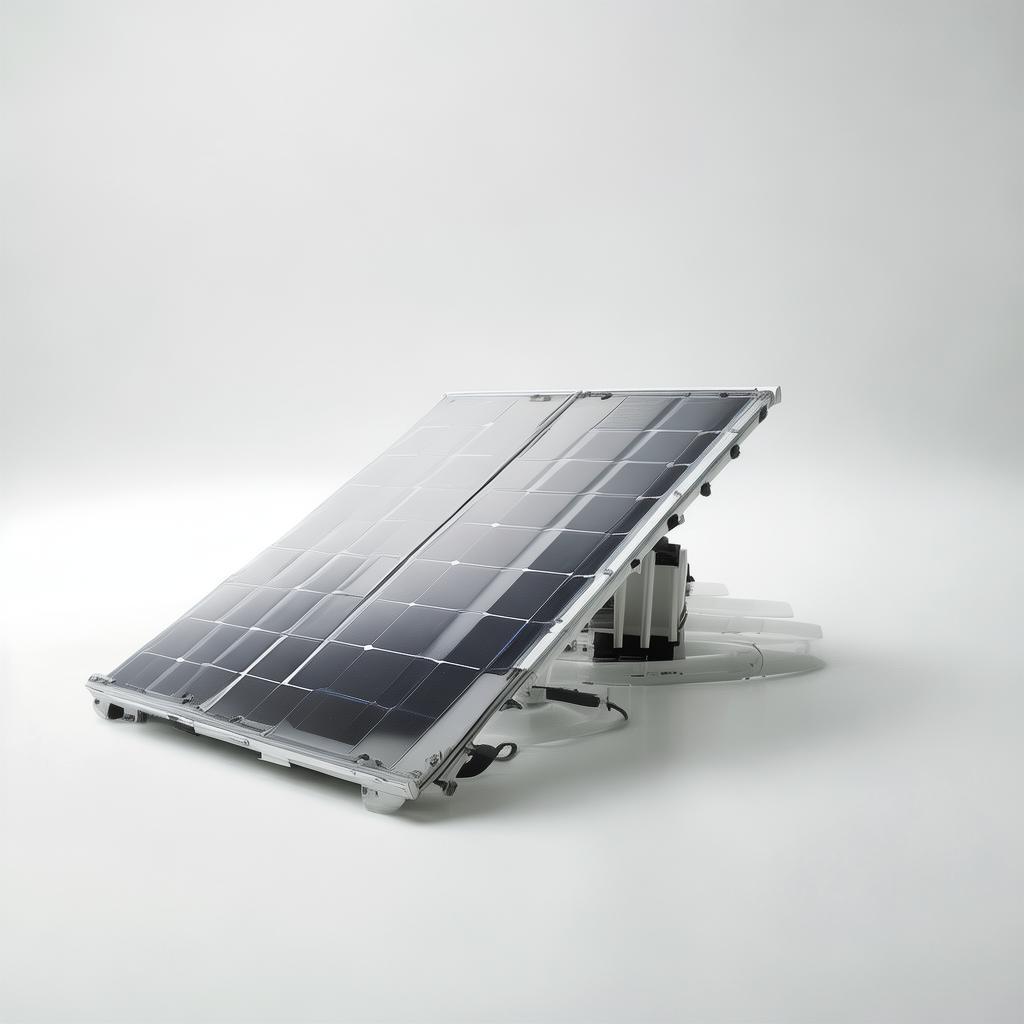
benefits of monocrystalline solar panel
Monocrystalline solar panels represent the pinnacle of photovoltaic technology, offering unmatched efficiency and reliability for industrial and commercial applications. Crafted from a single
Benefits of Monocrystalline Solar Panel
1. Product Overview
Monocrystalline solar panels represent the pinnacle of photovoltaic technology, offering unmatched efficiency and reliability for industrial and commercial applications. Crafted from a single continuous crystal structure, these panels deliver superior energy conversion rates, making them the preferred choice for businesses seeking long-term sustainability solutions. The benefits of monocrystalline solar panel extend beyond high performance to include exceptional durability and space optimization, ideal for international trade projects where every watt counts.
In today's competitive global market, understanding the benefits of monocrystalline solar panel is crucial for procurement managers and engineers. These panels achieve efficiencies up to 22-24%, significantly outperforming polycrystalline alternatives. Their uniform black appearance not only enhances aesthetic appeal but also minimizes shading losses, ensuring consistent output even in partial sunlight conditions. For B2B buyers, this translates to faster ROI through reduced installation footprints and lower balance-of-system costs.
Engineered for harsh environments, monocrystalline panels withstand extreme temperatures, high winds, and salt mist corrosion, making them suitable for diverse climates from deserts to coastal regions. As renewable energy demands surge worldwide, leveraging the benefits of monocrystalline solar panel positions your operations at the forefront of green innovation, complying with stringent international standards like IEC 61215 and UL 1703.
2. Key Features
- High Cell Efficiency: Up to 24% conversion efficiency, maximizing power output per square meter and highlighting one of the primary benefits of monocrystalline solar panel.
- Superior Low-Light Performance: Advanced PERC (Passivated Emitter and Rear Cell) technology ensures optimal generation during dawn, dusk, or cloudy days.
- Anti-PID and Anti-LID: Potential Induced Degradation (PID) and Light Induced Degradation (LID) resistance for sustained performance over 25+ years.
- Robust Frame Design: Anodized aluminum frame with reinforced corners withstands 5400 Pa snow loads and 2400 Pa wind loads.
- Self-Cleaning Glass: Anti-reflective coating reduces dust accumulation, maintaining peak efficiency in remote installations.
- Half-Cut Cell Technology: Minimizes micro-cracks and power loss, enhancing reliability and extending lifespan.
- Multi-Busbar (MBB) Design: Reduces resistive losses by up to 10%, amplifying the overall benefits of monocrystalline solar panel.
3. Technical Specifications
| Parameter | Value | Unit |
|---|---|---|
| Cell Type | Monocrystalline Silicon (PERC) | - |
| Maximum Power (Pmax) | 550-585 | W |
| Module Efficiency | 21.3-22.6 | % |
| Optimum Operating Voltage (Vmp) | 41.5-42.5 | V |
| Optimum Operating Current (Imp) | 13.2-13.8 | A |
| Open Circuit Voltage (Voc) | 49.5-50.5 | V |
| Short Circuit Current (Isc) | 14.0-14.6 | A |
| Dimensions (L x W x H) | 2278 x 1134 x 35 | mm |
| Weight | 27.5 | kg |
| Front Glass | 3.2 mm Tempered Glass with AR Coating | - |
| Frame | Anodized Aluminum Alloy | - |
| Junction Box | IP68 Rated, 3 Diodes | - |
| Cable | 4 mm², 1400 mm Length | - |
| Operating Temperature | -40 to +85 | °C |
| Maximum System Voltage | 1500 | DC V |
| Power Tolerance | 0 ~ +3 | % |
| Warranty | 12 years product, 30 years linear power | - |
These specifications underscore the technical superiority that drives the benefits of monocrystalline solar panel, ensuring compatibility with leading inverters and mounting systems.
4. Application Scenarios
The versatility of monocrystalline solar panels makes them indispensable across various sectors. In large-scale solar farms, their high efficiency reduces land usage by up to 20%, optimizing CAPEX for utility-scale projects. Commercial rooftops benefit from compact footprints, enabling installations on space-constrained urban buildings without compromising output.
For industrial applications, such as manufacturing plants and data centers, the benefits of monocrystalline solar panel include seamless integration with peak shaving systems to offset high electricity tariffs during demand surges. Off-grid scenarios, from remote mining operations to telecom towers, leverage their reliability in low-light regions, powering critical infrastructure without grid dependency.
Additionally, floating solar projects on reservoirs capitalize on reduced evaporation and enhanced cooling, amplifying performance. Agricultural greenhouses and agrivoltaic setups combine energy generation with crop cultivation, promoting dual land use. In marine environments, salt-resistant designs support offshore platforms and coastal resorts, delivering resilient power solutions globally.
5. Advantages
Delving deeper into the benefits of monocrystalline solar panel, their higher upfront efficiency yields 15-25% more energy annually compared to polycrystalline panels, directly impacting LCOE (Levelized Cost of Energy). This edge is particularly pronounced in high-latitude installations where sunlight angles are suboptimal.
Durability stands out with a degradation rate of under 0.4% per year, backed by 30-year linear warranties guaranteeing 84.8% output retention. Temperature coefficients as low as -0.34%/°C minimize losses in hot climates, outperforming competitors by 5-10% under real-world conditions.
From an economic standpoint, the benefits of monocrystalline solar panel include faster payback periods—often 4-6 years in sunny regions—through incentives like ITC and accelerated depreciation. Environmentally, they embody circular economy principles with recyclable silicon content exceeding 95%, reducing your carbon footprint and enhancing ESG reporting.
Scalability for MW-scale deployments ensures supply chain stability, with production leveraging advanced automation for consistent quality. Bifacial variants further boost yields by 10-30% via rear-side generation, ideal for ground-mounted arrays.
6. Why Choose Us
As a leading manufacturer in the international solar trade, we specialize in premium monocrystalline panels that embody the full spectrum of benefits of monocrystalline solar panel. Our Tier 1 status, verified by BNEF, guarantees bankable performance with audited production lines exceeding 10 GW annual capacity.
We hold certifications including TUV, CE, INMETRO, and MCS, ensuring seamless customs clearance worldwide. Rigorous EL testing and flash report verification eliminate defect risks, while flexible OEM/ODM services cater to branded projects. Our global logistics network supports just-in-time delivery to over 100 countries, minimizing lead times.
Committed to innovation, we invest 5% of revenue in R&D, pioneering technologies like TOPCon and HJT for next-gen efficiencies. Partner with us for unmatched value, reliability, and the strategic benefits of monocrystalline solar panel that drive your renewable energy success.
7. FAQ
Q: What are the primary benefits of monocrystalline solar panel compared to polycrystalline?
A: Monocrystalline panels offer higher efficiency (up to 24% vs. 18%), better low-light performance, and a sleeker design, resulting in more power from less space and superior longevity.
Q: How do temperature conditions affect monocrystalline solar panel performance?
A: With low temperature coefficients (-0.34%/°C), they maintain high output in heat, providing one of the key benefits of monocrystalline solar panel in tropical or desert environments.
Q: Are monocrystalline panels suitable for all installation types?
A: Yes, their robustness supports rooftop, ground-mount, floating, and carport systems, with half-cut cells reducing mismatch losses in complex arrays.
Q: What warranty covers these panels?
A: 12-year product warranty and 30-year linear power warranty, with first-year degradation <2% and annual <0.45%, ensuring long-term benefits of monocrystalline solar panel.
Q: How do monocrystalline panels contribute to sustainability?
A: High recyclability, low carbon footprint during production, and extended lifespan minimize environmental impact, aligning with global net-zero goals.
Q: Can they integrate with energy storage systems?
A: Absolutely, compatible with leading batteries like lithium-iron-phosphate, enabling hybrid solutions that maximize the benefits of monocrystalline solar panel for 24/7 power.
Q: What is the typical degradation rate?
A: Under 0.4% per year, far below industry averages, preserving investment value over decades.
Related product
- English
- Françai
- Español
- Deutsch
- Română
- العربية
- 한국어
- 日本語
- Italiano
- Português
- Gaeilge
- Dansk
- Čeština
- Русский
- Afrikaans
- Euskara
- Català
- Esperanto
- हिन्दी
- Ελληνικά
- Bahasa Melayu
- Polski
- Српски
- Kiswahili
- ภาษาไทย
- Tiếng Việt
- Türkçe
- Svenska
- Cymraeg
- Slovenčina
- Latviešu
- Malti
- Magyar
- Galego
- ગુજરાતી
- Eesti Keel
- বাংলা
- Shqip
- беларуская мова
- Nederlands
- Tagalog
- ქართული
- Íslenska
- Kreyòl Ayisyen
- Lietuvių
- Norsk
- slovenščina
- தமிழ்
- Українська
- ײִדיש
- اردو
- తెలుగు
- فارسی
- македонски
- ಕನ್ನಡ
- Bahasa Indonesia
- עברית
- Suomi
- Hrvatski
- Български
- Azerbaijani