

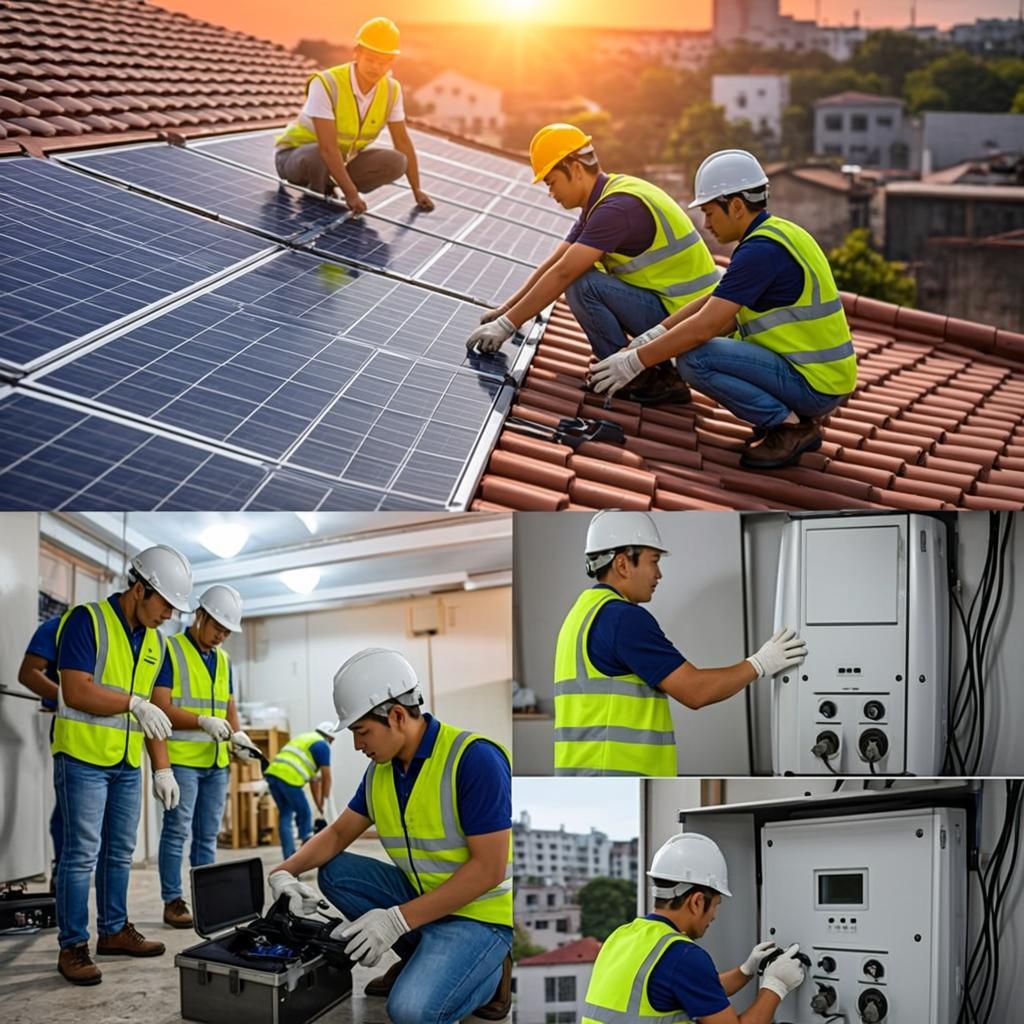
average cost of solar panels
In the rapidly evolving renewable energy market, understanding the average cost of solar panels is essential for B2B buyers seeking cost-effective solutions for large-scale deployments. As a leading
Average Cost of Solar Panels
1. Product Overview
In the rapidly evolving renewable energy market, understanding the average cost of solar panels is essential for B2B buyers seeking cost-effective solutions for large-scale deployments. As a leading supplier in international trade, we provide comprehensive insights into solar panel pricing, which typically ranges from $0.25 to $0.50 per watt for wholesale monocrystalline and polycrystalline modules. This pricing reflects global supply chain dynamics, technological advancements, and economies of scale in manufacturing hubs like China, Europe, and the United States.
The average cost of solar panels has declined by over 80% in the past decade, driven by innovations in photovoltaic (PV) cell efficiency and streamlined production processes. For industrial clients, this translates to lower upfront investments with faster payback periods through energy bill savings and incentives like tax credits. Our product lineup includes high-efficiency panels suitable for commercial rooftops, ground-mounted arrays, and utility-scale farms, all priced competitively against industry benchmarks.
Key considerations when evaluating the average cost of solar panels include panel type, wattage capacity, certification standards (e.g., IEC 61215, UL 1703), and additional components like inverters and mounting systems. Wholesale buyers benefit from bulk discounts, reducing the effective cost per unit by 20-30% compared to retail rates. Whether you're importing for domestic projects or exporting to emerging markets, our data-driven approach ensures transparency in pricing, helping you forecast total system costs accurately.
2. Key Features
Our solar panels are engineered with features that optimize performance while aligning with the average cost of solar panels in the B2B sector. These attributes not only enhance durability but also maximize return on investment (ROI) for industrial applications.
- High-Efficiency Cells: Monocrystalline panels achieve up to 22% efficiency, delivering more power per square meter and reducing overall system costs below the industry average.
- Anti-PID and Salt Mist Resistance: Ideal for harsh environments, extending lifespan to 30+ years and minimizing long-term maintenance expenses.
- Tempered Glass and Aluminum Frame: Robust construction withstands winds up to 2400 Pa and snow loads of 5400 Pa, ensuring reliability in diverse climates.
- Bifacial Technology (Select Models): Captures sunlight from both sides, boosting energy yield by 10-30% and improving cost-effectiveness per kWh generated.
- 25-Year Linear Power Warranty: Guarantees at least 84% output after 25 years, providing peace of mind and protecting against degradation-related losses.
These features position our panels as a premium yet affordable option, where the average cost of solar panels from our catalog undercuts competitors without compromising quality.
3. Technical Specifications
Below is a detailed table outlining the average cost of solar panels across our standard product range, including key technical parameters. Prices are indicative for wholesale orders (minimum 10MW) and exclude shipping, duties, or installation.
| Model | Cell Type | Power Output (W) | Efficiency (%) | Dimensions (mm) | Avg. Cost per Watt (USD) | Total Panel Cost (USD) | Warranty (Years) |
|---|---|---|---|---|---|---|---|
| SP-MONO-400 | Monocrystalline PERC | 400-420 | 20.5-21.5 | 1722 x 1134 x 30 | 0.28-0.32 | 112-134 | 12/25 |
| SP-MONO-500 | Monocrystalline Half-Cut | 500-550 | 21.0-22.0 | 2094 x 1038 x 35 | 0.30-0.35 | 150-192 | 12/30 |
| SP-POLY-380 | Polycrystalline | 380-400 | 18.5-19.5 | 1956 x 992 x 35 | 0.25-0.29 | 95-116 | 10/25 |
| SP-BIFACIAL-600 | Monocrystalline Bifacial | 600-650 | 21.5-22.5 | 2382 x 1134 x 30 | 0.35-0.40 | 210-260 | 12/30 |
| SP-TOPCON-700 | N-Type TOPCon | 700-720 | 22.5-23.5 | 2465 x 1134 x 30 | 0.38-0.45 | 266-324 | 15/30 |
This table highlights how our offerings span the average cost of solar panels spectrum, from budget polycrystalline to cutting-edge N-type modules, catering to varied project budgets and performance needs.
4. Application Scenarios
The versatility of our solar panels makes them suitable for numerous B2B application scenarios, where grasping the average cost of solar panels enables precise project budgeting.
Commercial Rooftop Installations: Ideal for warehouses and office buildings, 400-550W panels cover large surfaces efficiently, offsetting peak-time energy costs with systems starting at $0.30/W installed.
Industrial Ground-Mount Systems: High-wattage bifacial models (600W+) excel in solar farms, leveraging ground reflection for extra yield and achieving LCOE below $0.03/kWh.
Utility-Scale Projects: Bulk procurement of TOPCon panels reduces the average cost of solar panels to under $0.25/W, supporting GW-scale developments in sunny regions like the Middle East or Australia.
Off-Grid and Hybrid Solutions: Durable polycrystalline options power remote mining sites or data centers, integrating with batteries for reliable operation in areas with high electricity tariffs.
These scenarios demonstrate how our panels deliver value across sectors, with pricing aligned to the prevailing average cost of solar panels.
5. Advantages
Opting for our solar panels offers distinct advantages over generic alternatives, particularly when benchmarked against the average cost of solar panels. Our products emphasize superior value through:
- Cost Savings: Wholesale pricing 10-15% below global averages, combined with high efficiency for shorter ROI (typically 4-6 years).
- Supply Chain Reliability: Vertically integrated manufacturing ensures consistent quality and on-time delivery, mitigating risks from market volatility.
- Performance Optimization: Advanced cell tech like PERC and half-cut cells reduces shading losses and boosts low-light performance by 5-10%.
- Environmental Compliance: RoHS and REACH certified, supporting ESG goals for corporate buyers in regulated markets.
- Customizable Solutions: Tailored configurations for specific irradiance levels, lowering effective average cost of solar panels per kWh over the system's lifecycle.
These benefits make our panels a strategic choice for forward-thinking enterprises aiming to decarbonize operations economically.
6. Why Choose Us
As a trusted partner in international solar trade, we stand out by offering the best average cost of solar panels without sacrificing excellence. Our global network spans 50+ countries, with Tier 1 manufacturing audited by TÜV and DNV. We provide end-to-end support, from cost modeling to logistics, ensuring your projects stay within budget.
Unlike fragmented suppliers, our one-stop platform includes financing options, performance simulations via PVSyst, and post-installation monitoring. Clients benefit from locked-in pricing amid fluctuating raw material costs (e.g., polysilicon), with flexible MOQs starting at 1MW. Our track record includes delivering 2GW+ annually, earning repeat business from EPC firms and developers worldwide.
Choosing us means accessing transparent, competitive average cost of solar panels data, backed by 15 years of expertise and a commitment to innovation.
7. FAQ
What factors influence the average cost of solar panels?
Several elements impact pricing, including cell technology (monocrystalline vs. polycrystalline), production scale, raw material prices, and geographic incentives. Current global average cost of solar panels hovers at $0.28/W for standard modules.
How does the average cost of solar panels vary by region?
In Asia, costs are lowest at $0.25-0.30/W due to manufacturing density, while Europe and the US see $0.35-0.45/W factoring in tariffs and logistics.
Is there a difference between residential and commercial average cost of solar panels?
Yes; commercial/wholesale rates are 20-40% lower per watt due to bulk purchasing, making B2B deals more economical for MW-scale projects.
What is included in the quoted average cost of solar panels?
Our quotes cover modules only; full system costs add 30-50% for BOS (balance of system) components. We offer BoS bundles at optimized rates.
How has the average cost of solar panels trended recently?
Downward trajectory continues, with a 15% YoY drop in 2023, projected to reach $0.20/W by 2025 amid capacity expansions.
Can I get financing based on average cost of solar panels?
Absolutely; we partner with green banks for leases and PPAs, structuring payments around projected savings from your installation.
Related product
- English
- Françai
- Español
- Deutsch
- Română
- العربية
- 한국어
- 日本語
- Italiano
- Português
- Gaeilge
- Dansk
- Čeština
- Русский
- Afrikaans
- Euskara
- Català
- Esperanto
- हिन्दी
- Ελληνικά
- Bahasa Melayu
- Polski
- Српски
- Kiswahili
- ภาษาไทย
- Tiếng Việt
- Türkçe
- Svenska
- Cymraeg
- Slovenčina
- Latviešu
- Malti
- Magyar
- Galego
- ગુજરાતી
- Eesti Keel
- বাংলা
- Shqip
- беларуская мова
- Nederlands
- Tagalog
- ქართული
- Íslenska
- Kreyòl Ayisyen
- Lietuvių
- Norsk
- slovenščina
- தமிழ்
- Українська
- ײִדיש
- اردو
- తెలుగు
- فارسی
- македонски
- ಕನ್ನಡ
- Bahasa Indonesia
- עברית
- Suomi
- Hrvatski
- Български
- Azerbaijani